Every job interview concludes with the same invitation: "Do you have any questions for us?" Most candidates default to generic queries about company culture or daily responsibilities. But what if you could ask questions that not only impress the interviewer but also provide a clear, unvarnished view of the role, the team, and your potential success? This isn't just about sounding smart; it's about gathering the intelligence you need to make a career-defining decision.
The right questions to ask from an interviewer transform you from a passive candidate into a proactive partner, demonstrating strategic thinking and genuine interest. They help you uncover the unwritten rules, the real success metrics, and the hidden challenges that a job description never reveals. Understanding what interviewers are looking for is also crucial. To better prepare for your interview and understand the interviewer's perspective, consider reviewing these essential product management interview questions, which can provide insight into the types of problems you'll be expected to solve.
In this comprehensive guide, we'll explore powerful, categorized questions designed to reveal critical information about performance expectations, team dynamics, and growth potential. Our goal is to help you determine if a company is truly the right place to build your career. We'll break down why each question works, how to phrase it, and what to listen for in the answers, ensuring you leave every interview feeling confident and in control of your next career move.
1. What does success look like in this role during the first 90 days?
Asking this question shifts the interview dynamic from a simple Q&A to a strategic conversation about impact. It moves beyond the job description’s list of responsibilities and forces the interviewer to articulate the specific, tangible outcomes they expect from a new hire early on. This insight is pure gold, revealing the company's immediate priorities and the key performance indicators (KPIs) that truly matter.
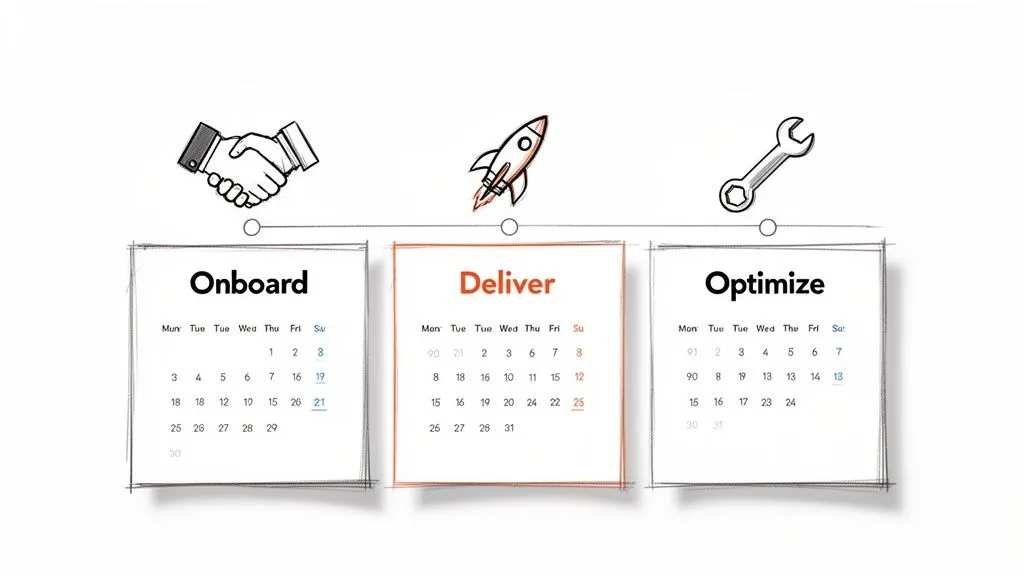
The answer provides a clear roadmap of expectations, helping you determine if the role aligns with your skills and working style. More importantly, it gives you the exact language and metrics needed to frame your past accomplishments in a way that resonates directly with the hiring manager's needs.
Why This Question Works
This is one of the most effective questions to ask from an interviewer because it demonstrates foresight and a results-oriented mindset. You are not just asking what you will do; you are asking how you will succeed. This signals that you are a candidate focused on delivering value from day one.
Key Insight: The interviewer’s answer is your cheat sheet. It tells you which of your skills and past wins to emphasize in your thank-you note and subsequent interviews, ensuring your narrative perfectly matches their definition of a successful hire.
Role-Specific Examples
- For a Tech Role: "A successful Senior Developer will have shipped two key features for our core product and helped reduce the critical bug backlog by 30% within their first three months."
- For an Operations Role: "We'd expect the new Operations Manager to fully map our top two workflows and identify and implement process improvements that lead to a 10% reduction in fulfillment time."
- For a Business Development Role: "Success in the first 90 days means securing five qualified enterprise meetings and establishing initial contact with three strategic channel partners."
How to Use the Answer
Listen carefully for specific metrics, project names, and departmental goals. Take notes. This information is critical for demonstrating your alignment. You can use it to tailor your follow-up and frame your experience, showing you have already delivered similar results in the past.
2. Can you describe the team I'd be working with and the organizational structure?
This question peels back the layers of the organizational chart, offering a glimpse into the daily reality of the role. It moves beyond your individual responsibilities to reveal the ecosystem you'll be operating in: the key collaborators, reporting lines, and the overall team culture. Understanding these dynamics is crucial for assessing cultural fit and foreseeing how your collaborative skills will be utilized.
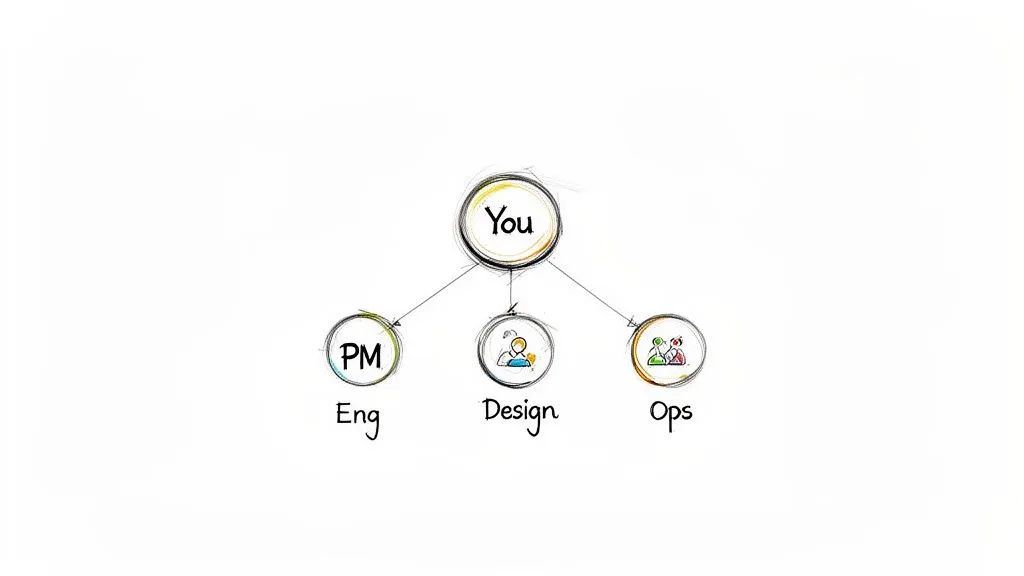
The answer provides a vital blueprint of workplace relationships. It helps you understand who holds decision-making power, which departments you will frequently partner with, and whether the environment is more collaborative or siloed. This context allows you to highlight relevant team-based achievements and demonstrate that you can navigate their specific internal structure effectively.
Why This Question Works
This is one of the essential questions to ask from an interviewer because it shows you think systemically. You are not just interested in your own tasks; you are evaluating how your role contributes to the broader team and company goals. This signals maturity, strong interpersonal skills, and an understanding that success is a collective effort.
Key Insight: The description of the team structure is a guide to the company's communication style and power dynamics. Listen for terms like "matrixed," "flat," or "cross-functional" to understand how projects get done and how you can best position yourself as a valuable team player.
Role-Specific Examples
- For a Tech Role: "You would report directly to the Engineering Manager and work on a scrum team with five other developers, collaborating daily with members of the product and design teams."
- For a Business Role: "You’ll be part of a cross-functional marketing team of 12. While you report to the Director of Marketing, you'll have matrix reporting to the VP of Sales for go-to-market initiatives."
- For an Operations Role: "You would lead a team of four logistics coordinators and be the primary operational support for six regional sales departments, reporting to the Head of Operations."
How to Use the Answer
Pay close attention to team size, key departmental collaborations, and reporting structure. This information helps you frame your past experiences in a way that mirrors their environment. If they describe a small, agile team, emphasize your ability to wear multiple hats. If it is a large, matrixed organization, highlight your experience navigating complex stakeholder relationships.
3. What challenges is the team currently facing, and how would this role help solve them?
This question cuts through the polished job description and gets to the heart of why the position truly exists: to solve a problem. Companies hire to overcome obstacles, meet new demands, or fix something that is broken. By asking about current challenges, you position yourself not as a candidate seeking a job, but as a strategic partner ready to provide solutions.
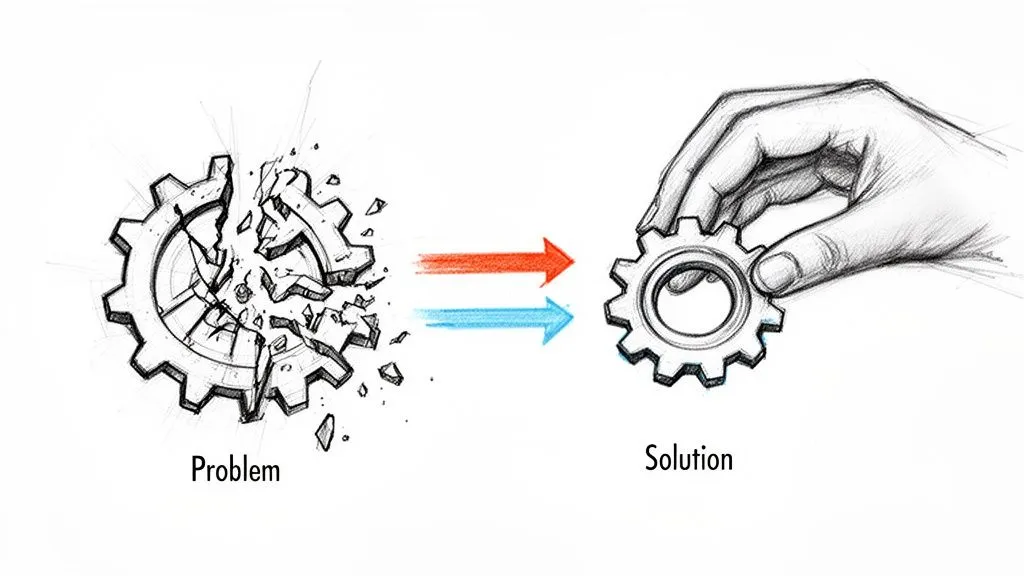
The interviewer's answer reveals the team's immediate pain points and the specific value they expect this role to deliver. This knowledge is invaluable, allowing you to reframe your experience and skills as direct remedies to their most pressing needs, transforming your candidacy from relevant to essential.
Why This Question Works
As one of the most insightful questions to ask from an interviewer, this query demonstrates your proactive and problem-solving mindset. It shows that you think about your contribution in terms of impact and are eager to understand where you can add the most value. It signals that you are not just looking to fill a seat; you are looking to make a difference.
Key Insight: The challenges mentioned are your blueprint for a compelling narrative. Use these specific problems to tailor your interview answers and follow-up communication, framing your past achievements as direct solutions to their current obstacles.
Role-Specific Examples
- For a Tech Role: "Our biggest hurdle is API latency, which is impacting user experience. We need someone in this role to help us reduce it by 40% and improve our overall test coverage to prevent future regressions."
- For an Operations Role: "Manual data entry in our logistics process is causing a 20% error rate. This position is crucial for implementing automation and developing training to streamline the workflow."
- For a Business Development Role: "Our sales cycle is taking too long to close deals. We need this person to help develop a more effective lead qualification process to improve conversion velocity."
How to Use the Answer
Listen for specific metrics, technical debt, process bottlenecks, or market pressures. Frame your follow-up questions to dig deeper into these challenges. In subsequent interviews and your thank-you note, connect your past accomplishments directly to these issues, using language like, "When you mentioned the challenge with X, it reminded me of a time I solved a similar problem by implementing Y, which resulted in Z." This shows you were listening and are the right person to solve their problems.
4. What skills or qualities do you see in your most successful employees in this type of role?
This question goes beyond the listed job requirements and uncovers the unwritten rules of success within the company’s culture. While a job description lists technical competencies, this question asks the interviewer to describe the behavioral DNA of their top performers. The answer reveals the soft skills, work ethic, and personality traits that truly enable someone to thrive in their specific environment.
By asking this, you’re not just trying to see if you fit the role; you’re trying to understand the profile of an A-player in their eyes. This insight is incredibly valuable, as it helps you move beyond simply matching keywords on a resume to aligning your personal narrative with their proven success patterns. It shows you care about long-term success, not just landing the job.
Why This Question Works
This is one of the most powerful questions to ask from an interviewer because it demonstrates a deep interest in cultural and performance alignment. You are signaling that you want to be a top contributor, not just a competent employee. It also gives you a direct look into the team's values and what behaviors get rewarded, which is often more telling than the official company values statement.
Key Insight: The interviewer's answer provides the exact language they use to describe their ideal candidate. By listening for these specific traits, you can mirror that language in your follow-up communication to frame your own skills and experiences in a way that directly matches their definition of a star employee.
Role-Specific Examples
- For a Tech Role: "The best engineers here are owners. They drive their projects end-to-end, communicate with stakeholders clearly, and are comfortable pushing back on scope creep to protect the timeline."
- For a Business Role: "Our most successful account executives are self-starters who build genuine relationships, adapt quickly to market changes, and are relentlessly curious, always asking good questions."
- For an Operations Role: "The people who excel on this team are detail-oriented and document everything, but they also think big picture and constantly look for ways to automate routine tasks."
How to Use the Answer
Listen for both hard and soft skills. The interviewer might mention a specific technology, but they will almost always emphasize traits like “proactiveness,” “curiosity,” or “collaboration.” Take note of these qualities. Afterward, you can subtly highlight examples from your past where you demonstrated those exact traits. This technique is especially useful for those crafting a resume, as you can learn how to emphasize the skills that truly matter. For more tips on this, explore how to build a student resume with real examples.
5. How does this company evaluate and support professional development and career growth?
This question signals that you are not just looking for a job; you are looking for a career. It shows the interviewer you are an ambitious, long-term thinker who is invested in growing with the company. By asking this, you are evaluating whether the organization provides a fertile ground for your professional journey, rather than just a temporary landing spot.
The response reveals the company’s commitment to its employees. Vague answers about "opportunities" are a red flag, while specific details about budgets, programs, and promotion paths indicate a structured and supportive environment. This information helps you gauge if the company’s growth trajectory can match your own aspirations.
Why This Question Works
This is one of the most critical questions to ask from an interviewer because it uncovers the underlying company culture toward employee investment. It demonstrates that you are a motivated candidate who seeks to continuously improve and add more value over time. Your inquiry forces the interviewer to move beyond the immediate needs of the role and discuss the long-term employee value proposition.
Key Insight: A company that invests in its people is a company that plans for future success. The details you gather here are not just about perks; they are direct indicators of organizational health, employee morale, and retention rates.
Role-Specific Examples
- For a Tech Role: "We offer a $2,000 annual learning budget for conferences and certifications. We also have a formal mentorship program and encourage internal mobility after 18 months in a role."
- For an Operations Role: "Our Operations team has quarterly skill assessments tied to career-pathing, and we support certifications like Six Sigma. High-performers are often tapped for cross-functional project-based rotations."
- For a Business Development Role: "There's a clearly defined promotion track from BDR to Account Executive, which typically takes 12 to 18 months. We also have a leadership development program for senior reps."
How to Use the Answer
Listen for concrete examples, not just abstract promises. Ask follow-up questions about specific programs mentioned, such as "Can you give me an example of someone who recently moved from this team to another department?" This shows you are actively listening and serious about growth. This information is also invaluable for your own career planning; you can identify key milestones to aim for and later highlight them in your resume updates. The process of documenting this growth can be complex, and understanding how to frame it effectively is a skill in itself. For expert guidance on this, you might explore services like a professional resume writer who can help articulate your career progression.
6. What was the previous person in this role doing well, and what would you like to improve?
Asking this question provides a rare, candid look into the unspoken expectations of the role. It moves beyond the official job description to reveal what the team valued in the previous incumbent and, more critically, what gaps they are now trying to fill. The answer gives you a before-and-after picture, clarifying the evolution of the role and the specific profile of the ideal candidate.
This information is invaluable for positioning yourself. It allows you to understand the non-negotiable strengths you must possess and the "pain points" the interviewer is hoping you can solve. You learn what made the last person successful and where the opportunities are for you to make an even greater impact.
Why This Question Works
This is one of the more strategic questions to ask from an interviewer because it shows you’re thinking like a problem-solver. You’re not just trying to fit into a pre-defined box; you’re seeking to understand the context and identify where you can add the most value. It signals high emotional intelligence and a desire to build on past successes while addressing existing challenges.
Key Insight: The answer reveals the role's hidden scorecard. The "doing well" part tells you the baseline expectations, while the "improve" part highlights the key area where you can stand out and exceed them.
Role-Specific Examples
- For a Tech Role: "They were a phenomenal coder and always hit deadlines, but they struggled with cross-team communication. We really need someone who is more collaborative and can mentor junior developers."
- For an Operations Role: "They were excellent at day-to-day execution, but they rarely documented processes. We need someone who can not only manage the workflow but also build a scalable, repeatable system."
- For a Business Development Role: "They were a strong closer on inbound leads, but their outbound pipeline was consistently weak. We need a true hunter who can build long-term relationships from scratch."
How to Use the Answer
Listen for the contrast between the positive and negative points. This is your cue to tailor your narrative. When you follow up or in subsequent interviews, you can directly address how you bring the best of both worlds. Frame your experience to show you possess the strengths they valued and have a proven track record of solving the exact problems they faced.
7. How is performance measured in this role, and what metrics matter most?
This question cuts through ambiguity and gets to the core of what a company truly values. While a job description lists responsibilities, understanding the exact metrics used for performance reviews reveals the underlying business priorities. It shows the interviewer you think like a business partner, not just an employee, by connecting your daily tasks to tangible business outcomes.
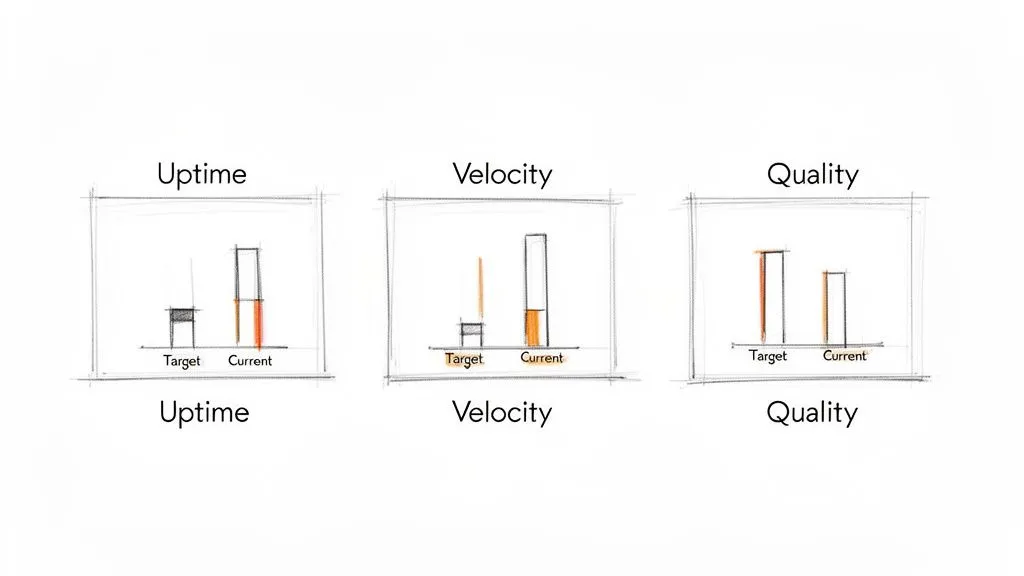
The answer provides a quantitative framework for success. Knowing these key performance indicators (KPIs) allows you to align your skills and past achievements directly with their measurement system. This is crucial for demonstrating that you are not just capable of doing the work, but of delivering the specific results they track and reward.
Why This Question Works
This is one of the most powerful questions to ask from an interviewer because it shows you are data-driven and focused on accountability. You are actively seeking to understand the "rules of the game" so you can excel. It signals a high level of professional maturity and a commitment to making a measurable impact.
Key Insight: The metrics the interviewer shares are the language of success at their company. Use these exact terms and KPIs when discussing your past achievements in follow-up conversations and in your thank-you note to prove you have already delivered what they measure.
Role-Specific Examples
- For a Tech Role: "Performance is primarily measured by system uptime, feature delivery velocity, and bug escape rates. We also look at code review quality and contributions to our documentation."
- For an Operations Role: "We evaluate our managers on cost savings achieved through process improvements, error reduction percentages in our fulfillment chain, and team retention rates."
- For a Business Development Role: "Success is quantified by pipeline growth month-over-month, deal close rate, and ultimately, the lifetime value of the customers you bring in."
How to Use the Answer
Write down the specific KPIs mentioned. If the interviewer is vague, you can gently probe further by asking, "Could you give me an example of a target for one of those metrics?" Later, you can frame your past accomplishments using this language (e.g., "I improved process efficiency by 15%" instead of just "I made things run better"). This directly translates your experience into their value system.
8. What does the interview process look like, and when can I expect to hear back?
This is a practical and professional question that demonstrates your respect for the process and your own time. Asking about the next steps and timeline signals that you are organized, serious about the opportunity, and eager to keep the momentum going. It moves the conversation from the abstract to the concrete, giving you a clear understanding of what to expect next.
This information is invaluable for managing your job search. It prevents the anxiety of waiting by the phone and empowers you to plan your preparation for subsequent rounds. Knowing the timeline allows you to allocate your energy effectively, especially if you are juggling multiple interview processes.
Why This Question Works
This is one of the essential questions to ask from an interviewer because it shows you are a proactive and considerate candidate. You are not just passively waiting for things to happen; you are actively managing your candidacy. It’s a simple, respectful way to get the clarity you need to proceed with confidence and professionalism.
Key Insight: The interviewer's response sets a mutual expectation. If they give you a specific date and you don't hear back, you have a clear, non-intrusive reason to follow up. This turns a potentially awkward check-in into a professional touchpoint.
Role-Specific Examples
- For a Tech Role: "The next steps are a technical assessment, followed by a final round with the team lead and director. We aim to make a decision within one week of the final interview."
- For an Operations Role: "There are two more interviews, one with the department head and another with a cross-functional partner, followed by a reference check. The entire process should take about two more weeks."
- For a Business Development Role: "The final round is a presentation to the leadership team. We plan to have all decisions finalized by the end of the month."
How to Use the Answer
Use the timeline to your advantage. If you know you have another week before the next technical round, you can schedule time to practice coding challenges or review specific projects. Knowing this also helps you tailor your resume or portfolio for the next stage, ensuring it passes any screening. You can discover how to optimize your resume to align with the specific requirements of each interview round. Note down any names mentioned for future follow-ups.
9. Why did you or others leave this company, and what's the retention rate for this type of role?
Asking about employee turnover is a bold move, but when framed correctly, it provides unparalleled insight into a company's culture, management effectiveness, and long-term stability. This question moves past the polished sales pitch and into the reality of the employee experience, revealing potential red flags like burnout, poor leadership, or a lack of growth opportunities.
An honest answer gives you a clearer picture of the role's sustainability and the company's overall health. It helps you assess whether the environment is one where you can thrive and build a career, or if it's a revolving door that will leave you searching for a new job in a year.
Why This Question Works
This is one of the most revealing questions to ask from an interviewer because it tests for transparency and uncovers the unwritten truths about the work environment. A confident, candid answer signals a healthy culture, while a defensive or vague response can indicate underlying problems. It shows you are a strategic thinker concerned with long-term fit and stability, not just a paycheck.
Key Insight: Pay close attention to the interviewer's tone and body language. A hesitant or dismissive answer often says more than the words themselves. A company with a healthy culture will be open about turnover and often highlight the positive reasons people move on, such as internal promotions.
Role-Specific Examples
- For a Tech Startup: "Turnover can be high; some engineers leave for FAANG companies after a few years, but many of our senior leaders grew from junior roles. Our average tenure in engineering is about 2.5 years."
- For an Operations Role: "We have very high internal mobility, so most 'turnover' in this role is people being promoted to other departments. We see it as a sign of success."
- For a Large Corporation: "As a large player, we sometimes lose top talent to competitors. We've recently been implementing new strategies to reduce employee turnover by improving our benefits and professional development tracks."
How to Use the Answer
Listen for patterns. Are people leaving for better opportunities, or are they fleeing a toxic environment? If the company mentions internal promotions as a common reason for departure, that's a great sign for your own growth potential. If they blame the market or former employees, proceed with caution. Use this information to gauge job security and career trajectory before you accept an offer.
10. Is there anything about my background or answers that concerns you, or anything you'd like me to clarify?
This is a bold, high-stakes question that demonstrates immense confidence and a commitment to open communication. Asking this directly invites the interviewer to voice any lingering doubts, giving you a rare and valuable opportunity to address objections before they can derail your candidacy. It transforms the end of the interview from a simple closing into a proactive problem-solving session.
You are essentially asking for real-time feedback, showing you are coachable, self-aware, and unafraid of constructive criticism. This move can uncover hidden concerns, such as a perceived gap in experience or a question about a career transition, allowing you to reframe your narrative and reinforce your suitability for the role on the spot.
Why This Question Works
This is one of the most powerful questions to ask from an interviewer because it shows you value transparency and are invested in ensuring a perfect mutual fit. Instead of leaving the room wondering what they really thought, you open the door for a final, clarifying conversation. It signals that you are a serious candidate who is thinking critically about the role and their own qualifications.
Key Insight: The interviewer’s response is your final opportunity to manage their perception. A thoughtful, non-defensive answer can turn a potential "no" into a "yes" by directly mitigating their primary concern before they even write up their interview notes.
Role-Specific Examples
- Response to a Career Gap Concern: "That’s a fair question. I intentionally took that time to get certified in AWS and deepen my Python skills. That strategic upskilling is precisely why my recent project in cloud migration was so successful, and I'm eager to apply that here."
- Response to a Career Change Concern: "I understand why you'd ask. My background in project management taught me rigorous budget and timeline management, which I see as directly applicable to ensuring your product launches are efficient and on schedule."
- Response to an Experience Concern: "While I haven't used that specific software, I became proficient in a similar platform, [Tool Name], in just three weeks. My ability to learn complex systems quickly means I'm confident I can master your tech stack rapidly."
How to Use the Answer
Listen carefully and without defensiveness; their concern is valid from their perspective. Acknowledge their point, then provide a concise, confident, and evidence-based response that connects your past experience directly to the needs of the role. Use this feedback to reinforce your strengths in your thank-you email, subtly reminding them of how you addressed their specific concern.
10 Essential Interview Questions Comparison
| Question | 🔄 Complexity | ⚡ Resources / Prep | ⭐ Key advantages | 📊 Expected outcomes | 💡 Ideal use cases & tips |
|---|---|---|---|---|---|
| What does success look like in this role during the first 90 days? | Moderate — requires timing and rapport | Low — prepare 90-day goals and examples | Clarifies immediate priorities and measurable goals | Concrete milestones and metrics to mirror on resume | Ask mid-to-late; note exact metrics and language to reuse |
| Can you describe the team I'd be working with and the organizational structure? | Low — straightforward informational question | Low — research org chart and prepare role-fit examples | Reveals collaboration context and reporting lines | Clear view of stakeholders, team size, and dependencies | Ask early; record team roles to highlight relevant teamwork |
| What challenges is the team currently facing, and how would this role help solve them? | Medium — needs tact to elicit specifics | Medium — prepare problem-solving examples and metrics | Shows where you can add immediate value with past wins | Identifies pain points you can target in resume and interview | Ask collaboratively; write down problems and associated KPIs |
| What skills or qualities do you see in your most successful employees in this type of role? | Low — direct cultural insight | Low — reflect on your top strengths and examples | Distinguishes real vs. advertised requirements | Clear list of hard/soft skills to emphasize on resume | Listen for patterns; update bullets to mirror their language |
| How does this company evaluate and support professional development and career growth? | Low–Medium — may require follow-ups for specifics | Medium — prepare questions on programs, promotions, budgets | Reveals investment in learning and mobility opportunities | Understand promotion paths, training budgets, mentorship | Ask for examples of recent promotions; note programs to plan growth |
| What was the previous person in this role doing well, and what would you like to improve? | Medium — sensitive, requires diplomacy | Medium — prepare tactful phrasing and follow-ups | Identifies strengths to maintain and gaps to address quickly | Insights into common pitfalls and immediate improvement areas | Ask diplomatically; emphasize how you bring strengths and fixes |
| How is performance measured in this role, and what metrics matter most? | Low–Medium — depends on transparency | Low — be ready to record KPIs and provide metric-based examples | Enables quantifying your impact in employer terms | Specific KPIs and targets you can reference on your resume | Request exact KPIs/targets; write them down for resume framing |
| What does the interview process look like, and when can I expect to hear back? | Low — logistical, expected question | Low — note timeline and stakeholders | Sets expectations and helps manage other opportunities | Clear next steps and decision timeline | Ask near the end; request names, steps, and dates for follow-up |
| Why did you or others leave this company, and what's the retention rate for this type of role? | High — sensitive; may create awkwardness | Low–Medium — prepare gentle, open-ended phrasing | Reveals culture, stability, and potential red flags | Insight into tenure norms and role sustainability | Phrase gently; listen for tone and honesty; probe retention data |
| Is there anything about my background or answers that concerns you, or anything you'd like me to clarify? | Medium — requires emotional intelligence | Low — prepare concise clarifications and examples | Opportunity to address objections and strengthen fit | Immediate feedback to resolve doubts before interview ends | Ask in closing; respond calmly; follow up with clarifying evidence |
From Questions to Confidence: Crafting Your Career Narrative
An interview is far more than a simple question-and-answer session; it's the ultimate discovery meeting for your career. The list of questions provided in this guide isn't just a checklist to get through. It's a strategic toolkit designed to transform you from a passive candidate into an active, engaged partner in the hiring process. By asking insightful, targeted questions, you shift the dynamic from an interrogation to a collaborative conversation about mutual value.
The real power of mastering these questions to ask from an interviewer lies in the intelligence you gather. When you inquire about the challenges the team is facing, you're not just looking for red flags; you're identifying specific pain points you can solve. When you ask what success looks like in the first 90 days, you’re getting a blueprint for making an immediate impact. This information is your competitive advantage, allowing you to move beyond generic qualifications and speak directly to the company's most pressing needs.
Recapping the Core Strategy: From Insight to Impact
Let's distill the central theme of this article into its most actionable takeaways. Your goal during the interview is to uncover the underlying story of the role and the team.
- Uncover the "Why": Questions about challenges, team structure, and performance metrics help you understand why this role exists and what it is truly meant to accomplish. This context is crucial for assessing if the job aligns with your own professional goals and values.
- Define Success: By asking about the 90-day plan, key performance indicators (KPIs), and the qualities of top performers, you are effectively asking for the success formula. This knowledge empowers you to tailor your follow-up communication and, if hired, to hit the ground running.
- Demonstrate Your Value: Your questions are a direct reflection of your thought process. Asking about professional development shows you're committed to long-term growth. Inquiring about team collaboration signals you're a team player. Each question is an opportunity to reinforce your personal brand and demonstrate strategic thinking.
Key Insight: The best candidates don't just answer questions well; they ask questions that demonstrate they've already started thinking like a member of the team. They are problem-solvers in action, using the interview itself as their first opportunity to add value.
Actionable Next Steps: Turning Questions into a Career Narrative
The information you gather from an interviewer is the raw material for building a powerful career narrative. This is where the interview process connects directly back to your resume and your overall job search strategy. After each interview, take a few moments to reflect and act.
- Document and Analyze: Write down the answers you received. What were the key challenges mentioned? What specific skills did the interviewer emphasize? Look for patterns across your interviews to understand what the market values most right now.
- Tailor Your Follow-Up: Use the specific language from the interview in your thank-you note. For example, if they mentioned a challenge with "streamlining the onboarding workflow," you can briefly reiterate how your experience in process optimization makes you confident you can help tackle that issue.
- Refine Your Resume and Cover Letter: This is the most critical step. The insights from your interviews are a goldmine for updating your application materials. If an interviewer consistently asks about project management skills, ensure your resume highlights your most impactful projects with clear, metric-driven results.
Ultimately, the process of asking smart questions builds a crucial and often overlooked skill: career self-advocacy. It equips you with the confidence and clarity to not just find any job, but to identify and secure the right role where you can truly thrive. You are no longer just a job seeker; you are an architect of your own career, and your questions are the tools you use to build its foundation.
The insights you gain from asking the right questions are invaluable for tailoring your application. To translate that knowledge into a resume that tells a compelling story of your impact, consider using a tool like StoryCV. It helps you frame your achievements and skills in a narrative that directly addresses the challenges and success metrics you've uncovered, ensuring you stand out to hiring managers. Build your career story at StoryCV today.