Think of a quality assurance tester as a product's first real user—a digital detective on a mission to find flaws before they ever reach a customer. They are the ultimate advocates for the user, making sure every piece of software is reliable, intuitive, and as bug-free as humanly possible.
The Guardian of Product Quality
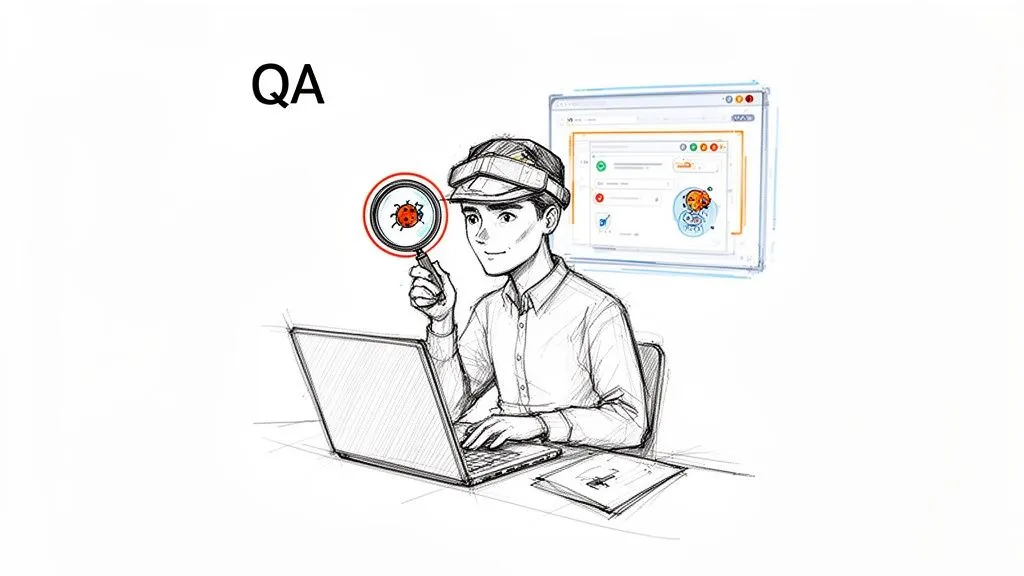
Forget the dry, corporate job descriptions. A Quality Assurance (QA) Tester is the backbone of any successful product launch. They are the critical link between the people building the software and the people who will actually use it, all driven by one profound goal: make sure the thing works.
But this job is so much more than just clicking around to see what breaks. Think of a QA tester as an architect of user trust. Every time you use an app that doesn't crash or a website that loads just right, you have a QA professional to thank. Their work is a meticulous blend of intense curiosity, technical know-how, and a deep empathy for the user’s journey.
Beyond Just Finding Bugs
While spotting defects is a huge part of the job, the role of a quality assurance tester is much bigger. They are deeply woven into the entire Software Development Life Cycle (SDLC), which is just the structured process tech companies use to design, build, and test software. QA acts as a constant feedback loop within that cycle.
This means testers don't just get a finished product dumped on their desk at the end. They're in the trenches with developers and product managers from the very beginning.
Their early involvement includes:
* Reviewing design ideas to spot potential problems before a single line of code is even written.
* Building comprehensive test plans that map out exactly what will be tested, how, and when.
* Creating detailed test cases—basically scripts that outline specific actions to verify every feature.
* Reporting bugs with absolute precision, giving developers clear, reproducible steps to fix them fast.
The impact of this work is massive. The software testing market is expected to rocket from USD 50,672.4 million in 2025 to USD 107,248.0 million by 2032. That explosion highlights just how critical skilled testers are to protecting digital experiences. You can learn more about the growth of the software testing market and its trajectory.
To get a clearer picture, here’s a quick breakdown of what a QA tester is focused on day-to-day.
Core Responsibilities of a QA Tester at a Glance
| Responsibility Area | Core Task | Ultimate Goal |
|---|---|---|
| Test Planning | Develop strategies and test plans based on project requirements. | Ensure comprehensive test coverage and efficient use of resources. |
| Test Case Design | Write detailed, step-by-step test cases for manual and automated testing. | Create clear, repeatable tests that validate specific functionalities. |
| Execution & Bug Reporting | Run tests, identify defects, and log them with precise, reproducible steps. | Provide developers with actionable information to fix bugs quickly. |
| Regression Testing | Re-run existing tests to ensure new code changes haven't broken old features. | Maintain product stability and prevent the reintroduction of old bugs. |
| Collaboration | Work closely with developers, product managers, and designers. | Catch issues early, clarify requirements, and improve the overall process. |
This table shows how a tester's work is a mix of strategy, execution, and communication, all aimed at delivering a flawless product.
In essence, a QA tester ensures that the final product not only meets the technical specs but actually delights the user. They champion quality from the first idea to the final launch, preventing costly mistakes and protecting the company's reputation.
Ultimately, they answer the single most important question for any digital product: "Is this ready for our customers?" By answering that with a confident "yes," they clear the path for successful, reliable, and well-loved technology.
The Essential Skills for a QA Testing Career
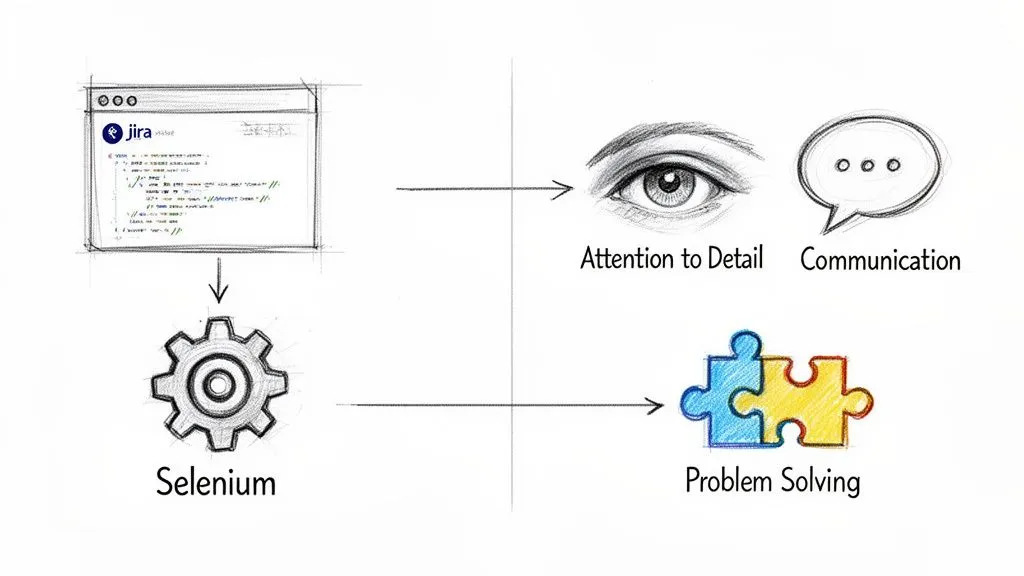
Being a great quality assurance tester isn’t just about having a knack for finding bugs. It’s about building a solid foundation of both technical abilities and people skills. The best testers I've worked with have the precision of an engineer and the relentless curiosity of a detective.
This unique mix is what elevates a QA professional from someone who just points out what's broken to someone who can figure out why it broke. More importantly, they can explain it clearly to the dev team, making the entire product better with every single test cycle.
Let's break down the skills that really define a top-tier tester.
Core Technical Competencies
These are the practical, hands-on tools of the trade a QA tester uses every single day. They provide the structure for methodical testing and efficient bug reporting, forming the absolute bedrock of the role.
Getting these down means you can slot right into a development workflow and start adding value from day one. Some of the most critical technical skills include:
- Test Case Creation: This is the art of writing dead-simple, step-by-step instructions that anyone on the team can follow to check if a feature works. A solid test case is crystal clear, covering not just the happy path (positive testing) but all the weird ways a user might break things (negative testing).
- Bug Tracking Tools: You have to be fluent in software like Jira, Asana, or Bugzilla. It's non-negotiable. This is where you log defects with exact details, assign them to the right developer, and track them all the way to "Done."
- Understanding of Methodologies: Modern tech teams almost universally run on frameworks like Agile or Scrum. QA testers have to understand these fast-paced, iterative processes to contribute effectively in sprints, daily stand-ups, and planning meetings.
These aren't just about following a process; they’re about creating a repeatable, scalable system for making sure the product is solid. Without them, testing quickly devolves into chaos.
Indispensable Soft Skills
While the technical stuff gets you in the door, soft skills are what truly separate a good quality assurance tester from a great one. These abilities dictate how you collaborate, think critically, and ultimately, act as the voice of the end-user.
Think of soft skills as the engine that powers all your technical expertise. They provide the context, empathy, and communication needed to turn a simple bug report into a genuine product improvement.
A tester’s greatest asset is often their perspective. They are trained to think like a user who doesn’t know how the system is supposed to work, which allows them to find flaws that developers, with their insider knowledge, might overlook.
Here are the soft skills that make the biggest difference:
- Attention to Detail: This is the classic QA trait, and for good reason. It’s the ability to spot tiny inconsistencies, typos, or design flaws that everyone else misses. It's the difference between a product that feels polished and professional and one that just feels sloppy.
- Clear Communication: A bug report is completely useless if a developer can't understand or reproduce it. Testers must be able to write concise, accurate, and easy-to-follow reports. Just as important is being able to verbally explain complex issues to team members who might not have a technical background.
- Problem-Solving and Critical Thinking: Finding the bug is only step one. A great tester will dig deeper to understand its root cause, explore its potential impact on other parts of the app, and think ahead to prevent similar issues from ever happening again.
In the end, the best QA pros blend these two skill sets seamlessly. They use their technical knowledge to run the tests and their soft skills to analyze the results, work with the team, and relentlessly champion a better experience for the user.
A Day in the Life of a QA Tester
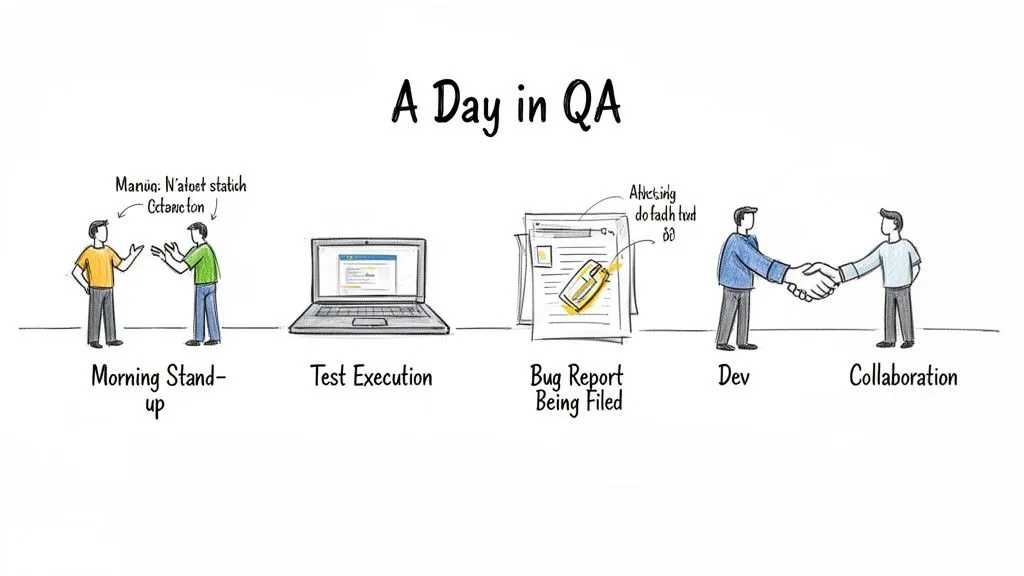
The life of a quality assurance tester is a lot more than just clicking around hoping to break things. It’s a disciplined cycle of discovery, problem-solving, and collaboration. Each day is a new puzzle, demanding a mix of methodical process and a bit of creative chaos to make sure a product is solid.
Your day doesn't usually start with code—it starts with people. Most QA testers kick things off with a daily "stand-up" meeting. It's a quick sync with developers, product managers, and designers where everyone shares what they're working on, flags any blockers, and gets aligned on the day's priorities.
Once that's done, it's time to get to work. You'll likely open up a project management tool like Jira, check your queue, and see what's on the docket. It might be verifying bug fixes from yesterday, testing a brand-new feature, or getting ready for a big release.
Executing the Test Plan
The core of the job is running through test cases. This isn’t random exploration; it's a systematic process guided by a detailed test plan. You follow carefully written steps to make sure every button, form, and user journey works exactly the way it's supposed to.
Take a simple "Add to Cart" button on an e-commerce site. A tester does more than just click it. They're checking:
- Does the item actually show up in the cart?
- Does the cart’s total price update correctly?
- What happens if you try to add an out-of-stock item?
- Can you add more items than are physically in inventory?
This methodical approach is how you cover all the bases. And when a test fails—when you find a bug—your role shifts from validator to detective.
The goal of a bug report is simple: give a developer everything they need to find, understand, and fix the issue without ever having to ask a follow-up question. Clarity and precision are everything.
You document the defect in painstaking detail. Screenshots, clear steps to reproduce the error, and a description of what you expected versus what actually happened. This precision is what helps developers squash bugs fast.
The Balance of Manual and Automated Testing
A lot of the day is hands-on, manual testing, but automation is a huge piece of the puzzle. Testers often run automated scripts, especially for regression testing—the process of making sure new code hasn't accidentally broken something that used to work. These scripts can check hundreds of functions in minutes, freeing you up for more complex, exploratory work.
This balance is key in modern QA. While manual testing still dominates at 82% of daily work, automation is the only way to keep up. Even though only 5% of firms are fully automated, a huge 73% are aiming for a 50:50 balance between manual and automated testing. You can dig into more industry trends with these in-depth software testing statistics.
The day usually wraps up with more collaboration. You might jump on a call with a developer to walk them through a tricky bug, or sit in on a meeting to review designs for an upcoming feature. It’s a constant loop of testing, reporting, and communicating—all focused on one thing: building a better product.
How to Build a Standout QA Tester Resume
Your resume is the first test you have to pass. Long before you speak to a hiring manager, it needs to get past the automated systems and then grab a human’s attention in just a few seconds. For a quality assurance tester, that means showing off your technical chops and a detective’s eye for detail.
A great QA resume does more than just list your duties; it proves your value. Think of it as a strategic document. Its one job is to highlight how you protect product quality, save the company money, and make the user experience better. You have to think like a marketer, and you're the product.
Optimize for ATS and Human Readers
Most companies use Applicant Tracking Systems (ATS) to do the first round of filtering. To make the cut, you have to include the right keywords—usually the specific tools, methods, and skills pulled straight from the job description.
Sprinkle these terms naturally throughout your resume:
- Testing Types: Regression Testing, Smoke Testing, User Acceptance Testing (UAT), Performance Testing
- Methodologies: Agile Methodology, Scrum, Kanban
- Tools: Jira, Selenium, TestRail, Postman, Bugzilla
- Skills: Test Case Design, Bug Triage, Test Plan Creation, SQL Queries
But keywords alone won’t get you hired. Once your resume lands on a recruiter’s desk, it needs to tell a compelling story. This is where you shift from listing tasks to showcasing your impact. For those just starting out, a well-structured document is key; you can find helpful guidance by exploring a strong student resume template with real examples to see how to frame your early experiences effectively.
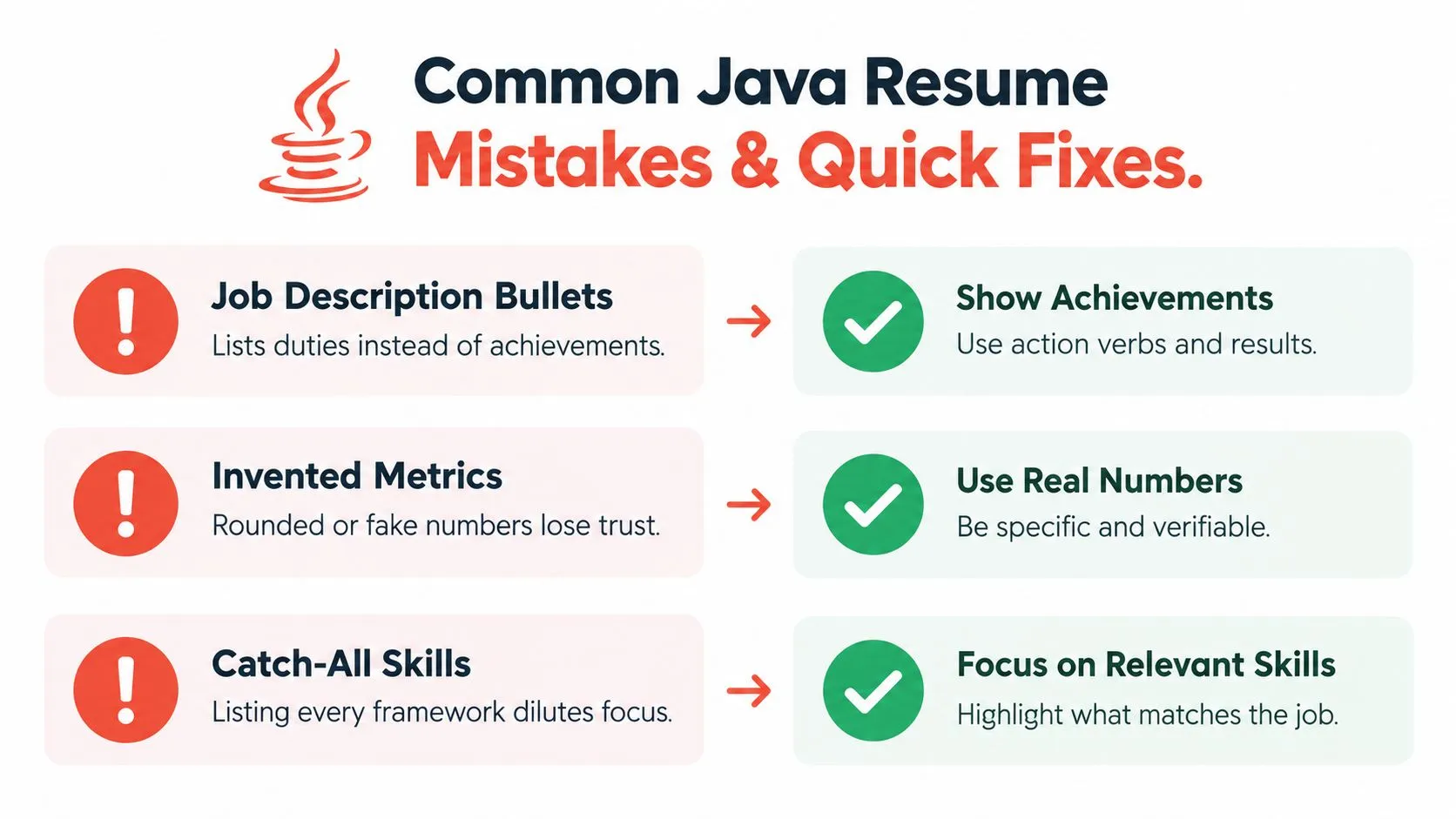
A standout resume transforms responsibilities into achievements. It answers the crucial question: "So what?" Instead of saying what you did, explain why it mattered by using numbers and concrete results.
Frame Your Experience with Impact
Recruiters want to see the results of your work. Did you slash the number of bugs? Speed up testing cycles? Make the product more stable? Quantify your accomplishments whenever you can to make them feel real and impressive. This simple shift turns a passive description of your job into an active demonstration of your skills.
Think about the difference. A generic bullet point might say, "Responsible for finding and reporting bugs." It's true, but it's also forgettable.
Now, let’s reframe that with some punch. "Identified and documented 150+ critical bugs pre-launch, preventing potential revenue loss and improving user satisfaction ratings by 15%." See? This version is powerful because it connects your actions to real business outcomes.
It's a small change in mindset, but it makes a huge difference. You're not just listing chores; you're proving you can deliver value.
From Duty to Impact: Transforming Your Resume Bullets
Here’s a look at how you can transform your own resume bullets from simple duties into powerful, hard-to-ignore achievements.
| Generic Duty (Before) | Impact-Oriented Achievement (After) |
|---|---|
| Wrote and ran test cases. | Developed and executed over 500 detailed test cases for a new payment feature, achieving 98% test coverage and ensuring a bug-free launch. |
| Performed regression testing. | Implemented a streamlined regression testing suite that reduced testing time by 30% per release cycle, allowing for faster product iterations. |
| Worked in an Agile team. | Collaborated within an Agile/Scrum environment, contributing to a 20% reduction in critical defects found in production by identifying issues early in the sprint. |
| Documented bugs in Jira. | Authored highly detailed bug reports in Jira with reproducible steps and logs, leading to a 40% faster bug resolution time by the development team. |
By adopting this achievement-first approach, your resume will clearly communicate your value as a quality assurance tester. It’ll stop being a boring list and start being a story of your impact.
Navigating Your QA Career Path and Salary
A career as a quality assurance tester isn’t a dead-end job; it's a journey with clear stages of growth. Each step up the ladder brings new duties, deeper technical challenges, and, of course, a bigger paycheck. Think of it less like a single role and more like a craft you hone over time.
Most people start out as a QA Analyst or Junior QA Tester. At this entry-level stage, your world revolves around execution. You'll run pre-written test cases, meticulously document bugs you find, and get a feel for the team's workflow. Your main goal is to become incredibly reliable and develop a sharp eye for detail.
From Junior Analyst to Senior Engineer
After you've put in the time and proven your skills, you'll likely move into a mid-level or Senior QA Tester role. This is where things get more interesting. Your responsibilities expand from just running tests to actually designing them.
You’ll start creating comprehensive test plans from scratch, mentoring the junior testers who are just starting out, and taking ownership of the quality for entire features or product areas. This is where your problem-solving skills really start to shine.
The next big jump is often to a QA Lead or QA Manager. In this position, your focus shifts from hands-on testing to strategy and leadership. You'll manage the testing team, set the quality standards for the entire organization, and make key decisions about which tools and processes to use. Your success is no longer measured by the bugs you find, but by the overall quality of the product and the efficiency of your team.
This infographic breaks down the core pillars of a standout resume that will help you climb that ladder.
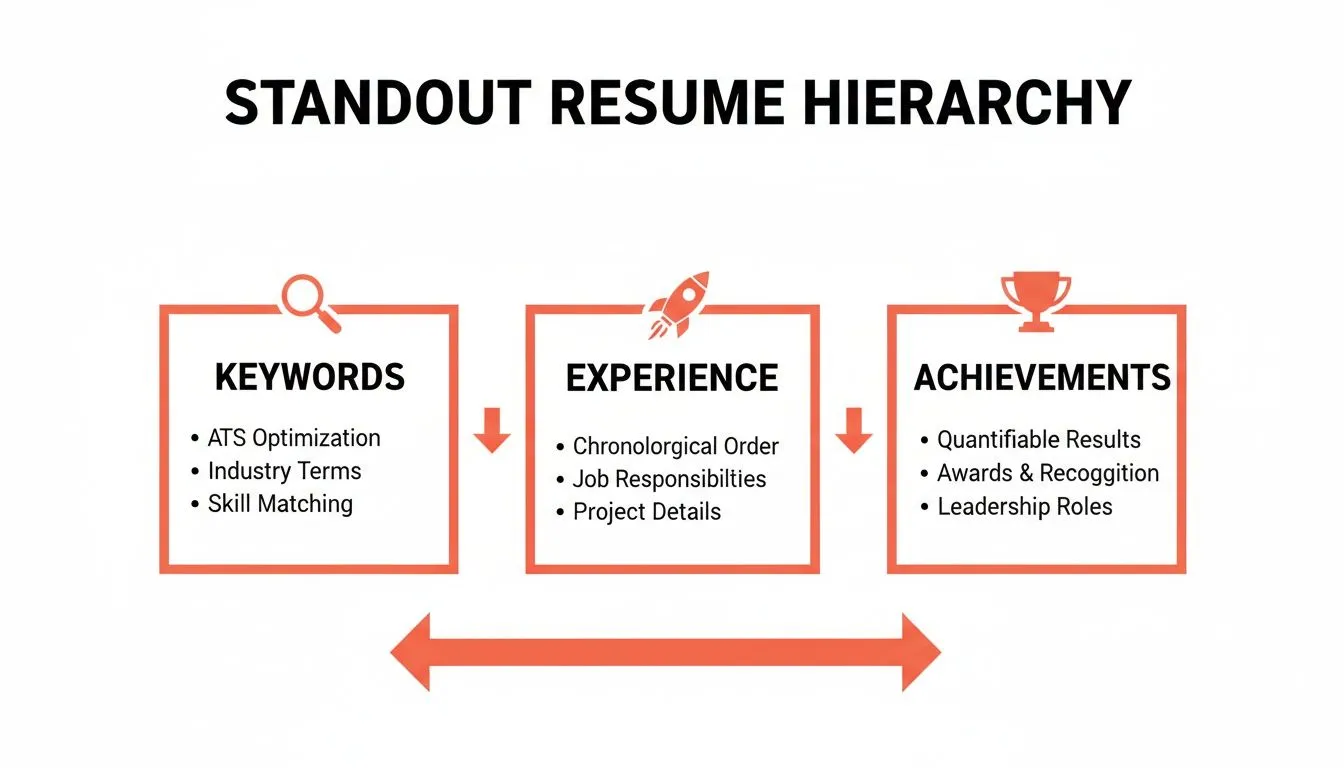
As you can see, a powerful resume is built on a foundation of the right keywords, supported by concrete experience, and topped off with measurable achievements.
Specialization and Salary Growth
Beyond the traditional management path, many testers choose to specialize. Roles like Automation Engineer, Performance Tester, or Security Tester require deep technical expertise and, as a result, command much higher salaries. Automation, in particular, is a total game-changer for your career and earning potential.
The biggest salary jumps in QA almost always come from mastering a high-demand, technical niche. Specializing in areas like test automation or performance engineering directly translates to higher value and, you guessed it, higher pay.
The automation market is on track to hit $29.29 billion by 2025, with overall job growth for software developers and testers expected to jump 22% through 2030. The numbers don't lie. The future of QA is technical, and mastering automation is your fastest ticket to a six-figure salary. You can see more details on software testing market growth and job trends to get a sense of the opportunities waiting for you.
To frame these specialized skills effectively, it helps to understand what a resume writer focuses on when building a compelling career story.
Common Questions About a QA Tester Career
Thinking about a new career always brings up a ton of questions. If you're eyeing a role as a quality assurance tester, you want to know what the job is really like before you dive in. Let's tackle some of the biggest questions people have when they're looking at a future in software testing.
What Qualifications Do I Need?
There's no single, locked-in path to becoming a QA tester, and that's what makes the field so accessible. A computer science degree definitely helps, but it's not a deal-breaker. Plenty of amazing testers come from totally different backgrounds—and that diversity of thought is a huge asset.
What really counts are the foundational skills. You need a sharp analytical mind, an almost obsessive eye for detail, and the ability to communicate clearly. These are non-negotiable. Getting a certification like the ISTQB (International Software Testing Qualifications Board) can also give your resume a serious edge and provide a solid framework for your knowledge.
The most important qualification is a mindset. A great QA tester is driven by a deep-seated curiosity to figure out how things work—and more importantly, how they break.
Can I Get a Job Without Experience?
Breaking into tech without direct experience feels like a classic catch-22, but it's absolutely doable in QA. The trick is to stop waiting for permission and start building practical skills. You need a portfolio that shows what you can do, even if you’ve never had the official title.
Here are a few ways to get that real-world experience:
* Contribute to open-source projects: Find a project you care about and just start testing it. Finding and documenting bugs for their dev team is real-world experience.
* Join bug bounties: Platforms like Bugcrowd or HackerOne let you find and report bugs for actual companies. It's a great way to prove your skills.
* Create your own projects: Spin up a simple website or app and then build a full test plan for it. Document every test case and finding, just like you would on the job.
These actions prove you have the drive and the skills to get things done. As you build your resume, make sure it’s formatted to beat the automated screeners. Learning about the ATS filter 90/10 rule will give you a much better shot at getting seen.
QA vs. Quality Control: What Is the Difference?
People throw these terms around interchangeably, but Quality Assurance (QA) and Quality Control (QC) are not the same thing.
Here’s the simplest way to think about it: QA is proactive, QC is reactive.
Quality Assurance is all about the process. It's about setting up systems and standards to prevent bugs from happening in the first place. Think of it as building quality into the project from day one.
Quality Control, on the other hand, is about the product. Its job is to find defects in the software before it ships. As a quality assurance tester, you'll be performing QC tasks, but your role is a critical piece of the bigger QA strategy.
How Stressful Is a QA Career?
Like any job in tech, a QA career has its moments. Deadlines are real, especially in the final push before a big launch. The pressure can build. A lot of the stress level comes down to the company culture and how well the development process is managed.
But it's also an incredibly satisfying role. There's a huge rush that comes from catching a critical bug that could have tanked a launch. You get to know that your work directly made the product better for thousands, or even millions, of users. A well-organized team that communicates openly makes the job feel less like a stressful race and more like solving a complex, rewarding puzzle.
Ready to build a resume that tells your unique story? StoryCV uses AI to help you frame your skills and achievements with impact, moving beyond generic templates. Create a compelling, professional-quality resume in minutes and land the interviews you deserve. Try it for free at https://story.cv.