Dismissing your cashier experience is a mistake.
You write bullet points that are true, but strategically worthless.
- 'Rang customers up.'
- 'Kept the store clean.'
- 'Welcomed guests when they came in.'
These are tasks, not accomplishments. They hide the real skills: financial operations, team leadership, brand consistency, and operational efficiency.
Your past work is valuable. You just need to translate it.
We're StoryCV, a Digital Resume Writer. We don't do templates. We help you find the language of impact. Here's a real example from a user who transformed their cashier experience with us.
| Role | Before | After |
|---|---|---|
| Cashier | • Rang customers up in a timely and respectful manner. | • Executed regional financial operations including vault management, lottery sales, and store audits as an ERP clerk to ensure transaction accuracy. |
| • Kept the store maintained and cleaned while also being customer friendly. | • Directed store maintenance and team productivity to uphold cleanliness standards and operational efficiency during high-traffic shifts. | |
| • Would say welcome in every time a new guest would come in and have a specific uniform as well to look professional. | • Upheld brand standards by consistently adhering to uniform requirements and greeting every customer with professional welcoming protocols. |
See the difference? It’s not about inflating your past. It's about articulating the real value you delivered. Your cashier experience holds skills that transfer to senior roles.
This article breaks down the core cashier job responsibilities for a resume. It shows you how to frame them as the business skills they truly are.
1. Processing Transactions Accurately and Efficiently
This is the foundation. It’s not just about taking money. It's about being the final checkpoint for the business's daily revenue.
Handling cash, cards, and digital payments with speed and precision is a critical cashier job responsibility for a resume. It shows an employer you can be trusted with their money.
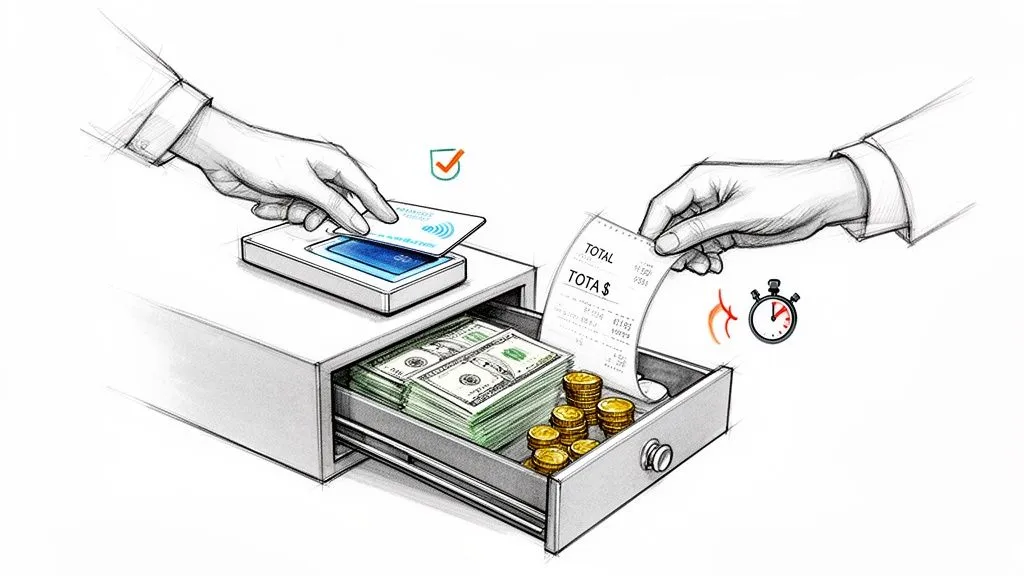
Errors lead to frustrated customers and financial loss. Efficiency keeps lines moving and operations smooth.
Why It Matters
This proves your reliability. Can you manage a cash drawer without errors? Can you operate the POS system during a rush? A "yes" makes you a valuable asset. It proves your attention to detail and ability to handle financial responsibility under pressure.
Resume Examples: From Vague to Valuable
"Handled transactions" gets ignored. Show impact with numbers.
- Before: Rang customers up.
-
After: Processed an average of 200+ daily transactions across cash, card, and mobile payment platforms with a 99.8% accuracy rate.
-
Before: Managed a cash register.
-
After: Balanced a $5,000+ cash drawer daily with zero discrepancies over an 18-month tenure.
-
Before: Knew how to use the register.
- After: Mastered Square, Toast, and legacy POS systems, cutting average transaction time by 12% during peak hours.
Key Takeaway: Recruiters look for trust and competence. Quantify your accuracy, transaction volume, or the cash amount you managed. Naming specific POS systems (Shopify, Square) helps your resume pass automated screening software (ATS).
2. Providing Exceptional Customer Service and Handling Complaints
A cashier is often the last person a customer sees. That final impression is critical. This responsibility is about creating a positive experience that builds loyalty. It involves answering questions, resolving issues, and showing empathy.
This is a top cashier job responsibility for a resume because it demonstrates emotional intelligence and problem-solving skills.
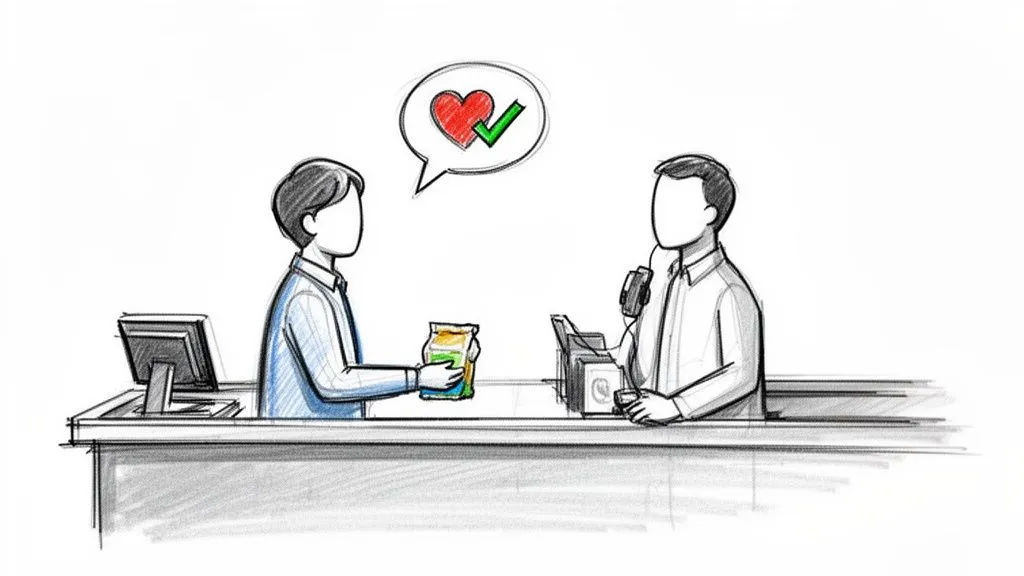
A positive checkout can turn a one-time shopper into a regular. A poorly handled complaint can lose a customer forever. Highlighting this ability shows you get the business impact.
Why It Matters
This is where you prove you are a brand ambassador, not just an operator. Handling a pricing dispute gracefully shows you can protect the company's reputation and retain customers, even when things go wrong. Knowing how to approach handling difficult conversations shows a maturity that managers value.
Resume Examples: From Vague to Valuable
"Provided good service" is meaningless. Prove it with metrics.
- Before: Helped customers with problems.
-
After: Resolved 95% of customer complaints on first contact, reducing escalations to management by 40%.
-
Before: Was friendly to customers.
-
After: Maintained a 4.8/5.0 customer satisfaction rating across 500+ monthly interactions.
-
Before: Dealt with angry people.
- After: De-escalated 10+ high-tension situations monthly involving pricing disputes without needing management intervention.
Key Takeaway: Hiring managers want proof of your interpersonal skills. Quantify your success with resolution rates or satisfaction scores. For more ideas, review these resume bullet points for customer service.
3. Maintaining a Clean, Organized, and Safe Checkout Area
This is about ownership, not just tidiness. A well-maintained checkout area shows conscientiousness and initiative. It's an overlooked but impactful cashier job responsibility for a resume.
A clean station prevents accidents, reduces merchandise loss, and makes a good final impression. It shows you see how small details contribute to the big picture.
Why It Matters
This reveals your proactive mindset. Do you just perform tasks, or do you take ownership of your environment? Showing you contribute to safety and efficiency proves you’re a responsible employee. It means you prevent problems before they start.
Resume Examples: From Vague to Valuable
"Kept area clean" is forgettable. Translate it into business contributions.
- Before: Kept the store maintained and cleaned.
-
After: Directed store maintenance and team productivity to uphold 100% of company cleanliness standards during all health inspections.
-
Before: Organized supplies.
-
After: Reorganized the front-end supply system, cutting restocking time by 20 minutes daily for a team of 15 cashiers.
-
Before: Watched out for problems.
- After: Reduced shrinkage in the assigned checkout zone by 8% over one quarter through vigilant monitoring and immediate reporting of discrepancies.
Key Takeaway: Frame this responsibility in terms of process improvement, safety, and efficiency. Quantify your impact with metrics like incident reduction or time saved. Connecting your actions to goals like loss prevention shows strategic understanding.
4. Operating Point-of-Sale (POS) Systems and Technology
Tech proficiency is no longer a bonus. It’s a core cashier job responsibility for a resume. Modern roles demand skill with digital POS systems, inventory software, and payment processors. This shows employers you are technically competent and adaptable.
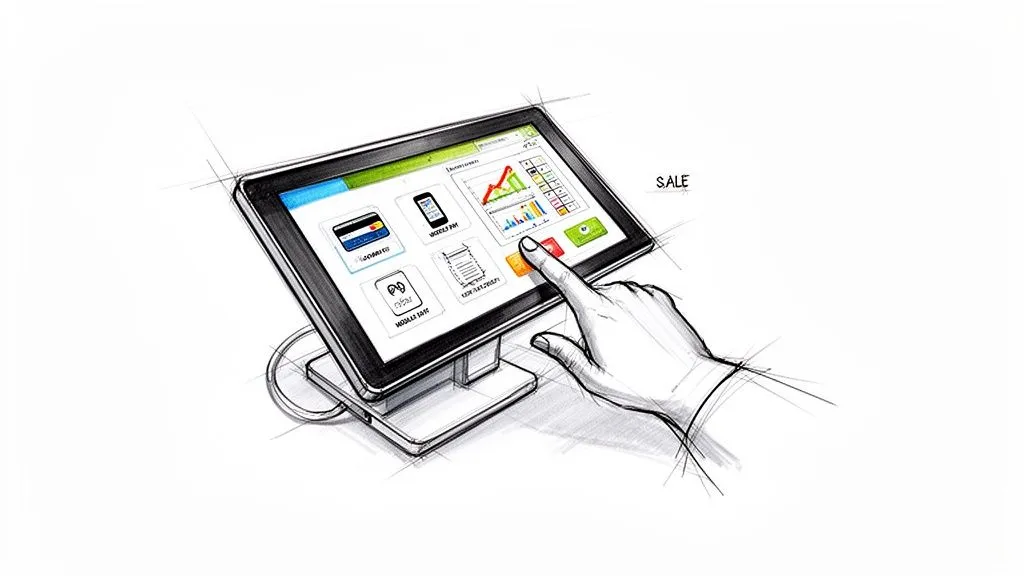
This extends beyond tapping a screen. It involves troubleshooting, understanding how sales data connects to inventory, and training others. It signals that you are a tech-savvy contributor to operational efficiency.
Why It Matters
Technical skill proves you can adapt and learn. Businesses constantly update their systems. An employee who masters new tech quickly is an asset. It proves you can move beyond basic duties and engage with the business's operational backbone.
Resume Examples: From Vague to Valuable
"Used a POS system" isn't enough. Show how your tech skills created value.
- Before: Used different registers.
-
After: Mastered Shopify, Toast, and legacy NCR systems, averaging 3 hours to full productivity on new platforms.
-
Before: Trained new hires on the register.
-
After: Trained 12 new cashiers on POS operations, cutting average onboarding time from 8 hours to 4 hours.
-
Before: Noticed a bug in the system.
- After: Identified and reported a recurring POS glitch; my collaboration with IT led to a patch that improved system reliability by 15%.
Key Takeaway: Name the specific POS systems you've mastered (Square, Lightspeed, Clover). This helps your resume pass ATS filters. Connect your tech skills to business results like improved efficiency or better training.
5. Meeting Sales Targets and Promoting Add-On Sales
This cashier responsibility moves you from passive processor to active revenue generator. It involves suggestive selling, upselling, and promoting loyalty programs. Mastering this shows business acumen and persuasive communication skills.
This skill demonstrates that you add value beyond the basic requirements. For employers, a cashier who can increase the average transaction value is a significant asset.
Why It Matters
Excelling here proves you are a proactive team member invested in the business's success. It showcases your ability to connect with customers and make relevant recommendations. This skill is highly transferable to roles in sales, business development, and customer success.
Resume Examples: From Vague to Valuable
"Upsold products" is weak. Quantify your contributions to show clear impact.
- Before: Suggested items to customers.
-
After: Increased average transaction value by $3.50 through relevant product recommendations, contributing over $18,000 in additional annual revenue.
-
Before: Signed people up for the rewards card.
-
After: Maintained a 70%+ loyalty program enrollment rate, ranking #1 on the team and exceeding the store average by 15%.
-
Before: Told customers about specials.
- After: Promoted seasonal upsells, achieving a 40% attachment rate on targeted products against a 25% store average.
Key Takeaway: Focus on the outcome of your sales efforts. Use percentages, dollar amounts, and rankings to prove your effectiveness. Highlighting these numbers makes you stand out as a results-driven candidate.
6. Training and Mentoring New Team Members
Going beyond your core duties to train others is a powerful signal of leadership potential. It shows an employer you can multiply your skills across the team. It highlights your communication abilities and patience, making it a key cashier job responsibility for a resume aimed at career growth.
Taking on training duties demonstrates that you are a trusted employee chosen to uphold company standards. It's a stepping stone from being a doer to being a leader.
Why It Matters
This skill proves you have qualities for supervisory roles. When you train a new team member, you are directly responsible for their performance. Success here shows you can build a stronger team, which is a critical concern for any manager. It suggests you're ready for more responsibility.
Resume Examples: From Vague to Valuable
"Trained new hires" is forgettable. Show the results of your training.
- Before: Helped new people learn the job.
-
After: Trained 15+ new cashiers over two years, achieving a 100% team retention rate after the 90-day probationary period.
-
Before: Made a training guide.
-
After: Developed a standardized visual training checklist that cut new cashier ramp-up time from 8 to 5 hours and improved the first-week error rate by 30%.
-
Before: Showed others how to do things.
- After: Mentored 3 junior cashiers who were promoted to Shift Supervisor roles within 18 months by coaching them on advanced POS functions.
Key Takeaway: Focus on the tangible outcomes. Quantify the number of people trained, their retention rates, or efficiency gains. Mentioning any training materials you created shows initiative.
7. Managing Cash Handling and Reconciliation Procedures
This moves beyond basic transactions into financial oversight. It covers end-of-day reconciliation, securing cash deposits, and ensuring every penny is accounted for. Highlighting this on a resume demonstrates trustworthiness and attention to detail. These are critical cashier job responsibilities for any role with financial accountability.
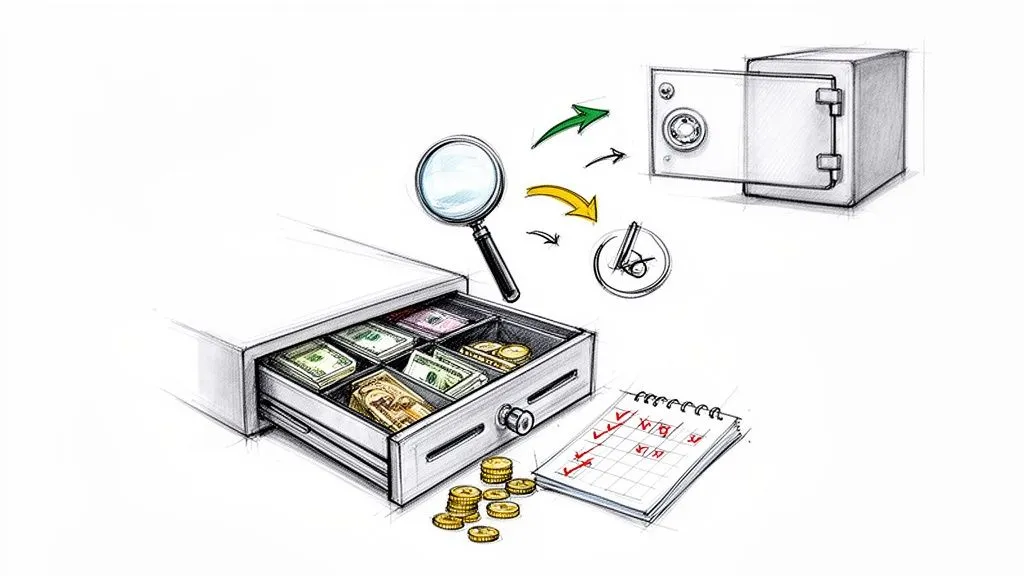
Mastering this skill proves you can operate with autonomy and protect the business’s assets.
Why It Matters
This responsibility is a direct reflection of your integrity. Can you balance a drawer flawlessly at the end of a chaotic shift? An affirmative answer positions you as a candidate ready for more responsibility, like a key holder or shift lead. It’s about risk management at a micro-level.
Resume Examples: From Vague to Valuable
"Balanced my drawer" is easily overlooked. Prove your value with data.
- Before: Handled daily closing procedures.
-
After: Maintained perfect cash reconciliation for 18 consecutive months, successfully balancing over 650 daily reports with zero discrepancies.
-
Before: Was trusted with the cash drawer.
-
After: Managed a cash drawer averaging $5,000+ daily with consistent accuracy and was entrusted with closing authority on 80% of shifts.
-
Before: Fixed register mistakes.
- After: Identified a systematic register discrepancy that led to the discovery of employee theft, preventing over $12,000 in potential annual losses.
Key Takeaway: Focus on consistency, the scale of your responsibility, and any problems you solved. Quantify the cash amount, the duration of your accuracy, or the financial impact of your vigilance.
8. Adapting to High-Volume Periods and Managing Stress
Any cashier can handle a slow afternoon. The real test is a Black Friday stampede. This is where you prove your mettle. This cashier job responsibility for a resume shows an employer you possess resilience and can maintain high standards under pressure. It’s a direct indicator of your ability to thrive in a fast-paced environment.
This skill isn't just about survival; it's about maintaining operational excellence. Your composure impacts customer experience, team morale, and transaction accuracy during critical periods.
Why It Matters
Hiring managers look for candidates who don't crumble under pressure. Demonstrating your ability to stay calm and focused during chaos is a powerful, transferable skill. It signals that you are reliable and can be counted on when it matters most.
Resume Examples: From Vague to Valuable
"Worked during busy times" is forgettable. Quantify the chaos.
- Before: Worked during the holiday season.
-
After: Maintained 99.5% transaction accuracy during Black Friday, processing over 400 transactions (vs. 150 daily average) while managing a 10-person queue.
-
Before: Was fast at the register.
-
After: Ranked in the top 3 for transaction speed (2.2 minutes per customer) during peak hours without sacrificing accuracy.
-
Before: Handled rushes well.
- After: Volunteered for express lane duty during staffing shortages, helping cut customer wait times by 30% during critical periods.
Key Takeaway: Don't just mention the stressful situation; prove you excelled in it. Use specific events like "Black Friday" and contrast your performance against normal operations. Metrics like accuracy rates or transaction volume provide hard evidence.
Stop Listing Duties. Start Telling Your Story.
You have the tools. Now apply them.
The gap between a resume that gets tossed and one that lands an interview isn't your experience. It's how you tell its story.
Your cashier role was a masterclass in front-line business operations. You handled financial transactions, de-escalated customer issues, and kept a complex system running smoothly during peak hours. You were the face of the brand and the first line of defense in loss prevention.
Standard resume advice flattens this rich experience into a bland list of duties. Don't do that.
The shift: A resume isn't a log of tasks. It's an argument for your future value, with evidence from your past. The "cashier job responsibilities for resume" you choose are your evidence.
This is about moving from "what I did" to "what I achieved." Most people get stuck here. They know they did good work, but they struggle to articulate why it mattered.
Look at this transformation again. It’s a change in perspective.
| Role | Before (The "What") | After (The "How" and "Why") |
|---|---|---|
| Cashier | • Rang customers up in a timely and respectful manner. | • Executed regional financial operations including vault management, lottery sales, and store audits as an ERP clerk to ensure transaction accuracy. |
| • Kept the store maintained and cleaned while also being customer friendly. | • Directed store maintenance and team productivity to uphold cleanliness standards and operational efficiency during high-traffic shifts. | |
| • Would say welcome in every time a new guest would come in and have a specific uniform as well to look professional. | • Upheld brand standards by consistently adhering to uniform requirements and greeting every customer with professional welcoming protocols. |
The "Before" column is a list of duties. The "After" column tells a story of competence, responsibility, and operational ownership. One says "I was present." The other says "I delivered results."
Stop thinking like an employee. Start thinking like a problem-solver. For every task you performed, ask:
- What was the goal? (e.g., to reduce checkout times)
- What was the result? (e.g., served 15% more customers per hour)
- What skills did it require? (e.g., POS proficiency, stress management)
Answering these questions stops you from listing generic cashier job responsibilities for a resume. You start building a compelling narrative that proves your value. You're not just a former cashier. You're a professional with documented experience in financial management, customer relations, and operational excellence.
Own that story.
Tired of trying to fit your career into a template? StoryCV is a Digital Resume Writer that helps you uncover and articulate the real impact of your work through a guided conversation. Stop listing duties and start telling your story. Get your powerful resume at StoryCV.