You open your resume, land on your latest role, and immediately start typing the usual sludge.
Managed cross-functional projects. Collaborated with stakeholders. Drove strategic initiatives.
It's all technically true. It's also dead on arrival.
The problem usually isn't your experience. It's the question you started with. Many individuals begin with, “What was my most recent role?” That pushes them straight into job-description mode. The better question is softer, which is exactly why people avoid it.
What work are you proud of?
That question sounds indulgent. It isn't. It's practical. It gets you out of duties and into decisions, tradeoffs, judgment, and outcomes. If your resume feels flat, stop tweaking wording and start there.
Your Resume Feels Flat Because You're Asking the Wrong Question
A resume goes bland when you treat it like an inventory. Title, dates, duties, tools. That's how you end up with bullets that could belong to half your department.
“What's your most recent role?” is a weak prompt because it anchors you to the official version of your job. The official version is almost never the interesting part. It tells people what was supposed to happen, not what you fixed, prevented, improved, or carried when things got messy.
The serious-sounding approach is the one failing you
People skip the proud of work question because it sounds soft. The resume feels like a serious document, so they reach for serious language. They copy responsibilities, list systems, and hope polish will create substance.
It won't.
Practical rule: If a bullet could describe five other people with your title, it's not saying enough.
The question “What am I proud of?” works because it pulls you toward actual work. It makes you remember the thing that was difficult, specific, and yours. That's where strong bullets come from. Not from formatting. Not from synonyms for “managed.”
Pride points to relevance
The work you're proud of usually reveals three things fast:
- What was hard: Not busy. Hard.
- What changed because of you: The before and after.
- What kind of operator you are: Builder, fixer, coach, stabilizer, closer.
That's the material a hiring manager can feel. It reads like a person wrote it.
Job Descriptions Create Boring Resumes
Conventional resume advice tells you to start with your latest role and list your responsibilities. That advice is why so many resumes sound like internal HR paperwork.
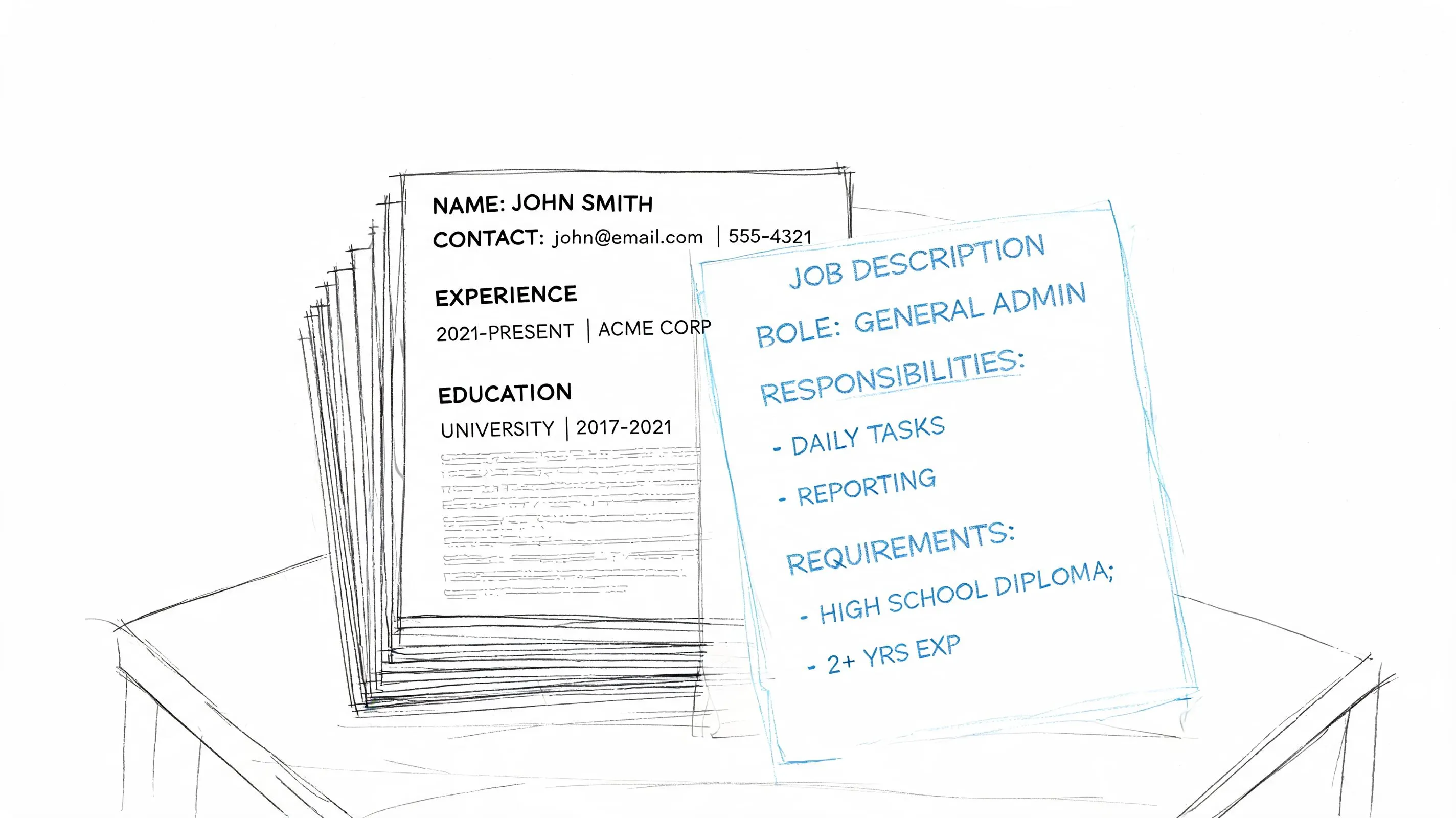
A job description captures scope on paper. It does not capture judgment. It doesn't show what broke, what you noticed before others did, or where you carried more than your title suggested.
That's why “biggest achievement” and “proud of work” are not the same question.
Achievement is visible. Pride is personal
Say you led a launch. Fine. That's an obvious bullet. It's visible, legitimate, and easy to explain.
But the thing you're proud of might be coaching a struggling teammate into a promotion two years ago. That story often reveals more about you than the launch does. It shows leadership, patience, standards, and the ability to improve performance without drama.
Here's the difference:
| Prompt | What it usually gives you |
|---|---|
| Biggest achievement | The headline everyone recognizes |
| Most recent role | The duty list you inherited |
| Proud of work | The work you know was hard and mattered |
The proud story isn't always the bullet that makes the final cut. That's not the point. The point is that starting there changes how you write everything else, including the launch.
Instead of “Led product launch across cross-functional teams,” you start asking better questions. What risk did you remove? What resistance did you manage? What did you simplify? Who did you align?
There's another reason this matters. Gallup reported that only about one in three U.S. workers strongly agree they received recognition or praise for doing good work, which means plenty of meaningful contributions were never formally acknowledged in the first place. If you don't articulate them yourself, they stay invisible in your resume too. See Gallup's employee recognition findings.
The work nobody praised can still be the work that mattered most.
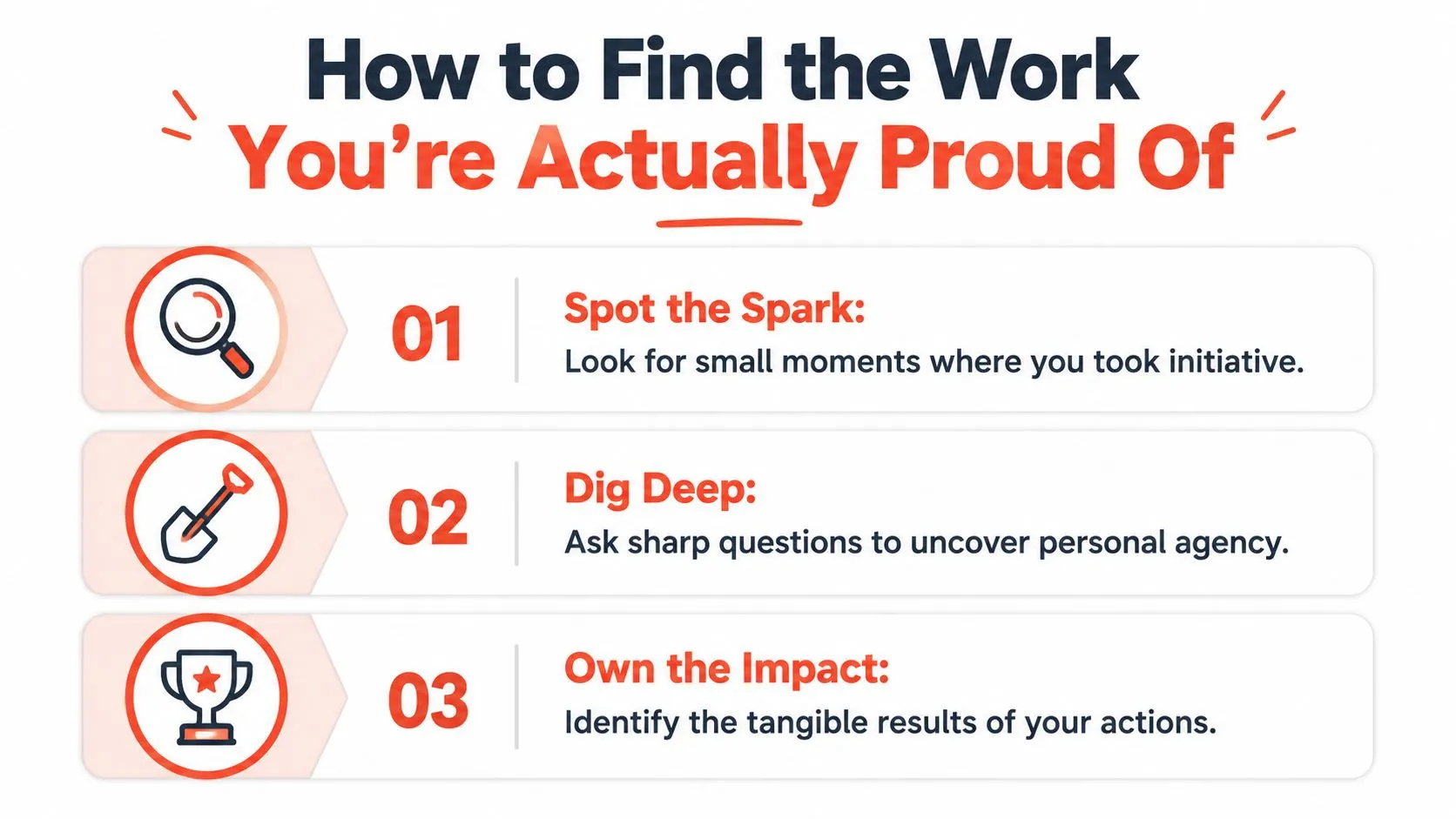
How to Find the Work You're Actually Proud Of
If “What am I proud of?” feels too broad, make it smaller. You're not trying to produce a noble life statement. You're trying to surface real career material.
This is worth doing. A 2024 APA Work in America survey found that 93% of employed adults said they were proud of the work they do, and 86% said their work has a positive impact on society. Pride isn't fluff. It's a mainstream way people understand meaningful contribution.
Ask sharper questions
Use prompts that force memory, not abstraction:
- What did you fix that other people had learned to live with?
- Where did you step in before a problem got expensive or public?
- Who got better because you coached, trained, or backed them?
- What did you stop, kill, or delay because it wasn't ready?
- When did you say something unpopular that turned out to be right?
- What piece of chaos got calmer because you took ownership?
These questions work because they bypass performative achievements. They get to agency.
Look for energy, not prestige
A useful signal is emotional residue. Which story still has texture when you tell it? Which one makes you think, “That was a mess, but I handled it well”? Start there.
If you need help with that reflection before you write a single bullet, this guide on career reflection before resume writing is a good place to slow down and think properly.
You're not hunting for the flashiest win. You're hunting for the clearest proof of how you work.
Write down three stories. Not bullets. Stories. Then mine them.
Turn Pride Into Proof with Context Action Impact
Pride is a starting signal, not a resume bullet. To make it useful, you need structure.
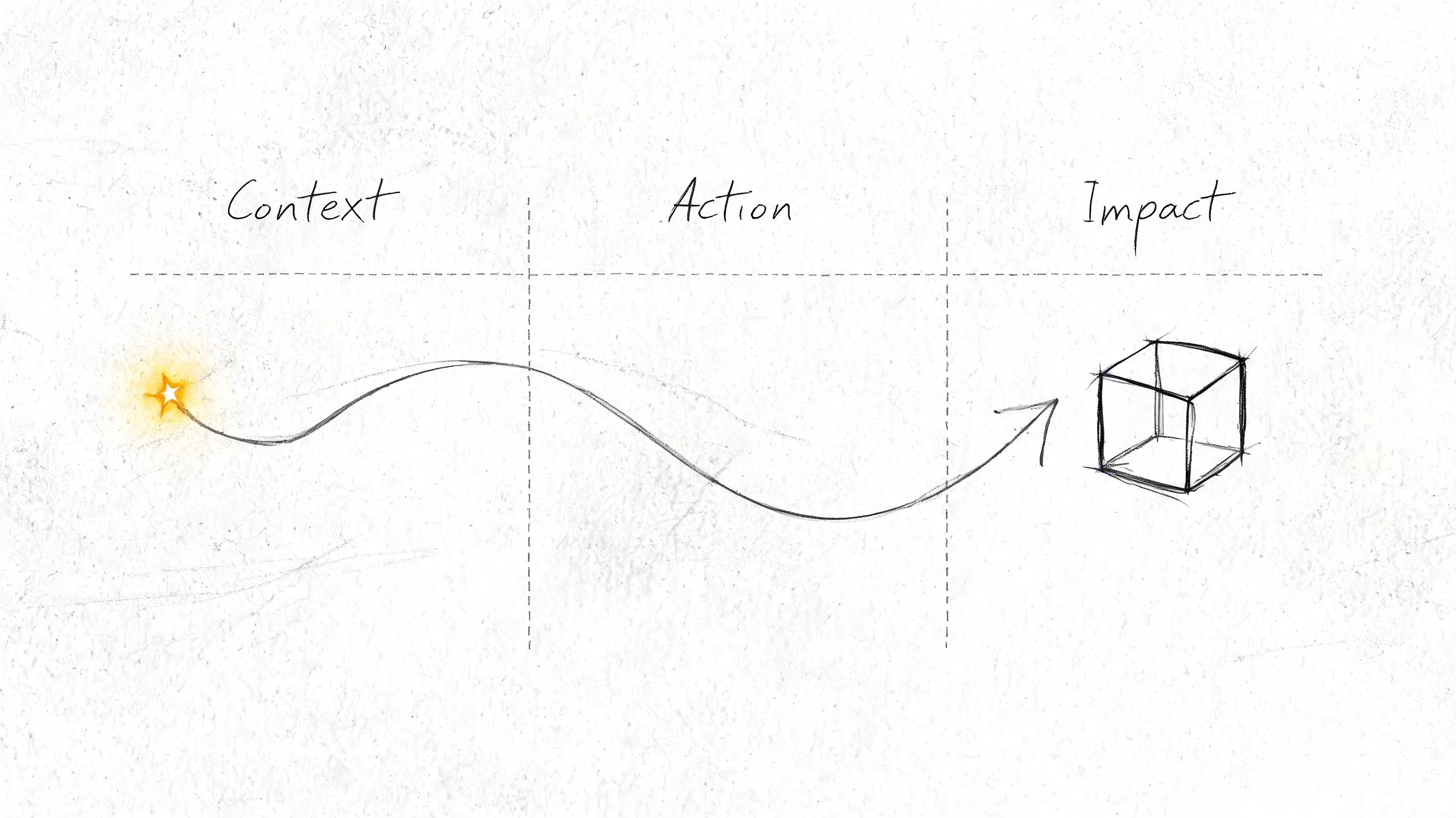
I like Context, Action, Impact because it's simple and hard to fake.
The CAI logic
-
Context
What was going on? What was broken, risky, unclear, behind, or politically messy? -
Action
What did you specifically do? Not “supported.” Not “helped.” What did you decide, change, build, challenge, organize, or unblock? -
Impact
What changed after that? Better process, stronger team, cleaner handoff, lower risk, faster delivery, fewer escalations, clearer ownership.
This matters well beyond degree-based career paths. Opportunity@Work notes that more than 70 million U.S. workers are Skilled Through Alternative Routes, and one of the core challenges is translating experience into accomplishments employers trust. CAI helps because it turns “I'm proud of this” into evidence.
A concrete rewrite
Start with the vague version:
- Managed team morale during a reorganization
That's not a bullet. That's a topic.
Now apply CAI:
- Context: Team was unsettled during a reorg, roles were unclear, and performance was slipping.
- Action: Reset priorities, clarified responsibilities, held regular one-on-ones, and coached a struggling team member into stronger ownership.
- Impact: Team stabilized, work quality improved, and one direct report grew into promotion-ready performance.
Now you've got something usable:
- Guided a team through a reorganization by resetting priorities, clarifying role ownership, and coaching a struggling direct report into promotion-ready performance, helping restore stability and execution during a high-uncertainty period.
That's not inflated. It's specific.
If you want help tightening these into stronger bullets, this piece on how to write impact statements is useful.
A short walkthrough helps here too:
Proud Work Examples for Different Careers
Theory is cheap. Here's what this looks like in practice.
Mid-level operator
Before
Managed software deployments across internal systems.
After
Redesigned a fragile manual deployment process into a repeatable rollout workflow, reducing last-minute coordination and giving the team a safer path for shipping routine updates.
Why it works: this came from pride in fixing a risky process, not from listing a duty.
Senior manager
Before
Oversaw a team through organizational change.
After
Kept a team functioning through a reorganization by redefining roles, setting clearer decision boundaries, and coaching managers through uncertainty so work quality didn't collapse when structure did.
Why it works: it shows leadership under pressure, not just headcount.
Career changer
Before
Organized community events.
After
Coordinated multi-stakeholder community events with shifting priorities, volunteer constraints, and tight timelines, building project management experience in planning, communication, and on-the-ground execution.
Why it works: it translates the work into business language without lying about it.
Technical lead
Before
Led product launch.
After
De-risked a product launch by surfacing hidden dependencies early, tightening cross-functional handoffs, and pushing for scope decisions before execution drift turned into delay.
Why it works: the launch is still there, but now it contains judgment.
Using These Stories with StoryCV
You sit down to write your resume and your brain serves up garbage first. Job titles. Duties. Generic project names. None of that helps.
StoryCV works best when you bring the parts of your work that still bother you, satisfy you, or make you say, “yeah, I fixed that.” If you need a second reference point, this guide to building an accomplishment-focused resume pushes in the same direction.
Start with four kinds of stories.
- The messy one: a problem you cleaned up after everyone else worked around it.
- The overlooked one: work that mattered even if nobody praised it.
- The judgment call: a decision where you changed direction, pushed back, or prevented a bad call.
- The people story: a moment where your influence made someone else better, steadier, or more effective.
Feed those into StoryCV's guided resume interview, and the tool can do its actual job. It asks for context, action, and outcome, then turns that into usable draft language. If you paste in a duty list, you get polished wallpaper. If you bring real examples, you get material that sounds credible.
Your job is to remember the work you respect. The software helps you write it clearly.
Your Work Is a Story Not a List
A flat resume usually means you wrote down your role and skipped your reality.
The work you're proud of is often the work where your standards showed up. That matters. Gallup has found that the most engaged teams outperform the least engaged on profitability by 23% in its summary of employee engagement findings at Gallup Workplace. The same ingredients show up in strong careers too. Clarity. Recognition. Meaningful contribution.
If you want another practical take on building an accomplishment-focused resume, that guide is worth a read.
Your resume shouldn't read like a filing cabinet. It should read like someone who did work worth trusting.
If you want help turning those proud-of-work stories into sharp, credible resume bullets, try StoryCV. Bring the messy reality, not the polished duty list. That's the material that makes a resume sound like you.