
The worst advice about startup experience on resume is also the most common: just show your range.
That sounds right inside a startup. It fails the second a corporate recruiter reads it.
At the startup, your resume language felt honest. You did product, ops, support, hiring, QA, vendor wrangling, launch work, and whatever broke that week. On paper, though, that honesty often reads as sprawl. The problem usually isn't formatting. It isn't whether your experience “counts.” It's that you're describing startup work in startup vocabulary, and corporate readers don't grade vocabulary like “scrappy,” “wore many hats,” or “owned end-to-end.” They grade scope, decisions, and outcomes.
Most startup resumes don't undersell effort. They underspecify ownership.
Your Startup Resume Is Lying By Telling the Truth
The resume is telling the truth. It's just telling the wrong truth.
If you write, “Wore many hats across growth, operations, and customer success,” you're accurately describing how the job felt. You're not describing work a hiring manager can assess. A corporate reader doesn't know whether that means strategic ownership, random support work, or a founder handing you everything nobody else wanted to do.

That's why broad startup resumes get rejected as “interesting but unfocused.” The issue isn't that employers dislike startup backgrounds. The issue is translation. Guidance on this topic often misses the hard part, which is explaining multi-hat experience to non-startup employers. That gap matters because workers in nontraditional careers have reported more difficulty getting their experience understood by employers, as summarized in this discussion of startup resume translation.
The phrases that hurt you most
A few words keep showing up on ex-startup resumes. They almost always make the document worse.
- “Scrappy” usually means resourceful to you. It can sound like anti-process to a large company.
- “Fast-paced” describes the environment, not your contribution.
- “Owned end-to-end” is incomplete unless you say what you owned and what changed because of it.
- “Wore many hats” tells the reader you touched a lot. It doesn't tell them what you were accountable for.
Practical rule: If a phrase flatters your identity more than it clarifies your work, cut it.
What corporate readers actually want
They don't need the chaos story. They need the business story.
That means replacing internal-feeling language with external-legible language. Don't write about the adrenaline of the role. Write about the function you stood up, the decision you made, the process you built, and the result you influenced.
If you want a quick second pass before applying, it's useful to get AI feedback on your job application and catch bullets that still sound impressive without being clear.
Stop Using Your Startup Title Find Your Corporate Role
Your startup title is often the first thing making your resume harder to scan.
“Founder's Associate,” “Growth Lead,” “First Operator,” “Chief Evangelist,” “Generalist,” “Business Hacker.” These titles may be real. They still force the reader to stop and decode. That's bad. Resume screening is a speed game.
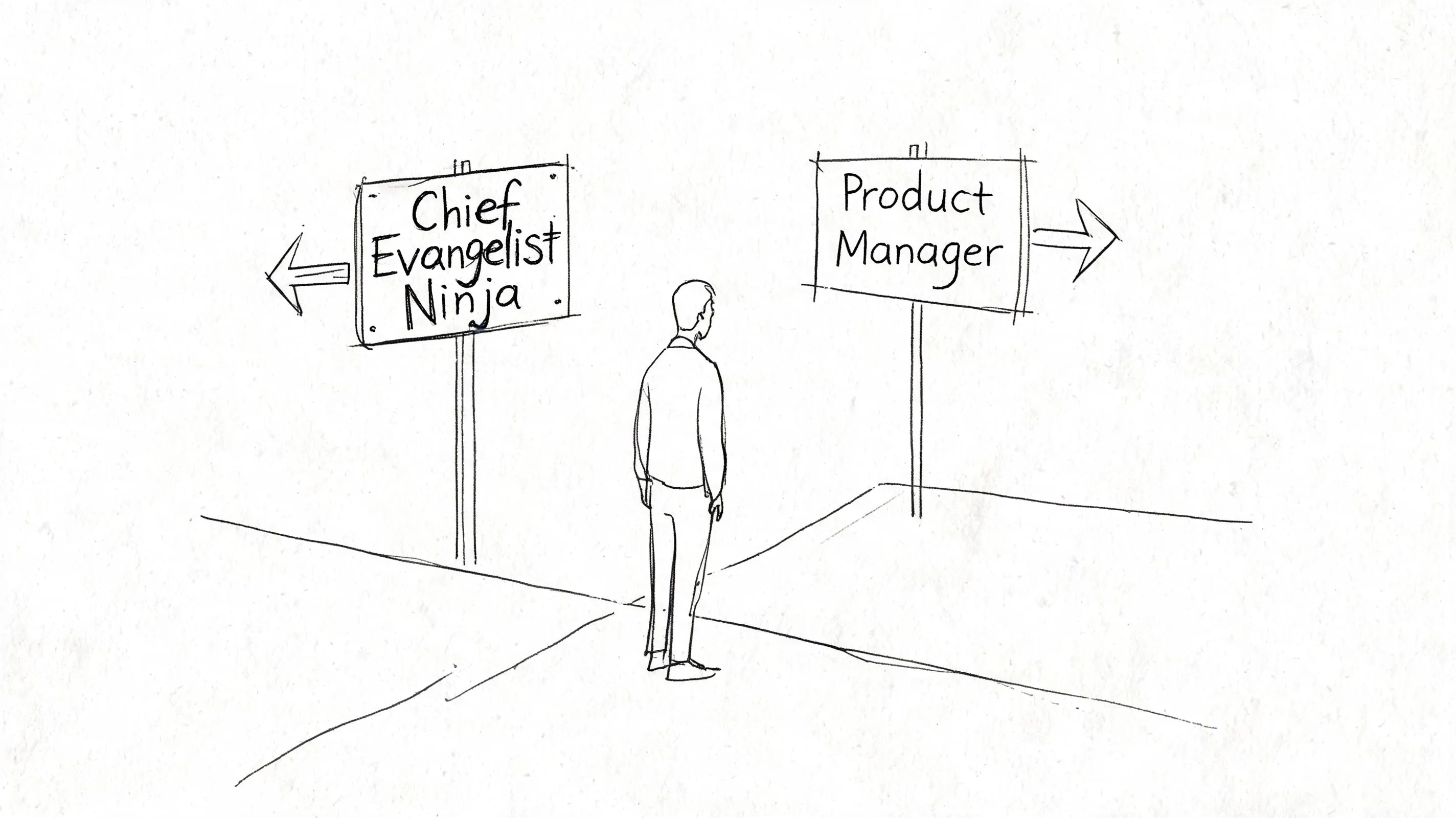
For larger-company hiring, startup experience works best when it's framed around adaptability, execution, and recruiter-friendly scanning norms. Employers often look for a mix of recognizable experience and measurable outcomes, and a practical baseline is company name, a legible title, dates, and 2 to 4 bullets with concrete numbers according to this startup resume guide.
Pick the container before you write the bullets
Don't start with “What all did I do?”
Start with “What function am I trying to be hired for?”
If you're applying for corporate marketing roles, your startup experience shouldn't be framed primarily as internal ops, recruiting help, and customer tickets, even if you did those things. Your resume needs one main container. That container is the closest corporate equivalent to your actual core work.
An easy way to frame the situation:
| Startup reality | Better resume container |
|---|---|
| Did launches, messaging, lifecycle emails, and some acquisition work | Product Marketing Manager |
| Cleaned CRM, fixed handoffs, built reporting, supported pipeline process | Revenue Operations or Sales Operations |
| Built support workflows, trained reps, reduced ticket chaos, documented policies | Customer Support Lead or Customer Operations |
| Ran roadmap coordination, launch tracking, and cross-team execution | Program Manager or Product Operations |
You are not lying by using a clearer container. You're translating.
A legible title beats a clever one
If your official title was weird, you have options. You can keep the official title and clarify it, or use a more standard title if it accurately reflects the work and you can defend it in an interview.
Examples:
- Founder's Associate → Founder's Associate, Operations & Growth
- First Operator → Operations Manager
- Growth Lead → Growth Marketing Manager
- Generalist → Business Operations Manager
If your career path is changing, this same logic matters even more. Storytelling has to do the sorting before the recruiter does it for you. A good primer on that is how to write a career change resume.
A quick walkthrough helps here:
Corporate readers don't penalize broad scope. They penalize unclear scope.
Translate Responsibilities Into Quantified Wins
Most startup resumes die in the bullet points.
The writer lists motion instead of impact. “Managed projects.” “Collaborated cross-functionally.” “Supported GTM initiatives.” These are office words. They don't tell anyone what changed because you were there.
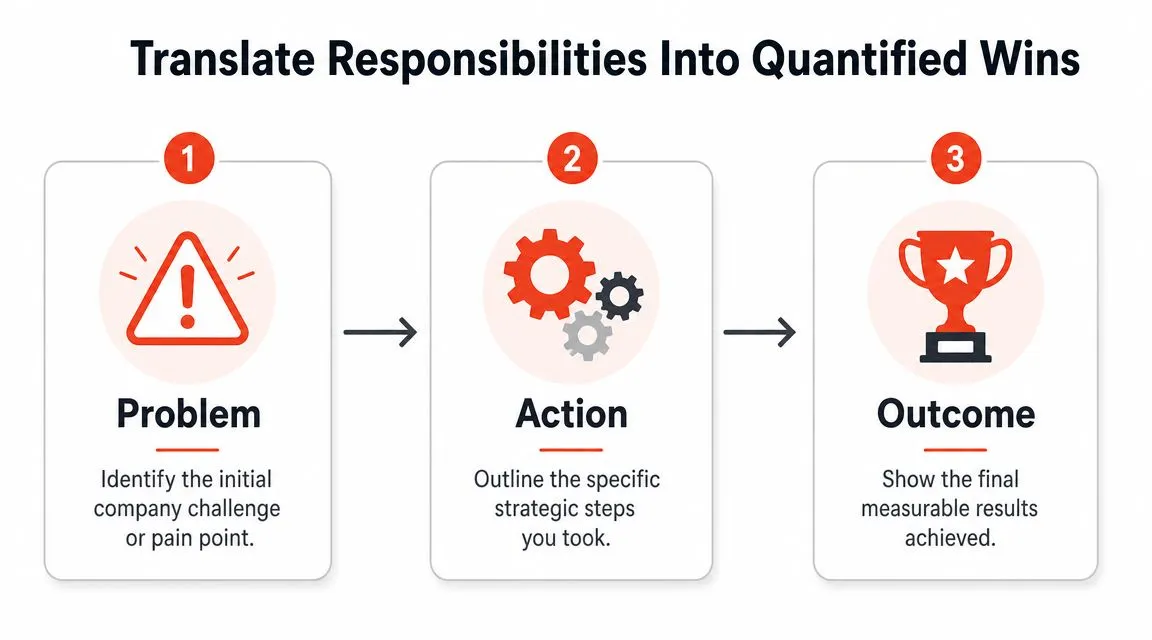
The better method is brutally simple. Start with the business problem. Then the action you personally took. Then the outcome.
Indeed-style guidance on startup resumes gets this part right: isolate the role by the business problem solved, convert duties into outcome statements, quantify the result, and only include the role where it reinforces the target job. It also calls out weak bullets like “managed projects” because they erase the ownership in startup work. You can see that framing in this practical resume method for startup roles.
Use this formula
-
Problem
What was broken, missing, slow, unclear, or blocked? -
Action
What did you decide, build, launch, redesign, automate, negotiate, or implement? -
Outcome
What changed in time, scale, efficiency, revenue influence, quality, adoption, or team capacity?
One before and after rewrite
Bad bullet:
- Wore many hats across operations and customer success in a fast-paced startup environment
Why it's weak:
- no ownership
- no decision
- no visible business value
- sounds busy, not effective
Better bullet:
- Built the first customer support workflow, implemented a ticketing system, hired and trained the first two support reps, and created the operating playbook used by the team
Same person. Same work. Much stronger.
If you do have numbers, add them. If you don't, don't fake them. Use legitimate proxies for scope instead.
What to quantify when startup data is messy
You may not have clean dashboards. That's normal. You can still anchor your bullets in evidence.
Use things like:
- Scale handled by naming product lines, regions, teams, or major workflows
- Speed improved by showing shorter turnaround, faster launches, or fewer handoff delays
- Operational output such as launches shipped, systems built, or playbooks written
- Team impact through hiring, onboarding, training, or documentation ownership
For help finding resume metrics that are real and defensible, this guide on metrics in resume writing is useful.
Write the decision, not the busyness.
You don't need to make startup work sound bigger. You need to make it easier to grade.
How to Structure Your Startup Journey
Startup careers are messy. Your resume shouldn't be.
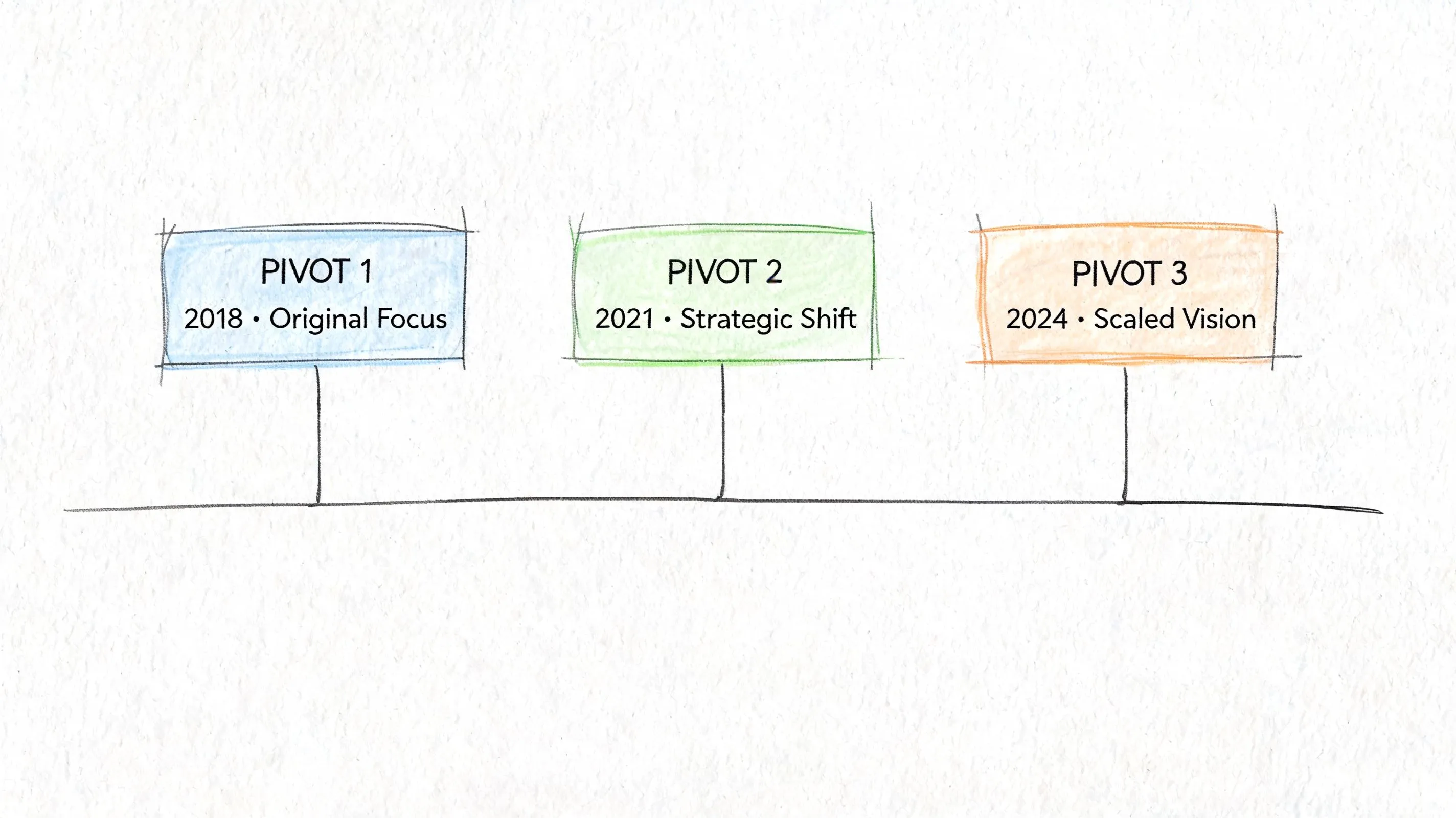
If the company pivoted three times, your title changed twice, and half the work happened because there was no org chart, do not mirror that chaos line by line. A recruiter won't admire that level of detail. They will lose the thread.
One reason this matters is competition. Startup applicant pools can be intense. PostHog shared that one marketing role received 300 applications in its first 2 days in its piece on what recruiters notice. In that kind of pile, ambiguity loses.
Group chaos into a coherent narrative
If you had three internal titles in one startup, consider consolidating them under one umbrella title if that creates a cleaner story and stays honest.
For example:
- Messy version
- Growth Associate
- Special Projects Lead
-
Interim Customer Success Manager
-
Cleaner version
- Founding Team Member, Growth & Operations
Then use bullets to show how the scope evolved.
This is better because titles are labels. Bullets carry the proof.
What to do with pivots, short stints, and failed startups
A few opinionated rules:
-
Pivots
Don't explain every pivot unless it changes the nature of your work in a way that's relevant. Most readers don't need the startup lore. -
Short roles
If several short phases happened inside one company, consolidate. If they happened across different companies, keep the chronology clean and let the bullets do the contextual work. -
Failed startups
You do not need to apologize for them. You also don't need to romanticize them. The company outcome and your contribution are separate things. -
Part-time or mixed-scope work
If the scope was real, present it clearly. If it was light involvement, don't inflate it.
Clarity beats completeness
A good resume is selective. That means some startup detail gets cut.
The best version of your experience isn't the most exhaustive one. It's the one a stranger can understand in seconds.
If listing every admin task, founder request, or emergency save makes the role look smaller, leave it out. Corporate hiring managers aren't looking for proof that you survived startup life. They're looking for proof that you can own a function inside a structured company.
Turn Ambiguous Projects Into Clear Case Studies
Single bullets aren't always enough.
Some startup work only makes sense when the reader can see the setup, your decision, and the result together. That's where a mini case study helps. Not a portfolio page. Not a giant paragraph. Just a compact story.
Startup experience is no longer unusual. The World Bank reports an average early-stage entrepreneurial activity rate of about 14% across economies, as cited in this discussion of startup experience as a mainstream signal. The problem isn't whether employers recognize startup work exists. It's whether you can package it clearly.
What a case-study bullet cluster looks like
Take one project that mattered. Then write it in three moves:
-
Business need
What problem existed? -
Your contribution
What did you personally decide, build, or drive? -
Outcome
What changed, using concrete evidence where you have it?
Example:
Project launch support
The weak version:
- Supported product launch efforts across teams
The stronger version:
- Led launch operations for a new product line by coordinating release timelines, customer communication, support readiness, and internal documentation
- Built the cross-functional checklist used by product, support, and sales to reduce launch confusion and missed handoffs
- Partnered with leadership on rollout sequencing and post-launch issue tracking
That reads like work a corporate team understands.
Pick only one or two
Don't turn your whole resume into project summaries. Choose the initiatives that best match the job you're targeting.
If you're applying to operations roles, spotlight systems, workflows, and execution. If you're applying to product marketing, spotlight launches, messaging, enablement, and cross-functional coordination. If you're applying to support leadership, show how you built process from scratch and made service work repeatable.
For more examples of sharp, readable bullet writing, these good bullet point examples are worth studying.
One practical note on tools: if you struggle to pull the narrative out of messy startup work, structured prompts help more than blank templates do. StoryCV is a digital resume writer that uses a guided interview process to turn scattered experience into clearer role narratives and bullet drafts.
The short version is simple. Most startup experience translates. What usually doesn't translate is the language. Stop writing about how broad the job felt. Start writing about what you owned, what you decided, and what changed.
If your startup background is real but your resume still reads fuzzy, StoryCV helps turn that experience into a clean, legible story. Not by stuffing in keywords or forcing you into a template, but by pulling out the scope, decisions, and outcomes that hiring managers understand.