Most advice on how to write impact statements is weirdly academic. It tells you to sound important, sprinkle in metrics, and polish the wording. Fine. But that's not the actual problem.
The problem is simpler. You’re not bad at writing. You’re bad at remembering your own work in a useful way.
A blank template won’t fix that. Neither will a list of “strong action verbs.” If your resume reads like a to-do list, it’s because you’re recalling duties, not moments. The project that was on fire. The process you cleaned up. The launch that nearly slipped. The team issue you fixed so nobody else had to.
That’s where impact statements come from. Not from better formatting. From better recall.
Your Resume Is a Story Not a To-Do List
Most resumes fail for one boring reason. They read like job descriptions.
“Managed stakeholder communication.”
“Responsible for reporting.”
“Worked cross-functionally with engineering.”
Nobody is impressed by tasks you were assigned. They want the part that came after. What changed because you were there?
That’s why duty-based resumes get ignored. A 2025 LinkedIn Workforce Report notes that 87% of recruiters prioritize quantifiable impact in resumes over keywords, yet most advice still leaves professionals with weak guidance on translating real work into job-ready stories, as summarized in this LSU AgCenter resource on impact statements.
Responsibilities are not achievements
A responsibility is what your manager expected.
An achievement is what happened because you handled that responsibility well.
That difference matters more than most resume “tips.” If your bullet says you “owned roadmap planning,” that tells me your title. If it says you aligned roadmap priorities across design, engineering, and leadership to get a stalled release moving again, now we’re getting somewhere.
A hiring manager doesn’t care that the task existed. They care whether you moved the business, team, customer, or project forward.
Templates can help with layout. They don't do the hard part. They don’t ask what was messy, what changed, who benefited, or why the work mattered. If you need structure for presentation, good product manager resume templates can be useful. But don’t confuse formatting with substance. Clean design can’t save empty bullets.
The question your resume must answer
Every strong bullet answers one question:
So what?
Try this quick test:
-
Weak bullet: Managed client onboarding
-
Better bullet: Improved onboarding process for enterprise clients
-
Strong bullet: Reworked enterprise onboarding workflow to remove recurring handoff issues, giving clients a smoother start and reducing internal confusion
The strongest version tells a mini-story. There was friction. You did something specific. Something improved.
That’s the whole game.
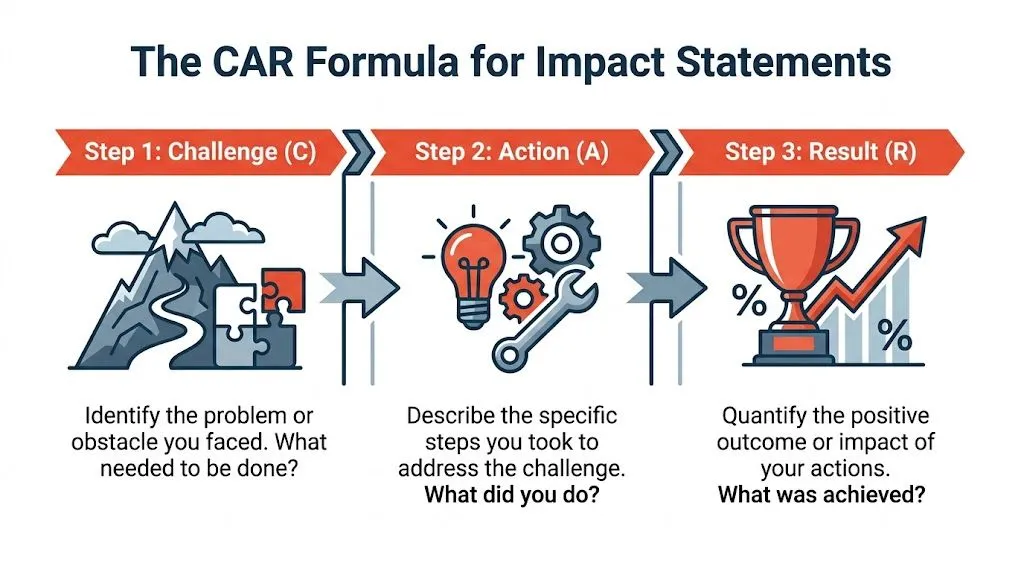
The CAR Formula Challenge Action Result
You don’t need a 14-step framework. You need one structure you can reuse without thinking too hard.
Use CAR:
-
Challenge
-
Action
-
Result
That’s it.
Recruiters move fast. Ladders says recruiters spend an average of 7.4 seconds scanning a resume, and BMNT notes that resumes using an action-result-impact formula see 2.3x higher response rates in tech and business sectors. If your bullet doesn’t tell a complete story quickly, it disappears.
C is for challenge
Start with the problem worth solving.
Not every bullet needs a dramatic crisis. But it does need context. What was broken, slow, risky, unclear, manual, delayed, or stuck?
Good challenge language sounds like this:
-
Operational friction that kept slowing a team down
-
Customer confusion during onboarding
-
Missed deadlines because handoffs were messy
-
Rising support volume without a clear process
-
Low adoption of a feature or workflow
You don’t need to write a novel. A few words of tension are enough.
A is for action
This is your move. Your decision. Your contribution.
Use verbs that show agency. Led. Built. Reworked. Introduced. Simplified. Negotiated. Automated. Designed. Launched.
Avoid limp phrasing like “helped with,” “involved in,” or “responsible for.” Those phrases are resume camouflage. They hide what you did.
Practical rule: if someone else could paste your bullet into their resume and it still sounds true, it’s too vague.
R is for result
People often freeze at this stage. They think result means a giant metric. It doesn’t.
A result can be a number. It can also be a visible outcome:
-
faster approvals
-
fewer support escalations
-
cleaner handoffs
-
stronger adoption
-
less rework
-
better executive alignment
-
clearer reporting
If you have a metric, use it. If you don’t, state the business effect plainly and move on.
Weak versus strong CAR bullets
| Weak | Strong |
|---|---|
| Managed weekly reporting | Fixed inconsistent weekly reporting by standardizing inputs and creating a cleaner reporting rhythm for leadership |
| Worked with engineering on release planning | Navigated shifting release priorities with engineering and product partners, helping the team make clearer tradeoffs and keep delivery moving |
| Supported onboarding improvements | Tackled onboarding friction by rewriting key steps and reducing confusion for both customers and internal teams |
Notice what changed. The stronger version doesn’t just tell me what you touched. It tells me why the work mattered.
CAR works because humans remember stories faster than lists. Use it for bullets, interview answers, promotion packets, performance reviews, all of it.
How to Quantify Your Impact as an Engineer and Beyond
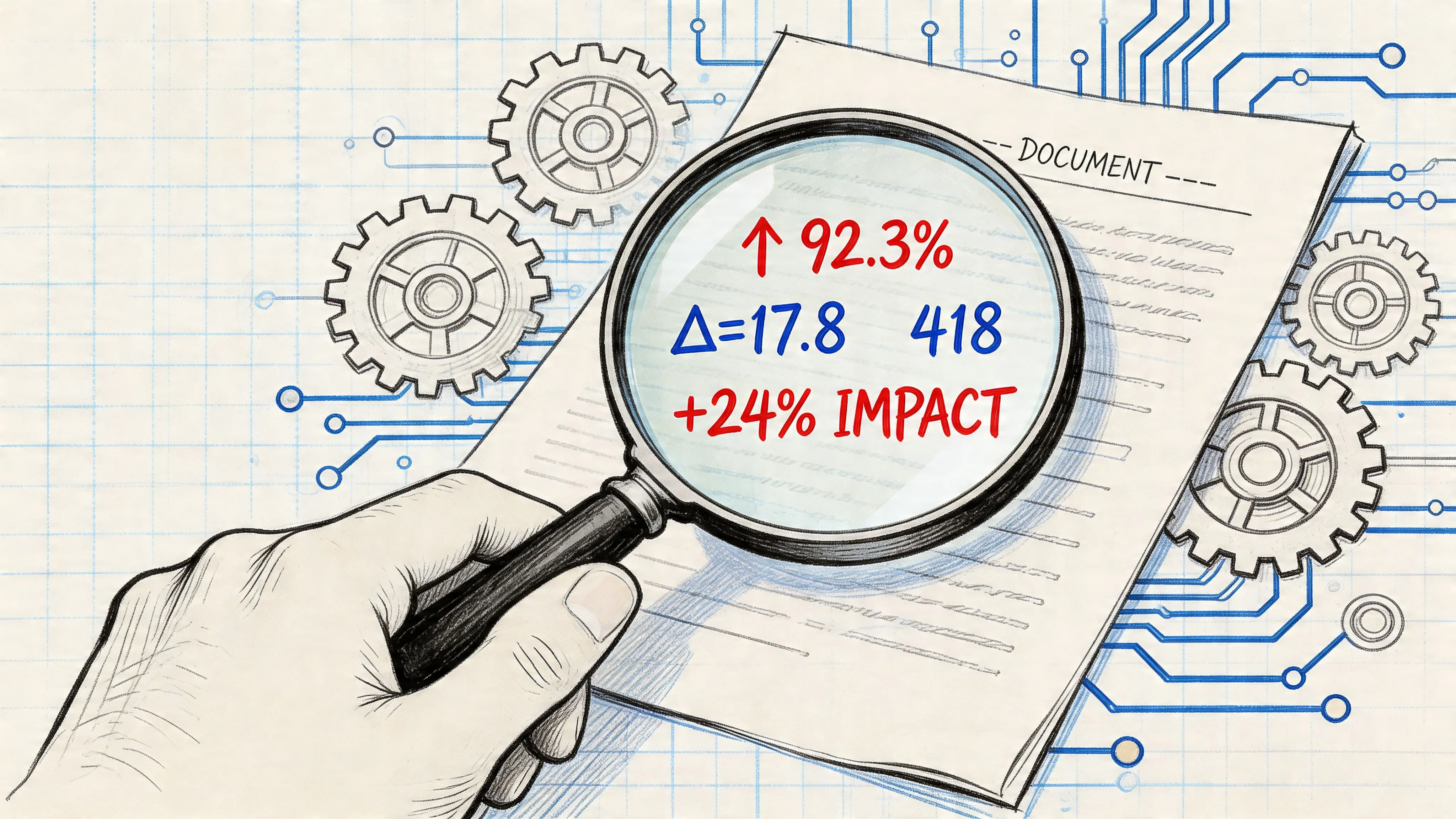
“I don’t have metrics” is usually false.
What you really mean is: “I wasn’t the person staring at the dashboard every day,” or “my impact was spread across a team,” or “nobody taught me how to connect my work to business outcomes.”
That’s fixable.
Where engineers should look first
If you’re trying to figure out how to quantify your impact as an engineer, stop looking only for revenue. Engineering impact often shows up in speed, reliability, quality, and avoided pain.
Look in places like:
-
Delivery metrics such as release speed, cycle time, or backlog cleanup
-
System health like incident frequency, bug volume, failure patterns, or support noise
-
Team efficiency including manual work removed, handoffs simplified, or documentation that reduced repeat questions
-
Customer experience through performance improvements, reduced confusion, or smoother onboarding
-
Risk reduction such as compliance coverage, test coverage, migration completion, or fewer recurring failures
If your work touched any of those, there’s impact there.
Use business logic, not fantasy
You are not allowed to invent numbers. Nobody is. That’s how resumes become fiction.
But you can trace your work honestly. This is where the principles of Results-Based Management (RBM) are useful. The idea is simple. Start with the outcome that mattered, then work backward to your contribution.
Ask:
-
What was the team trying to improve?
-
What specific part did I own?
-
What changed after my work shipped?
-
What evidence exists, even if it’s indirect?
That evidence might live in sprint retros, Jira tickets, release notes, dashboards, support logs, manager feedback, roadmap docs, incident reviews, customer emails, or performance review notes.
If you need more ways to uncover that evidence, this guide on resume metrics that prove impact gives a practical breakdown.
Most people don’t lack impact. They lack a record of it.
Collaborative work still counts
A lot of professionals undersell themselves because the result belonged to a team. That’s a mistake.
A 2025 SHRM study found that 72% of mid-level hires undervalue their collaborative impacts on resumes, leading to 30% fewer interviews, according to Land-Grant Impacts. The fix is simple. Claim your part.
Don’t write like this:
-
Helped launch new internal tool
-
Supported migration project
-
Assisted senior team on process improvement
Write like this instead:
-
Led QA coordination for a cross-functional migration, catching edge cases early and helping the broader rollout land more smoothly
-
Built the validation layer for an internal tool launch, reducing manual checks for the operations team
-
Reworked a brittle handoff point in the delivery process, helping the wider team spend less time untangling avoidable issues
You’re not stealing credit. You’re naming your contribution.
If your impact feels soft, make it concrete
“Improved collaboration” is soft.
“Set up a weekly decision log that cut repeated debates and gave engineering, product, and support one shared source of truth” is concrete.
“Mentored junior engineers” is soft.
“Created onboarding docs and code walkthroughs that helped new engineers ramp with fewer repeated questions” is concrete.
“Improved communication” is soft.
“Turned scattered update requests into a simple release note process so stakeholders got clearer status without interrupting the team” is concrete.
That’s how to describe your impact at work when the result isn’t sitting in a neat spreadsheet.
Impact Statement Examples For Any Career Stage
Theory is cute. Examples are better.
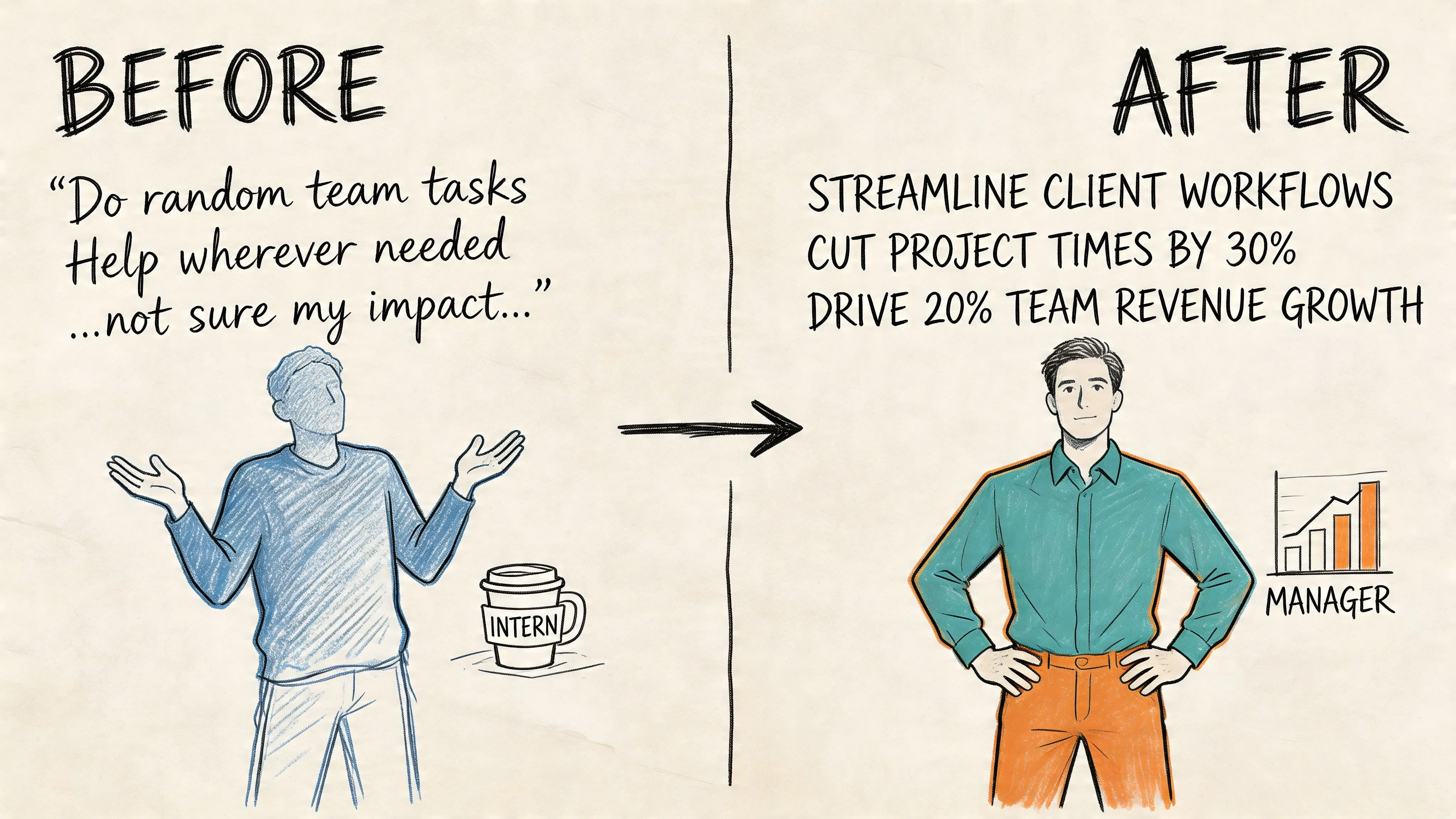
A LinkedIn analysis of 10 million profiles found that resumes that quantify impact receive 40% more interview callbacks than generic, duty-focused descriptions. So let’s fix the generic stuff.
Student or early career
You do not need a fancy title to write a real impact statement. Class projects, internships, volunteer work, campus jobs, freelance work, and research all count.
| Before | After |
|---|---|
| Worked on a class app project | Built part of a class web app for students, helping the team turn a loose idea into a working product with clear user flow |
| Assisted with student club events | Organized logistics for student events, helping the club run smoother and making attendance easier for members |
| Completed internship tasks for marketing team | Supported campaign execution during internship by handling content updates and keeping project work moving across deadlines |
Mid-level professional
People often get too modest. You’ve been doing useful work for years, but your resume still sounds like an employee handbook.
| Before | After |
|---|---|
| Managed cross-functional projects | Steered cross-functional project work through shifting priorities, keeping stakeholders aligned and preventing delays from turning into drift |
| Responsible for reporting and analysis | Rebuilt reporting process so leaders got clearer updates and the team spent less time chasing inconsistent inputs |
| Handled customer escalations | Took over complex customer issues, calming situations quickly and feeding recurring problems back into product and support workflows |
If you want more side-by-side examples like these, this guide on how to write achievements in a resume is worth reading.
Career changer
Career changers usually have impact. They just label it in the old industry’s language.
That’s the trap.
| Before | After |
|---|---|
| Managed operations at retail location | Ran store operations in a fast-moving environment, balancing staffing, customer issues, and daily execution under pressure |
| Served as military team lead | Coordinated team execution in high-accountability settings, building discipline, clear communication, and reliable follow-through |
| Worked in education and supported students | Guided students through complex material and competing deadlines, building trust and keeping progress on track |
The pattern to copy
Each “after” version does three things:
-
Adds context so the work means something
-
Shows your role instead of hiding it
-
States the effect in plain English
Your bullet does not need to sound impressive. It needs to sound true, specific, and useful.
That’s how you talk about your work confidently without sounding fake. You stop trying to sound important. You start describing what happened.
Common Mistakes to Avoid When Writing Impact Statements
Most bad impact statements aren’t bad because the person lacked experience. They’re bad because the writing hides the experience.
Here are the usual offenders.
Weak verbs that bury your contribution
“Helped with.”
“Worked on.”
“Responsible for.”
These phrases erase you.
Use verbs that show ownership instead:
-
Weak: Helped with process improvements
-
Better: Simplified a broken process that kept slowing handoffs
-
Weak: Responsible for stakeholder communication
-
Better: Kept stakeholders aligned during a messy rollout by creating a clearer update rhythm
Stopping before the so what
A lot of bullets describe action but skip outcome.
That leaves the reader doing the work. They won’t.
| Mistake | Fix |
|---|---|
| Built internal dashboard | Built an internal dashboard that gave the team one place to track work and reduced reporting confusion |
| Led onboarding redesign | Redesigned onboarding to remove repeated friction points for new users and internal teams |
Vague claims with no evidence
“Improved efficiency” means nothing on its own. Efficient compared to what? For whom? How did anyone notice?
If you can’t attach a clean metric, attach a visible effect.
-
Vague: Improved collaboration across departments
-
Clear: Set up a shared planning cadence that reduced repeated status chasing across departments
If the hiring manager can’t picture the problem or the payoff, the bullet is still half-baked.
Overwriting
Your resume is not a memoir. Don’t cram five ideas into one bullet. Pick the most valuable story and write it cleanly.
Bad bullets try to prove everything. Strong bullets prove one thing well.
Stop Writing Start Talking About Your Work
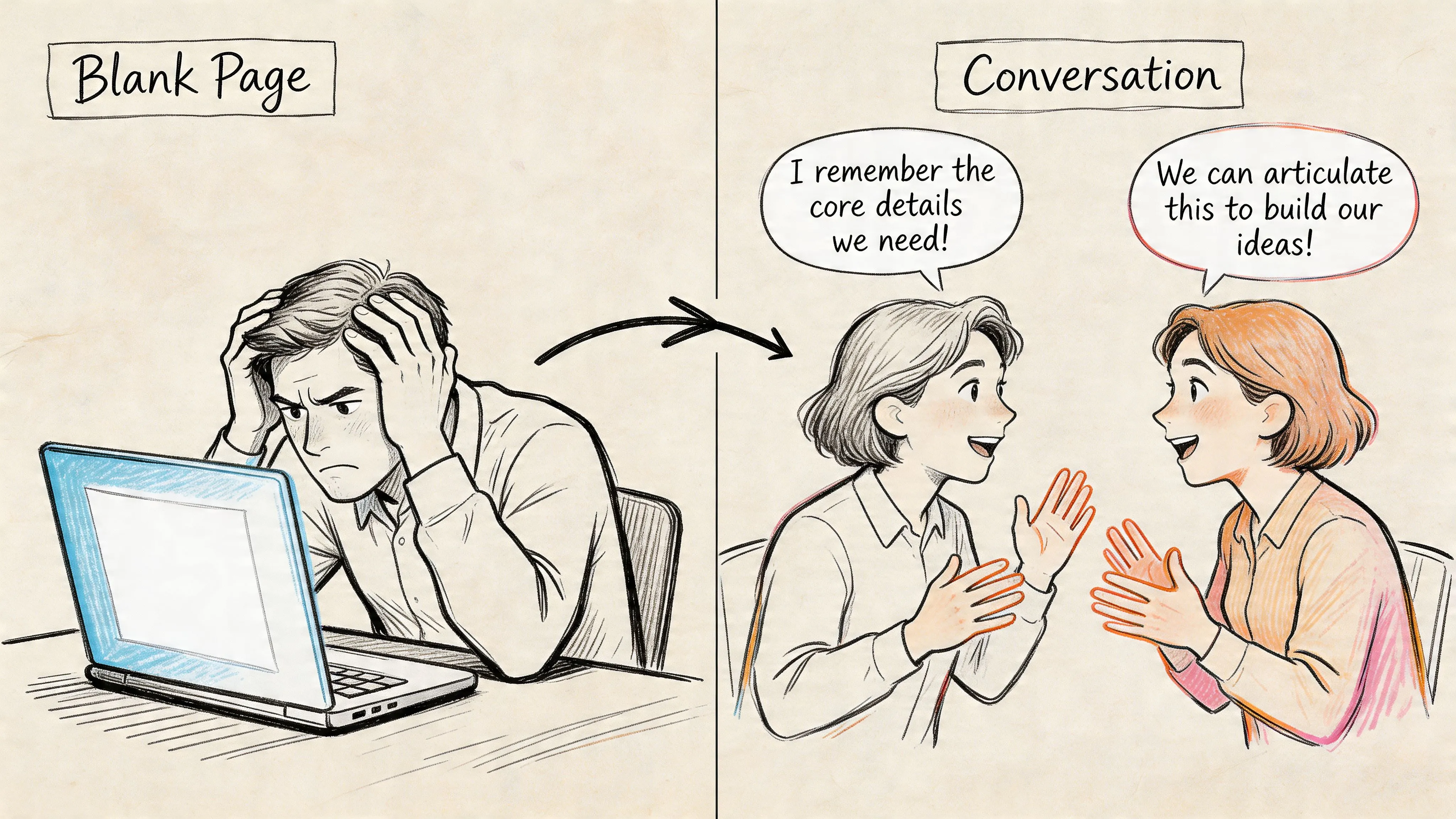
The blank page is the problem.
Not your intelligence. Not your experience. The page.
People don’t remember their best work by staring into a template. They remember it while talking. Someone asks what happened on that ugly project, and suddenly the details come back. The blocked dependency. The leadership mess. The workaround you created. The reason people trusted you when things got chaotic.
That’s why “just write stronger bullets” is lazy advice. It assumes memory shows up on command.
Conversation surfaces the real material
When you talk about your work, you naturally include the stuff that matters:
-
what was hard
-
what was at stake
-
what you did
-
what changed afterward
That’s already an impact statement. It’s just spoken first, written second.
A 2024 ResumeLab study of 5,000 hires found that mid-level professionals and graduates who used narrative-driven resumes with clear, metric-backed impact statements increased their hire rates by 35% compared to standard, duty-focused resumes, as cited in Tennessee State University's guide to impact statements.
How to talk before you write
Try this instead of opening a resume doc:
-
Voice note it. Explain a project out loud like you’re talking to a smart friend.
-
Pull the tension. What was broken, unclear, late, expensive, or risky?
-
Name your move. What did you change, decide, build, fix, or coordinate?
-
State the outcome. What became easier, faster, clearer, safer, or more reliable?
If you struggle with that kind of self-advocacy, practicing with interview-style prompts helps. This article on how to answer tell me about yourself uses the same basic muscle. Memory improves when the question is human, not robotic.
The best resume writing process feels less like form-filling and more like a structured conversation. That’s usually where the genuine story shows up.
How to Talk About Your Work Confidently
A lot of people know the formula and still freeze when reality gets messy. Fair. Here are the hard cases.
Frequently Asked Questions About Impact Statements
| Question | Answer |
|---|---|
| What if I don’t know the exact numbers? | Don’t make them up. Use verifiable scope, visible outcomes, and concrete context. Say what improved, who it helped, and what changed operationally. |
| What if I worked under an NDA? | Keep the result, remove the sensitive details. You can describe the type of product, team, or problem in broad terms without naming confidential clients, internal systems, or protected figures. |
| What if the work was done by a team? | Claim your slice clearly. Name your contribution and connect it to the shared result. “Led testing workflow for rollout” is honest. “Single-handedly delivered company transformation” is nonsense. |
| What if my work was mostly support or operations? | Support work creates impact all the time. Look for smoother execution, fewer errors, clearer communication, better handoffs, lower friction, or calmer escalations. |
| How do I talk about my work confidently without sounding arrogant? | Stick to facts. Confidence isn’t bragging. It’s accurate naming. If you solved a meaningful problem, say so plainly. |
| How many impact statements should be on a resume? | Enough to prove your value fast. Prioritize the strongest examples from recent roles. Don’t force every bullet into a dramatic story. |
| Can I use qualitative results instead of numbers? | Yes. If you don’t have clean data, use concrete effects. Clearer planning, smoother launches, less confusion, stronger alignment, and fewer repeat issues are all legitimate outcomes when written specifically. |
One last rule. If a bullet makes you sound interchangeable, rewrite it.
If you’ve done strong work but struggle to turn it into sharp, believable resume bullets, StoryCV is built for exactly that. It acts like a Digital Resume Writer, not a template box. Instead of making you fill in forms, it guides you through a structured interview that helps you remember the full story behind your work, then turns that into clear, ATS-friendly writing you’d want to send.