Your PO resume fails when it reads like a meeting transcript.
Hiring managers do not care that you managed the backlog, joined standups, or wrote user stories. They assume you did. They want proof that you made hard calls, sorted signal from noise, and changed something that mattered.
A strong product owner resume is a record of decisions. It shows the mess you inherited, the constraint that shaped the call, the trade-off you chose, and the result. That is the standard. Anything softer sounds like placeholder text.
Use this filter before you write a single bullet:
- What problem was real enough to deserve action?
- What did I decide, prioritize, cut, or push through?
- What constraint shaped that decision?
- What changed for customers, the team, or the business?
This article does not hand you pretty templates to copy. Templates create clones. Clones get ignored. The useful move is to examine why weak PO resumes collapse, then rewrite them into bullets that show judgment.
That is the point of the examples below. Each one helps you replace generic responsibility language with evidence of product thinking. Less ceremony. More decisions.
1. Junior Product Owner Resume
Junior PO resumes usually fail for a simple reason. They read like borrowed authority.
Early-career candidates stuff in backlog language, Agile terms, and generic ownership claims, then hope the wording makes them look experienced. It does the opposite. It tells a hiring manager you do not know what counts. If you are coming from customer success, QA, ops, or consulting, your advantage is not seniority. It is exposure to messy problems and the choices they forced.

What a strong junior bullet sounds like
Weak:
- Helped the product team manage backlog items and coordinate with engineering
Better:
- Turned recurring onboarding complaints from enterprise customers into a prioritized set of user stories, then worked with design and engineering to simplify first-time setup
Why does the second one work? Because it shows product judgment at junior scope. You identified a pattern, shaped a priority, and pushed it toward a better user outcome. You did not pretend to own strategy. You showed you can make sense of noise.
That is the bar for a junior PO resume. Clear observation. Clear decision. Clear consequence.
Good entry-level framing
Use your previous role as evidence, not filler.
- From QA: Show how bug patterns exposed missing requirements, confusing flows, or weak acceptance criteria.
- From support or customer success: Show how repeated complaints or churn risks changed what the team fixed first.
- From ops or implementation: Show where process friction revealed a product bottleneck worth solving.
- From side projects: Show one decision that mattered. What did you cut, reorder, or simplify, and why?
- From coursework or certifications: Pair the training with real application. A certificate alone says very little.
Example:
- Moved from customer success into an associate PO role by translating repeated renewal risks into onboarding fixes, then partnering with design to reduce early-user confusion
That bullet works because it connects customer pain to prioritization. It proves you can do more than report problems. You can turn them into product action.
If you need help tightening older roles so this story stays clear, use this guide on how to write a resume when you have a lot of experience, then apply the same principle here. Cut the routine work. Keep the decisions.
Skip the theater. A junior resume does not need fake scale. It needs credible evidence that you notice the right problems and make useful calls.
2. Senior Staff Product Owner Resume
Senior resumes shouldn't read like bigger junior resumes.
Once you're aiming at senior or staff roles, nobody cares that you “participated in sprint planning.” They care whether you shaped direction, resolved costly conflict, and protected the roadmap from noise. Scope matters, but decision quality matters more.
The shift from execution to leverage
At this level, your resume should show three things:
- where you created clarity
- where you forced a trade-off
- where your judgment changed how multiple teams operated
Here's a before-and-after that proves the point.
Weak:
- Managed the product roadmap for the mobile app and delivered features on time
Better:
- Restructured a bloated mobile roadmap down to core retention priorities, cut legacy work that was draining engineering capacity, and turned roadmap discipline into a business result
That works because it frames roadmap ownership as subtraction, not output. Senior product owners earn trust by saying no well.
Practical rule: The more senior you are, the less your resume should sound like Jira.
If you've got a long track record, compress the old stuff hard and give space to the work that shows scale, influence, and progression. Story matters more when your experience is broad. StoryCV's guide on how to write a resume when you have a lot of experience is useful here because the primary task is curation, not archiving.
A sharper senior example
Instead of:
- Collaborated with stakeholders across departments
Write:
- Aligned Sales, Support, and Legal around one compliance intake process by replacing ad hoc debate with a structured RFC loop, cutting feature definition time and reducing decision churn
That bullet has tension. Tension is proof.
A senior PO resume should also show that your influence outlived any single release. Did you improve how teams prioritized? Did you create a repeatable operating rhythm? Did you mentor other product people into stronger decision-makers? Put that in. That's real impact. That's seniority.
3. SaaS Product Owner Resume
A SaaS resume that reads like a release log is already losing.
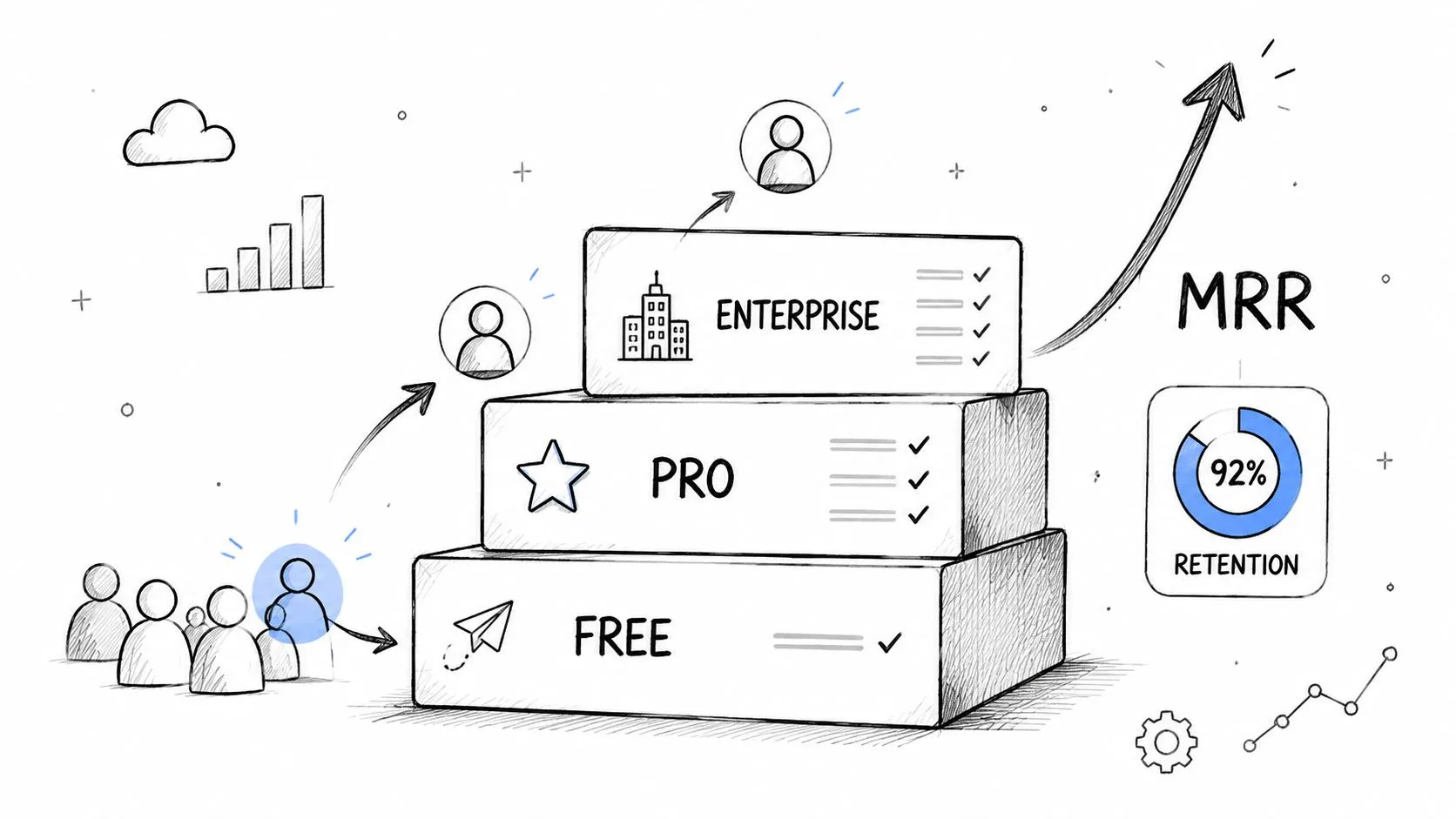
SaaS hiring managers care about one thing first. Did your decisions protect recurring revenue or grow it? Feature volume does not answer that. Decision quality does.
Write the business model into the bullet
The weak version sounds like task ownership.
- Owned onboarding improvements for SaaS platform
The stronger version shows how you diagnosed the business problem, chose what to fix, and accepted the trade-off.
- Reworked onboarding after identifying where new accounts stalled, prioritized activation friction over net-new feature work, and gave customer success a cleaner path to adoption conversations
That bullet works because it reflects SaaS economics. Activation, retention, and account growth matter more than another shipped item on a quarterly roadmap.
Use the same standard for every bullet. If you mention a feature, explain why it mattered. Did it reduce churn risk? Increase product adoption inside existing accounts? Remove friction that was blocking expansion conversations? If the consequence is missing, the bullet is still half-written.
What SaaS hiring managers want to see
- Retention judgment: Show that you protected stickiness, not just delivery speed.
- Expansion awareness: Show that product work helped existing customers deepen usage or justify a bigger contract.
- Commercial context: Sales, customer success, support, and product should show up together when the work crossed those lines.
- Operational maturity: Strong SaaS POs protect billing reliability, onboarding clarity, permissions, reporting, and other work that keeps accounts healthy.
A good SaaS resume does not sound like Jira with metrics pasted on top. It sounds like someone who understood where the business was leaking value, made a call, and improved the outcome. That is what makes a SaaS product owner credible.
4. Technical Product Owner Resume
Technical POs make one common mistake. They write like engineers applying for engineering jobs.
Depth helps. Translation wins.
If you've got a backend, platform, infrastructure, or data background, your resume should prove you can make technical trade-offs legible to non-technical people. Otherwise you'll just look like someone who drifted into product.
Don't flex the stack. Show the consequence.
Weak:
- Worked on APIs, integrations, and technical architecture across teams
Better:
- Owned API prioritization by balancing partner requirements, engineering constraints, and support pain points, which made integration work easier to estimate and easier to adopt
That line does two useful things. It shows technical fluency, and it shows product judgment.
A standout pivot example into a higher-consequence environment looks like this:
- Designed and owned the core data-ingestion pipeline for an e-commerce platform, scaling capacity to handle high-volume concurrent events while maintaining zero data loss during a sustained traffic period
That kind of bullet works for fintech and infrastructure roles because it signals reliability, risk control, and operational seriousness. It doesn't need “delight users” language. It needs proof that you can operate where failure is expensive.
What technical product owner resume examples get right
- They translate architecture into business value
- They show decision quality under constraint
- They avoid code-tour bullets
- They prove trust with engineers without disappearing into implementation
If your technical bullet can't be understood by a recruiter and respected by an engineer, rewrite it.
A technical product owner resume should sound like a bridge, not a backlog with cloud buzzwords sprinkled on top.
5. ATS Optimized Product Owner Resume
ATS advice goes off the rails when it turns a Product Owner resume into a bag of nouns.
Recruiters are not searching for the candidate who can list the most tools. They are searching for proof of judgment. Screening systems only help them find that proof faster. Your job is to make the signal obvious.
Start with a format that parsing software can read without guessing. Use standard headings. Keep a clear reverse-chronological timeline. Write your title, company, dates, and scope in plain language. Then make the wording match the role you want.
If the posting says Product Owner, use Product Owner. If it says Digital Product Manager and that reflects your work, use that wording in your summary or target title. If the team cares about discovery, show discovery decisions. If the team cares about execution, show prioritization and delivery tradeoffs.
The point is alignment, not mimicry.
Weak:
- Jira, Scrum, Agile, Kanban, roadmap, backlog, stakeholders, wireframes, APIs, SQL, Figma, Confluence
Better:
- Prioritized backlog across onboarding, billing, and support workflows, using customer pain points and engineering effort to sequence releases with fewer avoidable escalations
That second version still carries keywords. It also shows how you think. That is what weak resumes miss. They describe the product environment. Strong resumes describe the decisions made inside it.
If you want a clearer view of how systems parse titles, sections, and phrasing, read StoryCV's article on how AI resume screening works.
A few rules matter here.
- Put skills where they were used. A detached block of buzzwords looks lazy.
- Keep formatting boring. Single column usually wins because it is easy to parse.
- Don't inflate your title. Relabeling yourself creates doubt fast.
- Use exact terms from the job description when they are true. “Roadmap,” “stakeholder management,” and “acceptance criteria” belong in context, not as filler.
For candidates applying across tech markets, it helps to discover critical tech skills and then choose the ones that strengthen your actual work history.
ATS optimization is a filtering problem. The resume needs to be readable by software and convincing to a human. Keyword stuffing handles the first part badly and the second part even worse.
6. Agile Scrum Focused Product Owner Resume
A Scrum-heavy resume often reads like a religious pamphlet. Don't do that.
Ceremonies are not achievements. Velocity talk is not strategy. Agile matters only when you show how process changes improved delivery quality, alignment, or business outcomes.
Process is only valuable when it removes drag
Weak:
- Facilitated standups, sprint planning, retrospectives, and backlog grooming
Better:
- Reworked backlog refinement so engineering got clearer acceptance criteria earlier, which reduced ambiguity and made sprint planning less performative
That's a product owner bullet. It identifies drag and removes it.
One useful benchmark from a real resume example describes a digital product owner who led a CRM replacement in 6 months and generated more than RM2M in productivity savings. The point isn't to mimic the project. The point is to see how delivery speed plus business value beats process jargon every time.
Better Agile framing
- Show why the process changed: What was broken before?
- Show who benefited: Engineering, support, legal, customers?
- Show what got easier: Prioritization, planning, release confidence, cross-team alignment?
- Show what the business got: Faster decisions, less waste, cleaner delivery
Agile bullets should explain why the team moved better, not how many ceremonies you attended.
If you've got Scrum credentials, keep them. But don't let the certification section do all the talking. Your work history should prove that you used Agile as a decision system, not as office decor.
7. Design Forward User Centric Product Owner Resume
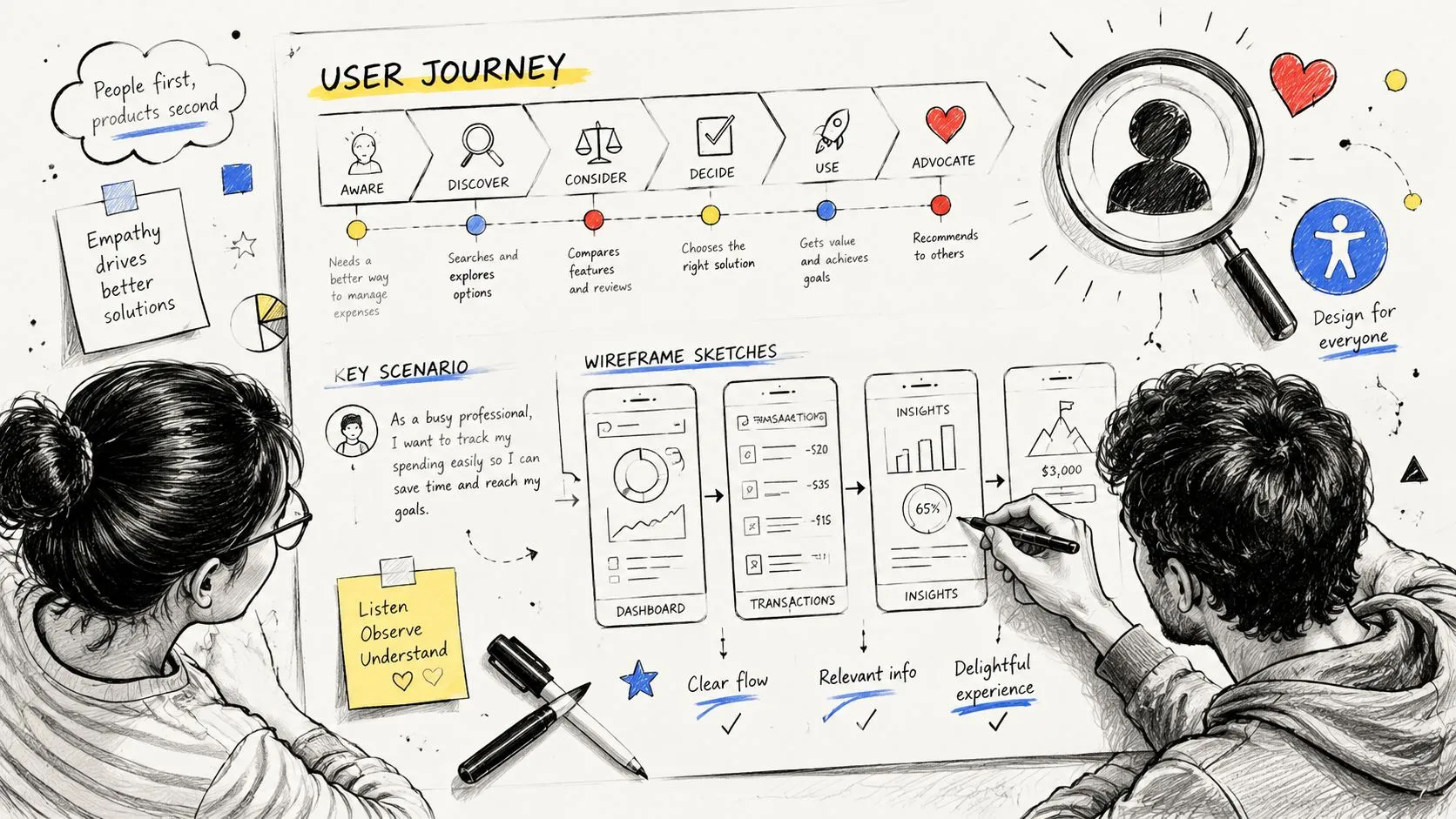
“User-centric” means nothing on a resume unless you show a product decision that changed because of user evidence.
That is why so many design-forward PO resumes fail. They describe taste, collaboration, and empathy. Hiring managers want judgment. They want to see what problem you noticed, what signal you trusted, what you changed, and what happened after.
Good bullets show the product decision
StoryCV gets one thing right in its advice on translating experience into a clear resume narrative. A strong bullet is a decision, not a duty.
Before:
- Responsible for the rollout of the new analytics dashboard and tracking user adoption rates
After:
- Inherited a legacy analytics dashboard with low active usage, redesigned the onboarding flow based on drop-off data, and increased weekly feature adoption within one quarter without added marketing spend
This works because it explains the chain of reasoning. Weak resumes stop at ownership. Strong resumes explain diagnosis, choice, and result. That is the essential pattern behind good product owner resume examples.
What design strength actually looks like on paper
A design-forward PO bullet should prove four things:
- What friction showed up: onboarding drop-off, repeated usability complaints, failed task completion, accessibility barriers
- What evidence shaped the call: interviews, session recordings, support tickets, funnel behavior, usability testing
- What product choice you made: changed flow order, cut scope, rewrote requirements, reprioritized a release, simplified an interaction
- What improved after: activation, retention, completion rates, support volume, adoption quality
Accessibility and localization can be strong examples too, but only if you frame them as product choices with delivery consequences. Expanding language support, adjusting navigation, or changing flows for clarity matters because it changes reach, usability, and execution complexity. Virtue language is useless here.
Skip lines like “advocated for the user” or “worked closely with design.” Those are table stakes. Say what you changed because the evidence was clear, and why that choice beat the alternatives. That is how a user-centric resume stops sounding decorative and starts sounding like product leadership.
8. Career Changer Returner Product Owner Resume
Most advice falls apart here.
A lot of product owner resume examples tell you to quantify impact, list skills, and add a summary. Fine. But they rarely explain how to translate non-product work into a product narrative without sounding fake. That gap is real, and it's called out directly in Zety's discussion of product owner resume examples. Most examples assume you already had the title.
So if you're changing careers, stop trying to force old experience into borrowed product jargon. Translate the logic instead.
The rule for pivots
You don't need to prove you were secretly a product owner for ten years. You need to prove that your previous work trained the same muscles:
- prioritization
- trade-offs
- customer understanding
- process clarity
- decision-making under constraint
A marketing manager can frame audience insight, positioning, and experiment design. An operations lead can frame workflow bottlenecks, handoff failures, and systems thinking. A customer success lead can frame retention pain and unmet product needs.
StoryCV's guide on how to write a career change resume is useful here because the hard part isn't adding buzzwords. It's building a believable line from past work to future role.
A stronger pivot example
Weak:
- Seeking to transition into product ownership after diverse business experience
Better:
- Built product judgment from customer-facing and operational roles by spotting where users got stuck, where teams lost time, and which process fixes changed outcomes
And if you're returning after time away, write the gap plainly and then show current relevance. Recent coursework, advisory work, volunteering, or internal systems projects can all support the story if they demonstrate the same decision muscles.
The resume doesn't need to pretend your path was linear. It needs to make the path make sense.
8-Point Product Owner Resume Comparison
| Resume Type | Implementation Complexity 🔄 | Resource Requirements ⚡ | Expected Outcomes ⭐📊 | Ideal Use Cases 💡 | Key Advantages ⭐ |
|---|---|---|---|---|---|
| Junior Product Owner Resume (Entry-Level Focus) | Low, focused framing and guided storytelling | Low, time for interviews, certs, side projects | High relevance for entry roles; demonstrates learning velocity and small‑scale impact | Recent grads, career transitions into PM, internship-to-hire programs | Highlights transferable skills, narrative-driven, ATS-friendly |
| Senior/Staff Product Owner Resume (Strategic Leadership Focus) | High, multi-year narratives and portfolio metrics | High, cross-team data, stakeholder references, thought leadership artifacts | Strong signal for executive hires; demonstrates organizational and revenue impact | Senior leaders pursuing VP/CPO roles, mature product orgs | Shows strategic vision, mentorship, sustained company impact |
| SaaS Product Owner Resume (B2B and Subscription Focus) | Moderate, needs subscription economics and retention evidence | Moderate, analytics, ARR/MRR figures, CS collaboration | High, clarifies retention, expansion and pricing outcomes | SaaS/B2B, product-led growth roles, subscription businesses | Demonstrates SaaS fluency and retention-first product thinking |
| Technical Product Owner Resume (Engineering-Focused) | Moderate, balance technical depth with product outcomes | Moderate, technical artifacts, performance/scalability metrics | High credibility with engineering teams; improves technical tradeoff decisions | Developer tools, infrastructure, platform PM roles | Engineering credibility, improves developer experience and architecture decisions |
| ATS-Optimized Product Owner Resume (Keyword & Screening Focus) | Moderate, keyword mapping and parser-friendly formatting | Low–Moderate, keyword research, ATS-testing tools | Higher screening pass rates; better visibility to recruiters | High‑ATS employers, large-scale applicant volumes, title translations | Increases ATS pass‑through while retaining authentic narratives |
| Agile/Scrum-Focused Product Owner Resume (Delivery & Process Focus) | Moderate, quantify ceremonies, velocity and scaling examples | Moderate, team metrics, certifications, scaling case studies | High, demonstrates delivery predictability and continuous improvement | Enterprise Agile orgs, scaled teams, SAFe/LeSS environments | Shows Agile mindset, backlog health, and ceremony optimization |
| Design-Forward/User-Centric Product Owner Resume (Design Collaboration Focus) | Moderate, integrate user research and design outcomes | Moderate, research artifacts, design system contributions | High, improves UX, engagement and accessibility metrics | Design-centric companies, consumer products, UX-heavy teams | Emphasizes user empathy, design partnership and accessibility |
| Career Changer/Returner Product Owner Resume (Transferable Skills & Narrative Focus) | Moderate, craft coherent transition narrative with evidence | Low–Moderate, courses, projects, translated accomplishments | Moderate–High, can overcome background gaps when credibly framed | Career changers, returners, professionals pivoting into PM | Translates adjacent expertise, shows adaptability and intentional learning |
Stop Copying. Start Deciding.
Your resume isn't a form. It's a case.
That's why most product owner resume examples fail. They give you polished fragments with no thinking inside them. They show outputs without tension. Features without trade-offs. Stakeholder management without conflict. Agile without consequences. It all reads like AI-generated keyword paste because the writer never stopped to ask the only useful question. What decision did you make that changed something important?
That's the standard to use on every bullet.
If a line only describes your duties, cut it.
If a line hides the friction, rewrite it.
If a line shows a metric but not the constraint, strengthen it.
If a line could belong to any PO at any company, it's dead on arrival.
The best evidence-backed resume guidance keeps landing on the same pattern. Strong bullets show scope, timing, and outcome. But don't miss the more important layer. Those bullets work because they reveal judgment. Managing a platform serving 50k+ daily users means something because it shows complexity. A CRM replacement delivered in 6 months means something because speed under pressure matters. A reduction in cart abandonment means something because the product team solved a business problem, not just shipped UI.
That's the ultimate job of a product owner resume. Not to sound qualified. To sound undeniable.
So build your resume like a sequence of arguments:
- Here was the mess.
- Here was the choice.
- Here's why that choice mattered.
- Here's what changed.
That's how hiring managers read. They aren't looking for a template match. They're looking for signs that you can handle ambiguity, make trade-offs, and move a product forward when the easy answer isn't obvious.
If pulling that story out of your own experience feels harder than doing the work itself, that's normal. Doing the job well often meant not needing to narrate it cleanly. StoryCV is one option if you want help turning raw experience into sharper, decision-based resume writing without falling back on generic templates.
If your current resume sounds like chores, StoryCV helps you turn it into evidence. It uses a guided interview to pull out key decisions, trade-offs, and outcomes behind your work, then turns that into a cleaner product owner narrative ready for use.