Using ChatGPT for resume writing is a smart instinct. The bad advice is thinking the hard part starts after the prompt.
That's backwards. ChatGPT is only as good as the structure and judgment you bring to it. If you already know which wins matter, which details prove them, and how to frame them for the job, it can help. If you don't, it hands you polished mush and calls it progress.
That's why so many good professionals bounce off it. They don't have a writing problem. They have a selection problem. A resume bullet is a decision, not a description.
The Smart Move That Becomes a Trap
Of course you tried ChatGPT first. You're busy. You've shipped real work. You don't want to spend your weekend turning it into corporate paste.
You're also not alone. A May 2024 survey found that 22% of Gen Z job applicants are already using ChatGPT for their resumes in a sign that this is now normal behavior, not some weird edge case, according to CNBC's coverage of the ResumeTemplates survey.
That instinct is reasonable. The trap is what comes next.
It feels like a writer. It behaves like an intern
A general chatbot doesn't know what mattered in your last role. It doesn't know which project changed the business, which stakeholder work was politically hard, or which metric is worth leading with. It waits for you to decide all that, then turns your decisions into cleaner sentences.
That's not the same as writing your resume.
Practical rule: If a tool needs you to know what to emphasize before it can help, the real job is still on your desk.
This is the bait-and-switch inside a lot of advice around ChatGPT for resume writing. You ask for help writing. What you get is pressure to become your own editor, strategist, and fact-checker.
You can see the same dynamic outside resumes. Teams experimenting with ChatGPT for publishing run into a similar issue. The model can generate a lot, fast. But someone still has to decide what deserves to exist.
The hidden cost is self-blame
When the output sounds generic, users often blame their prompt. Then they start tinkering. Longer prompt. More context. Another rewrite. More “optimize for ATS.” More adjectives. Worse result.
At that point, the problem isn't the wording. It's that the blank-box workflow asks you to do expert editorial work with no guardrails. If you've ever wondered whether your resume sounds polished but fake, this piece on how to tell if a resume is AI-generated gets at why that happens.
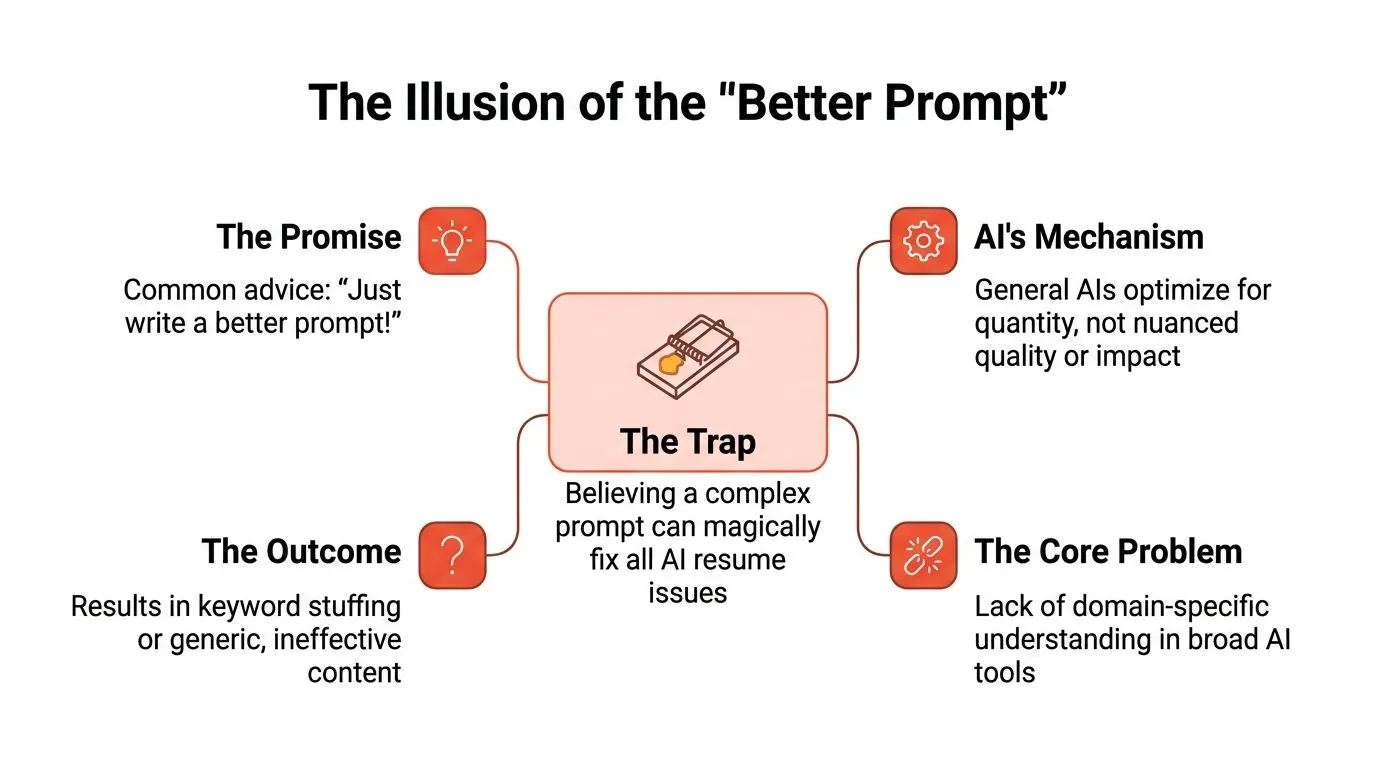
The Lie of the Better Prompt
“Write a better prompt” sounds helpful. It isn't. It's a polite way of telling you to do the hard part yourself.
To get decent output, you're supposed to remember your strongest work, separate responsibilities from results, identify missing keywords, choose the right voice, and trim the bloat after the model overdoes it. That's not prompting. That's resume strategy.
What the process actually asks from you
An effective workflow for ChatGPT for resume writing usually looks like this: list your responsibilities, list your results, feed both into a prompt like “Rewrite my experience in five bullet points highlighting leadership and revenue growth,” then manually refine the output to remove passive language and add keywords from the job description, as shown in this walkthrough on using ChatGPT for resumes.
That's already a lot of work. And notice what happened. You had to know the material before the model could help shape it.
A resume is remembered before it is written
Most mid-career professionals don't walk around with a prompt library in their heads. They have fragments. Half-remembered launches. A project that fixed a mess nobody else wanted. A metric buried in an old deck. A team effort they undersell because they're trying not to sound arrogant.
That's the key challenge.
You don't have a writing problem. You have a remembering and structuring problem.
This is why generic AI gives people such a weird mix of hope and disappointment. The tone sounds clean. The substance is thin. The model can only shape what you hand it, and what it often receives is a rushed summary of work that deserved better.
If you like tinkering with instructions, Markdown Converters' guide to preparing documents with ChatGPT custom instructions is useful. But that's exactly the issue. You shouldn't need a mini operating manual to explain your own career.
For a deeper take on that tradeoff, this breakdown of an AI resume writer vs ChatGPT gets to the same core point. General chat is flexible. Flexibility is not the same thing as editorial judgment.
An Example of Words vs Impact
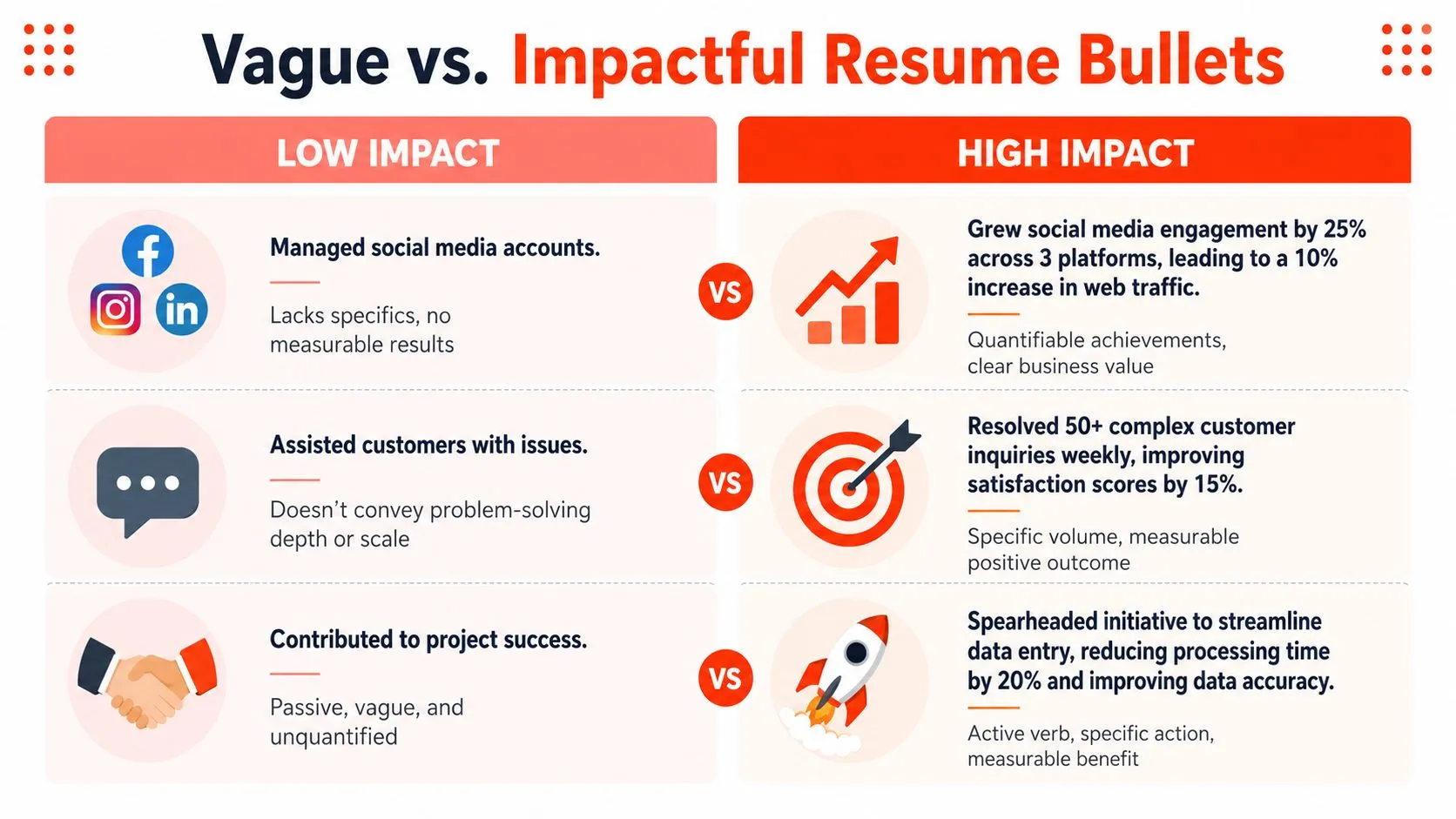
Here's the kind of bullet ChatGPT loves to produce when your prompt is broad:
Managed cross-functional teams to deliver product features
Clean sentence. Weak bullet. It tells me almost nothing.
Why it fails:
- No scale. Was this two people or twenty?
- No context. What kind of features? For whom?
- No strategy. What did you drive?
- No outcome. Did anything improve?
The better version comes from better thinking
A stronger version might look like this:
Led design, engineering, and analytics partners to launch three onboarding features, cutting drop-off in the activation flow by identifying the highest-friction step and simplifying it
Same person. Same work. Very different signal.
What changed was not vocabulary. What changed was editorial choice. We decided the bullet should foreground leadership, product judgment, and business impact. We cut the generic phrase “deliver product features” because it describes almost everyone in product.
The strongest bullets follow an Action Verb + Noun + Metric + Strategy + Outcome framework, and resumes optimized around that structure get 40% more interview invitations than duty-based resumes, according to Teal's guide to resume prompts and bullet structure.
Use the frame, not the fluff
A simple check helps:
| Weak question | Better question |
|---|---|
| What did I do? | What did I change? |
| Who did I work with? | What decision did I drive? |
| What was my responsibility? | What result can I defend in an interview? |
If you want a stronger process for this step, read StoryCV's guide on how to write achievements in a resume. It gets into the difference between listing duties and proving impact.
This short video also shows the gap between generic output and useful output in practice.
Why Keyword Stuffing Gets You Ghosted
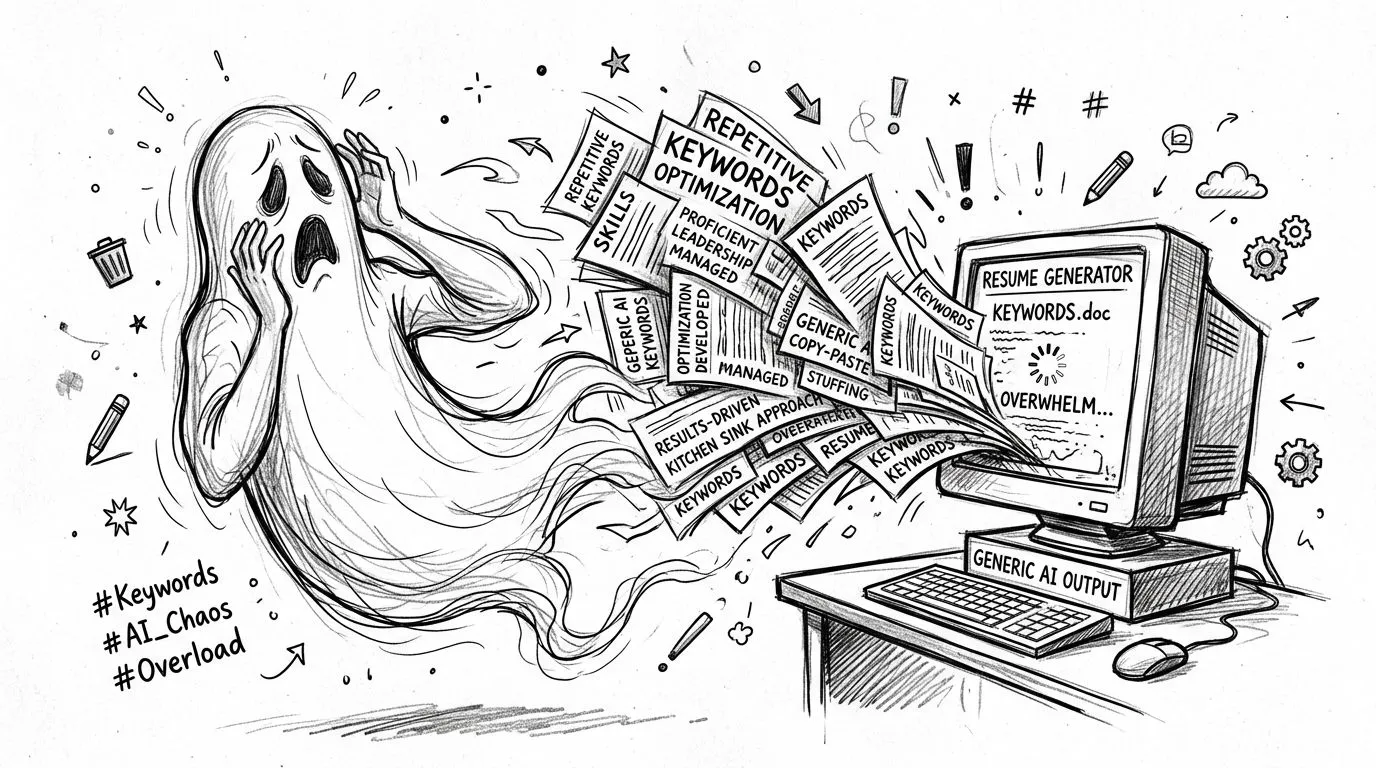
A lot of ChatGPT resumes fail in a very specific way. They look optimized. They read dead.
The model sees “ATS” and panics in the most machine-like way possible. It starts cramming in every skill, phrase, and competency it can infer from the job description. The result is a resume that tries to please software and annoys the human.
The kitchen sink problem
There's a name for this. The Kitchen Sink approach. Everything goes in. Nothing gets prioritized.
That's why these resumes often feel fake even when every sentence is technically fine. They don't make an argument. They just dump relevance signals.
If every bullet sounds equally important, none of them are.
Professionally written human resumes can reach callback rates of up to 22% by value front-loading the most important evidence early, while generic AI resumes using a Kitchen Sink approach tend to land in the 12% to 18% range, according to Resume Your Way's analysis of the callback gap.
Humans scan for meaning, not compliance
A recruiter or hiring manager doesn't reward you for mentioning every possible keyword. They want to know, fast, whether your experience is coherent and whether your strongest work matches the role.
That's where keyword stuffing falls apart for mid-to-senior professionals. You've done work with actual stakes. Budget decisions. Team influence. Process changes. Launches. Recovery from failure. But the AI rewrite flattens all of it into “collaborated,” “utilized,” and “optimized.”
That kind of resume doesn't sound senior. It sounds auto-filled.
The Alternative Is a Conversation Not a Command
The fix is not becoming better at bossing around a chatbot. The fix is using a system that doesn't make you do the editorial heavy lifting alone.
A major 2023 study found that targeted AI résumé writing assistance increased job hires by 7.8%, showing that the right kind of AI can create a measurable advantage over going it alone, according to this summary of the NBER working paper findings.
The right model asks, it doesn't wait
That distinction matters. Targeted help beats a blank canvas because resumes aren't just text-generation problems. They're extraction problems.
A strong resume writer should ask:
- What changed because of your work
- Which part you owned
- What was hard about the project
- What result you can stand behind
- What belongs on the page, and what should be cut
That's a conversation. Not a command.

Why purpose-built beats blank-purpose
This is the case for a dedicated online resume writer. Not because general AI is useless. It isn't. It can be helpful. But the blank-purpose model puts too much burden on the user.
You're expected to know the structure, the framing, the cuts, the hierarchy, and the right wording before the machine can help. That's backwards for someone who is already job hunting, already tired, and already too close to their own experience.
A purpose-built system should pull the story out of you. It should turn fuzzy memories into usable evidence. It should return bullets that already understand what belongs at the front. That's the key difference between generic AI and something like StoryCV. One gives you words. The other is built to give you clarity.
Generic AI produces words. A real resume writer produces decisions.
If ChatGPT gave you polished sludge, don't assume you're bad at resumes. You used the wrong shape of help. StoryCV is an online resume writer built for the part that matters: pulling out your real impact, making the right editorial calls, and turning your experience into bullets that sound like you on your best day.