Your resume bullets are wasted space.
Harsh, but true. If your resume lists responsibilities like "Managed projects," or "Responsible for marketing campaigns," you’re just giving a job description.
Recruiters don’t care what you were supposed to do. They care about what you actually did. They skim for proof: solved problems, quantified results, real value. They won’t connect the dots for you.
This isn’t about finding a magic template. It’s about articulating your wins. The difference between a weak bullet and a strong one is the difference between getting ghosted and getting an interview.
This guide shows you how to turn boring duties into compelling proof. We've got strong resume bullet point examples across eight categories, with before-and-after comparisons. Stop sounding like everyone else.
1. Action Verb + Quantified Result Format
This is the gold standard for a reason. It stops you from listing duties and forces you to show impact. It’s the fastest way to prove your value.
A job duty says what you did. An impact bullet says what happened because you did it.
Before and After: The Impact Is Clear
Let's look at some common resume bullet point examples and see how numbers transform them from passive to powerful.
Before:
* Responsible for managing the sales pipeline and closing deals.
After:
* Increased quarterly revenue by 34% by implementing a new B2B sales strategy, generating $2.1M in new contracts.
Before:
* Helped with customer onboarding.
After:
* Reduced customer onboarding time from 6 weeks to 2 weeks by architecting an automated workflow, improving NPS by 18 points.
Why This Format Works
It delivers results. It answers the "So what?" question before they even ask it. ATS systems love it because it’s full of keywords and metrics like "increased revenue," "efficiency," or dollar amounts.
Strong resume bullet points lead with a power verb and end with a number.
How to Apply This Method
- Start with a Strong Verb: Ditch "Responsible for." Use Architected, Accelerated, Negotiated, Optimized.
- State Your Accomplishment: What project, process, or campaign did you run?
- Add the Numbers: Crucial. Use percentages, dollars, time saved, or user numbers. No exact figures? Use credible estimates based on scope or team size.
- Add Context (Optional): Briefly mention the "how" or "why" (e.g., the specific strategy used).
Writing good achievements is about shifting from tasks to outcomes. This format is the tool to make that shift happen.
2. Problem-Solution-Impact (PSI) Narrative Bullet
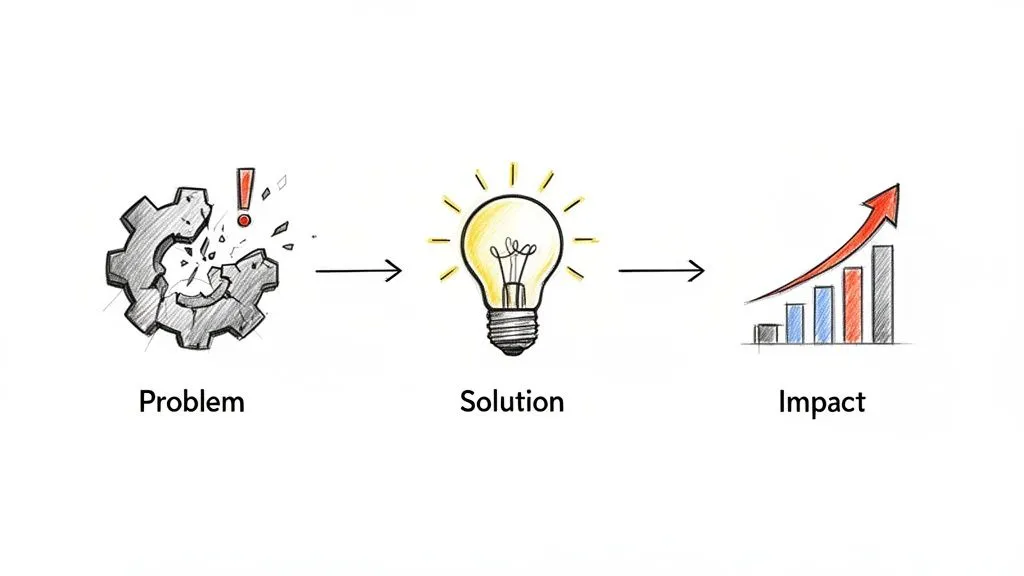
The PSI format is next-level. It tells a mini-story about your strategic thinking. It doesn't just show what you did; it explains why it was necessary, proving you can identify and solve real business problems.
This is perfect for mid-to-senior professionals. It proves you don’t just complete tasks; you drive meaningful change.
Before and After: The Impact Is Clear
Let's look at some bullet point examples for a resume and see how the PSI narrative adds strategic depth.
Before:
* Built a new real-time monitoring dashboard using Datadog.
After:
* Recognized engineering lacked visibility into production issues; built a real-time monitoring dashboard using Datadog, reducing incident response time by 67%.
Before:
* Redesigned the customer onboarding experience.
After:
* Identified customer churn affecting 22% of key accounts; redesigned the onboarding experience using qualitative research, cutting churn to 8% within 6 months.
Why This Format Works
PSI showcases problem diagnosis, critical thinking, and strategic planning. It proves you understand the "why" behind your work. To a hiring manager, it signals you’re a proactive problem-solver, not a passive doer.
How to Apply This Method
- Start with the Problem: Lead with the challenge or inefficiency. Use verbs like Identified, Recognized, Diagnosed.
- State Your Solution: Describe the action you took. What did you build or implement?
- End with the Impact: Quantify the result. Show how your action solved the problem.
- Connect the Dots: The whole bullet should read like a cohesive story.
This format turns your resume from a list of tasks into a portfolio of strategic wins. It's one of the most effective ways to write bullet point resume examples that resonate with leaders.
3. Technical Skills + Business Outcome Hybrid Bullet
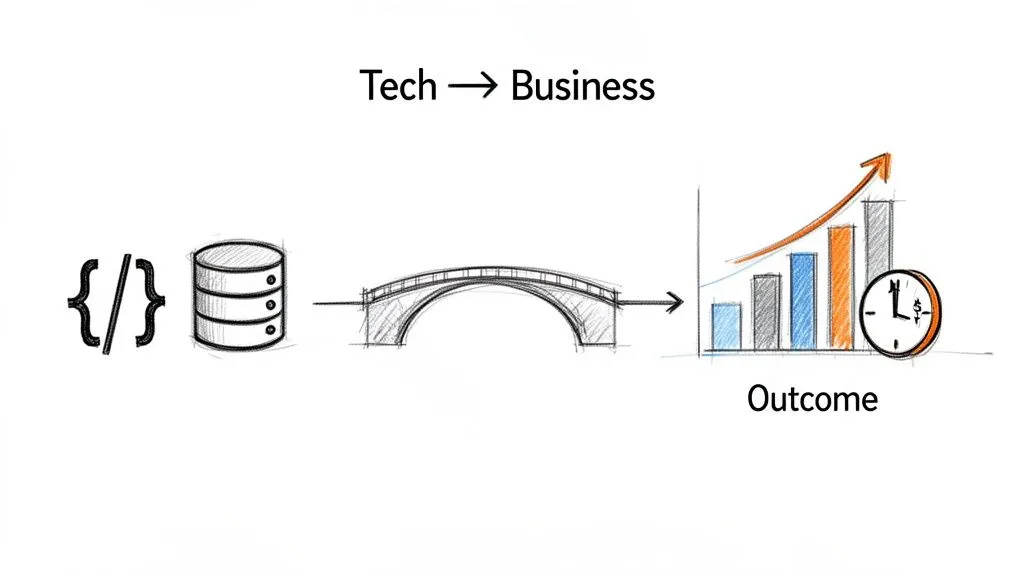
Non-negotiable for tech pros. This format bridges the gap between your technical skills and business value. It proves you don’t just use tools; you use them to solve problems and drive growth.
Companies hire engineers to achieve business outcomes. Show you get this, and you’re already ahead.
Before and After: The Impact Is Clear
Here are some bullet point examples for a resume that transform a tech list into a business-focused achievement.
Before:
* Used Python, TensorFlow, and SQL for customer data projects.
After:
* Implemented a machine learning pipeline (Python, TensorFlow) to predict customer churn with 87% accuracy, saving $1.2M annually through proactive retention campaigns.
Before:
* Responsible for building the testing framework for the application.
After:
* Built an automated testing framework (Selenium, pytest) covering 89% of the codebase, reducing production bugs by 61% and cutting the QA cycle from 2 weeks to 3 days.
Why This Format Works
It speaks to both tech managers and business leaders. A hiring manager sees the technologies they need (Python, AWS). A director sees the results they care about (reduced costs, increased efficiency). These strong resume bullet point examples show both technical competence and business sense.
How to Apply This Method
- Lead with an Action Verb: Start with Architected, Implemented, Optimized, Automated.
- State the Business Outcome: Immediately follow with the quantifiable result. What metric did you improve?
- Specify Key Technologies: Mention the specific tools or languages you used. Be concise. For more ideas, see these examples of technical skills in a resume.
- Add Further Impact (Optional): Add a secondary metric, like enabling faster releases.
4. Leadership & Scope Expansion Bullet
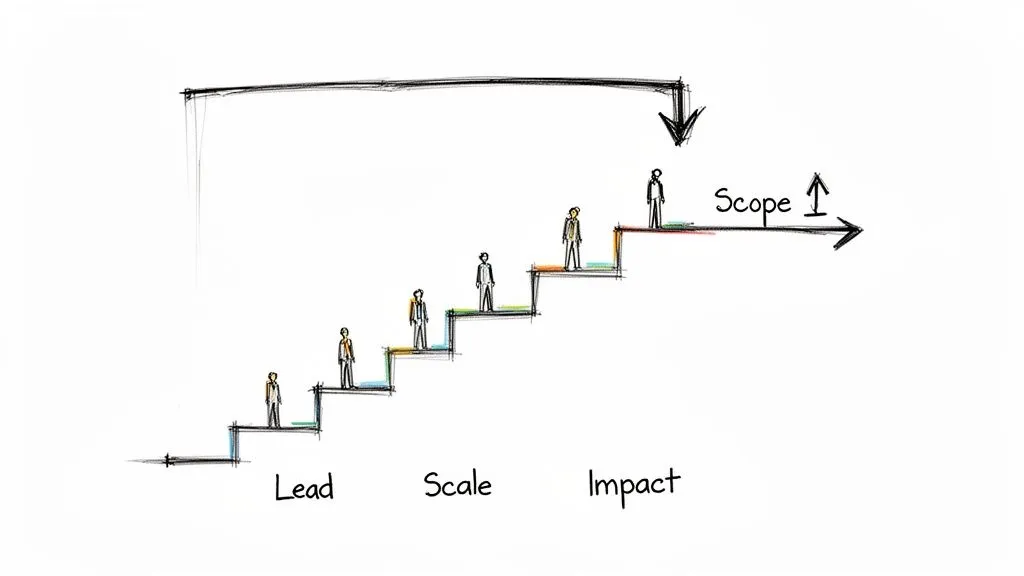
This is for professionals on a growth path. It shows how you've scaled projects, grown teams, or expanded a function. It signals you’re ready for a bigger role.
Stop listing past titles. Tell the story of your increasing impact.
Before and After: The Impact Is Clear
Let's see how framing bullets around scope expansion creates a powerful leadership narrative.
Before:
* Managed the customer success team and company playbooks.
After:
* Expanded the customer success function from 1 to 6 team members, implementing new playbooks that improved customer retention by 28% and increased ARR by $4.2M.
Before:
* Promoted to Lead Data Engineer and managed a team.
After:
* Promoted from individual contributor to Lead Data Engineer, building a team of 5 analysts from scratch and establishing a data infrastructure that supported 3 new product launches.
Why This Format Works
It proves you don't just do tasks; you build and scale value. It shows proactivity and the ability to handle more ownership—key traits for any leadership role. These strong resume bullet point examples connect team growth directly to business outcomes.
How to Apply This Method
- Define Your Starting Point: What was the team size, budget, or scope when you started?
- Describe the Growth: How did you expand it? Use verbs like Scaled, Grew, Expanded.
- Connect to Business Impact: Why did this matter? Tie it to a key metric like revenue or market share.
- Show the Outcome: Clearly state the final state. "Grew team from 2 to 8."
5. Cross-Functional Collaboration & Influence Bullet
Modern work isn't done in a silo. This format proves you can align diverse teams and drive projects forward without direct authority. Essential for roles like product, ops, and marketing.
"Worked with other departments" is meaningless. Showing how you bridged a gap to hit a goal is powerful.
Before and after: The Impact Is Clear
Let's reframe common duties into statements of influence.
Before:
* Coordinated with engineering and marketing on a new product launch.
After:
* Aligned engineering, marketing, and sales around a new GTM strategy, driving a product launch that achieved a 67% conversion rate and $800K in pipeline in Q1.
Before:
* Helped get a new AI feature released.
After:
* Negotiated a shared roadmap across Product, Engineering, and Legal to launch a critical AI feature, accelerating the release by 8 weeks and unblocking a key enterprise deal.
Why This Format Works
This shows you’re a multiplier, not just an individual contributor. You can navigate complex org dynamics to deliver results. It answers the question: "Can this person get things done with people who don't report to them?" It signals maturity and leadership potential.
How to Apply This Method
- Name the Teams: Be specific. State "engineering, design, and finance."
- Describe the Mechanism: What did you do to align everyone? Create a shared dashboard? Run a weekly meeting?
- State the Conflict (Optional): What was the core problem? Budget dispute? Timeline conflict?
- Connect to a Business Outcome: The collaboration isn't the achievement; the result is.
6. Cost Reduction & Efficiency Optimization Bullet
This speaks directly to the bottom line. It shows you can reduce expenses, eliminate waste, or improve efficiency. In any economy, this is a prized skill.
It shows you’re a strategic thinker who protects company resources.
Before and after: The Impact Is Clear
Let’s turn common duties into powerful, money-saving achievements.
Before:
* Responsible for managing cloud computing resources.
After:
* Optimized cloud infrastructure by implementing a reserved instances strategy, reducing AWS spend by 38% ($420K/year) while improving system performance by 22%.
Before:
* Streamlined internal workflows.
After:
* Eliminated redundant processes across 4 departments, saving $210K annually in operational costs without impacting output.
Why This Format Works
Cost reduction is universally understood and valued. It provides irrefutable proof of your commercial acumen. These bullet point examples for a resume signal that you think about the financial health of the business.
How to Apply This Method
- Start with a Strong Verb: Use Consolidated, Eliminated, Streamlined, Renegotiated.
- State the Inefficiency: What did you tackle? A bloated budget? A slow process?
- Add the Numbers: Quantify the savings. Use annual dollar amounts ($XXXK/year) or percentage reduction.
- Add Context (Optional): Briefly mention the method used to add credibility.
7. Innovation & First-to-Market Initiative Bullet
This bullet proves you’re an opportunity-finder, not just a task-doer. It showcases your ability to pioneer new approaches and deliver something novel. Critical for roles in product, strategy, and business development.
Companies want people who create new value. This shows you can build the future.
Before and after: The Impact Is Clear
Let's reframe simple duties into stories of pioneering achievement.
Before:
* Suggested a new sales channel for our products.
After:
* Pioneered a direct-to-consumer model for a traditional B2B company, launching the new channel from concept to $1.8M ARR in just 12 months.
Before:
* Worked on a new feature for the app based on user trends.
After:
* Identified an emerging customer behavior trend; launched a "first-to-market" AI recommendation feature adopted by 38% of active users, increasing engagement by 31%.
Why This Format Works
It positions you as a strategic asset. It tells a hiring manager you bring a unique perspective that can unlock new revenue or advantages. These strong resume bullet point examples signal you can handle uncertainty and create something from nothing.
How to Apply This Method
- Start with a Pioneering Verb: Use Pioneered, Conceptualized, Launched, Introduced.
- State the "First": Clearly define what was new. A new market? A novel process?
- Quantify the Launch Impact: Measure the success with metrics like revenue (ARR), user adoption, or market share.
- Add Context (Optional): Mention constraints (e.g., "on a limited pilot budget") to highlight your resourcefulness.
8. Customer Impact & Satisfaction Bullet
This shifts focus from internal metrics to the end-user. It proves you understand business success is driven by customer outcomes.
A task-based bullet says what you did. A customer-impact bullet shows how their experience improved because of your work.
Before and After: The Impact Is Clear
Let's focus on the customer to transform simple duties into powerful achievements.
Before:
* Responsible for managing relationships with key accounts.
After:
* Implemented a customer advisory board for top 10 accounts, increasing customer lifetime value by 34% and turning 3 at-risk clients into expansion opportunities.
Before:
* Fixed bugs and added new features based on feedback.
After:
* Championed a user-requested API integration, driving feature adoption by 73% of the customer base and reducing churn by 12%.
Why This Format Works
It shows empathy and business acumen. It proves you can connect your work to the bottom line by keeping customers happy. Recruiters look for candidates who think beyond their immediate tasks.
How to Apply This Method
- Start with a Strong Verb: Use Championed, Resolved, Transformed, Advocated.
- State the Customer-Focused Action: What did you do to improve their world?
- Add Customer-Centric Metrics: Use NPS, CSAT, churn reduction, or adoption rates.
- Connect to Business Goals (Optional): Explain how a better customer experience also helped the business.
Stop Filling Boxes. Start Telling Your Story.
You've seen the resume bullet point examples. We've broken down everything from the classic Action + Result to more nuanced structures like Problem-Solution-Impact.
The goal was never to give you lines to copy and paste. That’s a dead end. It leads to a generic resume. The point is to fundamentally shift your mindset.
Your resume is not a form. It’s the executive summary of your professional story.
The Real Takeaway: Frameworks, Not Formulas
A great bullet point is the final product of reflection. It's about understanding the narrative arc of your work.
Think back to the frameworks:
* Action + Result: The most direct way to show cause and effect.
* Problem-Solution-Impact (PSI): The story of your signature projects.
* Technical + Business Hybrid: Bridges the gap between your code and the money it made.
* Scope & Influence: Shows how you expanded your responsibility and influenced others.
These are mental models, not rigid formulas. They are prompts to help you uncover the details that matter.
Next time you update your resume, don't ask, "What did I do?"
Ask yourself:
1. What was the biggest problem I solved?
2. What project am I most proud of, and what was its measurable outcome?
3. When did I save the company time or money? How much?
4. How did my work directly affect a customer?
Answering these questions is the real work. The bullet point examples for your resume are just proof of what this thinking can produce.
You've done great work. The challenge isn't a lack of experience; it's a lack of a system to articulate it. Stop staring at a blank page. Start by asking the right questions.
Tired of the blank page? The guided interview at StoryCV asks you the right questions to uncover these stories. We help you articulate your impact and instantly generate tailored, powerful bullet points like the ones you’ve seen here, turning your experience into a compelling narrative. Get started with StoryCV and build a resume that tells your true story.