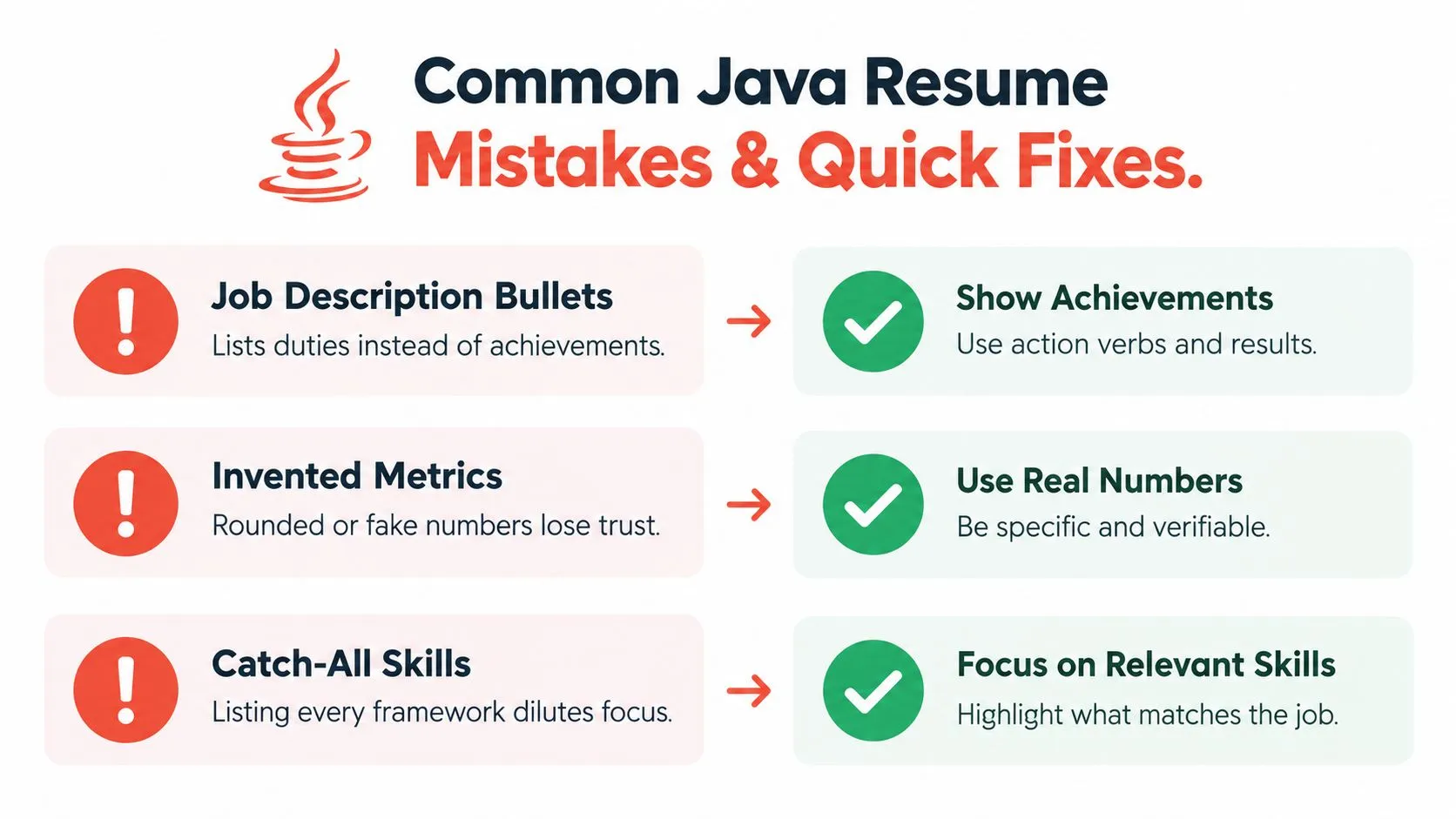
Your resume needs more than just a list of programming languages and software. In today's competitive job market, proving your technical ability means demonstrating quantifiable impact. Simply listing "Python" or "AWS" isn't enough; hiring managers want to see how you used those tools to solve a problem, create value, or drive efficiency. The emphasis on practical abilities is evident in the growing trend of skills-based hiring, which prioritizes what you can actually do over where you learned it.
This guide provides an actionable catalog of examples of technical skills in resume that recruiters and hiring managers are actively seeking. We'll break down the most in-demand skills across key industries like software development, data analytics, IT operations, and product management. More importantly, we'll provide specific, results-oriented bullet point formulas you can adapt to your own experience.
You will learn how to move beyond a simple skills list and instead build a compelling narrative that showcases your expertise. We will cover everything from framing cloud management achievements and data visualization wins to articulating leadership and cybersecurity impact. This approach ensures your resume not only gets past automated applicant tracking systems (ATS) but also captures the attention of the decision-makers who can offer you the job.
1. Cloud Platform Management (AWS, Azure, GCP)
Proficiency in major cloud platforms like Amazon Web Services (AWS), Microsoft Azure, and Google Cloud Platform (GCP) is one of the most in-demand examples of technical skills in a resume today. This skill involves deploying, managing, and optimizing applications and infrastructure in a cloud environment, demonstrating your ability to handle modern, scalable systems. For companies, this expertise translates directly into reduced operational costs, enhanced security, and the agility to scale services on demand.
Why This Skill Is Crucial
Cloud skills are essential because nearly all modern businesses rely on cloud infrastructure to operate. Whether it's a tech startup building a new app or a multinational corporation migrating its data centers, professionals who can manage these complex environments are invaluable. This skill signals to employers that you understand the principles of infrastructure as code (IaC), continuous integration/continuous deployment (CI/CD), and cost optimization.
Actionable Resume Examples
Instead of just listing "AWS," show your impact. Frame your experience with specific, quantified results.
- Weak Example: Managed cloud infrastructure on AWS.
- Strong Example: Architected and deployed a multi-tier, highly available application infrastructure on AWS, achieving 99.99% uptime and reducing monthly hosting costs by 25% through strategic use of EC2 Spot Instances and Lambda functions.
- Strong Example: Implemented a CI/CD pipeline using Azure DevOps for three development teams, automating build and deployment processes and cutting manual deployment time by 60%.
- Strong Example: Optimized GCP resource utilization for a large-scale data processing workflow, leading to a 30% reduction in annual cloud spend by rightsizing Compute Engine instances and implementing BigQuery cost controls.
2. Data Analysis, Visualization & Analytics Engineering (SQL, Python, Tableau, Power BI, dbt, ETL)
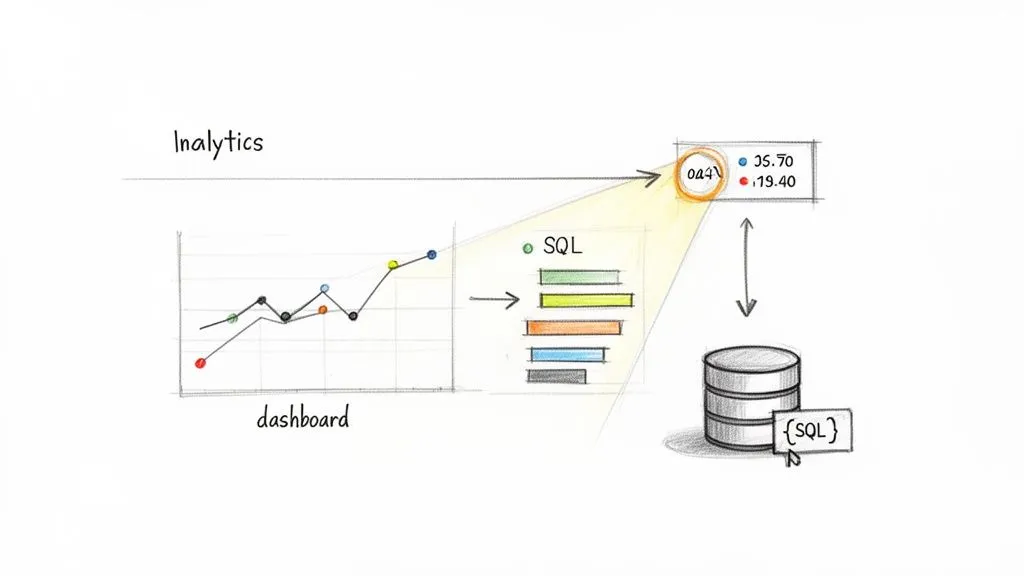
The ability to extract, transform, analyze, and visualize data is a cornerstone technical skill for driving business decisions. This skill set, which includes tools like SQL, Python, Tableau, and Power BI, bridges the gap between raw information and actionable insights. It demonstrates to employers that you can not only interpret complex datasets but also communicate your findings effectively to influence strategy. Companies across all industries seek professionals who can translate data into clear business value, such as identifying cost-saving opportunities or optimizing marketing spend.
Why This Skill Is Crucial
In a data-driven world, companies that leverage analytics effectively gain a significant competitive advantage. This skill is critical because it powers everything from product development to operational efficiency. An employee proficient in data analysis can uncover hidden trends, predict future outcomes, and provide the evidence needed for sound decision-making. Beyond traditional business applications, data analysis skills are vital in fields like sports data science careers in motorsport, where statistical analysis and predictive modeling drive performance. Showcasing these abilities proves you can contribute directly to an organization's bottom line. For more guidance on framing these abilities, explore how to approach listing strengths on a resume.
Actionable Resume Examples
Connect your technical actions to business outcomes. Quantify the impact of your work instead of just listing the tools you used.
- Weak Example: Used SQL and Tableau for data analysis.
- Strong Example: Developed an interactive Power BI dashboard to track supply chain logistics, which identified inefficiencies and led to a $500K annual cost-saving opportunity.
- Strong Example: Wrote and optimized complex SQL queries to analyze customer behavior across a 10M+ record database, informing a targeted marketing campaign that increased marketing ROI by 25%.
- Strong Example: Engineered and deployed Python-based ETL pipelines using dbt to process over 5TB of daily data, reducing analytics latency from days to hours and enabling real-time business intelligence for leadership.
3. Full-Stack Web Development (JavaScript, React, Node.js, databases)
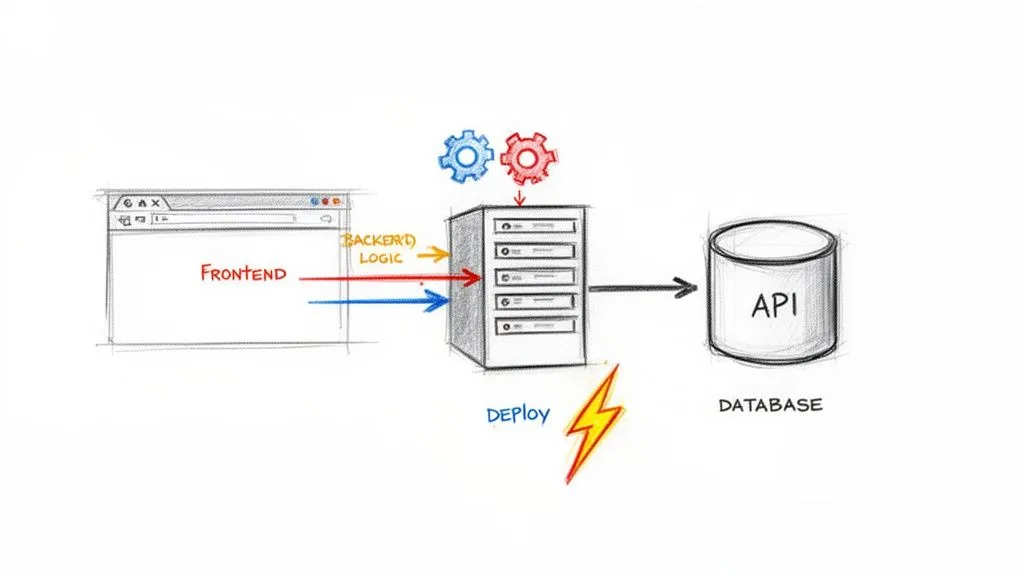
Full-stack development proficiency, covering front-end frameworks like React, back-end technologies like Node.js, and database management, is a powerful example of technical skills for a resume. This skill demonstrates your ability to build a complete web application from the user interface to the server-side logic and database. For employers, a full-stack developer is a versatile asset who understands the entire product lifecycle, reduces dependencies between teams, and can take end-to-end ownership of features.
Why This Skill Is Crucial
Full-stack expertise is highly valued, especially in startups and agile environments, because it enables rapid prototyping and iterative development. It proves you can not only build a functional user interface but also design the APIs, server logic, and database schemas that power it. This holistic understanding of system architecture signals to hiring managers that you can think critically about performance, scalability, and maintainability across the entire technology stack. For more specialized roles, you can learn more about front-end developer career paths on Story.cv.
Actionable Resume Examples
Instead of a generic list of technologies, connect your full-stack skills to measurable business outcomes.
- Weak Example: Proficient in the MERN stack.
- Strong Example: Developed and launched a full-stack SaaS scheduling application using React, Node.js, and MongoDB, acquiring over 1,000 active users in the first six months and processing 10,000+ appointments.
- Strong Example: Engineered a real-time collaborative dashboard with a React front-end and a Node.js/WebSocket back-end, supporting over 500 concurrent users and decreasing data sync latency by 75%.
- Strong Example: Architected and built a scalable e-commerce platform from the ground up, integrating a secure Stripe payment gateway and a PostgreSQL database that managed an inventory of 5,000+ products.
4. Machine Learning & AI Model Development (Python, TensorFlow, PyTorch)
Expertise in building, training, and deploying machine learning models using frameworks like TensorFlow and PyTorch is a highly sought-after technical skill. This capability involves applying statistical methods and algorithms to data, enabling systems to learn and make predictions or decisions. For companies, this skill unlocks the ability to automate complex processes, personalize customer experiences, and derive predictive insights from vast datasets, creating a significant competitive advantage.
Why This Skill Is Crucial
In an increasingly data-driven world, businesses across finance, healthcare, and e-commerce rely on machine learning to solve their most challenging problems. This skill signals to employers that you possess advanced analytical, statistical, and programming abilities. It demonstrates you can translate a business problem into a technical solution, manage the entire model lifecycle from data collection to deployment, and ultimately create tangible business value, a key differentiator in any technical role.
Actionable Resume Examples
Don't just list the algorithms you know. Quantify the business impact your models delivered.
- Weak Example: Built a machine learning model.
- Strong Example: Developed a customer churn prediction model using Python and Scikit-learn, achieving 92% accuracy and enabling proactive retention campaigns that prevented an estimated $2M in annual revenue loss.
- Strong Example: Built and deployed a recommendation engine using collaborative filtering in PyTorch, resulting in an 18% increase in average order value and a 12% lift in user engagement.
- Strong Example: Trained a TensorFlow-based computer vision model to automate quality control on the assembly line, reducing manual inspection time by 70% and decreasing product defect rates by 25%.
5. Cybersecurity & Network Security (Firewalls, Encryption, Penetration Testing)
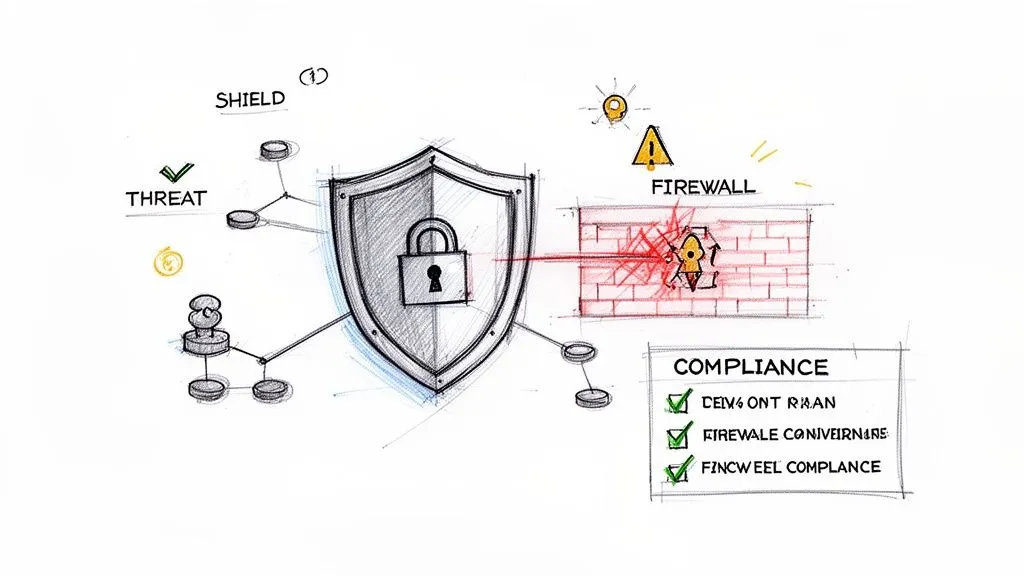
Expertise in cybersecurity is among the most critical examples of technical skills in a resume for any organization today. This skill set involves protecting systems, networks, and data from cyber threats through tools and strategies like firewalls, encryption, and penetration testing. With data breaches costing millions and regulatory penalties becoming stricter, this technical skill demonstrates a deep understanding of risk management, compliance, and organizational resilience.
Why This Skill Is Crucial
In an era of constant digital threats, cybersecurity is no longer just an IT function; it's a core business imperative. Companies are legally and financially obligated to protect customer data and intellectual property. Highlighting cybersecurity skills shows employers you can safeguard their most valuable assets, maintain customer trust, and ensure business continuity. It proves you can think proactively, identifying and mitigating vulnerabilities before they are exploited by attackers.
Actionable Resume Examples
Avoid generic claims like "Experienced in network security." Instead, connect your technical actions to tangible business outcomes like risk reduction and cost savings.
- Weak Example: Responsible for security audits and incident response.
- Strong Example: Led a comprehensive security audit that identified 40+ critical vulnerabilities, securing a $500K remediation investment and preventing potential data breaches.
- Strong Example: Implemented a zero-trust network architecture using MFA and micro-segmentation, which reduced unauthorized access attempts by 95% within the first six months.
- Strong Example: Designed and deployed a new incident response playbook that reduced mean time to detection (MTTD) from 45 days to just 4 hours, significantly minimizing the potential impact of security incidents.
6. DevOps & Infrastructure Automation (Docker, Kubernetes, CI/CD)
Expertise in DevOps practices and infrastructure automation tools like Docker, Kubernetes, and CI/CD pipelines is a powerful example of technical skills for a resume. This skill set involves bridging the gap between software development and IT operations to automate and streamline the entire software delivery lifecycle. For businesses, this translates into faster release cycles, improved application reliability, and a more agile, collaborative engineering culture, which are all critical competitive advantages.
Why This Skill Is Crucial
DevOps and automation are at the heart of modern software development. Companies need professionals who can build, manage, and scale reliable systems that support rapid, continuous delivery. Listing skills like Kubernetes or CI/CD demonstrates that you can create efficient, repeatable, and scalable workflows that reduce manual errors and accelerate time-to-market. This signals to employers that you are a systems-thinker capable of delivering tangible business value through operational excellence.
Actionable Resume Examples
Avoid generic tool listings. Instead, highlight the direct business impact of your automation efforts.
- Weak Example: Used Docker and Kubernetes for containerization.
- Strong Example: Implemented a containerization strategy using Docker and orchestrated deployments with Kubernetes, reducing new server provisioning time from 2 days to 10 minutes and increasing deployment frequency by 400%.
- Strong Example: Architected and maintained a complete GitLab CI/CD pipeline for a microservices application, enabling 50+ automated deployments per day with a 99.98% success rate and cutting developer onboarding time by 75%.
- Strong Example: Automated infrastructure provisioning with Terraform and Ansible, managing 200+ servers as code and eliminating configuration drift, which led to a 90% reduction in environment-related bugs.
7. Project & Product Management (Agile, Scrum, OKRs, Roadmapping)
Proficiency in project and product management frameworks like Agile, Scrum, and OKRs (Objectives and Key Results) are crucial examples of technical skills in a resume for roles that require strategic execution. This skill set involves defining a product vision, prioritizing work through roadmapping, coordinating cross-functional teams, and delivering results on time. For companies, this expertise demonstrates leadership, strategic thinking, and the ability to translate business goals into tangible outcomes, ensuring teams are aligned and focused on impact.
Why This Skill Is Crucial
These skills are essential because they provide a structured approach to complex problem-solving and product development. In today's fast-paced environment, businesses need leaders who can navigate ambiguity, manage resources effectively, and pivot based on data. Listing these skills shows employers you can drive projects from concept to completion, align team efforts with company objectives using frameworks like OKRs, and foster a culture of continuous improvement through methodologies like Agile and Scrum.
Actionable Resume Examples
Instead of just listing "Agile" or "Product Management," show your direct influence on business results.
- Weak Example: Managed a product backlog and led sprint planning.
- Strong Example: Led an Agile product roadmap that grew the active user base from 50K to 500K in 18 months by prioritizing high-impact features identified through user research and A/B testing.
- Strong Example: Implemented a company-wide OKR framework across a 40-person engineering organization, improving strategic alignment and increasing on-time project delivery by 35% in the first two quarters.
- Strong Example: Managed the cross-functional launch of a key retention feature, coordinating marketing, sales, and engineering teams to reduce customer churn by 12% within six months of release.
8. Mobile App Development (iOS/Swift, Android/Kotlin, React Native)
Expertise in mobile app development, including native platforms like iOS (Swift) and Android (Kotlin) or cross-platform frameworks like React Native, is a highly sought-after technical skill for a resume. This skill involves designing, building, and deploying applications for mobile devices, demonstrating a strong understanding of user experience, platform-specific constraints, and performance optimization. For companies, this translates directly to reaching customers on their most-used devices and driving engagement in a mobile-first world.
Why This Skill Is Crucial
With global user behavior now dominated by mobile devices, businesses across every sector need a compelling mobile presence to stay competitive. Professionals skilled in mobile development are essential for creating the user-friendly, high-performance applications that drive revenue, brand loyalty, and customer satisfaction. This skill signals to employers that you can navigate the entire development lifecycle, from concept to App Store or Google Play deployment, and understand critical concepts like API integration, push notifications, and platform-specific design guidelines.
Actionable Resume Examples
Instead of just listing "iOS Development," connect your skills to tangible business outcomes and user-centric metrics.
- Weak Example: Built an iOS app.
- Strong Example: Developed and launched an iOS fitness tracking app using Swift and SwiftUI, achieving over 100,000 downloads and a 4.8-star user rating within the first year by focusing on a responsive, intuitive UI.
- Strong Example: Engineered a new in-app payment module for an Android e-commerce app in Kotlin, reducing payment processing friction and directly increasing checkout conversion rates by 23%.
- Strong Example: Led the development of a cross-platform B2B sales tool using React Native, saving an estimated 40% in development time and resources compared to building separate native applications.
9. Systems Design & Architecture (Microservices, Scalability, Reliability)
The ability to design large-scale, reliable, and maintainable software systems is a critical technical skill for senior-level roles. This expertise goes beyond coding; it involves strategic thinking about trade-offs, scalability, and long-term product viability. Demonstrating this on your resume signals you can make high-level decisions that impact engineering velocity, system resilience, and business growth. For companies, this means hiring someone who can build robust platforms that support future innovation and scale.
Why This Skill Is Crucial
Systems design skills are paramount because poor architectural decisions can lead to crippling technical debt, frequent outages, and an inability to adapt to market changes. An engineer proficient in architecture can prevent these issues by designing systems that are both scalable and maintainable. This skill shows employers you understand complex concepts like microservices, distributed systems, and fault tolerance, proving you can be trusted with a company's most critical technological foundations.
Actionable Resume Examples
Avoid generic claims like "designed software systems." Instead, articulate the problem, your solution, and the resulting business impact.
- Weak Example: Worked on microservices architecture.
- Strong Example: Led the re-architecture of a monolithic application into 30+ microservices, enabling parallel development for 50+ engineers and reducing new feature deployment time from quarterly to weekly.
- Strong Example: Designed and implemented a multi-region, active-active system architecture using traffic routing and data replication, achieving 99.999% uptime and reducing P99 latency by 40% for global users.
- Strong Example: Implemented circuit breaker and bulkhead patterns across critical services, which prevented cascading failures during peak traffic and improved overall system reliability by 95% in Q4.
10. Leadership & Technical Mentorship (Team Development, Delegation, Communication)
While often categorized separately, the ability to lead technical teams and mentor junior talent is a critical technical skill for senior-level roles. This skill involves guiding project direction, developing the capabilities of team members, and establishing processes that improve code quality and productivity. For employers, this demonstrates you are a multiplier, an individual whose value extends beyond your own code to elevate the entire team's performance and foster a sustainable engineering culture.
Why This Skill Is Crucial
Technical leadership is essential for scaling teams and delivering complex projects. A strong technical leader ensures that best practices are followed, knowledge is shared effectively, and junior engineers grow into future leaders. This skill signals to hiring managers that you can be trusted with significant responsibility, from architectural decisions to team-building. It shows you understand the balance between technical execution and people management, a key differentiator for career advancement. These abilities bridge the gap between hard and soft skills, making you a more impactful contributor. For more on this, explore the difference between soft skills vs. hard skills.
Actionable Resume Examples
Instead of generic claims like "mentored junior developers," quantify your influence on team growth and project outcomes.
- Weak Example: Led a team of engineers.
- Strong Example: Grew and led a 15-person engineering team, promoting three engineers to senior roles and establishing a mentorship program that improved new hire ramp-up time by 40%.
- Strong Example: Mentored five junior engineers through a formal development plan, resulting in two promotions within 18 months and a 25% increase in team-wide code contribution velocity.
- Strong Example: Championed and implemented a peer code review process and weekly knowledge-sharing sessions, leading to a 30% reduction in production bugs and a 15% improvement in deployment frequency.
Top 10 Technical Resume Skills Comparison
| Skill / Area | Complexity (🔄) | Resource Requirements (⚡) | Expected Outcomes (📊) | Ideal Use Cases (💡) | Key Advantages (⭐) |
|---|---|---|---|---|---|
| Cloud Platform Management (AWS, Azure, GCP) | High 🔄 hands‑on IaC, security, continuous updates | Moderate–High ⚡ cloud credits, labs, certifications | Scalability & cost savings 📊 reduced ops overhead, faster scaling | Modern apps, migrations, cost optimization 💡 | In‑demand, measurable impact ⭐ certifications & salary premium |
| Data Analysis, Visualization & Analytics Engineering (SQL, Python, Tableau, dbt) | Moderate–High 🔄 technical + communication skills required | Low–Moderate ⚡ BI tools, datasets, modest compute | Actionable insights 📊 dashboards, ROI, data‑driven decisions | BI, marketing, product analytics, reporting 💡 | Broad applicability, high business impact ⭐ |
| Full‑Stack Web Development (JavaScript, React, Node.js) | Moderate–High 🔄 frontend + backend breadth | Low–Moderate ⚡ dev tools, hosting, CI/CD | Working products & MVPs 📊 user growth, feature delivery | Startups, MVPs, web products 💡 | Fast prototyping, visible portfolio ⭐ |
| Machine Learning & AI Model Development (TensorFlow, PyTorch) | Very High 🔄 math, experimentation, model lifecycle | High ⚡ labeled data, compute (GPUs), tooling | Predictive automation 📊 revenue lift, efficiency gains | Personalization, forecasting, computer vision 💡 | High ROI & prestige, strategic advantage ⭐ |
| Cybersecurity & Network Security (Pen Testing, Encryption) | High 🔄 deep networking, threat analysis | Moderate–High ⚡ labs, tooling, certifications | Risk reduction & compliance 📊 fewer breaches, audit readiness | Regulated industries, enterprise security 💡 | Job security, measurable risk mitigation ⭐ |
| DevOps & Infrastructure Automation (Docker, Kubernetes, CI/CD) | High 🔄 integrates dev + ops practices | Moderate ⚡ orchestration, CI/CD, IaC tools | Faster delivery & reliability 📊 higher deployment frequency | SaaS platforms, engineering productivity 💡 | Improves velocity and stability directly ⭐ |
| Project & Product Management (Agile, OKRs, Roadmapping) | Moderate 🔄 stakeholder coordination, prioritization | Low ⚡ frameworks, analytics, cross‑team time | Aligned delivery & outcomes 📊 user growth, revenue impact | Product launches, org alignment, strategy execution 💡 | High visibility, leadership path ⭐ |
| Mobile App Development (iOS/Swift, Android/Kotlin, React Native) | Moderate–High 🔄 platform‑specific constraints | Moderate ⚡ devices, SDKs, app store access | User engagement & distribution 📊 downloads, retention | Consumer apps, mobile‑first experiences 💡 | Visible portfolio, strong market demand ⭐ |
| Systems Design & Architecture (Microservices, Scalability) | Very High 🔄 large‑scale trade‑offs, extensive experience | High ⚡ cross‑team effort, long‑term investment | Scalable, reliable platforms 📊 long‑term performance & cost benefits | High‑scale services, platform engineering 💡 | Massive leverage, strategic product impact ⭐ |
| Leadership & Technical Mentorship (Team Development) | Moderate–High 🔄 people + technical oversight | Low–Moderate ⚡ time, coaching frameworks, hiring involvement | Team growth & productivity 📊 promotions, fewer defects | Scaling teams, culture & career development 💡 | Amplifies impact across organization, career progression ⭐ |
From Skills to Story: Crafting Your High-Impact Resume
Throughout this guide, we've explored a comprehensive catalog of examples of technical skills in resume writing, moving from simple lists to impactful, evidence-based statements. Merely listing technologies like Python, AWS, or Tableau is no longer sufficient in a competitive job market. The true power lies in transforming that list into a compelling narrative of achievement.
Your resume is not just a document; it's your professional story. The difference between a resume that gets discarded and one that lands an interview is the ability to connect your technical expertise to tangible business outcomes.
Your Core Takeaways: The STAR Method Supercharged
To ensure your technical skills truly resonate, distill your experience through these three critical lenses. Think of it as an upgraded framework for crafting every bullet point:
-
Context is King: Always start with the problem you were trying to solve or the goal you were aiming to achieve. Did you need to reduce data processing time, improve application security, or increase user engagement? Framing your work this way immediately gives the reader a reason to care.
-
Tools as the Vehicle, Not the Destination: Your technical skills are the tools you used to drive a result. Instead of leading with "Used SQL," lead with the achievement, "Automated financial reporting by developing SQL scripts..." This positions you as a problem-solver who strategically applies technology.
-
Quantify the Impact: This is the non-negotiable final step. Every technical task has a measurable outcome. Connect your skills to metrics that matter to the business: revenue generated, costs saved, efficiency gained, or user satisfaction improved. A 30% reduction in server costs is far more powerful than just mentioning "AWS cost optimization."
Putting It All Together: From Skill to Bullet Point
Let's revisit the core principle. Your resume's purpose is to prove your value, and the most effective proof is a demonstrated return on investment. The journey from a simple skill to a high-impact bullet point is a strategic one.
- Before: Skilled in Docker and Kubernetes.
- After: Reduced application deployment time by 75% by containerizing legacy services with Docker and orchestrating them with Kubernetes, enabling the team to ship features weekly instead of monthly.
This transformation is the key. It moves beyond a simple keyword match for an Applicant Tracking System (ATS) and tells a human recruiter a story of your competence and business acumen. Mastering this approach ensures that the examples of technical skills in resume you provide aren't just listed; they're proven.
Your technical abilities are your foundation, but the story you build upon that foundation is what secures your next great opportunity. Go beyond the list, focus on the impact, and craft a resume that showcases you not just as a skilled technician, but as an indispensable asset.
Ready to turn your technical skills into a compelling career story? StoryCV acts as your intelligent writing partner, interviewing you to uncover the context and impact behind your work, then crafting resume bullet points that truly stand out. Stop wrestling with words and start building your high-impact resume at StoryCV today.