When you hear the terms soft skills vs hard skills, the basic distinction is pretty simple. Hard skills are the technical, teachable things you can prove you know, like how to code in Python or run a successful SEO campaign. Soft skills are the interpersonal traits that dictate how you show up to work—things like communication, teamwork, and how you handle a crisis.
Defining Soft Skills And Hard Skills In The Modern Workplace
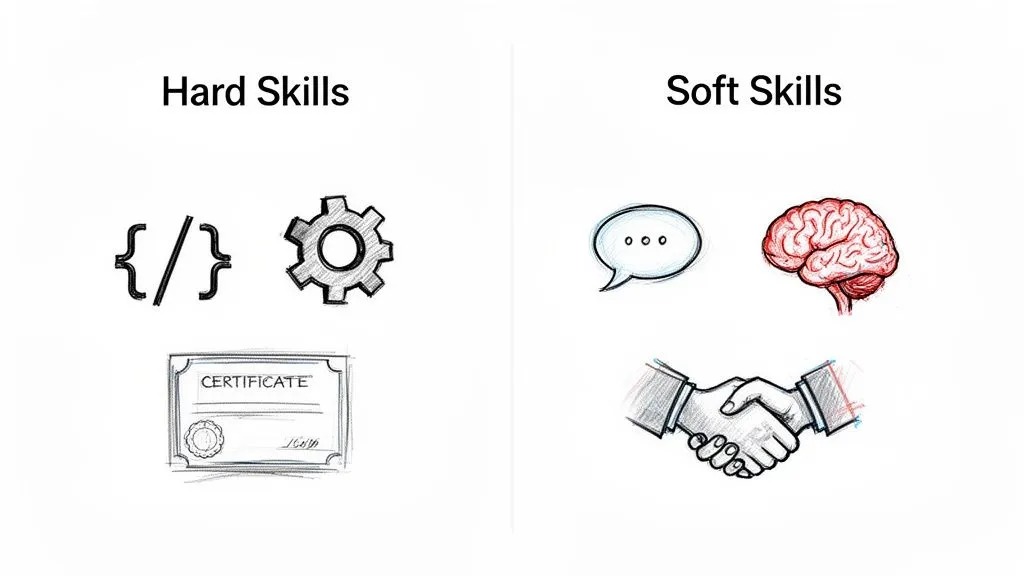
To build a meaningful career, you need a mix of both. Think of them as two sides of the same professional coin. Hard skills are the "what" you can do; soft skills are the "how" you get it done.
Hard skills are concrete and almost always job-specific. You pick them up through school, training programs, or certifications. Because they're technical, they're the easiest to list on a resume and verify with a skills assessment. They get you in the door.
Soft skills, on the other hand, are all about your personality and behavior. These interpersonal abilities are much harder to quantify but are absolutely critical for navigating office politics, collaborating on a big project, or leading a team. You develop these over a lifetime, through every interaction and experience.
Quick Comparison: Soft Skills vs Hard Skills
This table gives you a quick, side-by-side view to lock in the fundamental differences between these two critical skill sets.
| Attribute | Hard Skills (Technical Abilities) | Soft Skills (Interpersonal Abilities) |
|---|---|---|
| How They Are Acquired | Through formal education, training, and certifications. | Through life experience, practice, and social interaction. |
| How They Are Measured | With tests, certifications, and technical assessments. | Through behavioral interviews, references, and observation. |
| Nature | Objective, rule-based, and often technical. | Subjective, people-oriented, and situational. |
| Application | Typically applied to specific tasks or technical problems. | Applied across all roles and interactions. |
| Examples | Python, SEO, Graphic Design, Data Analysis | Communication, Teamwork, Problem-Solving, Leadership |
While your resume might get a recruiter's attention because of your impressive hard skills, it’s usually your soft skills that will land you the job and, later, the promotion. It's a dynamic that's becoming more and more obvious in today's team-based work environments.
A landmark study, pulling from research by Harvard University, the Carnegie Foundation, and Stanford Research Center, found that 85% of job success comes from well-developed soft skills. Hard skills? They only account for the remaining 15%. That number says a lot about what employers truly value.
Ultimately, you have to understand how these two skill types work together. One isn't more important than the other; they're complementary. A brilliant coder (hard skill) who can't communicate with their team (soft skill) is going to cause bottlenecks and frustration. Likewise, a fantastic communicator who lacks the core technical knowledge can't actually do the job.
The key is learning how to blend them and, more importantly, how to show that blend to employers. Our guide on what strengths to list on a resume can help you articulate this balance perfectly.
Hard Skills vs. Soft Skills: More Than Just a Simple Split
It’s tempting to draw a neat line between hard and soft skills, but in the real world, that line is blurry. Their true power comes from how they work together. The real distinction isn't just what they are, but how you learn them, how you prove them, and where they matter most in your career—from getting past a screening bot to landing a leadership role.
Think of it this way: the most effective people don't just have a toolbox of skills; they know how to blend them. A graphic designer’s mastery of Adobe Illustrator is a critical hard skill, but their soft skill in translating a client's vague feedback ("make it pop") is what turns a decent design into a brilliant one.
How You Learn Them
The way we pick up these two types of skills couldn't be more different, and that’s a big reason why employers see them so differently.
Hard skills are usually learned in a straight line. You take a class, follow a tutorial, or get a certification. Think about learning a programming language, financial modeling, or a new software suite. The path is clear, and it often ends with a piece of paper—a credential that proves you know your stuff. A project manager getting a PMP certification is a perfect example of this. It’s tangible proof.
Soft skills, on the other hand, are developed in the messy, non-linear world of human experience. You don't get a certificate for empathy or resilience. You build these muscles by navigating tough team dynamics, bouncing back from a project that went sideways, and actually listening in meetings instead of just waiting for your turn to talk. This makes them much harder to teach in a classroom and, frankly, much harder to fake.
The core difference is this: hard skills are about knowing what to do, while soft skills are about knowing how to be. One is about process; the other is about people.
How You Prove Them
Because you learn them so differently, you have to prove them differently, too. This is where the hard skills vs. soft skills debate gets really interesting, especially when you're trying to get hired.
Hiring managers can test for hard skills pretty easily. They can give you a coding challenge, ask to see your portfolio, or just look for a specific certification on your resume. These are objective, measurable ways to confirm you can do the technical parts of the job. If the role requires SQL, a quick technical screen will tell them everything they need to know.
But soft skills? You can't exactly run a test for good judgment. Recruiters have to dig deeper. They use behavioral questions like, "Tell me about a time you and a coworker disagreed. How did you handle it?" They're not just listening to the story; they're looking for evidence of collaboration, problem-solving, and self-awareness. You prove your soft skills by showing, not telling—describing how your communication skills got a delayed project back on track is far more powerful than just listing "good communicator" on your resume.
Where They Matter Most: Getting Hired vs. Getting Promoted
The most practical way to look at this is through the lens of your career path. Both skill sets are always important, but one usually takes the spotlight at different stages.
-
Getting Hired: Your hard skills are your ticket in the door. They’re the keywords that Applicant Tracking Systems (ATS) are looking for and the basic requirements that get your resume seen by a human. A job description for a data analyst will spell out the need for SQL, Python, and Tableau. If you don't have those, you’re probably not getting a call.
-
Getting Promoted: Once you're in, your soft skills are what drive your growth. The higher you climb, the less your job is about your own technical output and the more it's about leading, influencing, and collaborating. A brilliant coder (hard skill) who can't mentor junior developers or communicate with the product team (soft skills) will eventually hit a ceiling. Leadership, emotional intelligence, and strategic thinking are the things that get you into the C-suite. In fact, one iCIMS study found that 94% of recruiters believe an employee with strong soft skills has a better shot at a leadership role than someone with more experience but weaker soft skills.
Why Soft Skills Matter More Than Ever in an AI World
As artificial intelligence and automation start handling more and more of the technical workload, the age-old debate of soft skills vs hard skills is getting a serious reality check. A lot of the repetitive, technical tasks that once defined entire careers are now being done faster and more accurately by machines. This isn't a sign that humans are becoming obsolete. Far from it. It just means the skills that truly matter are changing.
The goal isn't to out-compete an algorithm at its own game. It's to master the uniquely human abilities that AI can't touch. When a machine can generate code or analyze a massive dataset in seconds, it frees up the human professionals to tackle ambiguous, strategic problems that require a real human touch.
This shift demands a new kind of workforce—one that can not only use the new technology but also lead teams, solve messy problems, and spark genuine innovation. All of these things are powered by soft skills.
The New Power Skills
In a workplace humming with AI, the most indispensable people are the ones who can partner with technology to create something better than either could alone. This kind of collaboration hinges on a specific set of skills that machines are notoriously bad at.
-
Critical Thinking & Problem-Solving: An AI can spit out data and patterns all day long. But it takes a human to look at the results, ask why, and come up with a creative solution to a problem nobody's seen before.
-
Creativity & Innovation: True innovation—that spark of connecting two unrelated ideas to create something brand new—is still a deeply human act.
-
Emotional Intelligence (EQ): Empathy, self-awareness, and the knack for building real relationships are the bedrock of leadership, teamwork, and client trust. You can't program a machine to have a gut feeling or show genuine compassion.
-
Adaptability & Learning Agility: Technology changes fast. The most valuable professionals are those who can learn new systems on the fly and pivot their entire strategy without breaking a sweat.
These aren't just "nice-to-have" personality traits anymore; they are the core differentiators that will define career success for years to come. As AI tools become common, understanding uniquely human values like academic integrity in the age of AI becomes even more critical, proving that ethics and judgment still matter.
The real value of a professional is no longer just what they know (hard skills), but how they think, adapt, and interact (soft skills). Machines can be programmed with knowledge, but they cannot be programmed with wisdom or empathy.
How to Future-Proof Your Career
The single best way to stay relevant in the long run is to invest in your soft skills. A specific programming language might be obsolete in five years, but the ability to communicate an idea clearly or lead a team through a crisis will always be in high demand.
The data is already backing this up. Research shows a clear line between strong soft skills and better career trajectories. One study looking ahead to 2025 found that foundational skills like collaboration and adaptability lead to higher pay and a faster track to leadership roles, often outpacing purely technical experts. This fits with forecasts that the most critical skills for 2030 will be a mix of tech know-how (hard), social and emotional intelligence (soft), and higher-level cognitive abilities. The machines still can't replace a great team. You can read the full research about these findings on hbr.org.
Ultimately, the rise of AI isn’t a threat—it’s an opportunity. It allows us to hand off the grunt work and double down on the very things that make us human. By building up your empathy, creativity, and strategic thinking, you’re not just getting better at your job today. You’re building a resilient career that can thrive no matter what technology comes next.
How To Showcase Both Skill Sets on Your Resume and LinkedIn
Knowing the difference between soft skills and hard skills is one thing. Actually showing them off on your resume and LinkedIn is a whole different ballgame. Your real goal is to build a professional story that gets past the bots and grabs a human recruiter's attention. This takes a balanced approach where your technical skills and people skills back each other up.
Think of your hard skills as the price of admission. They are the specific keywords that Applicant Tracking Systems (ATS) are programmed to hunt for. For these, you need to be direct and precise. List your technical know-how, software fluencies, and certifications in a clear "Skills" section so the machine can find them easily.
Soft skills, on the other hand, need a bit more finesse. Just listing "teamwork" or "problem-solving" on your resume is a waste of space. Why? Because anyone can claim them, but few can prove them. The trick is to embed these traits into your experience section, using your accomplishments to tell a story about how you actually put them to work.
Weaving Soft Skills Into Your Achievements
Stop listing job duties. Instead, write your bullet points as tiny stories of accomplishment that show off your interpersonal abilities. This simple shift turns a boring task list into a compelling narrative of your impact. Every bullet point should silently answer the recruiter's question: "So, how did you actually do that?"
The most powerful way to frame these points is with numbers. Metrics give your claims weight, turning a vague statement into a concrete, undeniable contribution.
Key Takeaway: The best resumes don't just list skills; they prove them. Every bullet point is a chance to connect a hard skill with a soft skill to deliver a measurable outcome.
A project manager, for instance, doesn't just "manage projects." They use communication, leadership, and adaptability to see those projects through to completion. It’s this change in framing that separates a good resume from a great one. Learning how to describe yourself in a resume is really about mastering this storytelling skill.
Blending Skills in Practice
Let’s get practical. Here's a look at how to fuse soft and hard skills into powerful, story-driven bullet points that get results. Notice how the "Highly Effective" examples give context, describe an action, and end with a number. They paint a much clearer picture.
Sample Resume Bullet Points That Blend Hard and Soft Skills
The examples below show how to move from a generic task description to a compelling, story-driven achievement. This is the key to proving your value, not just listing it.
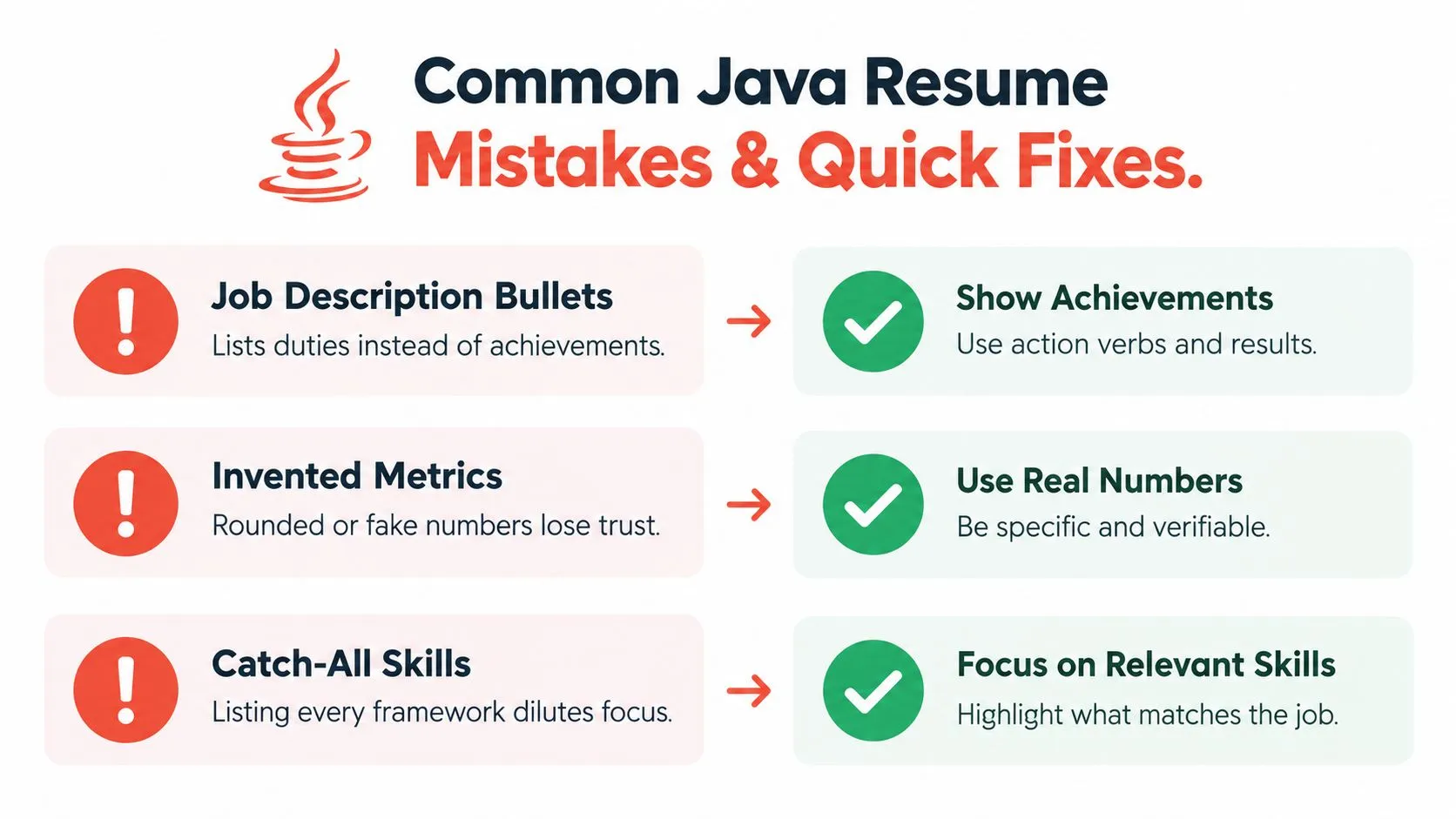
| Role | Generic (Less Effective) Bullet Point | Story-Driven (Highly Effective) Bullet Point |
|---|---|---|
| Marketing Manager | Responsible for SEO and content strategy. | Spearheaded a new SEO content strategy (hard skill) by collaborating (soft skill) with sales and product teams, resulting in a 45% increase in organic traffic in six months. |
| Software Developer | Wrote code in Python and JavaScript. | Enhanced application performance by refactoring legacy Python code (hard skill) and mentoring (soft skill) two junior developers on best practices, cutting page load times by 30%. |
| Customer Service Lead | Handled customer complaints and trained new hires. | Developed a new de-escalation protocol (soft skill) and trained a team of 10 using Zendesk analytics (hard skill), improving customer satisfaction scores by 15% within one quarter. |
These story-driven points work because they show the complete package. You’ve got the technical chops to do the work and the people skills to make it successful. That’s an unbeatable combination.
Optimizing Your LinkedIn Profile
Your LinkedIn profile gives you even more room to tell your story. Don't just dump skills into the "Skills" section and call it a day. Use your "About" summary to weave a narrative about your career, showing how your unique mix of skills led to your biggest wins.
And don’t just claim your skills—prove them. Consider using LinkedIn's Skills Assessment feature to earn badges that validate your technical expertise with an official stamp of approval.
This decision tree shows why roles that depend on uniquely human skills are better positioned for the future.
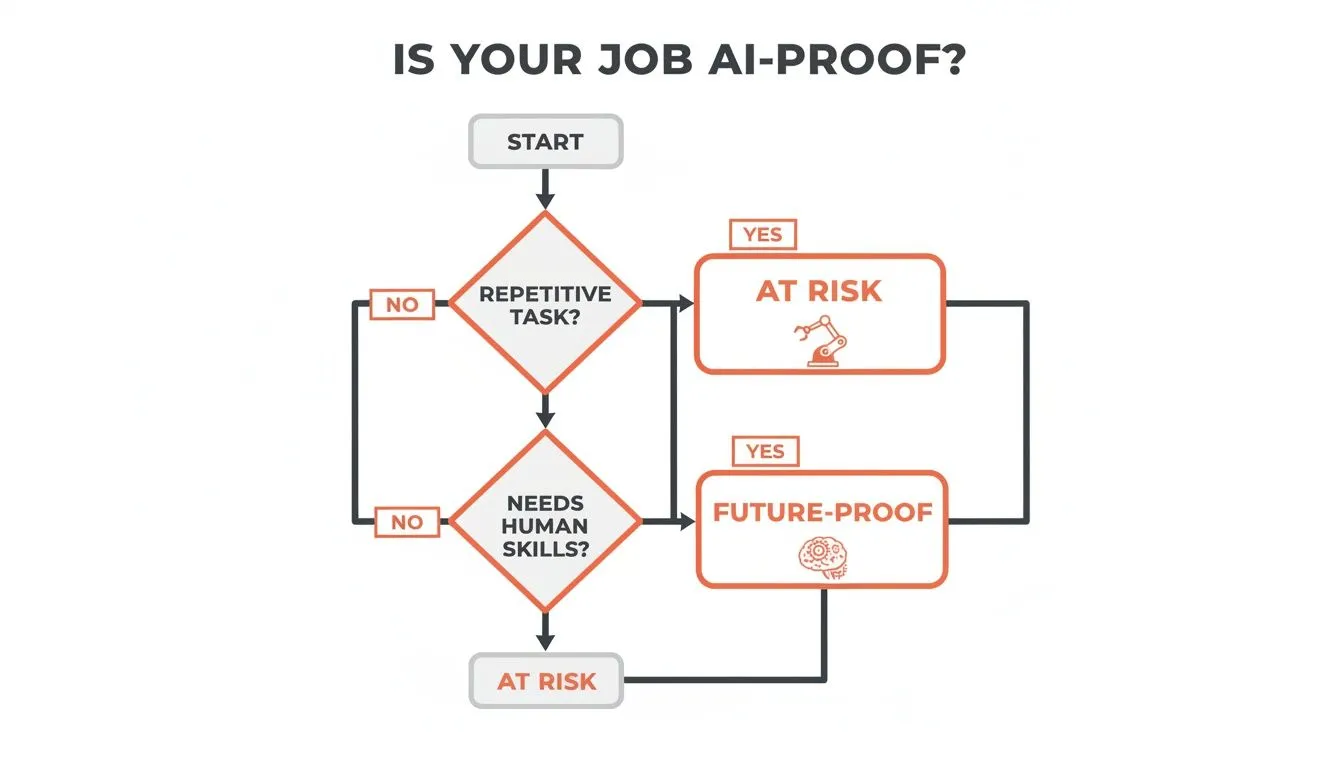
The flowchart drives home a critical point for your career: jobs built on creativity, strategic thinking, and empathy are far more resilient to automation than those based purely on repeatable technical tasks.
Recommendations are another goldmine. A glowing review from a former boss praising your leadership during a crisis is worth more than you calling yourself a leader ten times. Be proactive and ask for recommendations that touch on specific soft skills you want to emphasize. When you combine validated hard skills with demonstrated soft skills, your profile becomes a living, breathing testament to your total professional value.
How to Position Your Skills at Different Career Stages
The balance between soft and hard skills isn't static. It has to shift as you climb the career ladder. The way you frame your abilities as a recent graduate should look completely different from how a seasoned professional does it.
Nailing this dynamic is the key to building a compelling story that connects with what employers actually want at each phase of your career. It's about knowing which skills to lead with. If you're just starting out, it’s all about potential. Mid-career? It's about impact and leadership. And if you’re changing lanes entirely, it's about connecting the dots from your past to your future.
For Students and Recent Graduates
When you’re fresh out of college, your resume can feel a little thin on real-world experience. That’s normal. This is where your soft skills become your most valuable currency. Companies hiring for entry-level jobs don't expect you to be an expert on day one; they’re betting on your ability to learn, adapt, and work well with others.
Your main challenge is to translate academic projects, part-time jobs, and extracurriculars into proof of professional value. Don't just list a group project. Talk about how you used communication and negotiation to get team members with conflicting ideas on the same page. Instead of just mentioning your retail job, explain how you built empathy and problem-solving skills by turning unhappy customers into fans.
- Actionable Tip: Reframe every experience through a soft skills lens. A volunteer gig shows initiative and teamwork. Running a student club proves leadership and organizational skills. Your goal is simple: show you have the interpersonal foundation to thrive in a professional environment.
A recent graduate’s resume is a story about potential. Leading with soft skills proves you’re a smart investment—someone who can be trained on the technical stuff because you already know how to be a great teammate.
For Mid-Level Professionals
After a few years in the workforce, the game changes. You’ve proven you can do the job. Now, employers want to see if you can lead, influence, and think bigger. Moving up to a senior or management role is almost entirely about your soft skills.
Your hard skills are still the bedrock, but now they support your leadership abilities. You have to prove you’re not just a "doer" but a force multiplier—someone who makes the whole team better.
-
Focus On Leadership: Talk about the time you mentored a junior colleague, took the lead on a tough project, or helped resolve a conflict between teammates.
-
Show Strategic Thinking: Describe how you spotted a broken process and proposed a fix, or how your insights helped the team hit a bigger company goal.
-
Quantify Your Influence: Use numbers to connect your leadership to real results. For example, "Mentored three new hires, cutting their ramp-up time by 25% and boosting team productivity."
For Career Changers
Switching careers can feel like you're starting over, but it’s really a translation game. Your biggest hurdle is convincing a hiring manager that your experience in one field is directly relevant to another. This is where your transferable skills—both hard and soft—are everything.
Start by breaking down your past roles. What were the core skills that made you successful? A teacher, for instance, has years of experience in communication, patience, and stakeholder management (juggling students, parents, and admin). Those are gold in any corporate setting.
The key is to build a bridge. Explicitly connect your accomplishments from your old career to the needs of the new one. Show them how your unique background gives you a fresh perspective or a creative way to solve problems. By framing your past through the lens of transferable skills, you make a powerful argument for why you’re the right person for the job, even without direct industry experience.
Demonstrating Your Skills in a Job Interview
The interview is where your resume comes to life. It’s the moment you move past bullet points and prove you have the right mix of soft skills vs hard skills.
When an interviewer asks you to solve a coding problem or walk through a technical process, they’re testing your hard skills. Your answer needs to be clear, confident, and correct. This is the baseline. It proves you can do the job.
But the questions that really separate candidates are the behavioral ones. A prompt like, "Tell me about a time you faced a tight deadline," isn't just about the deadline. It's a test of your soft skills—your problem-solving, your adaptability, and your grace under pressure.
Mastering Behavioral Questions with the STAR Method
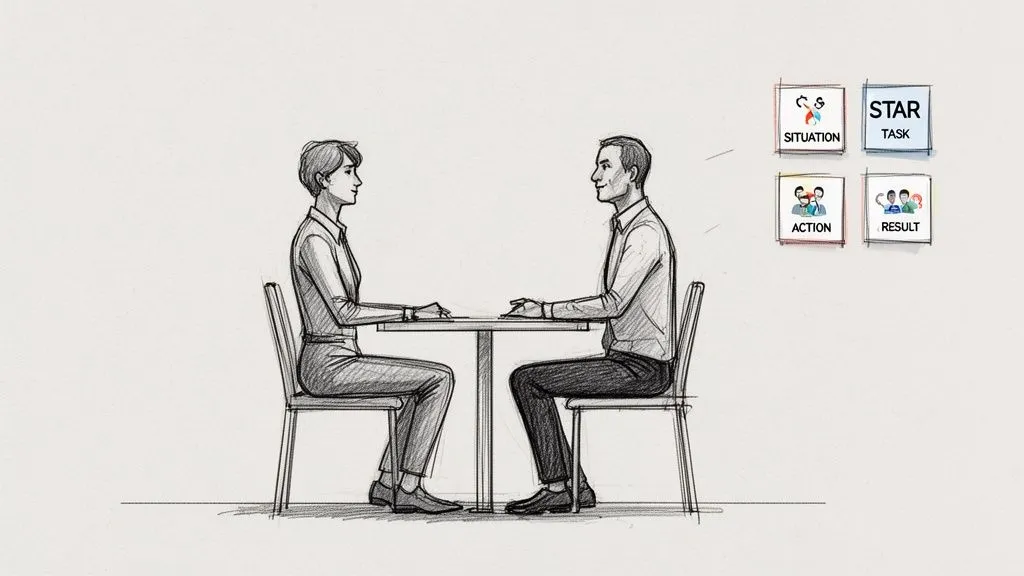
Answering behavioral questions is tricky. Ramble too much and you lose their attention; be too brief and you sound inexperienced. The best way to nail it is with the STAR method. It's a simple framework that forces you to tell a compelling story with a clear beginning, middle, and end.
Here’s how it breaks down:
-
Situation: Briefly set the scene. What was the context?
-
Task: What was your specific goal or responsibility?
-
Action: What specific steps did you take to handle the task?
-
Result: What was the outcome? Use numbers and metrics to show the impact.
Using this structure keeps your answers tight and memorable. It’s the perfect way to show how your hard and soft skills work together to deliver real value.
A well-told STAR story doesn't just list skills; it provides undeniable proof. It transforms a simple claim like "I'm a team player" into a memorable example of how your collaboration led to a measurable win for the company.
Blending Technical and Interpersonal Skills in Your Answers
The strongest candidates weave both skill sets into a single narrative. For example, if you’re asked about a tough project, you can walk through the technical solution (hard skill) while also explaining how you navigated a disagreement with a difficult stakeholder to get buy-in (soft skill).
Hiring managers see hundreds of resumes that list the same hard skills. It’s the candidates who can prove their soft skills in the interview who get the offers. Communication, problem-solving, and adaptability are consistently the differentiators that matter most.
Your first chance to set this balanced tone is with the classic opener: "Tell me about yourself." Nail that, and you frame the entire conversation. You can learn how to craft a powerful response by reading our guide on how to answer "Tell me about yourself".
Ultimately, the interview is your stage. It’s where you prove you’re a complete professional, not just a list of qualifications.
Your Questions, Answered
Let's clear up some of the common questions that pop up when you're trying to figure out the whole soft vs. hard skills puzzle.
Can a Soft Skill Also Be a Hard Skill?
Not really. The line between them is pretty clear, and it comes down to how you learn and measure them. Hard skills are the technical things you can prove you know, like coding in Python. Soft skills are about how you interact with people—think teamwork or communication—and they show up in your behavior.
That said, some roles live in a gray area. Take "project management." It absolutely requires hard skills, like using software to track a budget. But a project will completely fall apart without the soft skills to back it up—clear communication, leadership, and keeping the team motivated. The skill itself isn't a hybrid; the role just demands a strong mix of both.
So, Which Ones Matter More to Employers?
This is the classic "it depends" answer, but it's true. It all comes down to the job. For a junior software developer, your hard skills are your ticket in the door. No one's hiring you if you can't code. But for a management role, soft skills like strategic thinking and emotional intelligence become the main event.
Here’s the bottom line: employers want both. Hard skills will get your resume past the first filter. But it's the soft skills that get you the job offer and help you climb the ladder later on. The real magic happens when you can show you have the complete package.
How Do I Actually Get Better at Soft Skills?
Improving your soft skills is an active game, not a passive one. You can’t just sign up for a bootcamp and check a box. It's about self-awareness and putting in the reps, day after day.
-
Go ask for feedback. Seriously. Ask your manager or a coworker you trust for blunt feedback on your communication style. It might sting for a second, but it's the fastest way to see your blind spots.
-
Practice active listening. In your next meeting, make it a goal to truly understand what someone is saying before you even think about your reply.
-
Step up and lead something. Volunteer to manage a small project or offer to mentor a new hire. This is how you build real leadership muscle, one small decision at a time.
Ready to tell your career story with the right balance of skills? StoryCV's AI-powered platform helps you articulate your impact by blending your technical expertise with compelling, achievement-driven narratives. Get started for free and build a resume that truly represents your value.