Two roads lead to the same resume.
One starts with a polished template, asks you to fill in the boxes, and gets you to a finished document quickly. That's Kickresume, and it's useful when you already know what you want to say. The other starts with a conversation, pulls the useful details out of your work, and formats the result afterward. That's the StoryCV approach.
The choice in a StoryCV vs Kickresume comparison isn't templates versus templates, or features versus features. It's knowing what to write versus knowing how to format it. Kickresume optimizes for presentation. StoryCV is built around the harder content problem. A beautiful template with generic bullets is still a generic resume, just a nicer-looking one.
Two Roads, One Resume
The fork is simple.
Choose Kickresume if your resume content is already sorted and you mainly need a clean, professional document fast. Its templates and design controls solve a real problem. A messy layout can distract from good experience, and a structured builder makes it easier to produce something presentable without wrestling with a word processor.
Choose a conversation-first writer if your work history is strong but your bullets sound flat, vague, or interchangeable. A template can give you a place to write “managed key accounts.” It can't necessarily help you remember which accounts, what changed, what decisions you made, or why the work mattered.
The core test: If you know what to say, use a builder. If you don't know what to say yet, use a process that helps you find it.
Kickresume has the maturity of an established consumer resume product. Its company profile says it was founded in 2015 and trusted by more than 8 million people worldwide according to its company profile. That scale supports its role as a mainstream option for fast document creation.
The broader category is expanding too. Independent market research places the resume building tool market at USD 1.80 billion in 2026, with a projection of USD 3.10 billion by 2033 at a 9.5% CAGR in this market report. That growth creates room for different approaches, not just more template libraries.
Individuals searching this comparison already know which road feels painful. If your current resume looks fine but fails to explain your value, more visual polish probably isn't the answer. The rest of the comparison tests that judgment against workflow, output, ATS concerns, and audience.
| What you need | Better fit | Why |
|---|---|---|
| A polished resume quickly | Kickresume | It starts with layout and structured fields |
| Help finding the substance in your experience | StoryCV | It starts with questions about your actual work |
| A cleaner version of an already strong draft | Kickresume | The content problem is mostly solved |
| Stronger bullets from a messy career history | StoryCV | The process focuses on extracting context and impact |
What Each Tool Is Actually Built to Do
Kickresume's center of gravity is visual production. It gives users templates, structured sections, and writing support that help turn existing information into a readable resume. That's valuable for someone who has already identified the accomplishments worth highlighting and wants a reliable container for them.
The limitation follows from the same design choice. A builder generally expects you to bring the raw material. If you're looking at a job title and can't explain what you owned, improved, protected, launched, or changed, a polished field won't solve that uncertainty.
StoryCV starts from a different assumption: many professionals don't lack experience, they lack a useful first draft. Its guided AI interview asks about the work itself, including decisions, constraints, context, and outcomes, then turns those answers into resume bullets and summaries. That resembles the interview-based workflow used by professional resume-writing services, where a consultation gathers background before drafting as described in this overview of resume-writing services.
The trade-off is real
Kickresume can give you a stronger visual system quickly. StoryCV can give you stronger raw content before you worry about visual presentation. Neither approach is a universal replacement for judgment.
A template-first workflow is efficient when the candidate already understands their own story. It becomes frustrating when every field creates another decision: Which project belongs here? Is this task important? How do I make this sound less ordinary? What counts as an achievement?
A conversation-first workflow moves those decisions earlier and makes them explicit. That costs attention, but it directs attention toward the part of the resume that hiring managers need to understand.
This comparison of Rezi and StoryCV makes the same category distinction useful here. ATS-first builders focus on structure and matching. A writing-led product focuses on turning experience into credible language.
Kickresume isn't badly built because it doesn't conduct a deep interview. It solves a different problem. It's a document builder with writing assistance. StoryCV is an online resume writer that applies editorial judgment at software speed. The choice depends on whether the missing piece is the container or the content.
How the Workflow Feels in Practice
Take a mid-career product manager with experience across launches, internal systems, and cross-functional teams. The person has done meaningful work but currently describes it with broad phrases such as “managed product roadmap” and “collaborated with stakeholders.”
On Kickresume, the workflow begins with a template. The user chooses a visual direction, enters contact details, adds roles, and moves through labeled fields. Examples and suggested language can help inspire a phrase, but the candidate still has to decide what the phrase should describe.
That creates a familiar sequence:
- Choose the structure. The page starts to look finished before the content is finished.
- Fill in the history. The user enters titles, employers, dates, and responsibilities.
- Balance the page. Bullets get shortened or expanded partly because the layout feels uneven.
- Polish the language. The candidate edits wording, often without changing the underlying evidence.
The workflow feels productive because the document takes shape immediately. That's the strength. The quiet friction is that visual progress can disguise unresolved content decisions.
The conversation changes the order
With StoryCV, the product begins by asking about a recent project. What problem were you dealing with? What did you own? Who depended on the outcome? What changed after your work? Which constraint made the decision difficult?
The candidate answers in ordinary language. The system turns those answers into draft bullets, then the user reviews tone, accuracy, and emphasis before choosing a layout. The document appears later, after the thinking has happened.
That sequence feels less decorative at first, but it creates momentum for people who struggle to write about themselves. They aren't asked to invent polished bullets from nothing. They're asked to recall specific work and react to a draft.
A template creates visible progress. A guided interview creates usable evidence.
The difference matters most for professionals with complex histories. Product managers, operators, engineers, and managers often remember projects as a chain of decisions rather than a tidy list of achievements. A question-led workflow helps recover that chain. A template helps organize it once recovered.
If you already have excellent bullets, Kickresume's faster path is the sensible one. If you keep rewriting the same vague material, the extra visual speed won't save you much time.
What the Output Actually Reads Like
The content gap becomes obvious when you place two bullets beside each other.
Suppose the work input is a product manager who inherited a delayed internal platform project, coordinated engineering and operations, clarified priorities, and helped the team deliver a usable release. A generic builder can turn that into a clean sentence. A guided conversation can uncover the decisions and stakes behind it.
| Work Input | Generic Template Bullet | Guided-Conversation Bullet |
|---|---|---|
| Took ownership of a delayed internal platform project and coordinated several teams | Managed the product roadmap and collaborated with cross-functional stakeholders | Reframed priorities for a delayed internal platform, aligned engineering and operations around a smaller launch scope, and moved the team toward a usable release |
| Improved a recurring internal process | Improved processes and increased efficiency | Reworked a recurring handoff between teams, clarified ownership, and reduced the confusion that was slowing follow-through |
| Led work without direct authority | Led cross-functional initiatives and communicated with stakeholders | Drove a cross-functional initiative without direct authority by resolving competing priorities and keeping contributors aligned on the decisions that mattered |
The generic versions aren't grammatically wrong. They're underpowered. They describe familiar activities without giving the reader a reason to remember this candidate.
Specificity changes the reader's job
“Managed key accounts” forces the hiring manager to do the interpretation. Which accounts? What kind of responsibility? What did the candidate protect or improve? The stronger version supplies enough context to show judgment without turning the resume into a project report.
That distinction matters because the first human review is extremely fast, about 10.2 seconds on average, according to the hiring data cited in the StoryCV and Kickresume comparison from Jobsprout. The page needs to communicate substance quickly. Layout helps the eye move. Specific content gives the eye something worth stopping on.
Strong bullets also improve the rest of the application. Once the resume has a clear argument, the summary can state the candidate's direction. The skills section can support that argument instead of listing every tool ever used. The cover letter can open with the same evidence rather than repeating a job description.
Design is the delivery mechanism. It isn't the message.
ATS Compatibility, Pricing, and Data
ATS compatibility deserves a practical answer, not superstition.
A clean export can be parsed more reliably than a document overloaded with visual tricks. The risks usually come from complicated structures, dense multi-column layouts, decorative icons, and information that exists only as an image. A simple document with standard section headings and relevant language is easier for software and humans to interpret.
Kickresume's ATS Resume Checker is described as running more than 20 checks across formatting, design, typefaces, structure, and content, returning a numeric score with itemized issues in this independent review. That score is useful as a readability diagnostic, but it isn't a job-specific match score. A resume can pass formatting checks while still using the wrong evidence or language for a particular posting.
| Dimension | StoryCV | Kickresume |
|---|---|---|
| Primary workflow | Guided interview followed by drafted content | Template-led resume creation |
| Content responsibility | Helps uncover context, decisions, and outcomes | Assumes the user has the core content |
| Layout role | Packages the drafted narrative | Central part of the creation experience |
| ATS focus | Balances readable structure with human wording | Offers structured templates and an ATS checker |
| Pricing posture | Start with one fully written role for free, then unlock broader access through a monthly plan | Current limits and paid features should be checked directly before purchase |
| Data questions | Review retention, deletion, and model-use policies before entering sensitive history | Review the same policy questions before uploading career information |
Don't confuse an ATS score with a hiring signal
An ATS checker can identify structural issues. It can't decide whether your achievement sounds credible, whether your career pivot makes sense, or whether your strongest evidence appears near the top of the page. That's why AI resume screening guidance from StoryCV is useful context. Screening software is one stage in a hiring process, not the entire reader.
Pricing changes, so exact current figures shouldn't be treated as permanent. Compare what each plan provides, especially AI assistance, exports, editing, and multiple roles. A low-cost template is poor value if you still spend hours inventing the content. A writing workflow is poor value if you already have a finished, defensible resume and only need a different layout.
Privacy deserves the same scrutiny. Check how long the service retains uploaded career history, how account deletion works, and whether the company says user content is used to train future models. If you're adding a headshot, treat that as a separate decision and review AiHeadshots 2026 headshot guidance rather than assuming a photo belongs on every resume.
Who Each Tool Is Built For
The audience fit is clearer than the feature lists suggest.
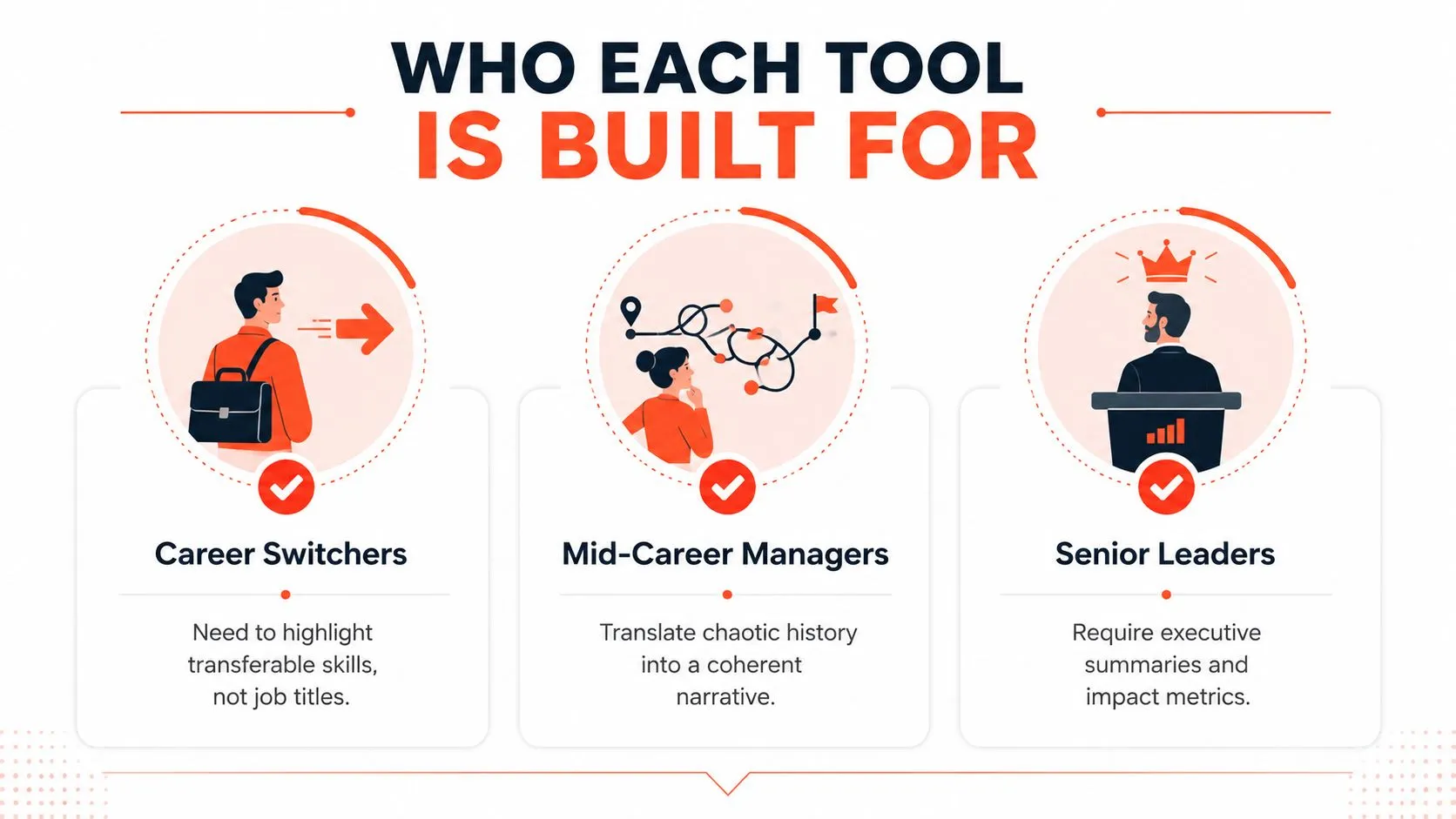
Career switchers need translation. Their old titles may not make the new direction obvious, so they need help surfacing transferable decisions, outcomes, and skills. A conversation-led process fits that problem better than a template that treats every role as a set of empty fields.
Mid-career managers often have the opposite problem from new graduates. They have too much history, spread across projects, teams, systems, and reorganizations. They need an editor that can find the through-line and remove the work that no longer supports the target role.
Senior leaders need compression. Their resume can't become a biography. It has to express scope, judgment, business impact, and leadership context without burying the reader in operational detail.
When Kickresume is the better choice
Kickresume is the sensible choice for people who already have the argument.
That includes students and first-job seekers with a straightforward history, designers who want a clean CV quickly, and professionals replacing a working resume with a better-looking version. It also fits anyone who has reviewed their bullets and can defend them clearly in an interview.
A strong existing draft changes the economics of the decision. You don't need a product to interrogate your history if you've already done that thinking. You need a readable container, fast editing, and a presentable export.
Decision rule: If the problem is “my resume looks dated,” choose a builder. If the problem is “my resume doesn't sound like the value I bring,” choose a writer.
The hybrid case is easy to diagnose. If interviews aren't happening despite a polished document, revisit the substance before changing templates. If interviews happen but the resume is visually chaotic, improve the presentation. Don't use design to avoid a writing problem.
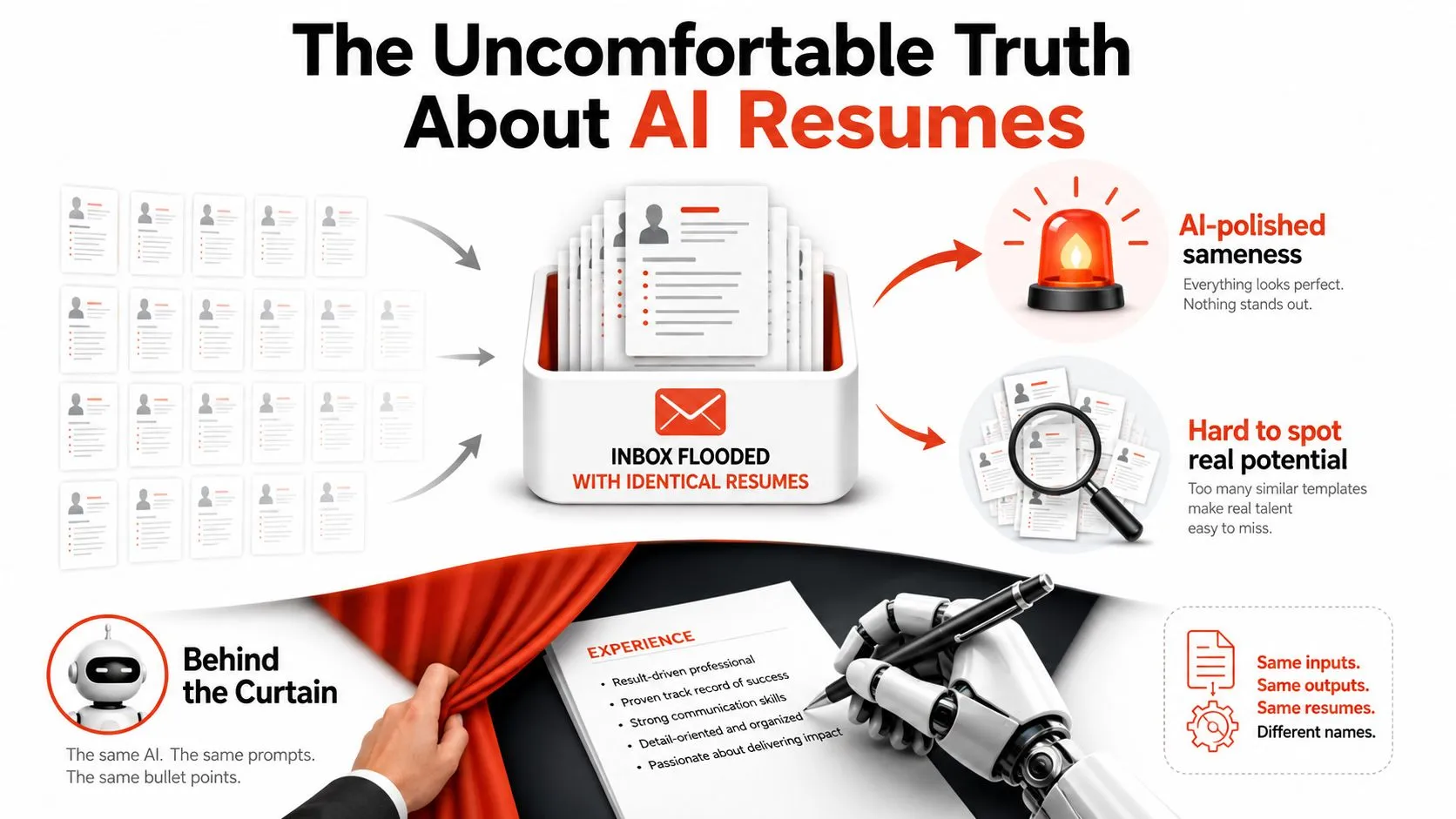
The Uncomfortable Truth About AI Resumes
AI has made resume production easier. It may also make the average application more similar.
When many candidates ask an AI system to describe the same project manager responsibilities, the output tends to cluster around familiar phrases. “Results-driven.” “Cross-functional collaboration.” “Strategic initiatives.” “Stakeholder management.” None of these terms is automatically useless. They become weak when they replace the actual story.
The problem isn't that AI writes quickly. The problem is that speed can remove the pause where the candidate has to decide what mattered. A faster generic bullet is still generic. A polished resume can pass a formatting check and still give a hiring manager no memorable evidence.
The differentiation moved upstream
Kickresume can help candidates package content efficiently. StoryCV's interview-led method aims to improve the content before packaging. That distinction matters more as applicants use AI across the entire search, from drafting resumes to tailoring applications. A LinkedIn survey cited by this overview of AI resume builders found that nearly 70% of people had used AI in their job search, including for resume drafting and application tailoring.
The sensible response isn't to reject AI. It's to demand better inputs and better questions. The tool should force you toward role-specific nuance, real decisions, credible scope, and an authentic voice.
Watch this short video for a visual look at the difference between automated output and stronger resume thinking.
A useful comparison of an AI resume writer and ChatGPT makes the key distinction clear. Generic AI gives you a responsive text box. A guided writer gives you a process designed to uncover evidence.
Judge both products by the quality of thinking behind the bullets. The number of clicks to a PDF is secondary.
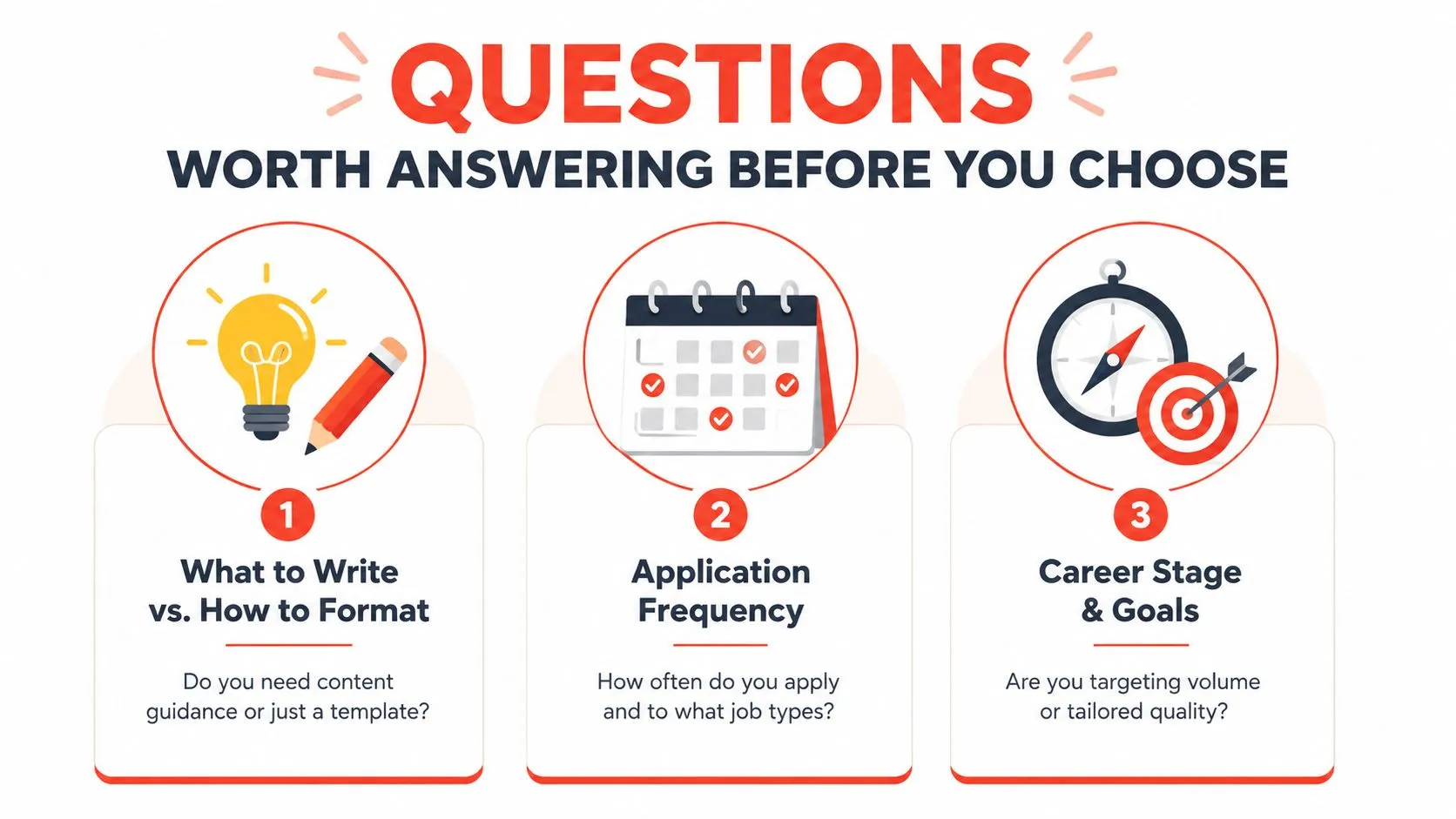
Questions Worth Answering Before You Choose
Start with the bottleneck, not the feature page.
Do you know what to write, or only how you want it to look? If your current bullets are specific and defensible, Kickresume's template-first path is enough. If they read like duties, choose a workflow that helps extract the story.
How often are you applying? High-volume applicants need a repeatable process, but speed can't come at the cost of sameness. Selective applicants need sharper tailoring and stronger evidence for each target role.
Are you starting from zero? If you have an existing CV, upload and revise it where possible. If your history is scattered across old documents, performance reviews, project notes, and memory, an interview-led workflow will reduce the burden of assembling everything yourself.
Do you need layout flexibility or content judgment? Export control and ATS readability matter, but they're not substitutes for relevant achievements. Independent resume guidance from LinkedIn, Monster, and ATS-focused career sources says a two-page resume is acceptable for many applicants and isn't automatically rejected by ATS software. Relevance and readability matter more than an arbitrary page count in this resume-length guidance.
Before paying, answer these four questions:
- Content: Can I write my strongest bullets without help?
- Audience: Am I targeting one role family or several?
- Workflow: Do I need a guided interview or just editable fields?
- Output: Do I need a polished document, better evidence, or both?
StoryCV is an online resume writer, not a template library. It interviews you about your work, turns the useful details into credible bullets, and helps you build a clearer narrative before formatting takes over. If your experience is stronger than your current resume, visit StoryCV and start with one fully written role.