Most accomplishment advice is backwards. It tells you to hunt for impressive outcomes first, as if good resume bullets start with glory and work backward.
They don't. You don't have a writing problem. You have a noticing problem. Staring at a resume and trying to remember your accomplishments is like looking through the wrong end of the telescope. “Accomplishment” sounds dramatic. Most work isn't dramatic. It's a series of quiet calls, small fixes, and trade-offs that kept things moving.
That's why people search for an accomplishments resume sample in the first place. They want proof of what counts. Fair enough. But copying someone else's example won't help. The value isn't in the wording. It's in the structure underneath it.
This is a field guide, not a swipe file. If writer's block is part of the problem, My Book Written's advice on writer's block gets at the same root issue from a different angle. For resumes, the useful question is simpler. What changed because you were the one doing the job?
1. The Decision and Constraint Pattern
A duty says what sat on your job description. An accomplishment says what changed because you made a choice inside a constraint.
That's the pattern. Constraint. Decision. Result.
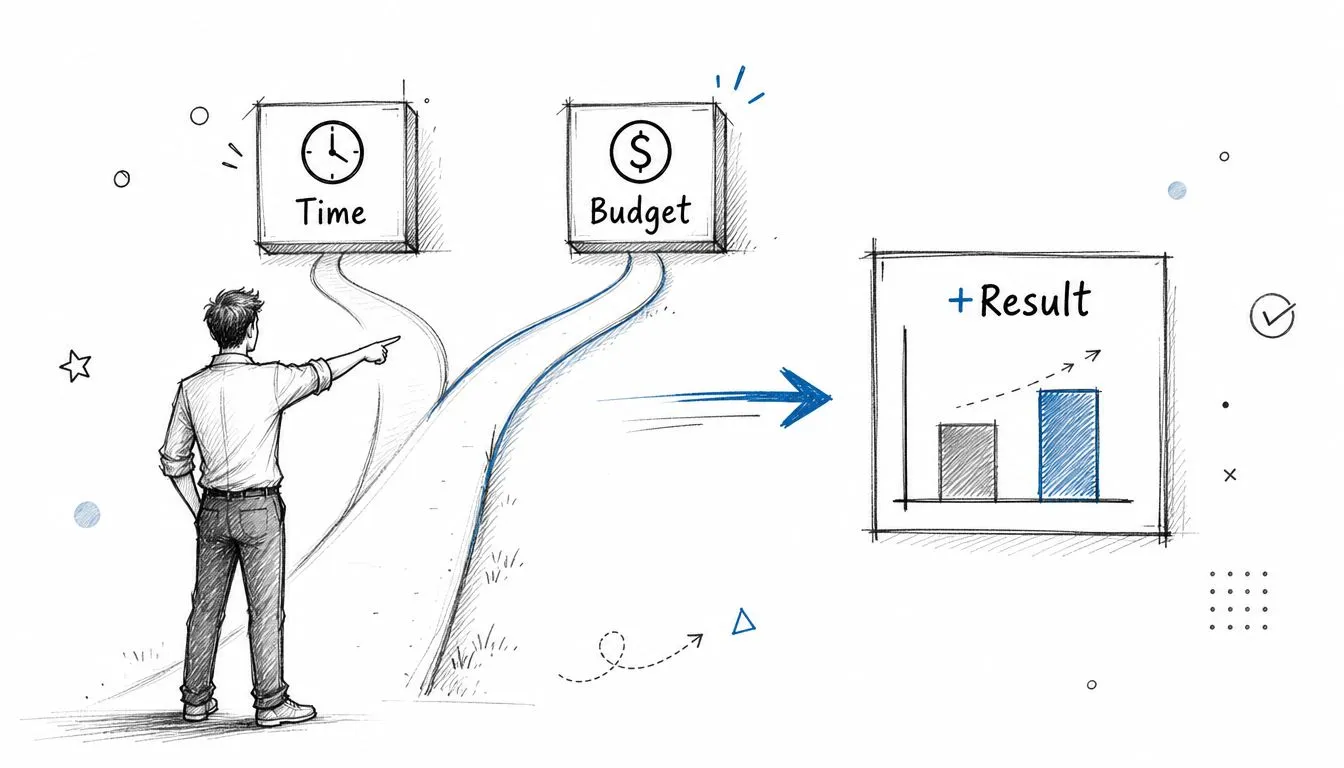
Duty versus accomplishment
Hypothetical scenario A
Duty bullet:
- Managed project timelines and coordinated team reviews.
Accomplishment bullet:
- Batched review requests into two daily windows during a high-volume release cycle, which cut interruptions for the team and made review turnaround more predictable.
The second one works because it names a choice. You didn't just "manage." You changed how the work moved.
Hypothetical scenario B
Duty bullet:
- Worked with stakeholders to keep delivery on track.
Accomplishment bullet:
- Held scope steady when last-minute requests threatened the timeline, which protected the core deliverable and kept the launch on schedule.
That sounds closer to real mid-level work. Not fireworks. Judgment.
Practical rule: If the bullet still makes sense after replacing your name with anyone in the same role, it's probably a duty.
What to notice while work is happening
Individuals often miss these moments because they don't label them in real time. They just do the work and move on.
- Notice the limit: Time, budget, ambiguity, headcount, messy ownership.
- Notice the fork: You chose one path and rejected another.
- Notice the consequence: Something became faster, clearer, safer, or more stable.
If you work in product or adjacent roles, good product owner resume examples often hinge on this exact kind of decision-making, not generic ownership language.
2. The Before and After That Isn't About Scale
People think an accomplishment only counts if the numbers look huge. That's nonsense. A before and after can be modest and still matter.
A messy process becoming usable is an accomplishment. A confused handoff becoming clear is an accomplishment. Stability counts.
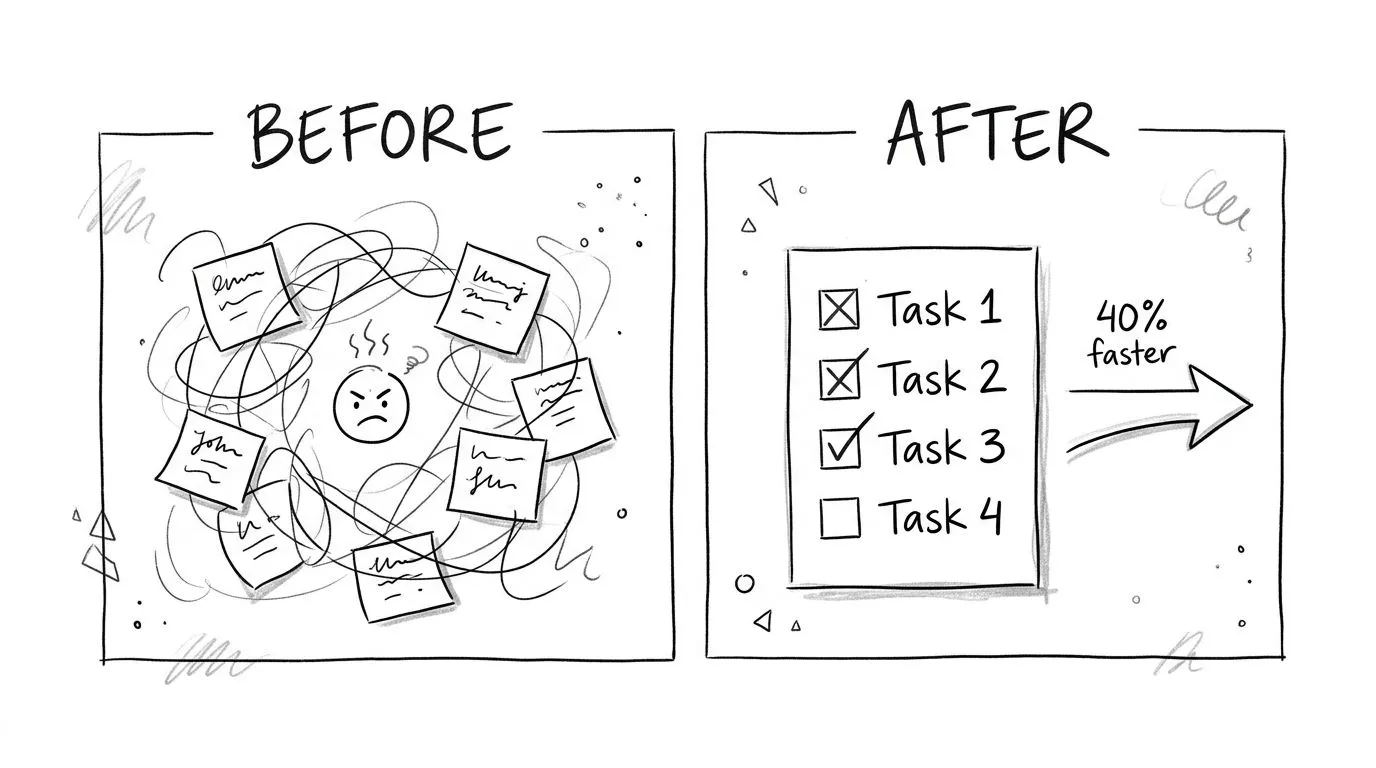
Two rewrites that show the shift
Hypothetical scenario C
Duty bullet:
- Helped onboard new team members.
Accomplishment bullet:
- Replaced scattered onboarding notes with one maintained guide, so new hires had a single place to find core processes and ramped up with less confusion.
Hypothetical scenario D
Duty bullet:
- Supported client handoffs.
Accomplishment bullet:
- Standardized handoffs in a shared format after repeated misses, which reduced back-and-forth and made ownership clearer for the next team.
Neither bullet needs inflated drama. They work because they describe movement from broken to better.
Recruiters expect most bullets to include at least one number or percentage, and unquantified bullets often read like a task list, not proof of impact, according to Resumly's guidance on using numbers and percentages in achievement statements. But if you don't have hard numbers, name the directional shift with specificity. Don't fake metrics.
Don't minimize the quieter win
Accomplishment sounds like it should be reserved for a rescue mission. It isn't. Quiet improvements count because work gets done through accumulation, not legend.
If you want more examples of how those shifts read on the page, how to write achievements in a resume is useful because it focuses on turning ordinary work into visible impact.
3. The Constraint Trade-Off You Navigated
Senior work often looks boring from the outside because the primary task isn't doing more. It's deciding what not to do.
That's why this pattern matters. A trade-off shows judgment. It proves you can choose under pressure without pretending every outcome was perfect.
What honest accomplishment language looks like
Hypothetical scenario E
Duty bullet:
- Oversaw product delivery and feature prioritization.
Accomplishment bullet:
- Delayed lower-priority requests to protect the core release, which let the team ship the stable version on time instead of stretching into a fragile launch.
Hypothetical scenario F
Duty bullet:
- Managed competing stakeholder requests.
Accomplishment bullet:
- Cut nonessential deliverables when capacity tightened, keeping the project supportable instead of promising a broader rollout the team couldn't maintain.
These work because they admit reality. You gave something up. That's not weakness. That's adult decision-making.
You don't need a miracle ending. You need a credible account of what you chose and why it mattered.
The mistake people make
They hide the trade-off because they're worried it sounds negative. Wrong move. Mid-to-senior hiring managers know work involves loss functions. They trust bullets that acknowledge pressure, competing needs, and imperfect choices.
A copied accomplishments resume sample usually fails here. It smooths out the hard edge. Real accomplishments have friction.
4. The Unsexy Efficiency Shift
Some of the best work never becomes a company all-hands slide. It just saves people time every week.
That counts. Especially if you're in operations, admin, support, finance, or any role where smooth systems matter more than visible heroics.
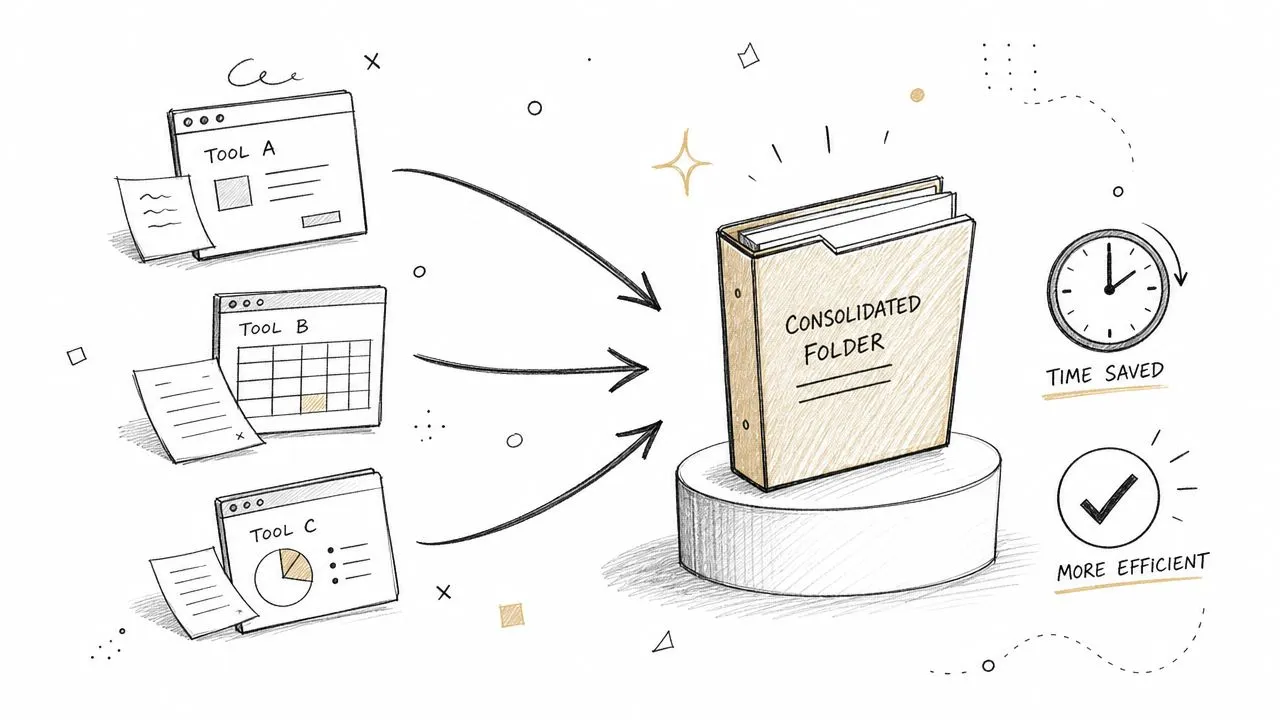
Two examples people usually overlook
Hypothetical scenario G
Duty bullet:
- Managed vendor records and billing support.
Accomplishment bullet:
- Consolidated duplicate vendor records into one cleaner process, which reduced reconciliation friction and made monthly billing checks faster.
Hypothetical scenario H
Duty bullet:
- Responded to incoming support requests.
Accomplishment bullet:
- Built a checklist-based intake step for incoming requests, which cut unnecessary follow-up and freed time for higher-priority issues.
This kind of bullet lands because it names the friction first. No friction, no accomplishment.
Why numbers help here
Efficiency work can sound abstract unless you anchor it. Financial and operational metrics were the strongest performers in a controlled case study of 1,200 mid-level professionals, where quantified resumes produced a 47% higher interview-to-application conversion rate and 2.3x more hiring manager engagements within the first 90 days, according to Teal's analysis of quantified resumes.
If exact figures aren't available, use credible ranges or plain-language impact. For more on choosing useful measures, metrics in a resume is the right angle to study.
5. The Problem You Spotted First
Not every accomplishment starts with execution. Some start with attention.
You noticed a pattern before anyone formally named it. That matters. Seeing the issue, gathering evidence, and getting it in front of the right person is real work.
Spotting versus solving
Hypothetical scenario I
Duty bullet:
- Reviewed customer feedback and shared insights.
Accomplishment bullet:
- Noticed the same confusion appearing across customer feedback, pulled the pattern into one summary, and got it in front of the team early enough to change the next round of work.
Hypothetical scenario J
Duty bullet:
- Supported planning conversations.
Accomplishment bullet:
- Flagged a recurring client request that kept surfacing across accounts, documented the pattern, and helped move it from anecdotal noise into a prioritization discussion.
That's stronger because it separates three things people blur together:
- Observation: What did you notice?
- Evidence: How did you know it wasn't random?
- Action path: Who used that insight?
Don't turn yourself into the lone genius
Most bad bullets in this category overstate the hero story. They imply you alone discovered the flaw and saved everyone. That's not believable.
Say what happened plainly. You saw it. You named it. Someone acted on it. That's enough.
6. The Standard You Established
Creating a standard is one of the cleanest accomplishment patterns because adoption proves value.
Not "I wrote documentation." Better. "I built something useful enough that people did use it."
Before and after rewrite
Hypothetical scenario K
Duty bullet:
- Created process documentation for the team.
Accomplishment bullet:
- Wrote the first clear version of a recurring team process, which gave people a shared reference point and reduced guesswork across handoffs.
Hypothetical scenario L
Duty bullet:
- Improved review consistency.
Accomplishment bullet:
- Introduced a simple review checklist for recurring errors, which gave the team a common baseline and made feedback more consistent.
That second version names the standard, not just the labor.
What to ask yourself: Did people keep using it when you weren't in the room? If yes, that's probably an accomplishment.
Adoption is the proof
When exact usage data exists, include it. Specificity matters because it makes the claim believable. One source notes that 90% of top accomplishment examples include concrete data points such as percentages, dollar amounts, or timeframes, and recommends focusing on the past 10 to 15 years of relevant experience so impact stays concise and credible, as outlined in MyPerfectResume's guidance on resume statistics and accomplishment examples.
If you don't have adoption numbers, name the behavioral shift. "Became the team's go-to checklist" is better than "created documentation."
7. The Relationship or Trust You Built Into a Project
Some of the highest-value work is relational. Not fluffy. Operational.
Two teams stop fighting. A difficult stakeholder starts engaging early instead of escalating late. A client stops treating every update like a surprise. That's project performance, not personality.
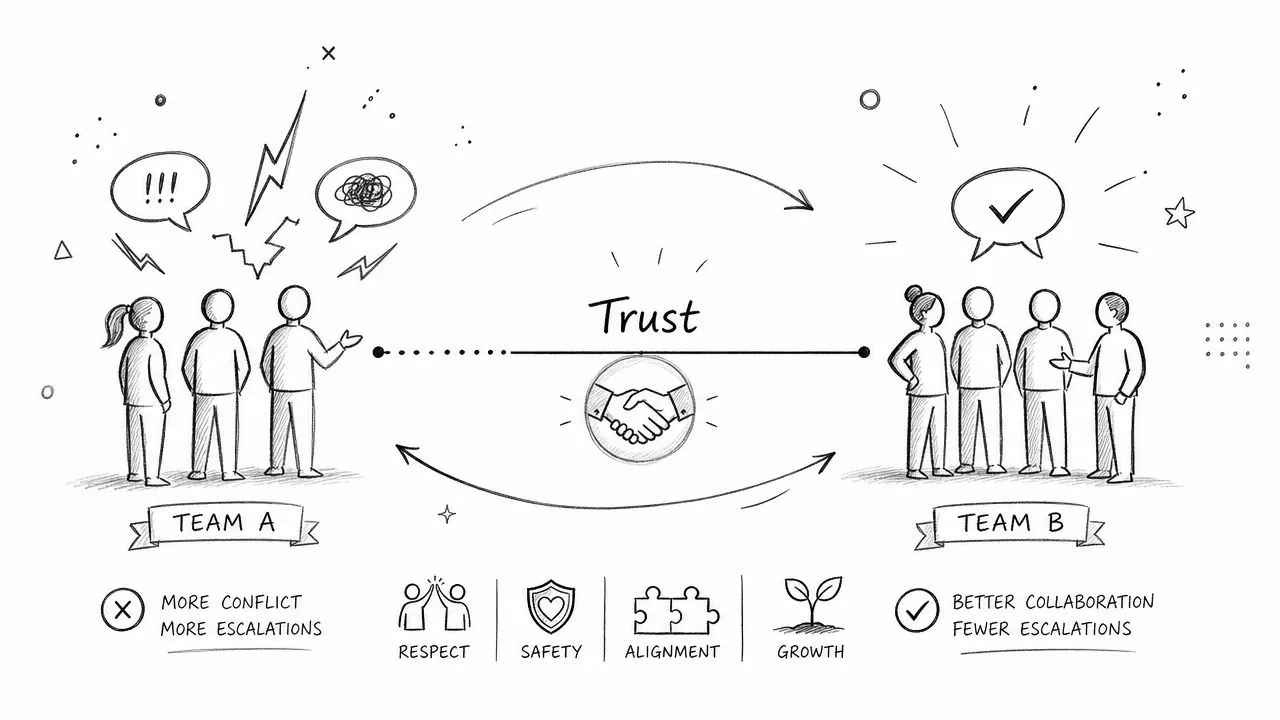
What this sounds like on a resume
Hypothetical scenario M
Duty bullet:
- Worked cross-functionally with multiple teams.
Accomplishment bullet:
- Replaced sporadic, reactive coordination with a regular working rhythm between teams, which reduced confusion and made project ownership clearer.
Hypothetical scenario N
Duty bullet:
- Managed client communications.
Accomplishment bullet:
- Reset a strained client relationship through more transparent reviews and clearer expectations, which made conversations less reactive and decisions easier to move forward.
These bullets work because they anchor trust in observable change. Clearer ownership. Fewer reactive conversations. Better coordination.
This is harder to measure, but still real
A major gap in resume advice is that it assumes everyone has hard numbers ready to go. That leaves people in creative, service, or relationship-heavy work with weak guidance, even though Monster notes that 70% to 80% of resume bullets should focus on achievements and also points out the lack of developed frameworks for people without raw quantitative data in its article on writing accomplishments on a resume.
So don't force fake math into trust-based work. Name the behavioral shift. That's the evidence.
8. The Risk You Mitigated or the Crisis You Prevented
Prevention is one of the hardest accomplishment types to claim because the proof is silence. Nothing blew up.
Still counts. Often counts more than the visible save.
Resume bullets for invisible wins
Hypothetical scenario O
Duty bullet:
- Reviewed systems and escalated issues.
Accomplishment bullet:
- Caught a fragile part of the process before it failed under heavier use, then tightened the checks early enough to avoid downstream disruption.
Hypothetical scenario P
Duty bullet:
- Supported compliance and quality reviews.
Accomplishment bullet:
- Flagged a gap in a routine review process and closed it before it turned into a larger operational issue.
The useful move here is to name the failure mode. What exactly were you preventing? Data loss. Delay. Rework. Escalation. Exposure. Instability.
If you're reconstructing this months later
Start with the sentence you'd normally dismiss.
- What almost went wrong: The near miss.
- What you saw: The signal.
- What you changed: The safeguard.
- What didn't happen next: The avoided damage.
Student and early-career resumes also benefit from this kind of concrete scope and outcome framing. In a before-and-after analysis of 850 resumes, adding quantified achievements increased ATS pass rates by 42% and human recruiter engagement by 58%, with resumes using 2 to 3 quantified bullets per experience section outperforming those with 1 or none by 65%, according to Distinctive Resume Templates' analysis of achievement-based resumes.
8-Point Resume Accomplishment Comparison
| Pattern | 🔄 Implementation Complexity | ⚡ Resource / Effort | ⭐ Expected Outcome Quality | 💡 Ideal Use Cases | 📊 Key Advantages |
|---|---|---|---|---|---|
| The Decision + Constraint Pattern | Medium, needs clear constraint + choice | Low–Medium, awareness + basic data | High ⭐, credible, transferable impact | Situations with trade-offs; general roles | Decision + measurable result; recognized by hiring managers |
| The Before/After That Isn't About Scale | Low, simple comparative framing | Low ⚡, small data or anecdotes | Medium ⭐, honest directional change | Incremental process fixes; ops, support | Shows trajectory change without exaggeration |
| The Constraint Trade-Off You Navigated | High 🔄, requires explaining judgment | Medium, stakeholder context and rationale | High ⭐, demonstrates senior judgment | Mid‑to‑senior roles, prioritization decisions | Reveals values and accountability; hard to fake |
| The Unsexy Efficiency Shift | Low–Medium, process tweaks, measurable | Low ⚡, modest engineering or process time | Medium ⭐, verifiable internal impact | Ops, finance, admin, backend roles | Time saved, reduced friction, easy to validate |
| The Problem You Spotted First | Medium, spotting + evidence + communication | Low–Medium, observation and persuasion | Medium ⭐, shows initiative and signal detection | Product, UX, customer success, ops | Early detection that enables larger fixes |
| The Standard You Established | Medium, creation + driving adoption | Medium, design + change management | High ⭐, lasting, scalable value | Documentation, templates, engineering standards | Persistent adoption; systemic improvement |
| The Relationship or Trust You Built Into a Project | High 🔄, nuanced, long‑running work | High, time, emotional labor, facilitation | High ⭐, transformative but less measurable | Leadership, cross‑functional, client roles | Fewer escalations, smoother collaboration |
| The Risk You Mitigated or the Crisis You Prevented | Medium, explain the avoided failure mode | Medium, audits, monitoring, controls | High ⭐, prevents costly negative outcomes | Security, compliance, reliability, ops | Demonstrates foresight; avoids large losses |
Accomplishments Are Decisions, Not Duties
Resume advice often goes wrong at the start. It treats accomplishments like rare trophies. They usually are not. They are the visible result of judgment under constraints.
A duty describes your assigned lane. An accomplishment shows what changed because of your choices inside that lane. That is the standard. If you improved a process, prevented a mistake, clarified a messy handoff, reset expectations, or made a stubborn problem easier to solve, you have accomplishment material already.
That is why hunting for an accomplishments resume sample usually wastes time. Sample libraries train people to imitate the surface. Bigger number. Stronger verb. Cleaner bullet. The underlying pattern sits underneath. What problem showed up, what constraints boxed you in, what decision did you make, and what changed after that?
Use the work experience section to answer those questions cleanly. Keep it tight. Keep it specific. Broad claims die fast on a short resume because they carry no proof.
Skip the fake polish too. A separate achievements section is sometimes useful, but forcing one can make a resume worse. Many strong candidates have one meaningful win embedded in routine work, not a neat shelf of awards. The job is not to sort your career into glamorous and ordinary. The job is to show where your judgment changed the outcome. That same skill matters outside resumes too. Good reflection beats generic examples, whether you are writing bullets or crafting impressive MUN essays.
Start with friction, not pride.
What did you decide that others were avoiding? What trade-off did you accept? What risk did you reduce? What confusion did you remove? Those answers produce stronger bullets than asking, "What impressive thing did I do?" because they pull you back to the actual mechanics of impact.
StoryCV uses that reflection-first approach. It is an online resume writer built around guided prompts that help users identify what changed in their work and turn it into clearer language.
If your resume reads like a duty log, fix the thinking before you fix the wording. Accomplishments are decisions, not decorations.
If your work matters but your resume reads like a duty log, StoryCV helps you turn real decisions, trade-offs, and results into clear accomplishment bullets without falling back on generic templates.