
Many applicants treat a bank cover letter as a polite afterthought. That's the mistake. A recruiter doesn't need your life story, and they definitely don't need a second résumé. They need proof, fast, that you can do the job, fit the group, and write like someone who won't waste their time.
Why a Bank Cover Letter Is Not a Formality
A cover letter for bank roles is not a formality. It's a compressed proof document, and the people reading it are scanning for one thing, can this candidate make me believe the résumé.
That's why generic letters fail without impact. They repeat the résumé, avoid specifics, and leave the reader with no reason to keep going. The better banking guidance is blunt about this, Morgan Stanley's guidance says not to repeat résumé content, but to add experiences and skills that increase appeal. Tailoring matters because the letter should name the role, show motivation for the firm, and close professionally, not drift into autobiography. Morgan Stanley-aligned banking cover letter guidance
Practical rule: if a sentence could sit in any applicant's letter, cut it.
The structure is tighter than most candidates think. A strong bank letter is usually one page, built as 3 to 4 paragraphs, and kept around 250 to 400 words. Finance-careers guidance also points to 0.75 to 1 inch margins and at least 10-point font so the letter stays readable and professional. Corporate banking cover letter formatting guidance
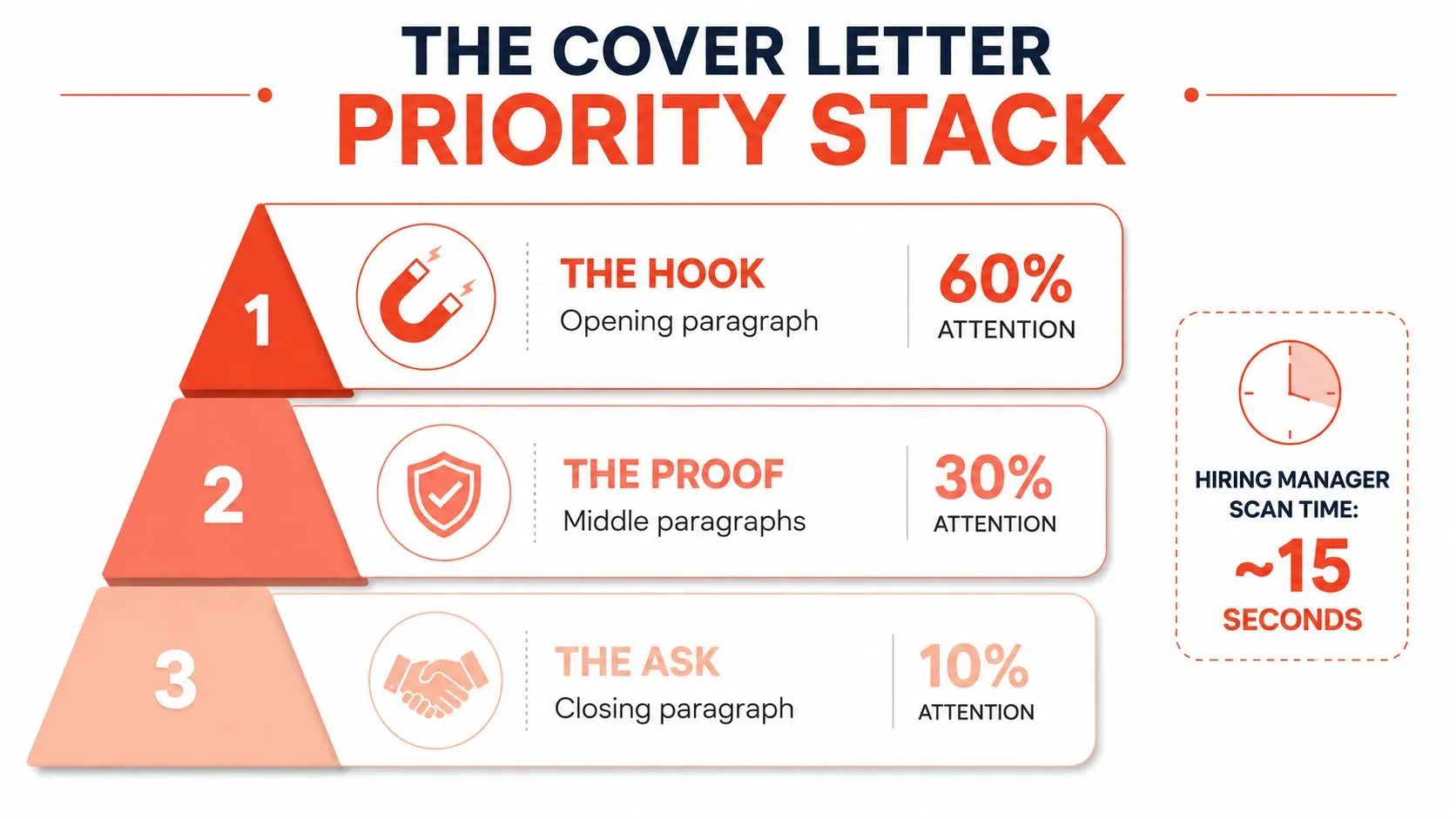
The opening must earn attention. The middle must prove competence. The close must sound confident enough to request the next step without begging.
If you want a useful comparison point outside banking, the structure people use in a strong financial advisor hiring guide follows the same logic, short, targeted, and evidence-first. Different job, same principle, don't waste the reader.
The Four-Paragraph Spine That Works Every Time
Start with the role, the firm, and one real reason
The first paragraph has one job, make the reader know this letter belongs to this role at this bank. Name the position, name the firm, and mention one relevant credential, deal area, tool, or business line without sounding like you're reciting keywords from a job ad.
Keep it tight. Three or four sentences is enough. If you need a model sentence, use something like, “I'm applying for the Corporate Banking Analyst role at [Firm], and my background in credit analysis and client coverage fits the pace of your middle-market team.” That's specific. It tells the recruiter where to place you.
Prove it with numbers, not adjectives
The second paragraph is the proof paragraph. Weak candidates use phrases like “hard-working” and “detail-oriented.” Strong candidates use evidence.
Banking examples are usually numeric for a reason. Current guides keep pushing measurable outcomes such as a $480M mandate, a process that went from 9 hours down to 5, or results like 35% customer engagement, 20% acquisition growth, and 98% client satisfaction. That style reflects how finance recruiting works now, candidates are expected to show scale, accuracy, and impact in concrete terms. Quantified banking cover letter examples
Practical rule: one number beats three adjectives.
Use two or three proof points, not a parade of them. Keep the focus on business value, transaction size, efficiency gains, client outcomes, risk reduction, or process quality. If your proof points don't help the banker see value, they're decoration.
Show fit without sounding like a fan
The third paragraph is where many applicants struggle. They write a generic letter expressing enthusiasm for the company. Hiring managers are less interested in admiration for the firm's reputation. They focus on whether your experience aligns directly with the team's needs.
Write about the group, coverage area, product line, or operating style. If you're aiming at M&A, mention transaction work and modeling. If you're aiming at commercial banking, talk about client relationships, underwriting, or portfolio discipline. Fit is not enthusiasm. Fit is relevance.
Close like you expect a reply
The final paragraph should be short and direct. Ask for the interview. Thank them. Keep the tone professional and clean. Don't over-explain. Don't say you're “honored” or “thrilled” unless you want to sound like a template.
A decent close sounds like this, “I'd welcome the chance to discuss how my background in credit analysis can support your team. Thank you for your consideration.” That's enough. Anything more dramatic usually makes the letter weaker.
Four Annotated Sample Letters by Role
Most template pages hand you one generic letter and pretend that counts as help. It does not. A bank cover letter has to prove one thing fast, you can do the job in front of you. If you want a broader example set, start with this sample cover letter for job application guide, then come back to the role-specific letters below.
Sample 1, Bank Teller
Dear Hiring Manager,
I'm applying for the Bank Teller role at Horizon Community Bank. I've spent the last four years in customer-facing roles where accuracy, calm handling of cash, and fast problem-solving mattered every day.
In my current role, I manage high-volume transactions, balance drawers at close, and handle customer questions without letting wait times spiral. I catch small errors before they become branch problems, and I take ownership when a process breaks down. I've also trained new hires on cash-handling procedures and service standards.
Your branch profile stood out because it values trust, speed, and a steady customer experience. That matches how I work. I'd bring a careful eye, a professional tone, and the kind of consistency branch teams depend on.
Thank you for your time. I'd welcome the chance to discuss the role.
Sincerely,
Alex Rivera
Why it works: the opening says the role right away. The middle proves reliability through process, cash handling, and customer trust. The close stays plain and direct. Cut the résumé-style duty list if you need space, because the point is not what a teller does in theory, it is what this teller can be trusted to handle every day.
Sample 2, Investment Banking Analyst
Dear Ms. Chen,
I'm applying for the Investment Banking Analyst role on your Technology, Media and Telecom team. My background in valuation, transaction support, and financial modeling matches the pace and precision your group expects.
At my current firm, I've supported deal materials, built models in DCF and LBO formats, and helped prepare analysis for client presentations. I've worked with FactSet, Capital IQ, and Bloomberg, and I'm comfortable turning messy data into something an associate can use directly. My work has been used in live client discussions, so accuracy matters.
I'm drawn to your TMT coverage because the work sits at the intersection of fast-moving companies and hard numbers. That is where I am strongest. I want a seat on a team that values speed, polish, and real analytical discipline.
I'd welcome the opportunity to discuss my fit. Thank you for your consideration.
Sincerely,
Jordan Patel
Why it works: this one names the group, the tools, and the kind of work the candidate can do. The sentence about live client discussions matters more than vague passion. It shows the candidate has already operated in a real banking setting.
Sample 3, Relationship Manager
Dear Mr. Lewis,
I'm applying for the Relationship Manager position at Northbridge Bank. My background in portfolio growth, client retention, and cross-functional account management fits the role's focus on long-term client value.
In my current role, I manage a book of business across multiple client segments, coordinate service delivery, and handle escalations before they affect retention. I've worked closely with credit, operations, and product teams to keep relationships stable and productive. The result is less friction for clients and cleaner execution for the business.
What appeals to me about your team is the balance of relationship depth and commercial discipline. I'm comfortable building trust, but I'm just as focused on portfolio quality and follow-through. That mix is what I'd bring to your group.
Thank you for your time. I'd appreciate the chance to speak.
Sincerely,
Maya Thompson
Why it works: this avoids fluffy relationship talk. It shows portfolio thinking, internal coordination, and client stability. That is the language banking managers respect.
Sample 4, Operations Specialist
Dear Hiring Manager,
I'm applying for the Bank Operations Specialist role at Rivergate Financial. My background in process improvement, exception handling, and risk control fits the kind of operational precision this job requires.
I've led work that reduced rework, tightened handoffs between teams, and improved how issues get escalated. I'm comfortable working in systems where timing, documentation, and accuracy matter more than flash. I've also been the person who catches the missing field, the mismatched record, or the broken step before it creates downstream noise.
Your operations team stood out because the role calls for both discipline and judgment. That is where I work best. I'd bring careful execution, clear communication, and a bias toward fixing the process instead of blaming the person.
I'd welcome the opportunity to discuss the role. Thank you for your consideration.
Sincerely,
Daniel Brooks
Why it works: it proves process discipline without drowning the reader in jargon. The candidate sounds like someone who understands operational risk, not someone trying to sound impressive.
ATS Mechanics Banks Actually Use
Banks don't use ATS the way job seekers imagine. The system usually helps parse the basics, contact details, work history, education, and obvious keywords. That means the letter should be clean, plain, and easy for software and people to read.
Start with standard section cues. Don't get cute with graphics, text boxes, or weird formatting. A clean PDF with your name, email, phone, role title, and a simple body is safer than a design-heavy file that looks clever and lands in the wrong place. If you're applying through a bank portal, the file name should be obvious, something like Firstname_Lastname_CoverLetter_Role.
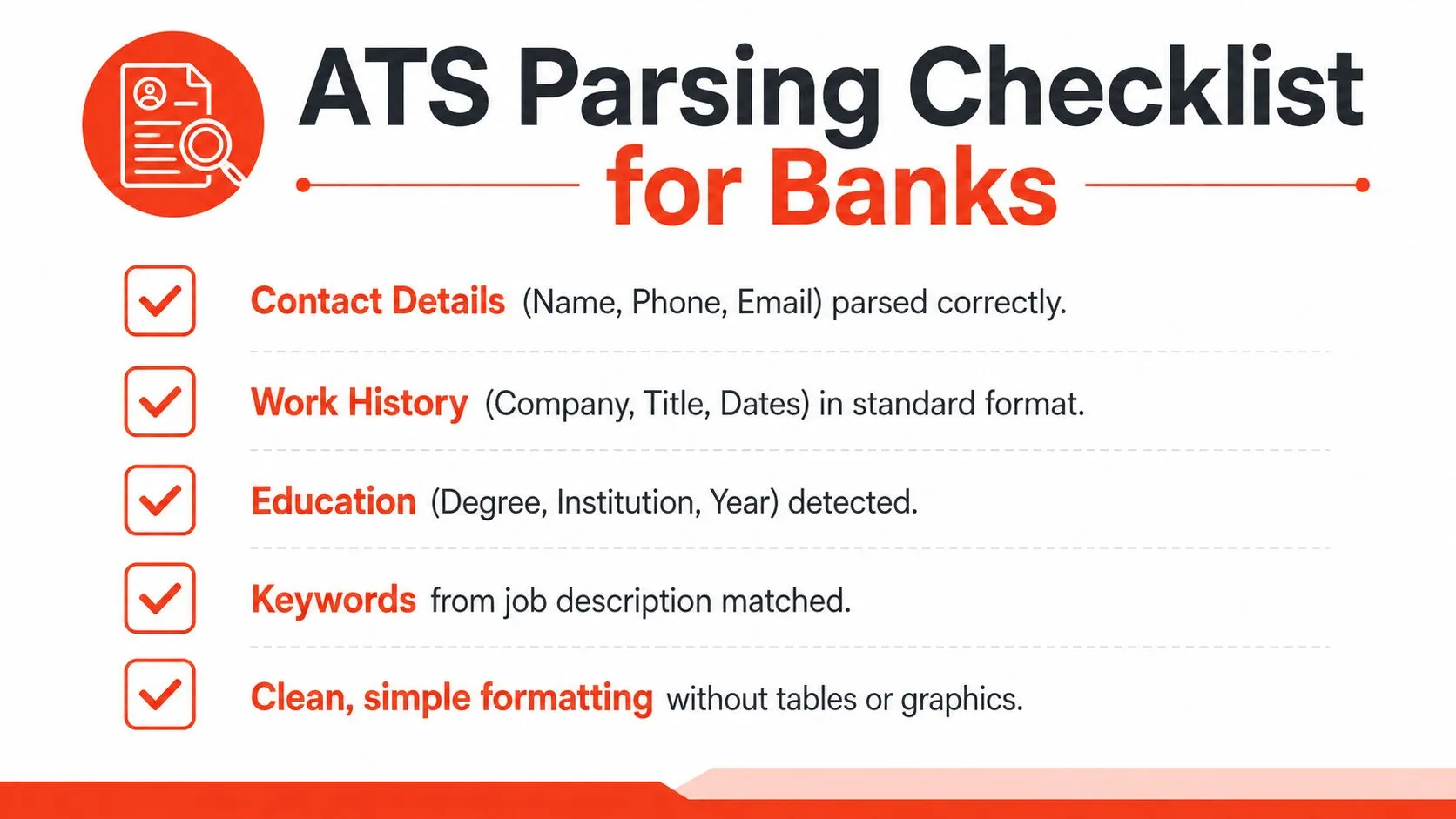
The keyword part is simple. Read the posting and circle the actual terms they use, tool names like Bloomberg, Capital IQ, or Salesforce, and verbs like underwrite, originate, reconcile, or onboard. Mirror two or three of those naturally in the letter. Don't stuff them everywhere like you're gaming a machine. That reads badly to a human and doesn't help enough to justify the mess.
If you want a broader screen of how employers filter documents, the logic in this AI resume screening guide is useful because the basics are the same, clean structure, plain language, and obvious relevance.
Keep the formatting boring. Boring survives.
The final check is simple. If the letter is easy to skim in ten seconds and the important terms are visible without hunting, it's doing its job. If it looks clever but feels hard to read, it's already failing.
The Transferable-Skills Playbook When You Lack Classic Banking Experience
Not everyone has an IB internship. Good. That doesn't mean you're out. It means you have to stop writing like an apology and start writing like someone with a useful skill set.

The biggest mistake non-traditional candidates make is trying to explain everything. Don't. A strong bank letter is not a mini résumé, and over-explaining unrelated experience usually makes the reader less certain, not more. The better move is to pick one strong transferable proof point and frame it in banking language. That could be a sales quota, a process fix, a retention win, a compliance-heavy project, or a high-pressure service environment.
For a retail sales manager, the opening can be sharp and simple. “I'm applying for the Bank Branch Manager role, and my record of leading customer-facing teams and improving service consistency makes me a strong fit.” Then back it with one quantified result and one sentence about trust, accuracy, or client relationships. Don't spend half the letter explaining why retail “isn't that different.” Show the overlap and move on.
For a military veteran, the cleaner angle is structure, judgment, and reliability. Lead with one mission-critical example, then translate it into banking terms. “I'm applying for the Operations Analyst role, and my experience managing high-stakes procedures under strict rules maps directly to operational control and risk awareness.” That's better than a long story about being adaptable.
For a career returner, the letter should lean into precision and current relevance. Lead with what still holds true, not with a caveat. A line like, “I'm applying for the Client Services Associate role, and my background in client coordination and documentation-heavy work fits the role's demand for accuracy and follow-through,” does the job without apology.
You can also borrow from the language used in the main transferable skills for career changers guide, but the principle is bigger than one article, choose one proof point, translate it cleanly, and stop over-justifying the gap.
One proof point beats a defensive paragraph. Banks hire clarity, not insecurity.
Later in the letter, the fit paragraph should do the heavy lifting. Name the bank, name the team, and say why your background helps that specific seat. Keep the tone steady. If your letter sounds like you're trying to persuade yourself, the recruiter will feel it.
Common Mistakes and the Final Pre-Send Checklist
The mistakes are predictable, which is why they're so frustrating. Recruiters see the same weak patterns again and again.
- Repeating the résumé: If the letter just restates your job history, cut it down and add one business reason you matter.
- Never naming the bank or team: If the firm can be swapped out and nothing breaks, the letter isn't specifically customized.
- Opening with generic passion: Replace “I've always wanted a career in finance” with the role, the firm, and one concrete reason.
- Writing paragraphs that ramble: Keep each paragraph focused on one job. If it goes past five sentences in your draft, it probably needs surgery.
- Closing too softly or too aggressively: Don't beg, and don't act entitled. Ask for the conversation plainly.
The fix is mechanical. That's the good news. You don't need inspiration. You need discipline.
Use this pre-send checklist before you hit submit:
- Length check: Is it still one page and roughly in the 250 to 400 word zone?
- Structure check: Does it stay at 3 to 4 paragraphs with a clear opening, proof, fit, and close?
- Proof check: Did you include at least one concrete metric, deal reference, tool, or measurable result where it makes sense?
- Fit check: Did you name the role, the bank, and, if relevant, the group or coverage area?
- Formatting check: Are the margins readable, the font at least 10-point, and the layout plain?
- File check: Does the file name clearly identify you and the role?
- Read-aloud check: Does it sound like a smart person talking, or like a form letter pretending to be important?
A bank cover letter is not where you explain your life, it's where you prove one thing, clearly, in about 300 words.
StoryCV helps you turn messy experience into a sharp, bank-ready narrative without stuffing a page with empty phrases. If you need a cover letter for bank roles that sounds like a human wrote it and still lands with hiring teams, start with StoryCV and build the version that gets read.