The chief of staff is on letter forty-three. Forty-two of them say some version of “highly organized, detail-oriented professional” with calendar management, travel coordination, and inbox support close behind. By that point, the issue isn't your experience. It's that most executive assistant cover letter samples are built from the same bland parts, and they make capable people sound interchangeable.
That's why copying a sample is a bad plan. A sample is scaffolding, not a script. Use the frame. Ignore the prefab sentences. Good EA work is invisible by design, so the letter has to show judgment, not just duties. If you're also cleaning up the rest of your application story, this piece on LinkedIn personal branding sits in the same neighborhood.
1. The Conflict You Resolved Before Anyone Noticed
Calendar management is not the achievement. Seeing the collision before it turns into a public mess is the achievement.
That difference is why most executive assistant cover letter samples fail. They list duties every EA shares. They don't show the moment you noticed something off, made a call, and spared your executive a problem they never had to experience.
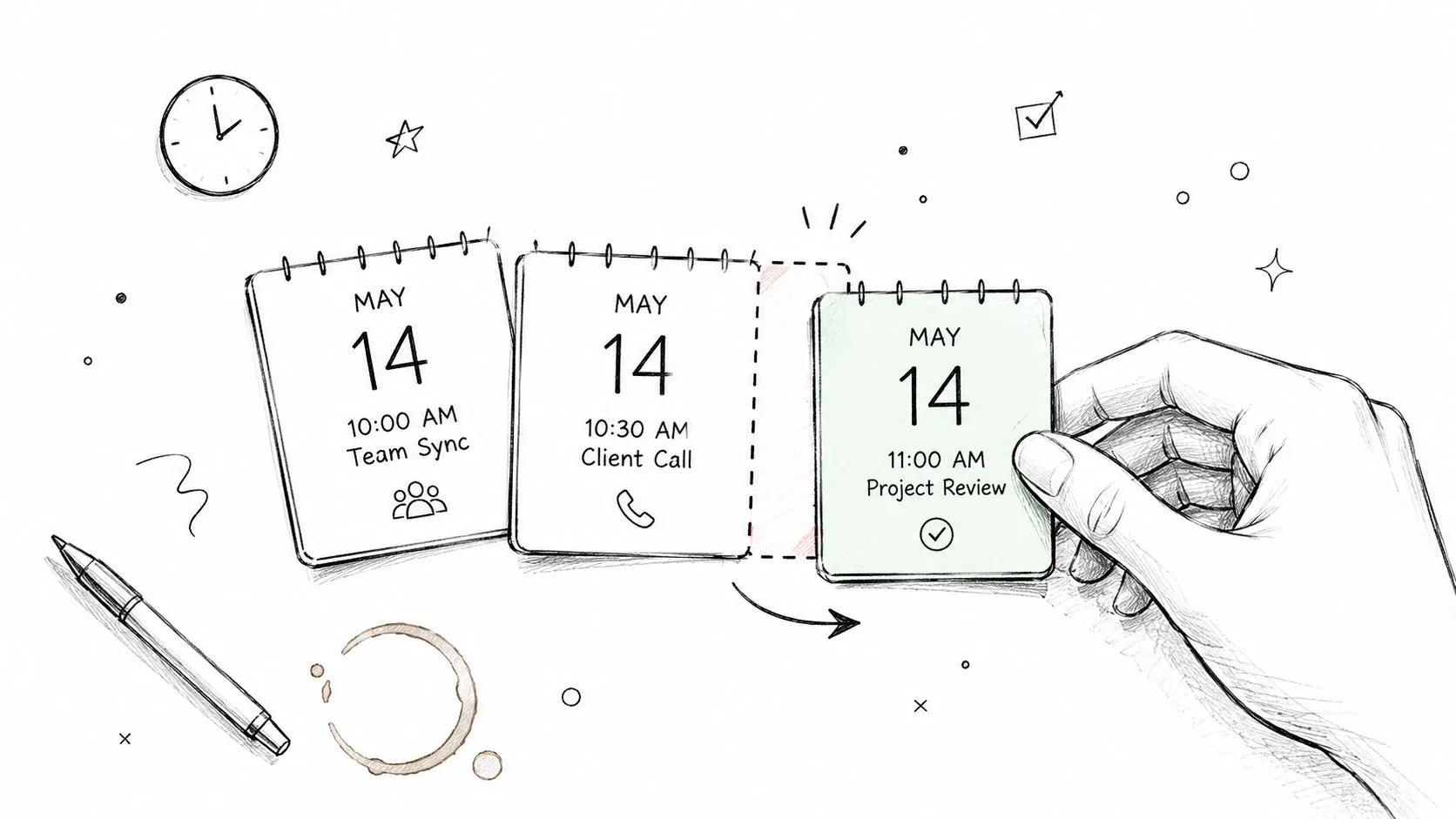
Duty Language Versus Judgment Language
Here's the kind of paragraph people paste from samples:
Managed executive calendars, coordinated board materials, and ensured all meetings were properly scheduled and stakeholders were notified in advance.
It's tidy. It's also anonymous.
Here's the rewrite:
While preparing Q2 board materials, I noticed the CFO's investor reviews were sitting back-to-back with her weekly ops call on separate calendars. I pulled her aside two days early, showed her the conflict, and shifted one meeting by 90 minutes before either group built around the wrong time. Board prep stayed intact, and she didn't have to choose between two priorities because I'd already removed the choice.
That sounds like a person who understands the job.
Practical rule: Write the invisible result. Nothing broke. Nobody got embarrassed. Time stayed protected.
Keep these paragraphs short. Three sentences is plenty. If you need help with the overall shape, use a solid cover letter structure for job applications, then swap in your own evidence. For handling the interpersonal side cleanly, RedactAI's conflict management advice is useful background.
2. The Thing You Handled Without Being Asked
The executive is in back-to-back meetings. A process is failing in plain sight. Nobody owns it, so everybody works around it badly. This is the kind of work an executive assistant should write about.
Generic samples miss the point because they describe maintenance. Strong letters show intervention.
A Better Kind of Proof
Weak sample line:
Maintained records of board communications, tracked distribution of executive materials, and ensured all recipients were notified of updates.
Better illustration:
Investor updates were going out late because no single source showed who had received what. I traced the handoff across email threads, spreadsheets, and Slack, found the point where confirmations vanished, and built a simple tracker that flagged missing distributions before send day. The process stopped relying on memory and started holding up under pressure.
That paragraph works because it shows how you think. You saw a gap. You diagnosed it. You fixed it without waiting for permission, a meeting, or a minor committee on operational sadness.
Keep the lesson simple. Write the unspectacular thing that prevented a mess. That is the job.
If you want help turning this kind of example into a sharper sentence, use these impact statement examples for showing results, decisions, and consequences. Then stop copying cover letter samples that read like software tooltips.
Numbers help when they prove something real. If they do not, skip them. A clean example of initiative beats a padded metric every time.
3. The Meeting You Moved Before It Conflicted
Some of the best EA work looks unimpressive on paper. You moved a meeting. Riveting stuff. Except the move protected the executive's focus before a high-stakes conversation, and that's the essence of the job.
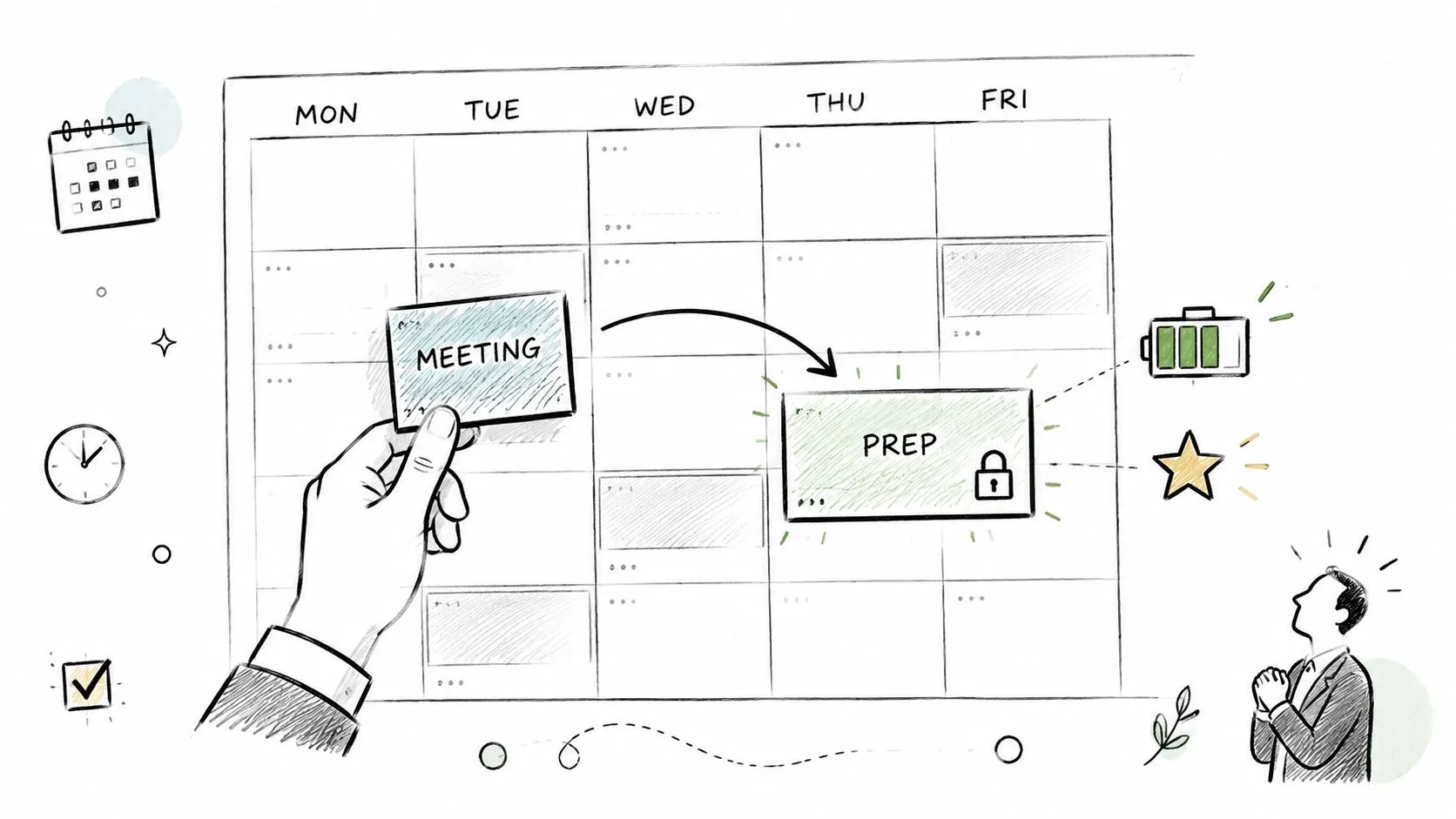
Protection Is the Story
Duty-based version:
Coordinated executive calendar, scheduled meetings with internal and external stakeholders, and managed competing scheduling requests.
Judgment-based version:
A VP requested a Friday 4 p.m. meeting with our CEO on the same day she had a major 2 p.m. product pitch. I'd seen what those pitches took out of her, so instead of confirming the slot, I offered Monday morning as better timing for a strategic discussion and held Friday for decompression and follow-up. The conversation happened at a better moment, and the pitch day stayed protected.
That's not about Outlook. It's about judgment.
Good EA writing names what you protected. Focus. Energy. Prep time. Decision quality.
When you describe this kind of work on a resume, the same principle applies. Impact statements that show the consequence of your decision transfer cleanly into a cover letter paragraph.
4. The Decision You Made Without Being Asked
Your executive is in back-to-back meetings. An approval lands. A vendor padded the renewal. The budget owner wants an answer today. If your letter makes you sound like someone who forwards the email upward, it is doing you no favors.
Executive assistants get trusted because they reduce decision load. Good cover letters show that you knew the leader's standards, applied them, and cleared the issue before it became another item in the queue.
The Choice Matters More Than the Task
Weak sample line:
Managed vendor relationships, evaluated renewal proposals, and negotiated contracts on behalf of executive leadership.
Useful rewrite:
A long-time vendor sent a renewal with a higher price and extra services my executive had never wanted. She cared about reliability and hated paying for decorative extras, so I cut the scope back to the services we used, pushed the pricing into line, and sent forward a clean approval instead of a problem. She approved it quickly because I had already made the call using the criteria she expected me to know.
That is the point.
The line that matters is not “negotiated contracts.” It is “I understood how she decides, and I acted accordingly.” That is the invisible part of EA work. Samples usually flatten it into admin sludge.
Keep the lesson. Skip the template brain. Pull two or three priorities from the job description. Then prove them with one example where you made a sound call without supervision. A cover letter should show judgment under familiar constraints, not a scrapbook of duties.
5. The Pattern You Spotted and Fixed Before It Became a Crisis
Good executive assistants stop sounding like administrators and start sounding like operators.
You saw a pattern. You figured out the cause. You changed the system before it became a recurring mess. That is cover-letter material.
The Before and After Has to Be Visible
Duty version:
Maintained executive calendar, coordinated board preparation materials, and organized quarterly board meetings.
Better version:
Over several board cycles, I noticed prep time kept shrinking because earlier meetings were creeping longer and eating into the buffer. I traced the compression back through the calendar, blocked protected prep time in every board week, and flagged any meeting that tried to occupy it before it became someone else's scheduling emergency. The prep stopped getting squeezed by accident and started getting treated like work that mattered.
That's a pattern story. Those are stronger because they show you can read operations, not just react to them.
One sentence should never appear in your letter: “I am a highly organized, detail-oriented professional.” It proves nothing. Replace it with one real moment of anticipation. One conflict you resolved before your executive knew it existed beats five traits every applicant claims.
A strict three-paragraph structure can also help. Opening with one relevant achievement, following with proof from past roles, and closing with a direct offer is the format Zety recommends in its executive assistant cover letter example guide. Ignore their prefab phrasing. Keep the structure.
6. The Stakeholder Situation You Managed Without Escalating
A stakeholder problem is often a scheduling problem wearing a human costume. Someone says they're frustrated with your executive. Usually they're frustrated with uncertainty, drift, or mixed signals.
Your letter should show that you can decode that and fix it without manufacturing drama.
Calm Is a Skill
Weak version:
Managed vendor relationships, maintained communication with external partners, and ensured regular check-in schedules were met.
Better version:
A key vendor kept sending follow-ups because our executive's monthly check-in kept slipping as the calendar tightened. I explained the pattern honestly, moved the call to a more stable slot earlier in the month, and made myself the standing contact for anything that didn't need executive time. The reminders stopped, the relationship settled down, and the issue never needed escalation.
That paragraph does something most executive assistant cover letter samples don't. It makes you sound like a translator between competing realities.
"Nothing blew up" is often the honest summary of excellent EA work. Your job is to explain why.
The mechanics still matter. Use a left-aligned header with your contact details, the date, and the employer's details. Address the hiring manager by name if you can, and if you can't, use “Dear Hiring Manager,” which is cleaner than awkward guessing, as laid out in Final Round AI's executive assistant cover letter format guidance.
7. The System You Built or Reformed That Became Standard Practice
The best proof is simple. You built a process people kept using after the immediate mess was over.
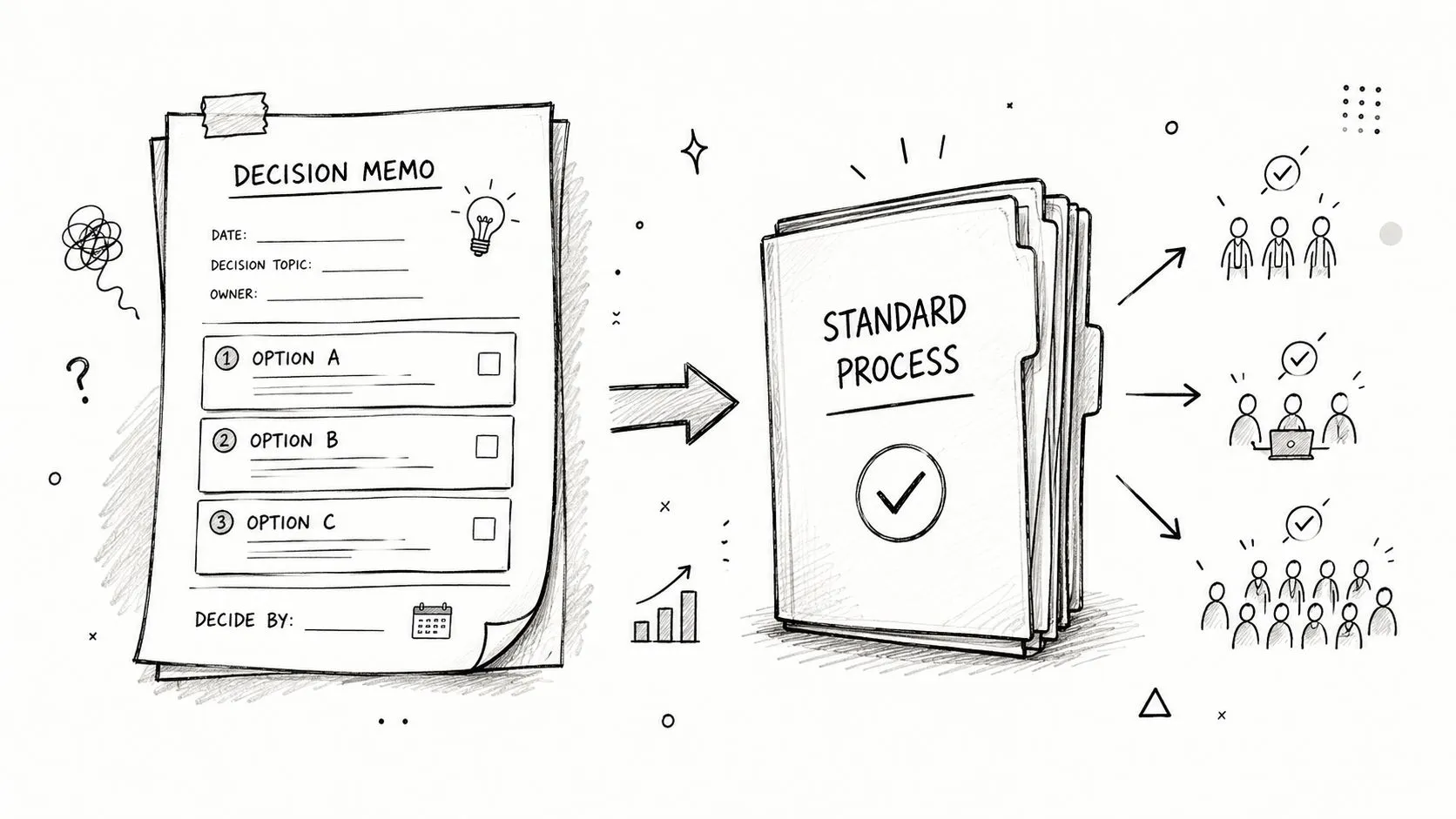
Standard Practice Beats Personal Heroics
Weak cover letters talk about effort. Hiring managers already assume you can work hard. They want evidence that you noticed recurring friction, designed a fix, and left the team better organized than you found it.
Plain sample language:
Coordinated decision-making processes, gathered input from stakeholders, and documented campaign discussions.
Useful rewrite:
Major campaign decisions kept stalling because context was scattered across email threads, meeting notes, and side messages. I built a one-page decision memo with the goal, options, tradeoffs, owner, and decision date so leaders reviewed the same information at the same time. The format cut repeat discussions and became the default for decisions beyond my executive's work.
That works because it shows the thinking. You identified the underlying problem, which was not "too many meetings." It was fragmented context. Then you fixed the mechanism causing the delay.
This is what strong executive assistant cover letters do. They make invisible work visible. Judgment. Pattern recognition. Process design. The part of the job that keeps other people from wasting a week discussing the same issue twice.
If you want sharper examples, study your work the same way you would study metrics in resume writing. Not every line needs a number. Every line does need a result, a changed behavior, or a process that stuck. That is the difference between "I supported the team" and "I built the way the team now works."
7-Point Impact Comparison for Executive Assistant Cover Letters
| Example Title | Implementation complexity 🔄 | Resource requirements ⚡ | Expected outcomes 📊 | Ideal use cases 💡 | Key advantages ⭐ | Key risks/limitations |
|---|---|---|---|---|---|---|
| The Conflict You Resolved Before Anyone Noticed | Moderate, observational judgment and discreet action | Low, calendar/stakeholder access and quick coordination | Prevented visible disruption; preserved priorities | Internal promotions, senior EA roles, judgment-focused moves | Demonstrates anticipatory judgment and strategic EA work | Must be specific and credible; risk of seeming to overstep |
| The Thing You Handled Without Being Asked | Moderate–High, diagnose problem and implement practical fix | Moderate, time to map systems and create tools (e.g., tracking sheet) | Fewer bottlenecks; consistent processes; measurable improvements | Moves to chief of staff, operations, cross-industry transitions | Shows ownership, reduces friction, portable problem-solving | Can look like overreach; needs evidence that change stuck |
| The Meeting You Moved Before It Conflicted | Low–Moderate, calendar pattern reading and negotiation | Low, calendar control and stakeholder outreach | Protected executive focus and preparation time | EA roles, supporting senior executives, internal moves | Core EA skill; immediately recognizable by hiring managers | Risks sounding presumptuous if authority wasn't clear |
| The Decision You Made Without Being Asked | Moderate–High, weigh trade-offs and act within exec values | Moderate, knowledge of exec preferences and negotiation effort | Faster resolutions, executive trust, potential cost or time savings | Chief of staff, operations manager, expanded EA scope | Signals "they think like us"; scales independent judgment | High risk if decision should have been escalated; needs exec validation |
| The Pattern You Spotted and Fixed Before It Became a Crisis | High, monitoring, diagnosis, and systemic intervention | Moderate–High, tracking data/behavior and implementing protections | Sustained quality improvement; fewer surprises and crises | Chief of staff, operations, senior EA supporting complex orgs | Demonstrates systems thinking and preventive impact | Hard to prove without data; risk of false positives or being seen as alarmist |
| The Stakeholder Situation You Managed Without Escalating | Moderate, interpersonal diagnosis and diplomatic response | Low–Moderate, regular engagement and relationship management | Stabilized relationships; executive time preserved; fewer escalations | Chief of staff, operations, visible-exec support roles | Shows emotional intelligence and keeps issues off the exec's desk | May sound like unauthorized promises; requires clear standing |
| The System You Built or Reformed That Became Standard Practice | High, design, test, and drive adoption of a repeatable process | Moderate–High, design effort, change management, training | Scalable, sustainable process; measurable time/quality gains | Chief of staff, operations manager, transformation roles | Highest leverage: makes operation run without constant oversight | Needs evidence of adoption; can be overstated if actually minimal change |
Write From Memory, Not a Sample
You open a cover letter sample. It looks polished. It says nothing.
That is the problem. Samples give you finished sentences without the reasoning that made them believable in the first place. Executive assistant work lives in the part people do not see. Judgment. Timing. Restraint. The quiet fix that keeps an executive from walking into a mess. If your letter cannot show that, it is decoration.
Write from memory instead. Start with a real day. The calendar conflict you caught early. The stakeholder you calmed before they became a problem. The process you cleaned up so thoroughly that other people copied it without being told. Those moments contain the only material that matters.
Then build a short argument from them. Three paragraphs is enough. One page is enough, as noted earlier. The goal is not to sound polished. The goal is to make a hiring manager trust your judgment.
Samples are still useful for one thing. They show you what generic sounds like, so you can avoid it. Once ten applicants use the same tidy phrases about being detail-oriented and proactive, the letter becomes wallpaper. Very neat wallpaper. Still wallpaper.
A better method is simple. Recall the situation. Name the decision. State the result. Add one concrete detail that proves you were paying attention. That is how you communicate invisible work. Not by listing duties, but by showing how you think when no one is standing over your shoulder.
StoryCV is a resume writer, not a cover letter service, and that distinction matters. The value is in the recall process. If your resume still reads like a duty log, StoryCV can help you turn vague tasks into evidence. Once you can name the moment, the letter usually writes itself.