
“Run a marathon” is popular advice for an interesting fact about me. It's also a conversation killer. The interviewer nods, says “That's impressive,” and moves on.
A better fact creates a natural next question. Maybe you repaired a broken radio from parts found at a market, learned to cook one dish from every place you've worked, or rebuilt a reporting process after discovering the original spreadsheet had become the team's biggest risk. The detail doesn't need to sound extraordinary. It needs to be askable.
Use this test: would a stranger have an obvious, genuine question after hearing it? That question is the point. It gives the other person a way into the conversation and reveals how you think, learn, notice problems, and work with people.
The eight patterns below turn ordinary experience into useful narratives. Adapt the same raw fact for a resume profile, interview opener, LinkedIn bio, or networking conversation. Your career stage matters too. A student, a mid-career operator, and a career changer shouldn't present the same evidence in the same way.
StoryCV takes the same approach to resume writing. It asks about the work behind the claim, then helps turn context, action, and outcome into clear language instead of making you fill boxes in a generic template.
1. The Specific Constraint, Not the Achievement
“I improved sales” tells the listener almost nothing. “I grew sales 34% while competitors were shrinking” gives the achievement a setting, a difficulty, and an obvious follow-up: how did you do that?
The constraint makes the result useful. It shows what you had to work around, not just what happened after everything went well. A hiring manager wants to know whether you can solve problems when the budget is tight, the team is changing, the technology is old, or the deadline is uncomfortable.
A tech professional might say, “I reduced API response time by 45% on a legacy system running on hardware from 2012.” An operations professional could say, “I managed vendor relationships across 12 countries while the procurement team was in transition.” A sales candidate might use, “I closed 8 deals in Q3 while onboarding as a first-time sales hire in a new vertical.”
Practical rule: Lead with the obstacle that made the result difficult. The result earns credibility when the listener understands the conditions.
Name the actual limitation. Budget, headcount, timeline, market conditions, technical debt, and missing processes all create stronger context than vague phrases such as "a challenging environment." Use precise details when you know them, but don't manufacture precision. "A small team" is weaker than a verified headcount, while an invented figure damages trust.
Your fact should make the next question easy. If nobody could naturally ask “How?”, you probably removed the part that matters.

2. The Oddly Specific Number, Not the Round One
Round numbers sound polished. Oddly specific numbers sound remembered.
“I managed a team of 10” could belong to almost anyone. “I managed a team of 8, then 11 during the summer contractor period” sounds like someone who actually carried the responsibility. The second version gives the listener something to ask about, such as how the team changed or how the work was divided.
A tech professional could say, “I reviewed and standardized code across 47 legacy services.” A business candidate might say, “I recruited and hired 6 engineers and 2 operations specialists over 9 months.” In operations, “I reduced invoice processing time from 14 days to 3 days for 312 vendor accounts” is far more informative than “I improved accounts payable.”
The number isn't the story by itself. It anchors the story in a real scope.
- Recover the detail: Check performance reviews, project records, emails, dashboards, and planning documents before you write.
- Estimate accurately: “Approximately 15 stakeholders” is better than “many” and safer than pretending you remember an exact count.
- Add context: “312 vendor accounts” tells the reader what the number represents. “312” alone is decoration.
- Avoid false precision: Don't write “47.3%” when you mean “roughly half.”
This is also how you turn duties into evidence. A guide to writing achievements on a resume can help you move from an activity to its scope, change, and consequence. The same discipline works when you answer an “interesting fact about me” prompt.
“Specificity is not showing off. It's proof that you were close enough to the work to remember it.”

3. The Failure That Led Somewhere, Not the Triumph Alone
A clean success story often ends too quickly. A failed attempt with a useful turn gives the listener a reason to stay with you.
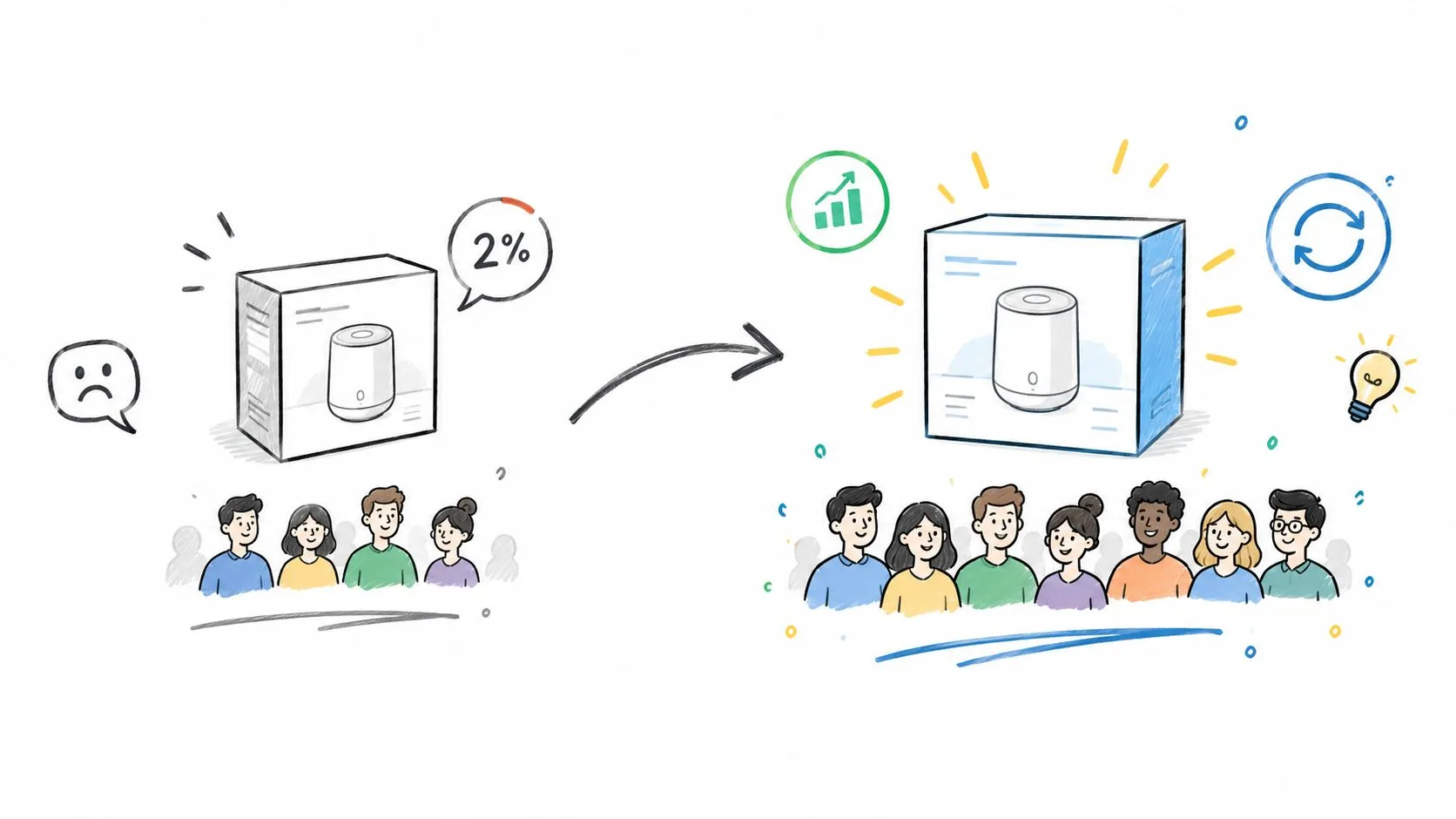
“I launched a feature that only 2% of users adopted, realized users needed live debugging tools first, and replaced the idea with what they were asking for” reveals more judgment than “I launched three successful features.” The failure is brief. The learning and correction carry the weight.
A tech professional might explain, “I built an automated testing framework that nobody used. I realized the team needed live debugging tools first, so I pivoted and built those instead. The new system was used on 90% of deployments.” The important signal isn't that the first idea failed. It's that the person didn't defend it out of pride.
A business candidate could say, “I pitched a new pricing model that lost us three customers. I reverted it, then introduced the same logic as an optional add-on. Adoption reached 22%.” An operations professional might describe a vendor system that created more work, then explain why they scrapped it after 3 months and improved the old process instead.
Keep the structure tight:
- Set up the intention: What problem were you trying to solve?
- Name the miss: What evidence showed the approach wasn't working?
- Explain the change: What did you learn, and what did you do differently?
- End with the result: What improved after the correction?
The failure should never become a confession. It's evidence that you can update your judgment when reality disagrees with your plan.
4. The Mundane Detail That Proves Ownership
“Led a project” sounds like a title. Ownership appears in the boring decisions nobody was required to make.
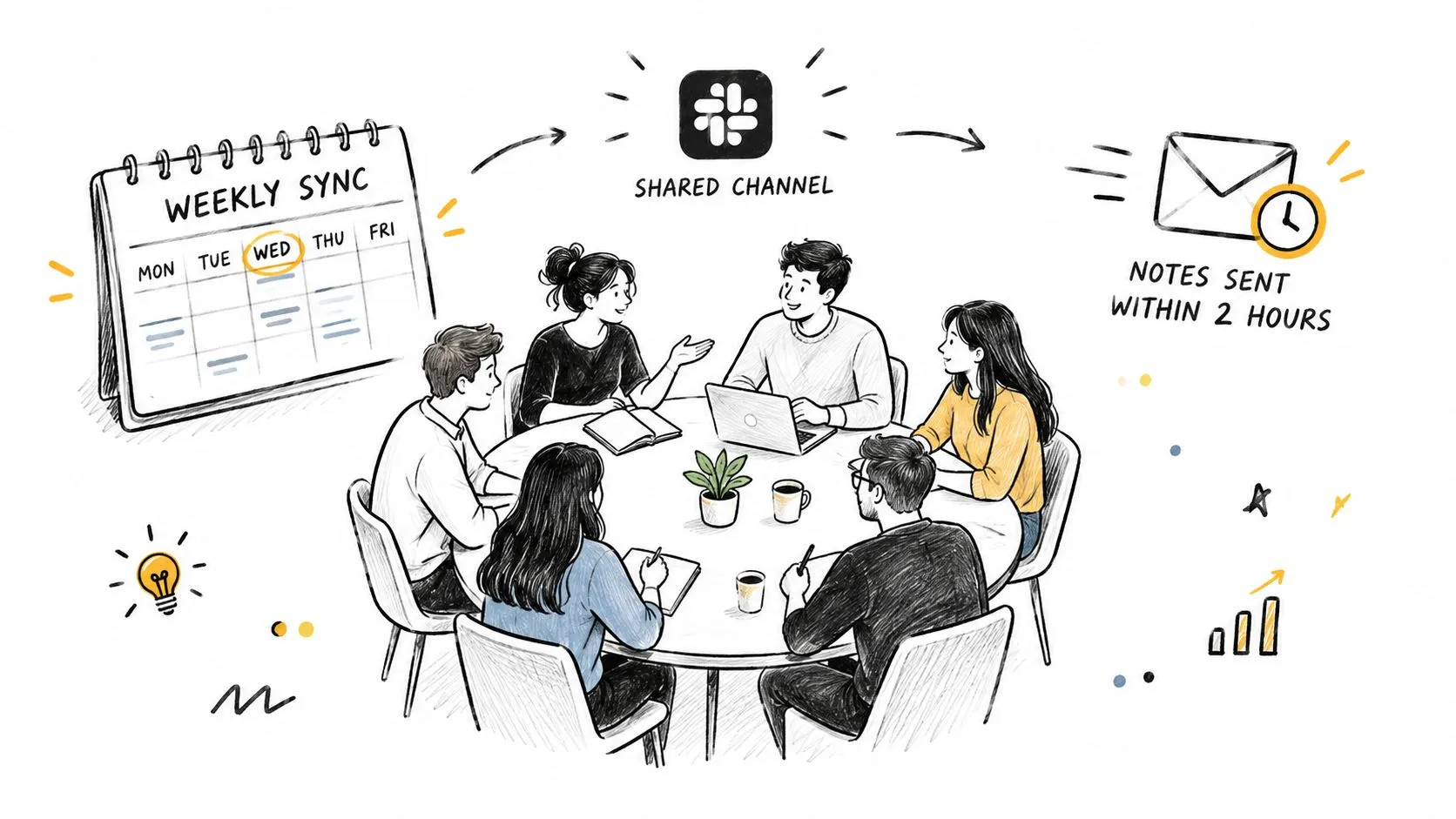
Consider this version: “I set up a weekly sync with 6 engineers, a product manager, and finance because communication was breaking down. I created a shared Slack channel and sent notes within 2 hours of every call.” Nothing about it sounds glamorous. That's why it works. It shows someone noticed friction, designed a mechanism, and maintained it.
A tech professional could say, “I owned incident response. I wrote a runbook, trained the on-call team through three practice drills, and added a 15-minute post-incident review to every incident. Response time improved from 45 minutes to 12 minutes.” The details show how the person made the process repeatable.
A business example might be, “Our client spreadsheet broke, so I built a simple database with automated follow-up reminders. Renewal rate moved from 68% to 81%.” In operations, “I created one vendor contact list, named an owner for each supplier, and added a monthly check-in. Payment delays dropped from 8 days to 2 days.”
A guide to describing yourself in a resume is useful here because strong self-description depends on the behavior behind the label. Don't call yourself detail-oriented. Show the system you built because a detail was being missed.
Start with the problem you noticed. Then name the mechanism, the people involved, and the effect. The right detail should feel like something only you would mention because you cared enough to make the process work.
5. The Skill Nobody Asked For, But You Learned Anyway
Listing a required skill doesn't tell anyone much. Explaining why you taught yourself a skill creates a story.
“Learned SQL to automate reporting because the vendor tools were too slow” beats “SQL.” It gives the listener a problem, a decision, and a natural next question: how did you learn it, and what did you build first?
A tech professional might say, “I taught myself Python to build a data migration script that removed 60 hours of manual work per release.” A business candidate could explain, “I learned Tableau because I was spending 4 hours a week building leadership reports manually. I automated the reporting and used the recovered time for analysis.” An operations professional might say, “I picked up basic HTML to fix broken links in our internal documentation portal, reducing support tickets by 18%.”
The skill matters, but the reason matters more.
- Name the pressure: What recurring problem forced you to learn?
- Use the actual skill: Say Python, Tableau, HTML, or SQL, not “technical skills.”
- State your depth plainly: “I learned enough Python to write a migration script” is stronger than claiming mastery.
- Show the result: Connect the learning to time saved, errors reduced, or work made possible.
This pattern works especially well for career changers and professionals whose formal job title hides their range. It also makes a personal fact more useful in an interview because it reveals how you respond when the job demands something new.
The best answer doesn't sound like a list of certificates. It sounds like a person who saw a problem, learned what was needed, and applied it.
6. The Work Nobody Sees, Behind-the-Scenes Impact
Some of your most valuable work won't appear in a revenue report or product launch. It still changes how a team operates.
“Documented the entire onboarding process so new hires stopped asking the same questions” sounds modest. It signals systems thinking, patience, and awareness of other people's time. It also invites a useful question: what made you decide that work mattered?
A tech professional could say, “I created a deployment runbook so incidents didn't depend on one person. Over 6 months, the number of single points of failure fell from 4 to 1.” A business example might be, “I built a client communication template and shared it with the team. Feedback response time improved, and client satisfaction scores rose by 7 points.” An operations candidate could say, “I mapped the contract approval workflow, found 3 unnecessary steps, and cut approval time from 21 days to 9 days without changing the requirements.”
Use this simple transformation:
I noticed something wasn't working. I built or changed something to address it. The team experienced a specific improvement.
Internal impact still counts. Time saved, fewer errors, faster handoffs, clearer documentation, and less dependency on one person are all evidence. Don't apologize for doing work behind the scenes. Teams need people who improve the system, not only people who collect visible wins.
This is also a strong direction for a networking conversation. It gives the other person a way to ask about judgment and team awareness without forcing you to deliver a rehearsed achievement speech.
7. The Constraint That Made You Better, Not Easier
Resource limits reveal decisions. They show what you prioritized, what you cut, and how you delivered without waiting for ideal conditions.
“Built a customer onboarding flow with a team of 1, me, in 6 weeks” creates a better conversation than “built a customer onboarding flow.” The listener can ask what you left out, how you chose the first version, and which risks you accepted.
A tech professional might say, “I built and deployed an API monitoring system in 3 weeks with no dedicated DevOps support. I used off-the-shelf tools and wrote bash automations.” A business candidate could say, “I launched a new market with a $15K budget and no paid advertising. I used partnerships and content to acquire the first 200 customers.” In operations, “I reduced cycle time by 40% with no new hires or budget by finding and removing process waste instead.”
The key is to explain the tradeoff. A constraint is interesting only when it changed your method.
- Name the limit: Time, budget, headcount, technical debt, or access.
- Show the choice: What did you prioritize, and what did you deliberately postpone?
- Describe the method: Which tools, partners, or shortcuts made delivery possible?
- End with the lesson: What did the constraint force you to understand?
Don't frame the story as suffering. Frame it as strategy. “We had no resources” sounds like a complaint. “We chose partnerships over paid advertising because the budget was limited” sounds like judgment.
For a senior professional, this pattern can also demonstrate restraint. Experienced operators don't just do more. They decide what isn't worth doing.
8. The Question You Asked That Changed Something
The strongest interesting fact about me examples often begin with an observation, not an assignment.
“I noticed we were losing 30% of support tickets to the spam filter and asked whether anyone had checked the false-positive rate. Nobody had. We changed the settings and recovered 8 hours of support time each week.” That story says the person didn't merely manage tickets. They saw a pattern, asked a question outside the routine, and changed the process.
A tech professional might explain, “I asked why our error logs lacked request IDs, which made multi-service debugging impossible. I added request IDs to the logging standard, cutting average resolution time by 35%.” A business candidate could say, “I noticed our top sales representative closed deals 2 times faster than average. I asked what she did differently, found a distinct discovery framework, and taught it to the team. Win rate improved by 18%.” An operations example might be, “I asked whether we tracked rush-shipping costs. We didn't. We found $45K per year in rush fees and cut that cost to $8K through better forecasting.”
Lead with what you noticed. Then state the exact question.
The explanation matters because the interviewer wants to know why others missed it. Maybe the issue wasn't tracked, it fell between departments, or everyone was too busy handling the symptoms. Your question shows pattern recognition and ownership.
A fact becomes askable when it contains a small mystery. What did you see? Why did you care? What changed after you asked?
8-Facet Comparison: Interesting Facts About Me
| Example | 🔄 Implementation complexity | ⚡ Resource requirements | 📊 Expected outcomes | 💡 Ideal use cases | ⭐ Key advantages |
|---|---|---|---|---|---|
| The Specific Constraint (Not the Achievement) | Medium, requires clear constraint + metric | Low, uses existing context/data | Highlights resilience; invites follow-up | Problem-solving roles; interviews | Signals problem-solving under pressure |
| The Oddly Specific Number (Not the Round One) | Low, retrieve or verify exact figures | Low, check records or notes | Boosts credibility; more memorable | Metrics-heavy roles; resumes | Precision equals believability |
| The Failure That Led Somewhere (Not the Triumph Alone) | Medium, candid setup + concise lesson | Low–Medium, needs outcome/pivot data | Shows learning velocity and judgment | Product, leadership, iterative roles | Demonstrates course-correction & maturity |
| The Mundane Detail That Proves Ownership | Low, describe concrete rituals and systems | Low, examples from day-to-day work | Signals ownership; predicts behavior | Team leads, ops, execution-focused hires | Shows process-focus and reliability |
| The Skill Nobody Asked For (But You Learned Anyway) | Medium, explain learning path and application | Medium, time invested to upskill | Shows initiative; increases capability | Small teams, growing roles, cross-functional | Proves self-directed growth and adaptability |
| The Work Nobody Sees (Behind the Scenes Impact) | Medium, tie hidden work to measurable impact | Low–Medium, effort often routine but time-consuming | Improves systems; sustained efficiency gains | Onboarding, support, ops, documentation roles | Signals systems thinking and long-term value |
| The Constraint That Made You Better (Not Easier) | Medium, name constraint and trade-offs | Low, often done with limited means | Shows prioritization and resourcefulness | Startups, lean teams, tight timelines | Demonstrates hustle and smart trade-offs |
| The Question You Asked That Changed Something | Low–Medium, show observation → question → impact | Low, observation + basic data checks | Reveals pattern recognition and leverage | Analytical, process-improvement, leadership | Highlights curiosity and proactive leadership |
Make the Fact Earn Its Follow-Up
Use a compact structure when editing an interesting fact about me:
Fact → context → action → outcome → question.
The fact gives the listener an entry point. Context explains why it mattered. Action shows your judgment. Outcome proves that something changed. The final question isn't something you need to say aloud. It's the question your wording should naturally create.
Take one true experience and adjust the emphasis for the audience.
A student might say, “I built a budgeting spreadsheet for a student society after we kept missing event costs. I taught three committee members to use it, and we stopped finding unexpected expenses at the end of each event.” The story doesn't need years of experience. It shows initiative, organization, and a result.
A mid-level professional could say, “I found that our weekly forecast was wrong because sales and operations used different definitions of ‘active account.’ I aligned the definitions, rebuilt the report, and gave both teams one operating view.” The details should emphasize ownership and cross-functional judgment.
A career changer might say, “I coordinated schedules and medication records for a family member while working part-time, then built a simple tracking system that made handoffs reliable. That experience led me toward operations and process design.” The point isn't to disguise a career break. It's to explain the transferable behavior with dignity and clarity.
Personal facts need boundaries. For resumes, use personal details only when they reinforce a professional signal and fit the context. For interviews, keep the answer positive, brief, and easy to discuss. For LinkedIn bios, choose a detail that adds warmth without competing with your professional identity. For networking, use something that opens a mutual conversation rather than demanding attention.
- Do use: Specific details, relevant context, honest outcomes, and a clear connection to how you work.
- Don't use: Controversial opinions, intimate information, negative stories without resolution, or novelty that reveals nothing useful.
- Do adapt: A personal fact can show curiosity in a bio, resilience in an interview, or a shared interest at a networking event.
- Don't force it: If the listener has no natural next question, choose another fact.
Recruiters and hiring managers skim. One 2026 resume report cites 6 to 8 seconds per resume for initial review, while another current source reports an average initial review time of 7.4 seconds. Those constraints make clarity more than a style preference. Your first lines need to communicate what you changed and why it matters. ResumeGo's 2025 controlled experiment reported that customized resumes were 31% more likely to land an interview than generic resumes, which reinforces the value of adapting your story to the role rather than recycling a polished sentence everywhere.
StoryCV is a practical next step when the experience is there but the wording isn't. It asks questions about one real role, draws out the decisions and outcomes you remember only vaguely, and helps turn those answers into resume-ready language. You don't need to invent an extraordinary life detail. You need to find the useful detail already inside your work.
Try StoryCV with one role. Answer the questions plainly. Then read the draft and ask one final question: would a stranger want to know what happened next?
StoryCV is an online resume writer that interviews you about your real work and turns context, decisions, and outcomes into clear resume-ready writing. Try StoryCV with one role, then find the words for the experience you already have.