A Jobscan subscription makes a simple trade. You pay for a match score, a keyword gap report, and a quick read on whether your resume is likely to parse cleanly against a specific job posting.
That's useful. It's also where a lot of people start optimizing the wrong thing.
A score can confirm that your resume contains the right words. It can't tell you whether your bullets say anything worth reading. If your experience section is vague, padded, or just parroting the job description back to the employer, a higher score won't save it. It only makes the problem look more polished.
Here's the cleaner way to think about a Jobscan resume checker versus an online resume writer: one helps you match a posting, the other helps you mean something on the page.
| Criteria | Jobscan Resume Checker | StoryCV Online Resume Writer |
|---|---|---|
| Core job | Check keyword overlap and ATS compatibility | Turn experience into clear, persuasive resume writing |
| Best used when | You already have a decent draft | You've done solid work but can't articulate it well |
| Main output | Match score, missing keywords, formatting feedback | Written bullets, summaries, and role narratives |
| Strength | Mechanical alignment to a specific posting | Editorial judgment at software speed |
| Blind spot | Doesn't tell you if a bullet is memorable | Isn't trying to be a score-chasing scanner |
| Best place in workflow | Near the end | At the beginning |
The Score Is a Tempting Trap
The most popular advice on ATS tools is backwards. People treat the score as the work. It isn't. It's the check after the work.
That's why Jobscan is so appealing. It gives you a number to chase. Numbers feel objective. They feel safer than writing. If the platform says your resume matches the role, you can tell yourself you're making progress.
But a resume doesn't get hired for containing nouns.
It gets hired because a recruiter or hiring manager can scan it and quickly understand what you did, what changed because of your work, and whether you can do it again in their context. A score can't judge that. It can't tell whether “led cross-functional initiatives” means you drove a messy rollout, or whether you pasted language from the posting into a bullet that says almost nothing.
What the score really confirms
A match score is good at one narrow question: does your resume reflect the vocabulary of this job posting?
That matters. If a role asks for SQL, stakeholder management, and forecasting, and your resume never says those things, that's a problem. But the reverse isn't enough. Mentioning the words doesn't prove the story underneath them is strong.
Practical rule: If your resume only improves when a scanner rewards it, the writing probably wasn't doing enough in the first place.
The real split
There are two tests happening.
- Machine test: Can the system parse the file and detect relevant terms?
- Human test: Does a person believe you did work that mattered?
- Career test: Can your resume make your experience feel specific, credible, and worth a conversation?
It's common to obsess over the first test because it's measurable. The second test decides interviews.
That's the trap. A resume that scores well can still read badly. And a resume that reads badly usually loses as soon as a human opens it.
What a Jobscan Resume Checker Actually Does Well
Jobscan is good at its job. If you use it for the right reason, it's a sharp tool.
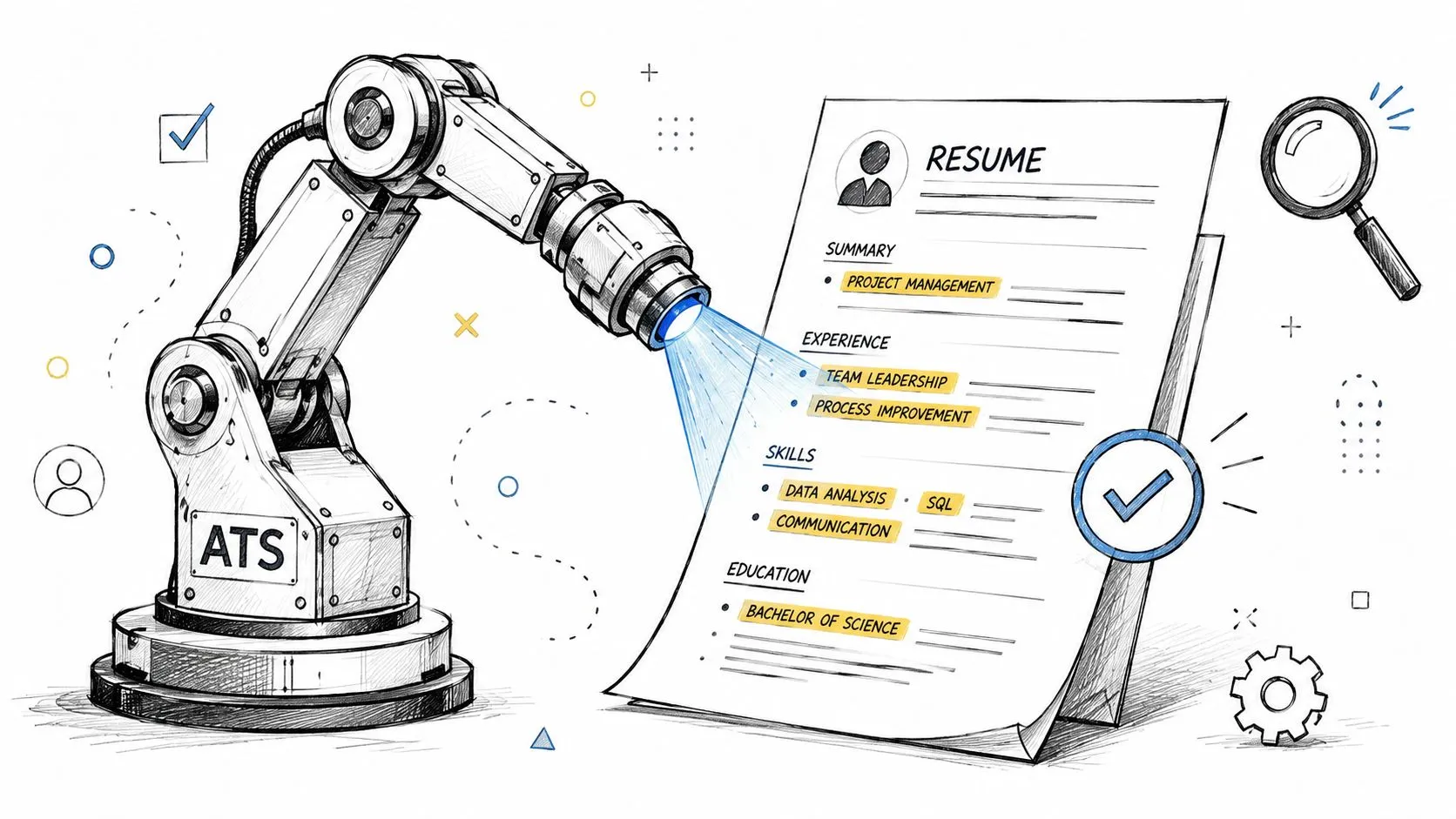
It compares your resume directly against a specific job listing and scores the match on a 1 to 100 scale while checking over 30 specific ATS parameters, including hard skills, soft skills, formatting errors, and word count, according to Jobscan's targeted resume page. That's not generic resume advice. It's a targeted comparison engine.
Where Jobscan is strongest
Jobscan's best feature is precision.
It doesn't just say “add more keywords.” It breaks match results into hard skills, soft skills, and management or leadership skills, then shows which terms from the posting appear in your resume and which are missing, as described in this review of the best ATS resume checker options. That's a useful gap analysis when you're tailoring for one role that matters.
It also goes a step further than many scanners. The same source notes that Jobscan can identify the exact ATS platform a company uses, such as Workday, Greenhouse, or Taleo, and adjust recommendations to fit platform-specific parsing behavior. That's a real advantage if you want a final compliance check instead of guessing.
For people comparing scanners, that's the job-to-be-done. You're asking:
- Did I miss obvious terms from the posting?
- Will my formatting create parsing trouble?
- Am I using language the system can recognize?
That's a fair use case.
What the tool is built to inspect
Jobscan works like a mechanical validator, not an editor.
It analyzes your resume against the posting text, mimics top ATS behavior, flags missing qualifications, and can generate one-click suggestions based on gaps identified in the scan, as covered in this breakdown of AI resume screening and ATS behavior.
A Jobscan resume checker answers “did I include the necessary language?” It does not answer “did I explain my work well?”
That distinction matters more than most job seekers realize.
The Hard Limit of a Match Score
A high score becomes dangerous when you start writing for the scanner instead of for the person reading after it.
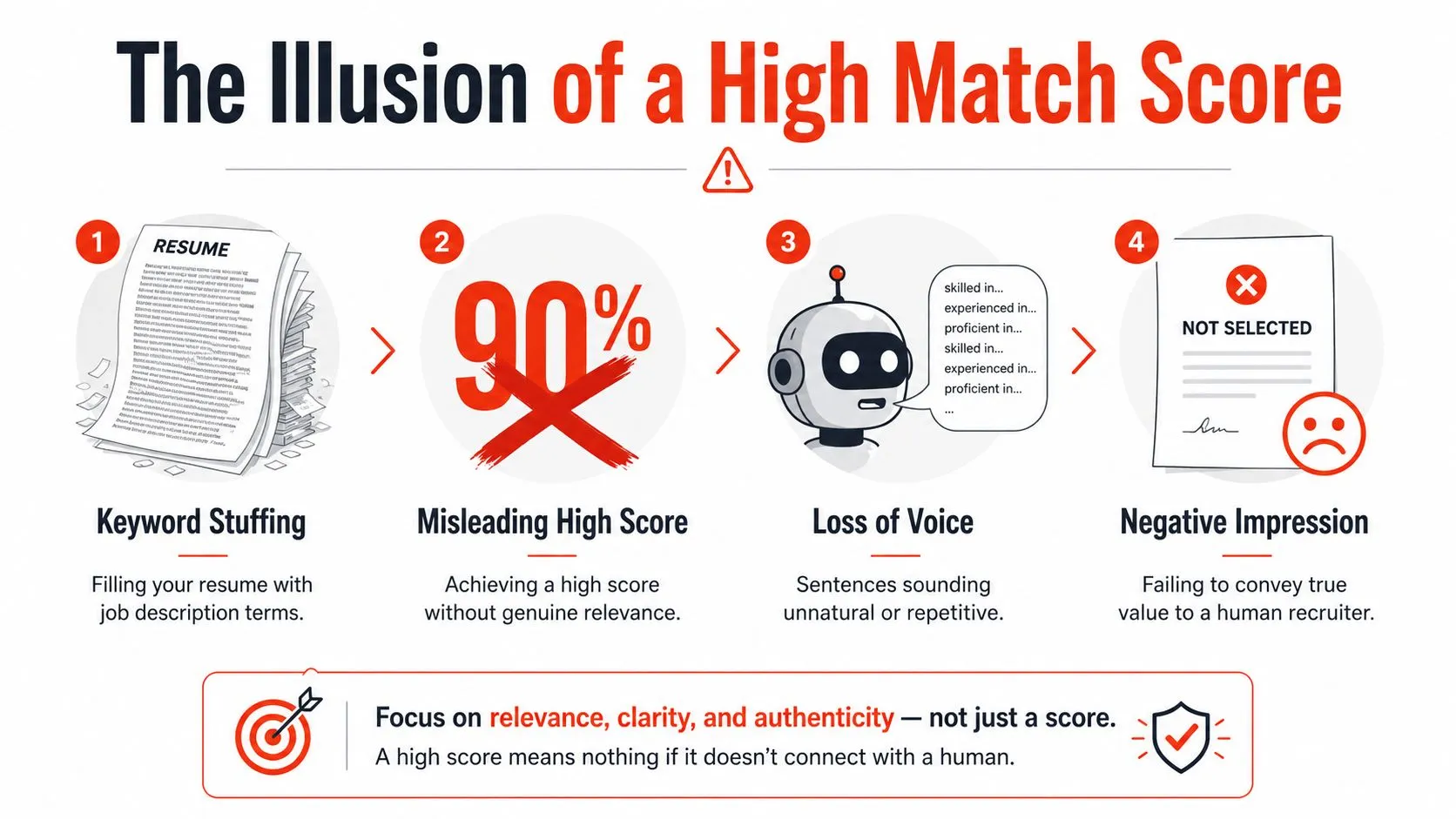
The common mistake is simple. You see missing keywords. You force them in. Then you keep forcing them in until your resume technically matches the posting but no longer sounds like a person describing real work.
That's how you get bullets like this:
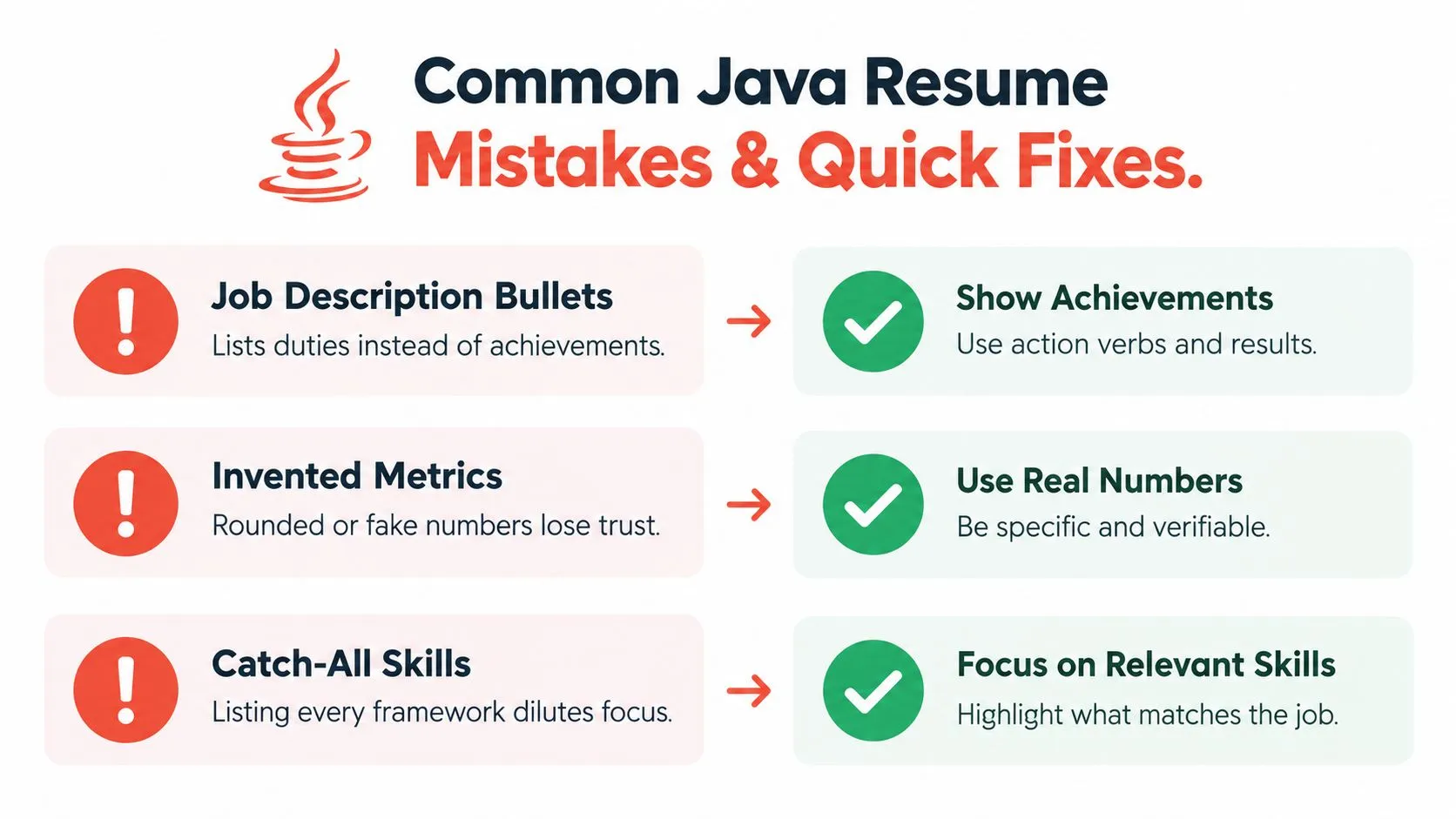
- Weak bullet: “Utilized cross-functional collaboration, strategic planning, stakeholder management, KPI reporting, and agile methodology to support business objectives.”
- What's wrong: It says the right terms. It says nothing concrete.
- Human reaction: So what did you do?
Keyword overlap is not evidence
This is the ceiling of ATS scoring. It can measure overlap. It can't verify substance.
A scanner can reward a bullet that repeats the posting's language back to the employer. It can't judge whether the claim is grounded in real experience, whether the sentence shows scope, or whether the accomplishment sounds credible. That's why over-optimization is a real risk, especially when people start treating the score as the finish line instead of a final diagnostic.
One review of ATS checkers argues that this over-optimization problem is under-discussed. It cites a 40% increase in recruiter rejections for keyword stuffing versus genuine skill alignment, and it also cites a finding that only 22% of Jobscan-optimized resumes led to interviews despite 80%+ match rates, in its critique of ATS over-optimization and Jobscan-style matching. Take the bigger lesson, not just the numbers. Chasing the score can produce resumes that pass software and fail people.
If a sentence sounds engineered to satisfy a checklist, a recruiter will hear the strain immediately.
What a human notices fast
A person doesn't read the way a parser reads.
They notice whether your bullet names the situation, your role, your action, and the result. They notice whether the line has texture. They notice whether “owned strategy” means anything beyond title inflation. If your resume loses specificity as you optimize it, you're making it less persuasive.
That's why tailoring works best after the writing is already solid. If you need help with the tailoring part itself, this guide on tailoring your resume to a job description is the right mental model. Match the language, yes. Don't let the language replace the evidence.
Solving the Real Problem Getting Your Story Straight
Most mid-career resume problems aren't formatting problems. They're articulation problems.

You did the work. You shipped the rollout, cleaned up the process, handled the client mess, trained the team, fixed the reporting, steadied the project. Then you sit down to write and produce bullets like “responsible for operations” or “worked cross-functionally with stakeholders.” That isn't because you lack experience. It's because translating experience into sharp writing is a separate skill.
The earlier problem
Before anyone should worry about ATS scoring, they need material worth scoring.
That means a resume has to do more than list duties. The phrase “your resume should tell a story” is often abused, but the underlying point is right. A strong resume emphasizes uniqueness, specificity, context, scope, and quantified value, while focusing on achievements over tasks and clearly stating your role and contribution, as outlined in this discussion of resume storytelling.
That's the earlier problem. Not keyword placement. Story extraction.
What stronger bullets look like
Compare these:
- Task language: “Managed vendor relationships for procurement operations.”
- Story language: “Reset a strained vendor process, clarified approvals across procurement and finance, and helped the team move purchases faster with fewer escalations.”
The second version is better even before you tailor a single keyword. It contains motion. It gives the reader something to picture.
Useful test: If a bullet could describe a thousand people, it doesn't help your candidacy.
This is also why people with less formal experience still need story, not filler. Someone learning the basics of creating a powerful CV with no experience still has to frame projects, coursework, volunteer work, or side work as evidence with context. The principle doesn't change. Only the source material does.
A storytelling resume format can be built deliberately. Indeed describes six parts: an eye-catching headline, a paragraph-form summary with setting and conflict, a traditional education section, a professional experience section showing progress, a mixed technical and interpersonal skills list, and a final review pass in its guide to the storytelling resume. You don't need to copy that structure exactly. You do need the mindset behind it. The reader should understand what kind of professional you are and what changes when you're in the room.
Here's a useful walkthrough of that writing process in action:
Jobscan vs StoryCV The Job To Be Done
People compare these as if they're substitutes. They're not.
One is a checker. One is an online resume writer. If you confuse those jobs, you'll buy the wrong kind of help.
Jobscan vs. StoryCV at a Glance
| Criteria | Jobscan Resume Checker | StoryCV Online Resume Writer |
|---|---|---|
| Primary job-to-be-done | Check ATS fit for a specific posting | Write a clearer, stronger resume from your actual experience |
| Input needed | Resume plus job description | Your background, context, and achievements |
| Best strength | Keyword alignment and formatting checks | Turning fuzzy experience into concrete bullets |
| Best timing | After drafting | Before drafting or during a rewrite |
| Output style | Match report and optimization suggestions | Editorially shaped resume language |
| Main risk if misused | Chasing score over substance | Expecting it to act like a scanner |
Which problem matters first
Jobscan is highly precise when measuring keyword alignment against a specific posting, but its core function is still keyword matching rather than overall resume health. A separate review contrasts that with broader systems that also review bullet strength, grammar, skills structure, and format, while noting that Jobscan's Match Rate Report focuses on formatting errors, key qualifications, word count, and tone for a specific listing in this analysis of a Jobscan alternative and match-rate workflow.
That's the clean distinction. Jobscan helps you check the fit of a draft. It doesn't solve the harder writing problem upstream.
If you're trying to decide where to invest time, use this split:
- Choose Jobscan first if you already have a strong resume and you're applying to a short list of high-priority roles.
- Choose an online resume writer first if your bullets are generic, your summary is flat, or your experience sounds smaller on paper than it was in real life.
- Use both only if you respect the order.
For job seekers who want a broader look at AI support beyond ATS scoring, this roundup of an AI-powered tool for job seekers is useful context. Different tools solve different bottlenecks. The mistake is expecting one category to do another category's work.
If you're weighing content-focused feedback against ATS-focused feedback, this comparison of StoryCV vs Resume Worded is a helpful next read.
The Right Workflow Score Last Not First
A high match score feels productive. It also sends plenty of job seekers in the wrong direction.
Start with the score, and you start writing for software. Start with the story, and you build a resume a hiring manager can understand in seconds.
A better order of operations
The right workflow is simple.
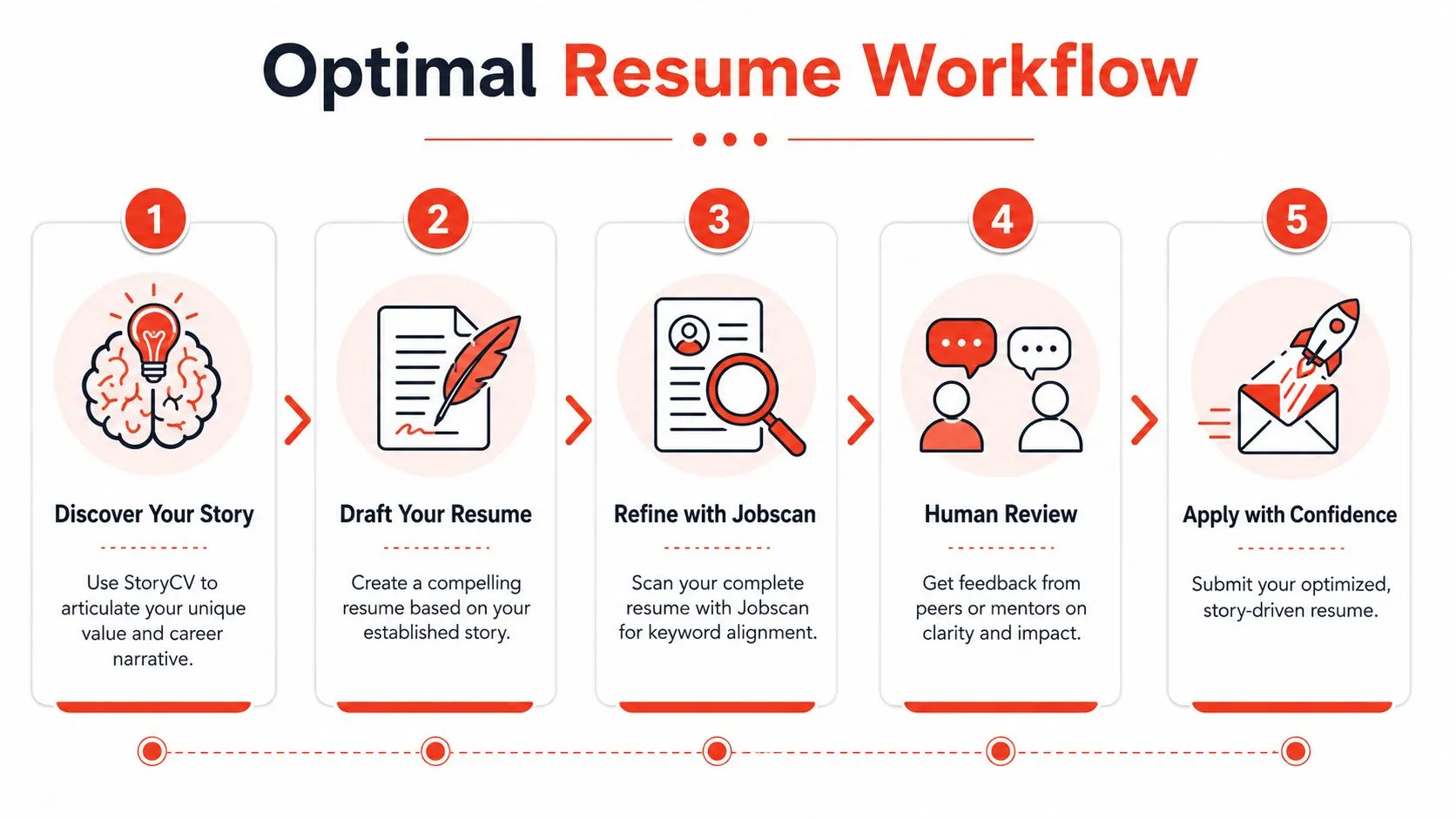
Write the story first. Tailor second. Scan last.
That order matters because the hardest part of resume writing is not keyword coverage. It is explaining your value with enough clarity and specificity that another person believes you can do the job. A scanner can reward term matching. A recruiter rewards relevance, judgment, and evidence.
The workflow that makes sense
-
Extract your real story
Write down what changed because of your work. Focus on outcomes, decisions, constraints, and influence. If you skip this step, your resume turns into a list of duties. -
Draft bullets a human would read
Build each bullet around action and result. Cut stock phrases, stacked buzzwords, and vague claims. If a bullet could describe ten other candidates, it is too weak. -
Tailor the language to the job posting
Match the employer's wording where it reflects work you have done. Make the overlap obvious. Do not force terms that distort your background. -
Run the ATS check last
Use Jobscan as a final cleanup pass. Check for missing keywords, obvious formatting issues, and gaps in phrasing. Then stop. Chasing a higher score after the resume already works usually makes the writing worse. -
Get one human read before you send it
Ask a peer, mentor, or former manager a blunt question: “Can you tell what I did and why it mattered?” If they hesitate, the score does not matter yet.
Final filter: A resume that reads clearly to a person and parses cleanly for a scanner is ready to send.
That is the primary priority. Story is the 90% problem. Score is the last 10%.
Jobscan helps you polish fit. It does not create substance. If your bullets are generic, your impact is buried, or your experience sounds smaller on paper than it was in real life, fix that first.
If your real problem isn't ATS compliance but turning solid experience into sharper writing, StoryCV is built for that. It's an online resume writer that helps you uncover what you did, frame it clearly, and produce bullets worth scoring in the first place. That's the difference between a resume that scores well and a resume that reads well.