When you tailor a resume to a job description, you match your headline, summary, and experience to what the company wants. It’s not about stuffing keywords. It's about framing your story as the specific solution to their problem.
This shows the recruiter you're serious. And you respect their time. A targeted resume opens doors. A generic one gets ignored.
Why Your One-Size-Fits-All Resume Is Broken
Your generic resume is failing. It’s not your fault. We were all told to make one perfect document and send it everywhere. That advice is broken. Sending the same resume to every job is like shouting into a void.
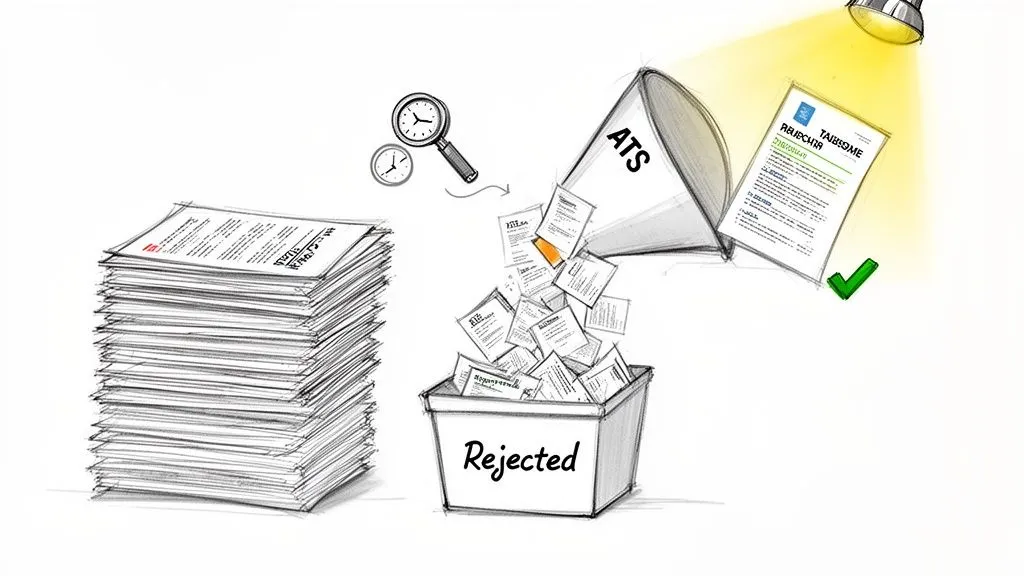
Recruiters are drowning. Applicant Tracking Systems (ATS) are ruthless. A generic resume just lists facts. It screams, "I haven't done my homework."
The Six-Second Scan
Recruiters spend an average of six to eight seconds on each resume. They aren't reading. They're scanning. Hunting for titles, skills, and outcomes that match their needs right now.
A generic document forces them to connect the dots. They don’t have time. Tailoring isn’t a nice-to-have. It’s the only way to survive that scan.
Somewhere along the way, we stopped writing for people. We started optimizing for algorithms. And in the process, we forgot the real point of a resume: to tell your story and open doors.
Mindset Shift: From Applying to Solving
The biggest mistake is treating your resume like a historical record. It’s not. It's a marketing document. It's designed to solve a company’s problem.
When you tailor your resume, you signal three things:
* You understand their specific pain.
* You respect their time.
* You have the exact experience they need.
The numbers don't lie. ATS software discards up to 75% of resumes before a human sees them. And with companies seeing a 182% surge in applications per hire since 2021, the competition is staggering. Small adjustments, like matching your resume title to the job title, can boost your interview rate by 3.5 times. This isn't optional. It's essential. You can see more resume statistics and findings on High5Test.
A targeted resume starts a real conversation. It shows you don’t want any job—you want this job. That makes all the difference.
First, Get the Content Right
Trying to tailor a weak resume is pointless. It doesn’t fix the core problem. Before you even think about tweaking your resume for a job, you need a rock-solid foundation. This is your master resume.
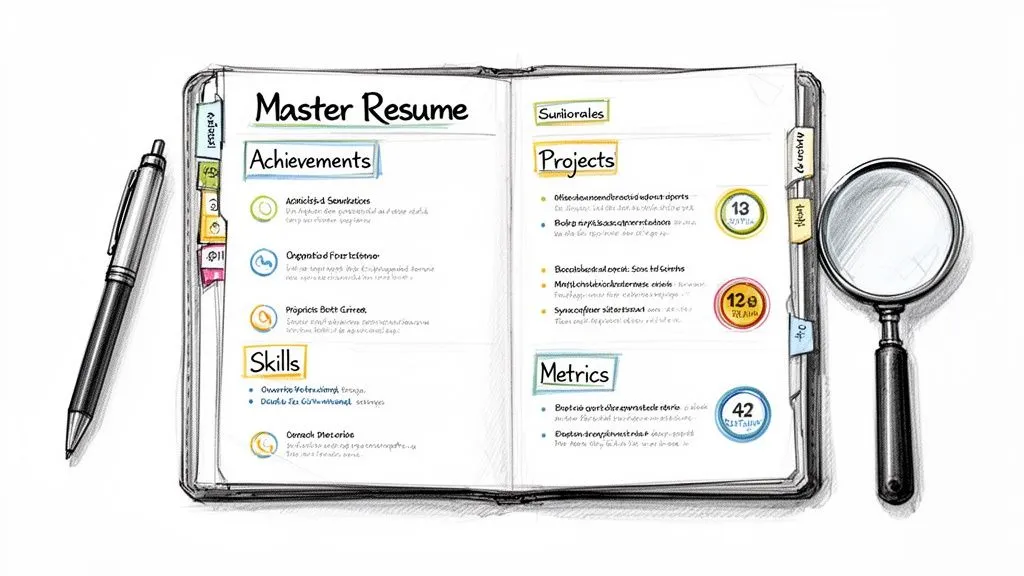
This isn’t the document you send out. Think of it as your career database. A sprawling, private file with every project, achievement, and skill. It can be five pages long. Who cares? Its only job is to capture your entire story. So you have great material to work with.
Why This Is Non-Negotiable
Most people skip this. They dive straight into tweaking an old resume, trying to force-fit old bullets into new roles. This is why tailoring feels exhausting. You’re rewriting from scratch every time.
A master resume flips the script. The hard work of remembering and quantifying your impact is done once, upfront. When a job pops up, you're not starting from zero. You're just selecting the most relevant stories from your database.
Your master resume is where you tell the truth to yourself. Your tailored resume is where you tell the most relevant version of that truth to an employer.
Build Your Career Database
This document is a living history. For every role, don’t just list duties. Dig deeper.
- Projects: What did you build, launch, or fix?
- Challenges: What was the big problem you were hired to solve?
- Actions: What specific steps did you personally take?
- Results: What were the outcomes? Use numbers: increased revenue by 15%, reduced churn by 20%, saved $50K.
This is the core of a powerful story. To make your master resume stronger, think about adding new skills. For instance, you could boost your CV with certified payroll training to add concrete expertise.
Building this document is a serious investment. It’s the difference between panicked applications and confident ones. If you're struggling to frame your achievements, our guide on the perfect resume can help you articulate your value.
Once your master copy is solid, tailoring becomes simple editing. Not a soul-crushing rewrite.
How To Decode a Job Description
Job descriptions are roadmaps, not wish lists. Most people scan for keywords, tweak a few bullets, and hit "apply." Big mistake.
To nail your resume, you have to decode what the company actually wants. Forget the corporate jargon. Look for the pain. Every job exists to solve a problem. Your mission is to find it.
Find The Real Requirements
First, get the job description out of the browser. Print it or copy it into a doc. Get your hands dirty.
Read it once. No marks. Just get a feel for the role. Formal? Scrappy? Full of buzzwords?
Now, on the second pass, triage the info. Highlight and categorize everything. Sort signal from noise.
- Deal-breakers: The non-negotiables. Look for "must have," "required," or "minimum 5 years experience." If you don't meet these, this probably isn't the role.
- Important Skills: Check responsibilities listed first or mentioned multiple times. This is where they signal their biggest needs. Words like "responsible for," "lead," "manage," or "develop" are signposts.
- Nice-to-Haves: Bonus points. Often under "Preferred Qualifications." Things like "familiarity with X software" or "experience in Y industry."
Focus On The Pain Points
Once sorted, zero in on the "Important Skills." The gold is buried here. A company doesn't list tasks to fill space; they're describing their struggles.
If the description says, "Develop a new client onboarding process," the real message is, "Our current onboarding is a mess, and it's costing us customers."
This is the ‘why’ behind the role. When you understand their pain, you can position your experience as the direct solution to their problem. Your resume stops being a history lesson. It becomes a preview of their future success.
The impact is huge. A whopping 83% of recruiters are more likely to hire candidates with customized resumes. And with every corporate role attracting an average of 250 applicants, blending in is the same as being invisible. This isn't about gaming a system. It's about showing a human you paid attention.
By identifying the core problem, you move beyond simple keyword matching. Now you can rewrite your resume's story to prove you’re the one who can make that pain go away. To dig deeper into which qualifications matter most, check our guide on what skills to put on a resume.
The Practical Art Of Rewriting Your Resume
Alright. You have your master resume. You've decoded the job description. Now for the real work: strategic rewriting.
This isn't fluff. It’s a surgical process. Edit, rephrase, and reorder your experience to tell the exact story the hiring manager needs to hear. Be the obvious solution.
Reframe Your Headline And Summary
Your headline and summary are the first things a recruiter sees. They must mirror the role you want.
Let's make this concrete. The job is for a "Senior Product Marketing Manager" with a focus on "SaaS & B2B Growth."
- Before: Marketing Manager
- After: Senior Product Marketing Manager | SaaS & B2B Growth
See the difference? "Before" is a generic label. "After" is a specific solution. It instantly signals you get the seniority, industry, and mission.
Next, your summary. Grab the top priorities from the job description and weave them into a sharp, two-sentence opening. If they want "go-to-market strategy" and "cross-functional leadership," your summary better lead with that.
Reorder and Rewrite Your Bullets
Your bullets prove you can solve their problems because you’ve already solved similar ones. What you remove is as important as what you add.
First, reorder your bullets. For your most relevant job, find the three or four achievements that scream "I can do this job" and move them to the top of that section. Irrelevant points get buried or deleted.
Next, rewrite the bullets. Infuse them with the language from the job description.
- Job Description Keyword: "Lead generation"
- Generic Bullet (Before): Responsible for marketing campaigns.
- Tailored Bullet (After): Drove a 25% increase in MQLs by leading targeted lead generation campaigns across LinkedIn and email automation.
The "after" version is specific, quantified, and speaks to their needs. If you're looking for more ways to frame your wins, our article on how to write achievements in your resume offers a deeper dive.
A great tailored resume doesn't just list what you did. It proves you can deliver what they need, using the language they understand.
Curate Your Skills Section
Finally, stop treating your skills section like a junk drawer. This is prime real estate. Prune it to match what the job description demands.
If the role calls for "Salesforce" and "Marketo," make sure those are listed. That obscure software you used five years ago? Get rid of it. This shows you're focused. It makes it easy for the ATS and the human scanner to check their boxes.
This process is meticulous. It’s also what separates top candidates. Research shows 61% of hiring managers see a tailored resume as the most effective strategy. With some roles getting nearly 200 applicants, being generic is a surefire way to get ignored. You can discover more insights about resume statistics on standout-cv.com. By making these edits, you’re not just applying; you’re starting a conversation on their terms.
Build A Smarter Application Workflow
Tailoring every resume sounds exhausting. It is—if you're doing it manually. Burnout is real. You need a system, not just good intentions.
The goal isn't to create a unique masterpiece from scratch every time. That’s a painful chore. It's about working smarter.
From One Master To Many Variants
Here's the secret: stop thinking in terms of "one resume." You need resume variants. After you’ve built your master resume, create a few core versions for the specific roles you're targeting.
For example, a tech product developer might create:
- A "Product Manager" variant
- A "Product Owner" variant
- A "Technical Program Manager" variant
Each of these is already 80% tailored. They use the right language and highlight relevant projects. When you find a new "Product Manager" job, you aren't starting from scratch. You're making a few minor tweaks to a document that's already strong.
This is where StoryCV becomes your partner. Instead of staring at a blank screen, you can manage these variants in a fraction of the time. We provide editorial judgment at software speed, helping you produce high-impact resumes without the soul-crushing effort.
This visual guide breaks down the core tailoring process. It shows you exactly where to focus.
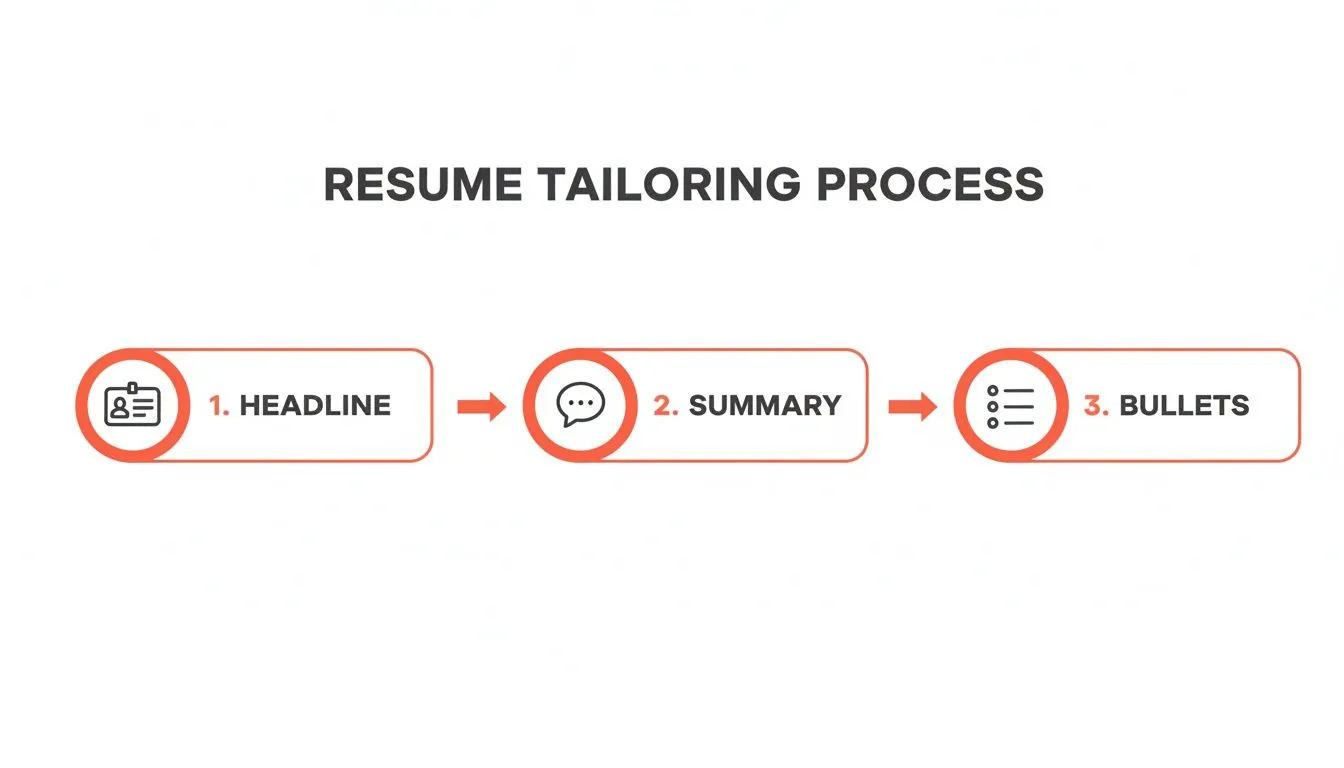
As you can see, tailoring is a strategic, top-down process. Start with the headline. Use the summary and bullets to prove you're the right person.
Build A Sustainable System
You shouldn't have to send out 100 applications and hope. That's a broken process. A great resume should open doors with just a few.
Building a system of resume variants allows you to apply for the right jobs, effectively, without draining your will to live. It's about precision, not volume.
As you build this workflow, remember your resume is just one piece of the story. A strong online presence helps. You can explore these top personal branding websites to showcase your value and complement your resumes. The point is a consistent, compelling narrative everywhere a recruiter might look.
Got Questions About Tailoring Your Resume?
Let's clear the air. Tailoring a resume brings up questions. The kind that makes you want to give up. I get it. Here are straight answers.
How Much Customization Is Enough?
This isn't about rewriting your life story every time. That’s a fast track to burnout. Be strategic.
Focus on the big three:
- Your Headline: Non-negotiable. A five-second fix. Mirror the job title. If they want a "Senior Product Manager," your headline should say "Senior Product Manager."
- Your Summary: This two-sentence pitch needs to sound like you read the job description. Reflect their top priorities back to them.
- Your Most Recent Role: Take the top three bullet points under your current job and rephrase them. Make them direct answers to the company's biggest problems.
Anything more gives you diminishing returns. The goal is to make your relevance impossible to miss in six seconds.
Do I Really Need to Do This for Every Single Job?
No. Anyone who tells you otherwise is giving you bad advice.
That old "tailor for every job" mantra isn't practical today. A smarter approach is to create a few targeted "resume variants" for the types of roles you want.
You might have one for "Project Manager," another for "Program Manager." Each one is 80% there. When you find a specific job, you pull up the closest variant and make those small, high-impact tweaks. You can apply with precision and speed, respecting your own time.
How Do I Handle Career Gaps When Tailoring My Resume?
Don't hide it. Don't fudge the dates. Recruiters spot that, and it kills your credibility.
Be direct. You can address the gap briefly in your summary or cover letter. The resume itself should focus on what you did, not the time you were away. If the gap is long, consider a functional or combination resume format. These put the spotlight on your skills, not a strict timeline.
And don't forget to emphasize any projects, freelance work, or skills you picked up during that time. It all counts.
Are Cover Letters Still Worth the Effort?
Sometimes. Many recruiters admit they don’t read them. But for some, a cover letter is critical.
Treat a cover letter as an opportunity, not an obligation. If it's optional, a well-written, concise letter can give you an edge—especially if you're changing careers.
If you write one, make it count. Don't repeat your resume. Tell a quick story that connects one of your proudest achievements to their biggest problem. Keep it short, sharp, and focused on them.
Feeling like this is all too much? That's what StoryCV is for. We're your digital resume writer. We guide you through a smart interview to pull out your real impact, turning your experience into a story that gets you noticed. It's time to ditch the templates and guesswork.