A strong medical laboratory assistant resume names your exact scope before claiming impact. In the United States, that scope can be supported by credentials with listed application fees of $155 through ASCP and $135 through AMT.
The popular advice is to make your resume sound bigger. That's wrong for a CLIA-regulated lab. An impressive-sounding claim about performing complex hematology or chemistry testing can damage your application if the hiring lab manager knows the role didn't authorize that work. The manager is accountable for assigning testing complexity, training, and competency. A resume that blurs those lines reads as dishonest or dangerous.
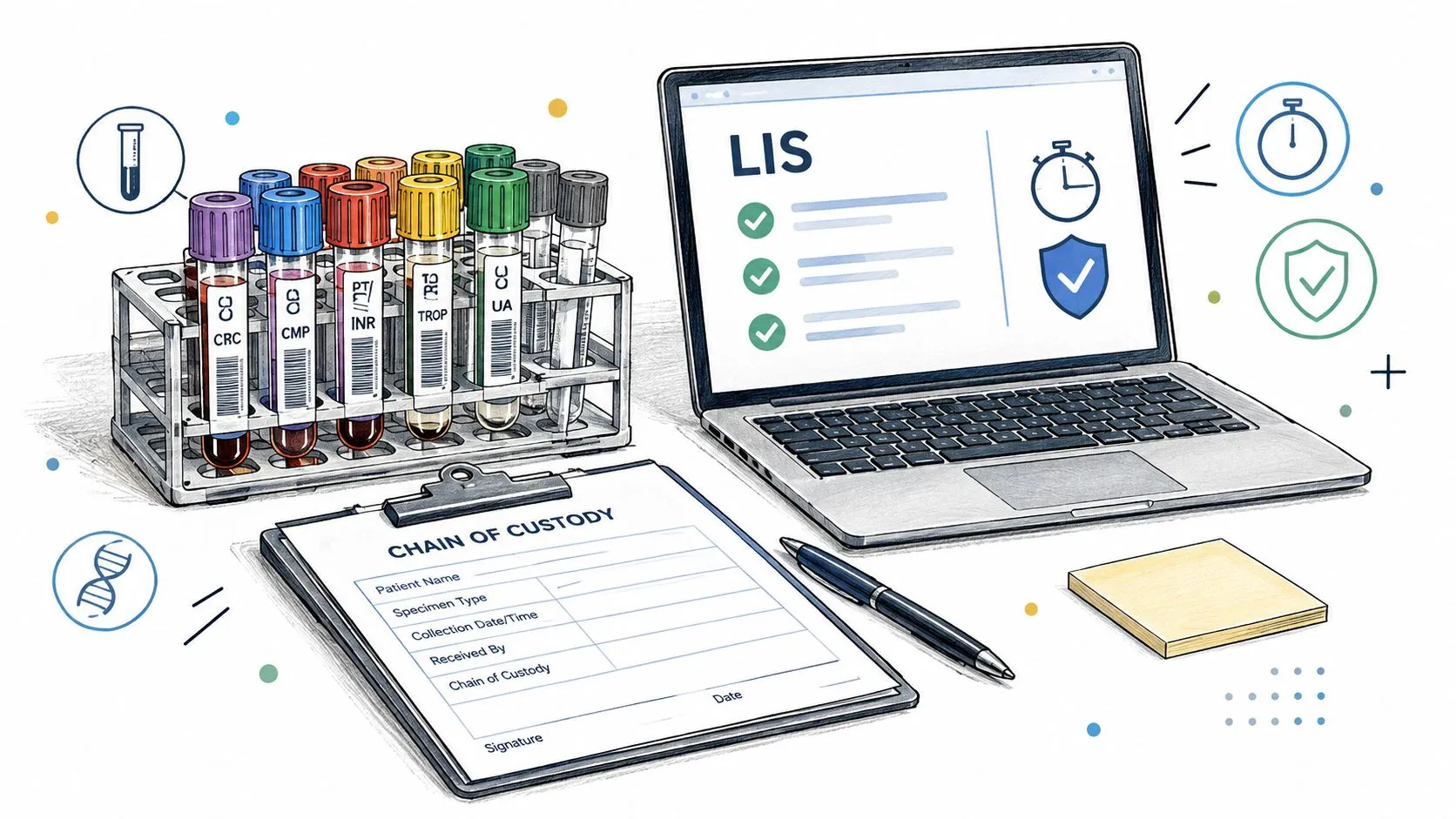
Precision builds trust. Name accessioning, chain-of-custody tracking, centrifugation, aliquoting, LIS entry, quality control logging, and waived testing under supervision. Those details show that you understand where your responsibility starts and ends. Medical laboratory assistant work commonly centers on specimen handling, phlebotomy, basic testing, data entry, slide preparation, equipment maintenance, safety, and documentation, as outlined by Penn Foster's overview of medical laboratory assistant duties.
An MLA supports preparation and defined testing workflows. An MLT generally carries a broader testing scope and different credential expectations. Don't write an MLA resume that implies MLT-level testing. Use the seven examples below to turn responsibility into context, action, and outcome. When routine work is hard to remember in useful detail, StoryCV's guided interview can help surface what you did without inventing scope.
1. Scope-Precise Accessioning and LIS Entry Resume
A hiring manager should understand your authorised work within the first few seconds. Start with the specimen workflow, not a broad claim such as “performed laboratory testing.” Accessioning, labeling, chain-of-custody tracking, order entry, and preparation for testing are credible evidence of readiness.
Practical rule: Name what you handled, what system you used, and who directed the work.
Weak:
Performed hematology and chemistry tests.
Stronger:
Accessioned high daily volumes of patient specimens, entered orders and tracking information into Cerner LIS, and prepared samples for waived testing under MLT supervision.
The stronger version doesn't pretend the assistant performed tests outside the stated scope. It shows operational value while making the supervision structure visible. That distinction matters in a regulated environment.
Use this structure for your own bullets:
- Accessioning: Received, labeled, and accessioned blood and urine specimens, verifying identifiers and collection requirements before processing.
- LIS work: Entered orders, specimen status, and approved data into Epic, Cerner, or the vendor system you used.
- Chain of custody: Tracked send-out specimens through documented handoffs and escalated discrepancies to the supervising technician.
- Quality control: Logged daily QC activity and flagged out-of-range results to the MLT for investigation.
Avoid adding a number unless you can verify it from a shift record, dashboard, or supervisor feedback. The same rule applies to error rates and turnaround times. ASCP's Medical Laboratory Assistant credential information shows why documented credentials and defined competency matter more than inflated wording.
If you're comparing writing support with an AI resume builder, focus first on whether the process captures your actual lab scope. Formatting can't repair an inaccurate claim.
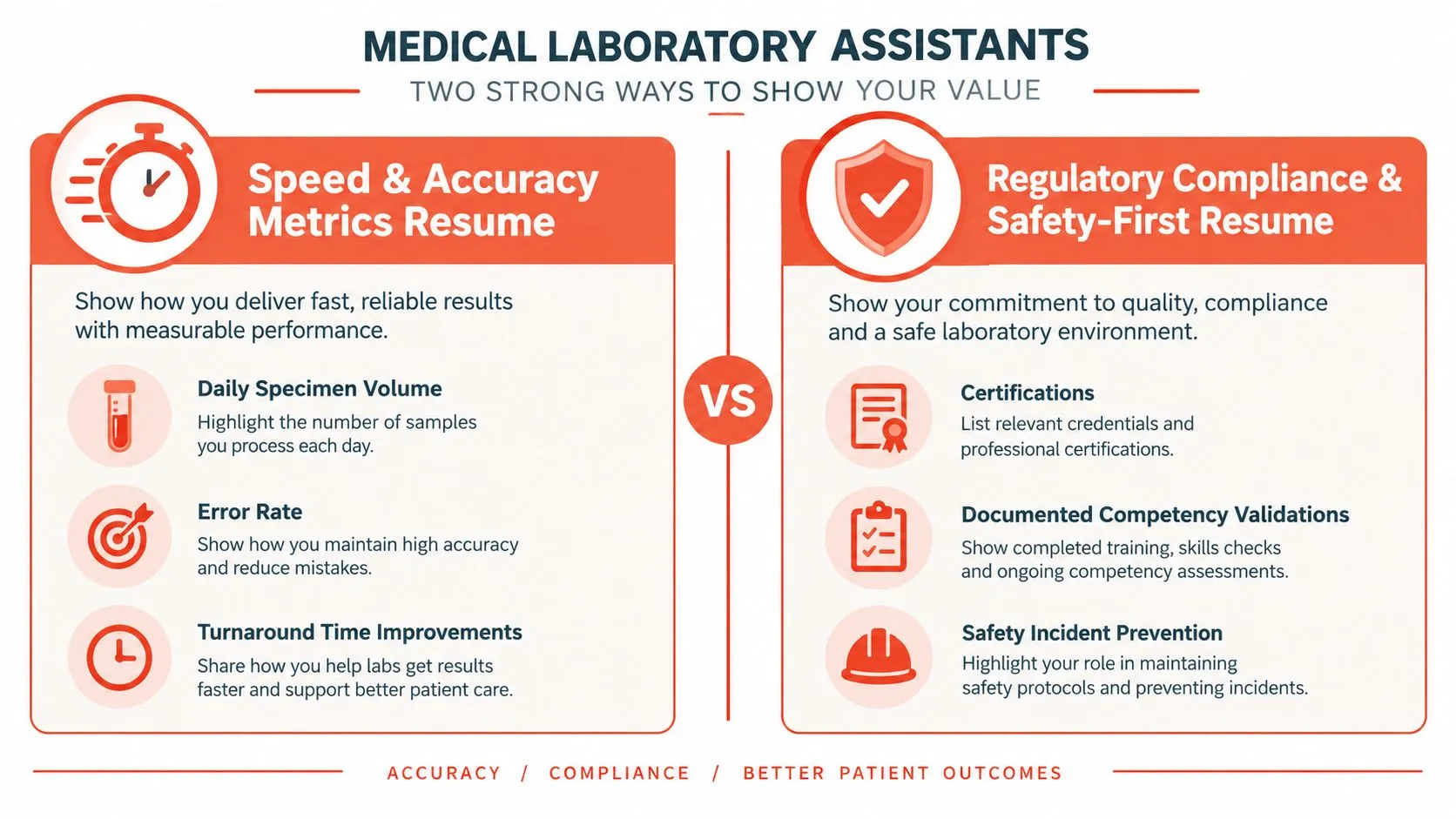
2. Speed and Accuracy Metrics Resume for High-Volume Labs
Speed matters in a hospital, reference, or urgent-care laboratory. It just isn't enough by itself. A resume that says “worked in a fast-paced lab” gives the reader no way to judge your contribution. Pair throughput with accuracy, handoff reliability, or turnaround performance.
Start by checking your own records. Use accessioning logs, specimen tracking reports, shift feedback, or documented workflow changes. Don't estimate a metric because it sounds persuasive. If the number isn't verified, remove it.
Weak:
Processed specimens quickly and accurately in a busy laboratory.
Stronger:
Processed a high daily volume of specimens with documented accessioning accuracy, sequenced centrifugation and handoffs to keep prepared samples moving to chemistry, hematology, and coagulation sections.
The second bullet still works without invented statistics. It identifies the work, the operational context, and the outcome you can support. If your records verify a daily volume or turnaround improvement, insert it. If they don't, use language such as “high daily volume” or “consistent same-shift handoff.”
Pair output with a quality signal
A lab manager doesn't want speed that creates recollection, relabeling, or rework. Show how you protected the workflow:
- Throughput: State the verified specimen volume you handled per shift or day.
- Accuracy: Include a documented accessioning or labeling accuracy measure when available.
- Turnaround: Name the stage you improved, such as collection to centrifugation or aliquoting to section delivery.
- Reliability: Explain how you identified a queue, delayed handoff, or centrifuge bottleneck and reported it.
The StoryCV guide to metrics in a resume is useful for separating a real measure from a vague performance claim. The principle is simple. Show what moved, but never manufacture the movement.
3. Regulatory Compliance and Safety-First Resume
A compliance-focused resume should show control points, not broad claims about safety. In a CLIA-regulated laboratory, an MLA may accession specimens, prepare samples, enter information in the LIS, maintain records, and perform supervised waived testing when assigned and trained. An MLA does not present MLT-level testing, result interpretation, or regulatory decision-making as independent work.
Write each bullet with StoryCV's responsibility-to-context-to-action-to-outcome method. For example:
Managed specimen intake in a CLIA-regulated laboratory, verified labels and requisitions against LIS records, escalated mismatches before preparation, and maintained documentation for supervisor review.
This bullet identifies the responsibility, setting, action, and workflow outcome without claiming authority beyond the role. A safety-focused alternative is:
Completed laboratory safety orientation and competency validation for specimen handling, PPE use, labeling, and biohazard disposal, reporting exceptions to the supervising technician.
Use evidence that a manager can verify:
- Training: Name the course or certification, completion date, and renewal status when relevant.
- Documentation: Identify the logs, checklists, competency records, or LIS entries you maintained.
- Risk control: Describe how you handled unlabeled tubes, incomplete requisitions, improper transport, or other assigned exceptions.
- Equipment and preparation: Mention centrifuge, aliquoting, or storage checks only when you performed the task and followed the approved procedure.
- Waived testing: State the test support, device, training, and supervision involved. Do not describe independent testing or result interpretation if an MLT or supervisor handled it.
A strong bullet might read:
Verified specimen labels, requisitions, and transport requirements during intake, documented discrepancies in the LIS, and escalated unresolved issues before processing.
For biosafety terminology, review this guide to laboratory biosafety levels. List only training and duties you completed. That boundary protects your credibility and makes your MLA scope clear.
4. Cross-Functional Lab Support and Communication Resume
Cross-functional support belongs on an MLA resume only when the scope is clear. An MLA may move specimens between collection points, accessioning, preparation areas, testing sections, and clinical units. The role supports workflow. It does not include MLT-level testing, result interpretation, or independent testing decisions.
Use StoryCV's responsibility-to-context-to-action-to-outcome method to build each bullet. Start with the assigned responsibility, identify the setting, describe the action, and state the documented outcome.
Supported specimen flow across chemistry, hematology, and urinalysis sections during daily intake, communicated delays and rejected-specimen reasons to nursing staff, and escalated testing questions to the supervising technician.
This shows operational communication without overstating authority. A medical laboratory assistant can report workflow information and escalate concerns. An MLT or supervisor handles testing decisions and result interpretation.
Make flexibility specific:
Coordinated urgent specimen intake from the emergency department, verified collection and labeling requirements, and notified the appropriate section when recollection was required.
Documented recurring hemolysis issues from an inpatient collection point, shared the pattern with phlebotomy staff, and referred follow-up to the supervising MLT.
Name systems and equipment you used, such as Sysmex, Beckman Coulter, Abbott, Epic, Cerner, or a vendor-specific LIS. Add training details when verifiable, including the course or certification, completion date, and renewal status. If you trained another assistant, identify the task and state that instruction occurred under laboratory direction.
A manager should be able to verify the communication chain:
- Recipient: nursing, phlebotomy, courier staff, or a laboratory section.
- Information: delay, rejection reason, missing identifier, or transport issue.
- Outcome: escalation, correction, recollection, or LIS documentation.
Keep every duty within your CLIA-aware assignment. Precision protects your credibility and distinguishes MLA support from MLT testing responsibility.
5. Sample Preparation and Pre-Analytical Excellence Resume
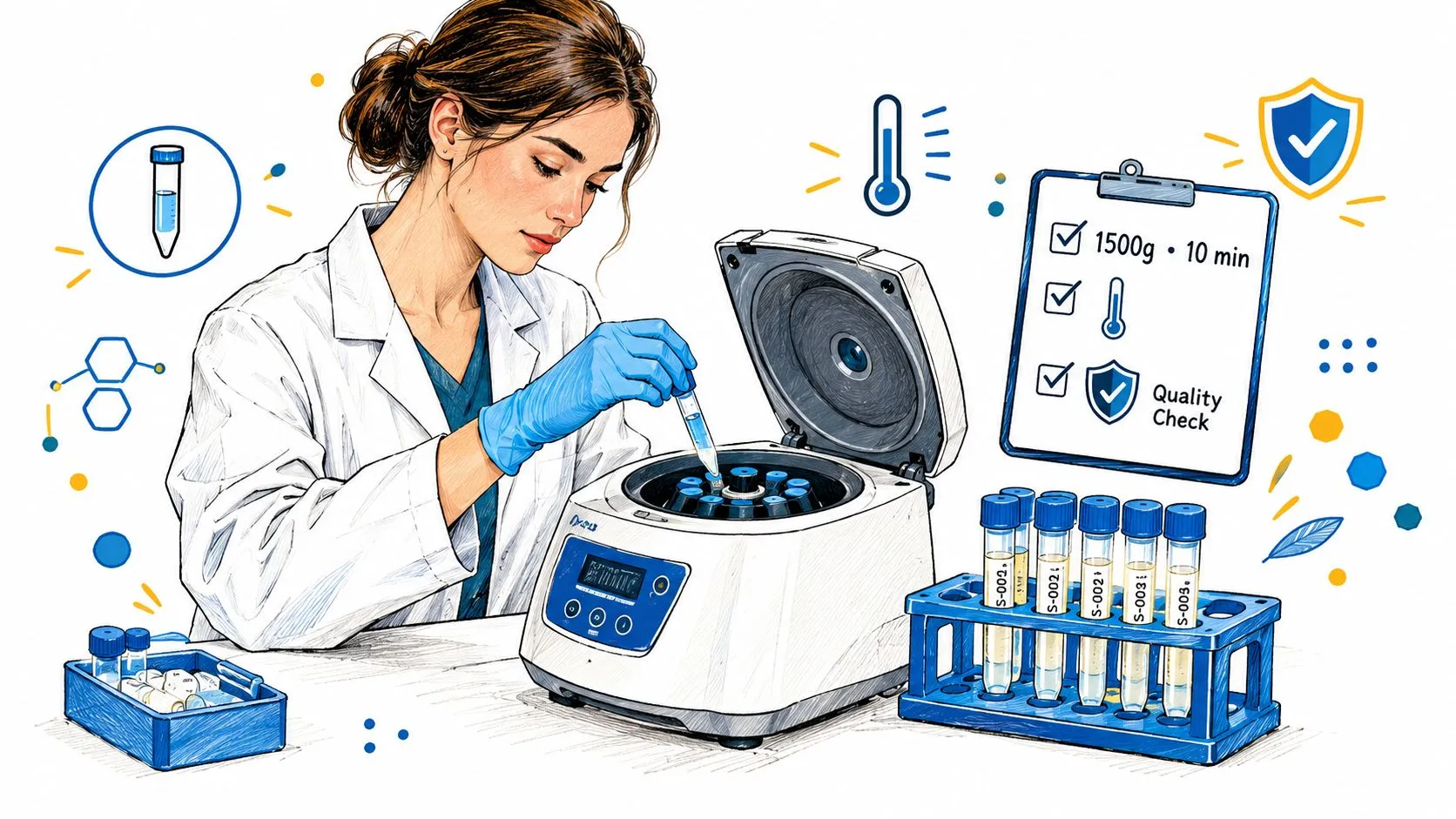
Pre-analytical work is where an MLA can show disciplined laboratory judgment without claiming testing authority. Accessioning, tube selection, preparation, centrifugation, aliquoting, inspection, storage, and section handoff all affect whether a specimen is ready for the assigned test.
Write the procedure, not a vague duty. “Performed centrifugation” says little. “Centrifuged serum samples according to the laboratory's approved force and time parameters” shows controlled work. Add exact parameters only when you know them and were authorized to document them. Never guess.
Use StoryCV's responsibility-to-context-to-action-to-outcome method to build the bullet:
Prepared serum and plasma specimens for assigned testing by verifying tube type, applying approved centrifugation parameters, inspecting sample integrity, and aliquoting into labeled containers for section delivery.
Add a documented outcome when your records support it:
Identified hemolysis, lipemia, and insufficient-volume issues during pre-analytical inspection, recorded rejections in the LIS, and escalated recurring collection problems to the supervising technician.
Make the work verifiable. Name the centrifuge or preparation equipment, relevant tube or aliquot container types, and the checks included in your training. State whether prepared specimens went to chemistry, hematology, coagulation, or another assigned section. Mention storage conditions only when they were part of your documented responsibility.
Equipment and Containers show what you handled. Inspection shows the decision points within your assignment. Handoff shows where the prepared specimen went next.
Keep the scope clear. An MLA supports preparation and may perform supervised waived testing when assigned under laboratory procedures. An MLT has a different testing scope and may perform work that does not belong on an MLA resume. Do not claim that you ensured accurate results. State how you protected specimen readiness, documented exceptions, and referred testing decisions to authorized personnel.
Compare wording with StoryCV's lab technician resume guidance, then remove any MLT-level testing claims that your own duties cannot support.
6. Lab Information System and Data Integrity Resume
A medical laboratory assistant's LIS work should read like controlled laboratory support, not generic computer use. One incorrect identifier, incomplete order, missed priority flag, or untracked specimen can interrupt the testing chain. Name the system, the transaction, the check, and the person who handled exceptions.
Write the bullet with StoryCV's responsibility-to-context-to-action-to-outcome method:
Accessioned outpatient specimens in Epic LIS, matched patient identifiers and requisitions, updated specimen status and priority fields, and routed discrepancies to the supervising MLT for resolution.
This shows what you handled without implying MLT-level testing or independent result release. An MLA can support accessioning, preparation, LIS documentation, and supervised waived testing under laboratory procedures. An MLT has a different testing scope. Keep testing decisions, result verification, and authorization with the designated MLT or supervisor unless your documented role says otherwise.
Use the actual LIS vendor, such as Epic or Cerner. Then state the controlled workflow in plain terms: received specimen and requisition, entered the approved order or status, checked missing fields and routing requirements, and escalated discrepancies. Mention preparation only when it was part of your assignment, such as recording aliquot location or confirming that a specimen was ready for the assigned section.
A stronger outcome can describe traceability rather than an invented statistic:
Updated specimen-status queues in Cerner, identified delayed handoffs, notified the assigned laboratory section and clinical unit, and documented the escalation for follow-up.
If your employer documented an accuracy rate or count, include it. Otherwise, the sequence provides evidence. Do not claim that you ensured accurate results.
Peer support also belongs here when it was real:
Oriented new laboratory assistants to LIS accessioning, specimen-status updates, and escalation procedures under laboratory manager direction.
Name the checks included in your training and the authorized contact for exceptions. That precision separates credible MLA experience from a resume that merely claims MLT responsibilities.
7. Waived Testing and Point-of-Care Resume
Point-of-care bullets must show the procedure, platform, training, quality-control duty, and supervision. A medical laboratory assistant may handle assigned CLIA-waived testing, documentation, and escalation. An MLT has a broader testing scope and different authorization. Keep result interpretation, verification, and reporting within the responsibility documented for your role.
Build each bullet with StoryCV's responsibility-to-context-to-action-to-outcome method. State what you handled, where it fit in the workflow, what you did, and what the action supported. For example:
Performed CLIA-waived dipstick urinalysis under MLT supervision in an outpatient setting, recorded required QC activity, and escalated unexpected or invalid findings according to laboratory procedure.
Name rapid strep, rapid flu, HCG, or glucose testing only when your training covered it. Identify the actual platform. If you used a Roche cobas analyzer, include it. If you did not, leave it out.
Use these scope markers where they match your documented duties:
- Test scope: “Performed CLIA-waived dipstick urinalysis under MLT direction.”
- Quality control: “Recorded required QC results and reported out-of-range findings before patient testing.”
- Competency: “Maintained documented competency for assigned waived testing procedures.”
- Equipment: “Used the named point-of-care platform according to approved procedure.”
- Escalation: “Referred invalid results, instrument issues, and questions to the supervising technician.”
A complete bullet might read:
Completed assigned waived testing under MLT supervision, maintained equipment and QC logs, and escalated invalid controls or specimen concerns before testing continued.
This wording shows hands-on work without implying MLT-level testing. For related clinical phrasing, review these medical assistant resume examples, then remove procedures you did not perform in the laboratory setting. Your resume must describe your actual scope, not combine duties from several healthcare roles.
Medical Laboratory Assistant: 7-Point Resume Comparison
| Resume Type | Implementation Complexity 🔄 | Resource Requirements ⚡ | Expected Outcomes 📊⭐ | Ideal Use Cases 💡 | Key Advantages ⭐ |
|---|---|---|---|---|---|
| Scope-Precise Accessioning & LIS Entry Resume | Low 🔄, factual, scope-focused bullets | Low ⚡, LIS access, specimen counts, supervision details | High 📊, immediate regulatory credibility; reduces liability | CLIA labs; hiring by lab directors | Compliance-first; clear scope; trusted by managers |
| Speed & Accuracy Metrics Resume for High-Volume Labs | Medium 🔄, needs metric sourcing and validation | Medium ⚡, access to dashboards, supervisor verification | High 📊⭐, measurable throughput and balanced quality | High-volume hospital, reference, urgent-care labs | Demonstrates throughput, hard-to-question numbers |
| Regulatory Compliance & Safety-First Resume | Medium–High 🔄, documents certifications and validations | Medium–High ⚡, certifications, competency records, audit logs | Very High 📊⭐, reduces hiring anxiety about liability | Regulated environments; labs facing inspections/audits | Shows maturity, audit-readiness, safety leadership |
| Cross-Functional Lab Support & Communication Resume | Medium 🔄, multiple-section examples and outcomes | Medium ⚡, cross-training records, examples of liaison work | Medium–High 📊, signals adaptability and fewer handoffs | Small/mid-size labs; roles requiring multi-section support | Flexibility, communication, workflow problem-solving |
| Sample Preparation & Pre-Analytical Excellence Resume | Medium 🔄, protocol specifics and measured improvements | Medium ⚡, protocol knowledge, rejection/error metrics | High 📊⭐, reduces pre-analytical errors; improves sample quality | Labs prioritizing sample integrity; QC-focused units | Addresses largest error source; technical precision |
| Lab Information System & Data Integrity Resume | Medium 🔄, lists systems and data-quality interventions | Medium ⚡, LIS experience (Epic/Cerner), IT collaboration | High 📊⭐, improves reporting accuracy and traceability | Labs modernizing IT; remote data-entry or LIS roles | Shows healthcare IT competence; reduces data errors |
| Waived Testing & Point-of-Care Resume | Low–Medium 🔄, lists certified waived tests and QC habits | Low ⚡, current waived certifications, POC equipment logs | High 📊, clarifies testing scope; shows hands-on competency | Clinics, urgent care, POC testing environments | Defines legal scope; reduces liability; practical skills |
Make Your Scope Impossible to Misread
Choose the example closest to the laboratory you're targeting. A hospital accessioning role needs different emphasis from a point-of-care position or a reference-lab preparation role. Start with the relevant workflow, then remove every illustrative metric you can't verify.
Next, name the systems, equipment, and supervision structure. Write “under MLT supervision,” “directed by the laboratory manager,” or another accurate phrase when it clarifies your authority. List Epic, Cerner, a vendor-specific LIS, or a named analyzer only if you used it.
Then rewrite each duty as responsibility, context, action, outcome. “Handled specimens” becomes “Accessioned incoming specimens for a high-volume hospital laboratory, verified identifiers and collection requirements, entered tracking data into Cerner LIS, and escalated discrepancies before processing.” The outcome might be a documented accuracy measure, a timely handoff, fewer rejected specimens, or a controlled workflow. Use the outcome you can prove.
Run one final ATS pass using truthful terms such as specimen accessioning, aliquoting, centrifugation, LIS, chain of custody, quality control, CLIA-waived testing, and pre-analytical processing. Don't stuff keywords into a skills block while leaving the experience section empty of evidence.
ASCP lists the Medical Laboratory Assistant credential with a $155 non-refundable application fee, while AMT lists a Certified Medical Laboratory Assistant pathway with a $135 fee and a $75 annual renewal fee, with CMLA renewal every 3 years. Those credential details can help you present certification accurately, but the larger lesson is scope. An MLA and an MLT aren't interchangeable titles. Precision is a hiring advantage, not an apology.
StoryCV can help you talk through one real role, recover the operational details, and turn them into clear bullets without stretching your authority. Tell your lab story.
StoryCV is an online resume writer that uses a guided interview to turn your real laboratory work into resume-ready bullets. Talk through accessioning, LIS work, sample preparation, supervision, and waived testing, then use the resulting draft as the basis for your application. Visit StoryCV and tell your lab story.