Most advice about high school resumes is wrong. It treats paid work like the only thing that counts.
It doesn't. A resume is proof of judgment, effort, reliability, and results. You don't need a job title to show any of that. You need better framing.
That's why good resume examples for highschool students never read like a sad apology for “limited experience.” They read like evidence. A fundraiser becomes coordination. Tutoring becomes measurable academic impact. A club project becomes execution. If you built something, led something, improved something, or stuck with something, you have material.
Keep it tight. For high school students with limited professional experience, the standard is one page, a guideline endorsed by academic authorities including the University of Missouri and UC Berkeley, with margins between 0.5 to 1 inch so the page stays readable and not crammed, as summarized by Resume Genius on high school resume structure. That limit helps because you're forced to cut the fluff and keep only what matters.
A strong high school resume also isn't just a list of duties. Quantified bullets matter. One benchmark says teen resumes with at least three action verbs paired with numerical metrics got more interview requests than resumes without metrics, based on a 2024 sample of 1,200 applicants, as reported in Indeed's teen resume examples. That tracks. “Helped with event setup” is forgettable. “Coordinated logistics for fundraiser” is not.
These eight examples show the shift. Same student backgrounds. Better storytelling.
1. First Job Resume No Work History
No work history isn't a problem. Empty thinking is the problem.
If you've never had a paid job, your resume should lean on school projects, volunteer work, extracurriculars, and useful skills. A hybrid resume format works best here because it lets you put skills and relevant experience before a thin job history. One benchmark says the combination format outperforms purely chronological or functional formats for entry-level roles, and it also recommends a short profile summary, a focused skills section, and a one-page cap, according to Resume Builder's high school student resume guidance.
Example bullets that actually work
Use bullets like these:
- Built something real: Designed and launched a club website using HTML and CSS, improving membership inquiries through a clearer contact page and event updates.
- Taught with a result: Mentored freshmen in algebra during weekly peer tutoring and tracked test-score improvement across the semester.
- Ran an event: Coordinated promotion, setup, and post-event wrap-up for a school fundraiser, keeping volunteers aligned and tasks on schedule.
Those are stronger than “participated in club activities” or “helped classmates.”
Practical rule: Lead with the outcome, then explain the work. “Built,” “coordinated,” and “improved” beat “helped with” every time.
What to put near the top
Education should sit high on the page. Include GPA only if it's 3.5 or above, and add relevant coursework if it matches the role. A common standard is to include 3 to 4 relevant classes when they support the job, especially if your experience is light, as explained in Zety's high school student resume guide.
If you need help turning thin experience into real resume language, read how to apply for a job without experience. The trick isn't pretending. It's translating.
2. Student-Athlete Resume Balancing Sports and School
Sports alone won't get you hired. What sports forced you to learn might.
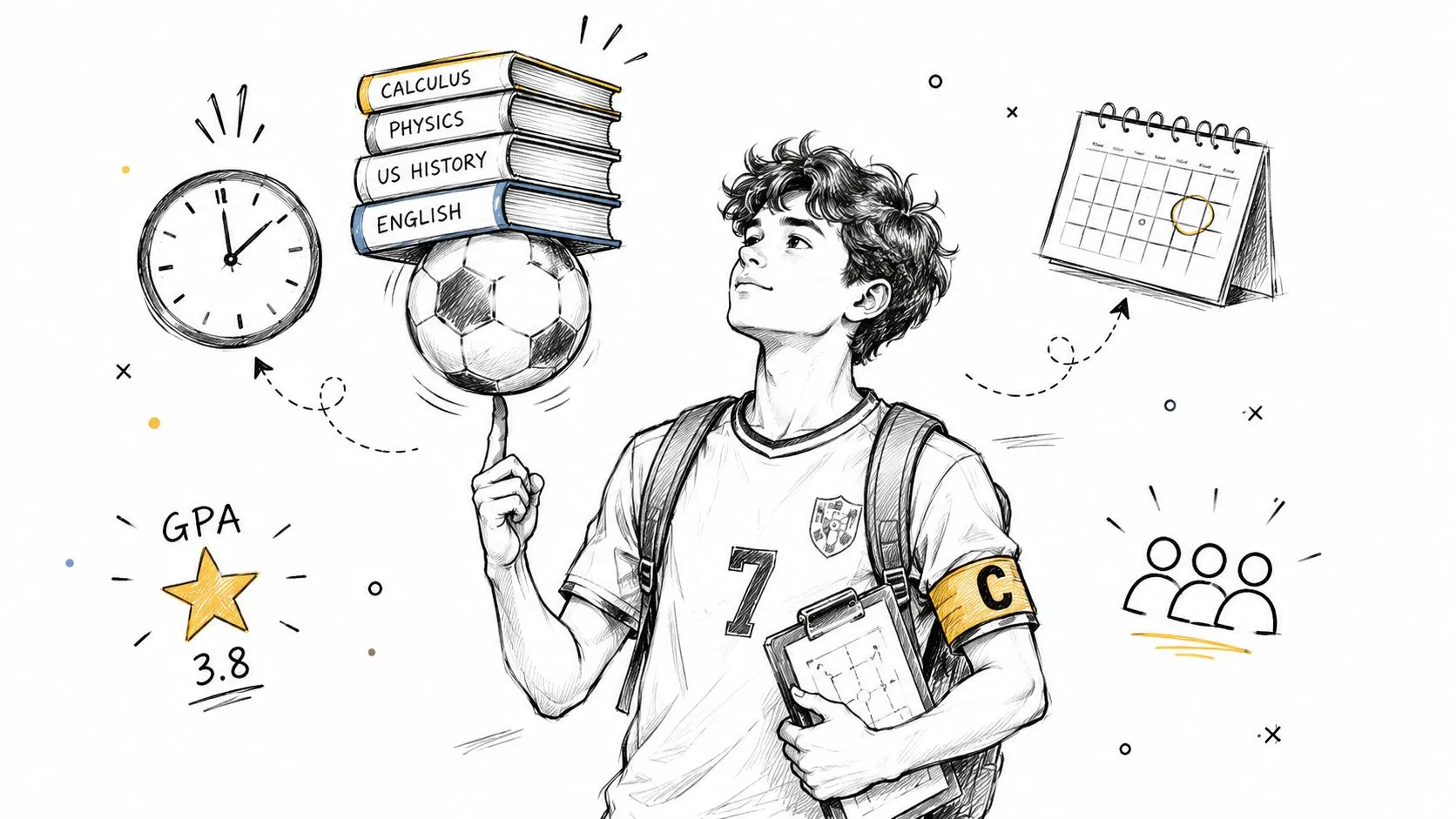
A student-athlete resume should show discipline under pressure. Practice, travel, classes, assignments, and maybe a part-time job. That stack matters because employers want reliability, scheduling discipline, and follow-through.
Better athlete bullets
Try language like this:
- Led peers: Served as captain for varsity cross country, organizing team communication and helping teammates stay on conditioning plans.
- Handled competing priorities: Balanced a strong GPA with regular competition, schoolwork, and volunteer commitments across the academic year.
- Trained others: Supported younger athletes during drills and skill sessions, reinforcing technique and team standards.
If you also worked during the season, put that near the top. It says more than your win-loss record.
What to include and what to skip
Include GPA only if it clears the accepted threshold. That threshold is 3.5, and below that, it usually weakens rather than helps, as noted by BeamJobs on high school student resumes.
Then answer the employer's unspoken question. When can you work? Say it plainly. “Available year-round except during track travel” is useful. “Flexible schedule” is lazy.
Recruiters don't care that you played a sport. They care that you showed up, improved, and handled pressure without dropping the ball.
If you want a broader read on the habits behind this kind of schedule, Vanta Sports on student-athlete time management is worth a look.
3. Homeschooled Student Resume Proving Rigor
Homeschooled students face a credibility test. Fair or not, you need to remove doubt fast.
That means naming real programs, real coursework, real exams, and real credentials. Vague claims make people squint. Specifics make them move on.
How to make rigor obvious
Write bullets like these:
- Named the program: Completed AP Biology through an accredited program and documented exam performance.
- Used outside validation: Earned dual-enrollment college credit while maintaining a strong GPA across advanced coursework.
- Built technical proof: Completed industry-recognized coursework in IT support and applied the learning to troubleshooting and customer-facing tasks.
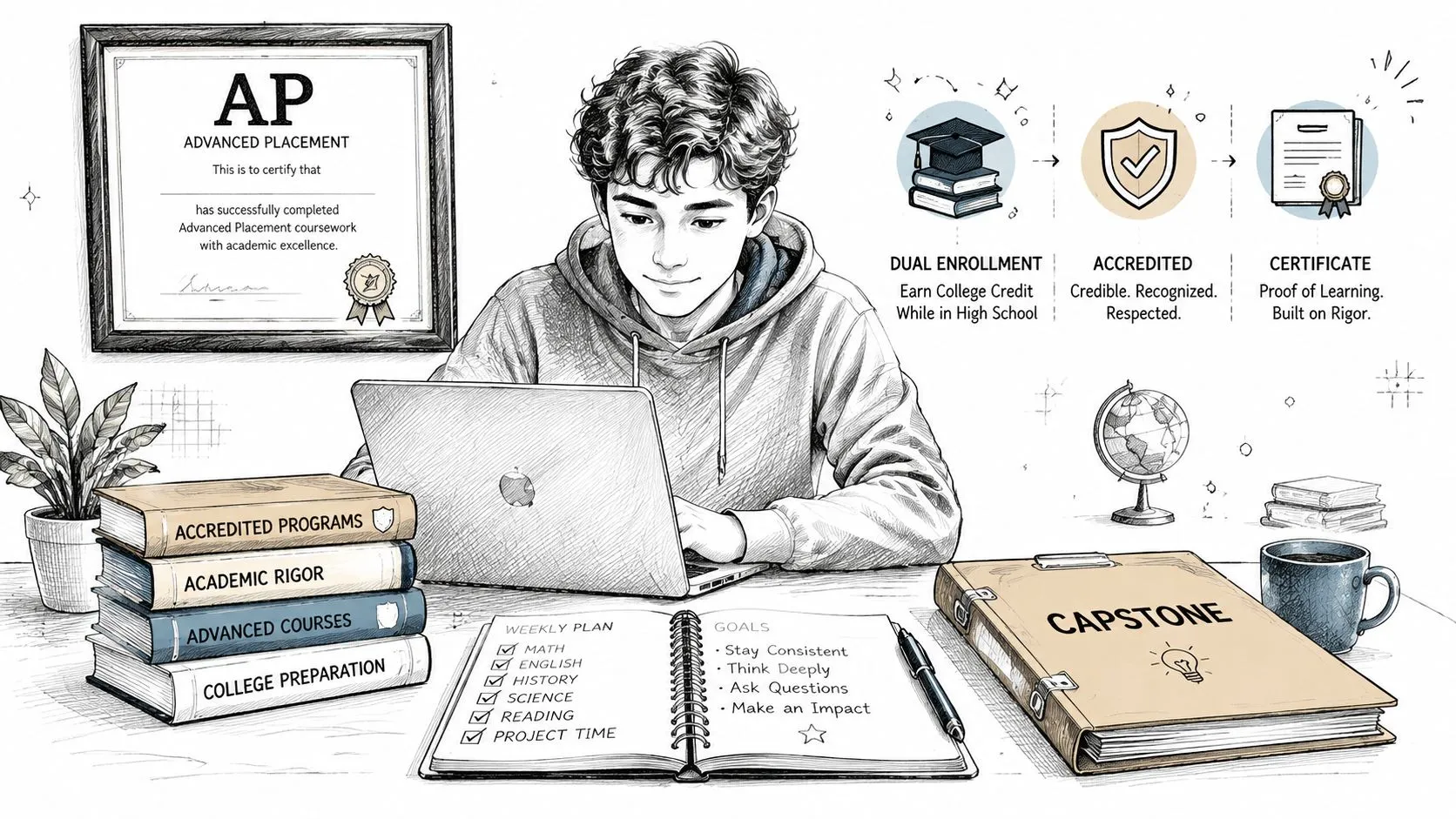
List the accrediting body or testing organization when relevant. It acts like a trust marker. The same goes for dual enrollment, certificate programs, and major independent projects.
What the education section should carry
A homeschooled student's education section should be more detailed than average. Add advanced courses, external programs, and selective project work. Relevant coursework matters because it shows what you specifically studied, not just that you studied. A common recommendation is to include 3 to 4 classes aligned with the role when they strengthen your case, as covered earlier in the high school resume standards.
If you completed a major project, treat it like a capstone. Name the topic. Name the outcome. Name the deliverable.
Example:
- Finished independent work: Conducted an independent research project on local water quality, compiled findings into a formal paper, and presented conclusions to a community audience.
That reads like initiative because it is initiative.
4. Seasonal Work Resume Summer Jobs and Internships
Short-term work is still real work. Stop apologizing for the calendar.
Summer jobs and internships are compressed by design. That can help you. You learned fast, produced in a short window, and proved you could be useful without months of runway.
Bullets that show speed and contribution
Use bullets like these:
- Ran daily responsibility: Led activities and behavior support for a group of campers across an eight-week program.
- Learned fast: Took on register, inventory, and customer tasks during peak retail season and became reliable before the summer ended.
- Finished projects: Completed independent office tasks within the internship window and handed over polished work, not half-finished notes.
Dates matter here. Use real date ranges. “June to August” says more than “summer.”
What makes a seasonal role impressive
Rehire offers matter. Return invites matter. Being trusted with more by the end of the season matters. Say it.
Also, don't list every task. Pick the few that show growth. High school resumes work best when each role has three to five bullets, and each bullet should start with a different strong action verb and include numbers where possible, according to Indeed's high school resume tips.
A good seasonal entry feels complete. Start date. End date. Clear contribution. Clear takeaway.
5. Volunteer-Heavy Resume Service and Impact Without Pay
Volunteer work counts. The paycheck isn't the point. Responsibility is.
A lot of students bury volunteer experience at the bottom like it's charity wallpaper. Bad move. If volunteering is where you did the most meaningful work, bring it forward and treat it with the same seriousness as a paid role.
Better ways to write volunteer bullets
Weak version:
- Helped at food bank.
Better version:
- Coordinated distribution: Organized weekly meal distribution, tracked supplies, and kept service running smoothly during busy periods.
- Tutored consistently: Supported students in math over a sustained period and tracked improvement across assignments and tests.
- Recruited help: Led volunteer signups and day-of coordination for cleanup events in the community.
Many guides tell students to quantify impact but don't really show how to do it for informal experience. That gap is one reason volunteer-heavy resumes often come out flat, as discussed in Monster's guide to high school resume objectives.
Treat unpaid work like real work
Name the organization. State your role. Use strong verbs. Show tenure. Add hours if they strengthen the story. If you held leadership responsibility, say so.
Unpaid doesn't mean unserious. If people trusted you with real responsibility, put that on the page like it belongs there.
If your best examples come from service work, how to write a resume with volunteer work will help you frame it properly.
6. Entrepreneurial High School Resume Self-Started Work
A side hustle is work if someone trusted you enough to buy.
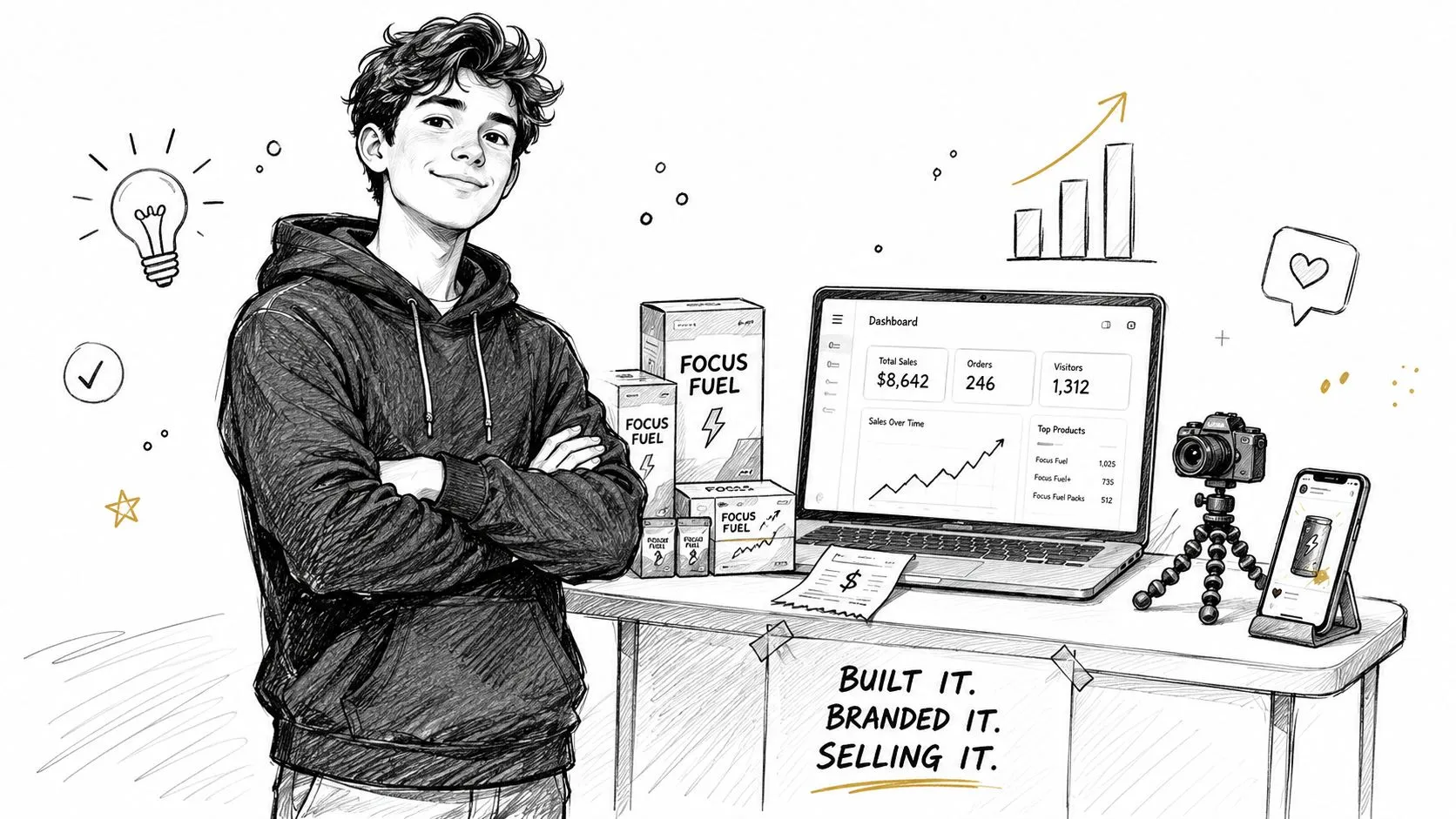
Too many students hide self-started work because it feels less official. That's backwards. Starting something from zero is strong evidence of initiative, sales instinct, learning speed, and accountability.
What counts as entrepreneurial experience
These resume bullets work:
- Launched a service: Managed social media accounts for local businesses, planned content, and handled client communication directly.
- Ran an online shop: Sourced products, photographed listings, wrote descriptions, handled buyer messages, and fulfilled orders.
- Built sites for clients: Designed websites for local groups using platforms like Wix or WordPress and managed revisions from feedback.
That's not a hobby description. That's a business process.
What to show beyond the idea
Show the full chain. How did clients find you? What tool stack did you learn? What problem did you solve? Did the work continue over time? Did anyone come back?
If money changed hands, be honest about the amount. If the project didn't earn revenue, don't fake traction. Frame the learning and the deliverable.
A simple structure works well:
- Business name
- Dates
- Type of service or product
- Selected achievements
- Tools used
For students who also want to use entrepreneurial work in admissions storytelling, this guide to turning a business idea into a college application story is useful.
A quick visual walkthrough helps too.
7. Academic Achievement Focus Strong Student Minimal Work
Academic work is work when it proves skill under pressure.
If your strongest evidence comes from AP classes, competitions, debate, coding projects, or research, stop trying to make your resume sound like retail. It should sound like intellectual performance translated into employer language.
The right way to frame academic wins
Use bullets like these:
- Placed competitively: Earned a state-level placement in Science Olympiad across multiple events requiring technical preparation and fast problem-solving.
- Handled rigorous coursework: Maintained strong academic performance across honors and AP classes while contributing to related projects or teams.
- Completed research: Designed an independent study, analyzed findings, and presented conclusions to judges or faculty reviewers.
That's solid resume material.
What belongs in this version
Only include academic details that signal real strength. Relevant coursework is one. Advanced classes are another. GPA belongs only if it clears the accepted cutoff. That cutoff is 3.5, and experts consistently use it as the line for whether GPA helps or hurts, as outlined in guidance on writing impact-focused bullets for resumes.
If you've got a genuine academic achievement, make it concrete. Name the competition. Name the subject area. Name the deliverable. Then translate it.
Example:
- Applied analysis: Analyzed experimental results from a science project and presented findings clearly to non-technical judges.
That sentence can work for jobs, internships, and early college applications because it proves thinking, not just studying.
8. Work-Study and Need-Based Employment Resume Balancing Finances
Some students work because they have to. That story deserves respect, not softening.
A part-time job while carrying school and family responsibility shows maturity fast. Employers understand reliability when they see it. Your job is to write it clearly.
Bullets that show trust and consistency
Good examples:
- Handled volume: Assisted customers during busy shifts, kept service moving, and followed store or food-safety procedures.
- Earned more responsibility: Trained new hires, opened or closed shifts, or took on lead tasks after proving dependable.
- Managed real constraints: Balanced regular weekly work with classes and kept performance steady across both.
If you worked steady hours during the school year, include that. It signals time management in a way vague soft-skill claims never will.
What should stand out first
Promotions go first. Long tenure goes first. Customer-facing responsibility goes first. Those details prove trust.
If your GPA is strong enough to include, pair it with your work schedule. If it isn't, leave it off and let the work speak for itself. The standard still holds. Include GPA only at 3.5 or above, and keep the resume brutally selective about what earns space, as noted earlier in established high school resume guidance.
This version of a resume should feel grounded. No apology. No “despite.” Just facts, responsibility, and progression.
Side-by-Side Comparison of 8 High School Resume Examples
| Resume Type | Implementation Complexity 🔄 | Resource Requirements ⚡ | Expected Outcomes 📊 | Ideal Use Cases 💡 | Key Advantages ⭐ |
|---|---|---|---|---|---|
| First Job Resume: No Work History | Moderate, reframe projects/volunteering as experience | Low–Moderate, quantified school projects, teacher refs, artifacts | Good screening potential; demonstrates transferable skills | Summer jobs, internships, entry-level retail, admin | Positions academics/extracurriculars as credible experience; ATS-friendly |
| Student-Athlete Resume: Balancing Sports & School | Moderate, balance accomplishments, availability, leadership | Low–Moderate, GPA, captain roles, schedule notes, season metrics | Signals time management, discipline, performance under pressure | Part-time off-season roles, internships, flexible retail/hospitality | Shows reliability under constraint; highlights teamwork and coachability |
| Homeschooled Student Resume: Proving Rigor | High, must prove accreditation and measurable outcomes | High, transcripts, AP/standardized scores, dual-enrollment records | Reduces credibility gap; demonstrates rigor and independence | College internships, tech roles, positions requiring transcripts/certs | Validates nontraditional education; emphasizes self-directed learning |
| Seasonal Work Resume: Summer Jobs & Internships | Low–Moderate, clarify date ranges and short-term achievements | Low, clear dates, short-term metrics, rehire/return offers | Shows rapid onboarding and short-term impact; rehire signals reliability | Next-summer internships/jobs, college apps, fall part-time roles | Demonstrates fast learning curve and measurable short-window results |
| Volunteer-Heavy Resume: Service & Impact Without Pay | Moderate, translate volunteer duties into achievement statements | Moderate, hours logged, org names, impact metrics, awards | Conveys sustained commitment and community impact | Nonprofits, mission-driven roles, college applications, leadership tracks | Highlights long-term responsibility and values alignment |
| Entrepreneurial High School Resume: Self-Started Work | High, present venture like a business; honest outcome framing required | High, revenue, customer metrics, product/screenshots, contracts | Strong differentiation; shows ownership, problem-solving, end-to-end skills | Startups, sales/BD, operations, growth-focused internships | Signals initiative, risk tolerance, full-stack execution ability |
| Academic Achievement Focus: Strong Student, Minimal Work | Low–Moderate, collect scores/awards and translate to employer language | Moderate, AP/test scores, competition placements, research artifacts | High credibility for technical/academic roles; externally validated skill | STEM internships, research programs, scholarships, tech/finance roles | Demonstrates rigor, analytical ability, and competitive success |
| Work-Study & Need-Based Employment Resume: Balancing Finances | Low, document hours, tenure, promotions, and academic context | Low–Moderate, employer verification, hours/week, GPA context | Signals maturity, reliability, time-management under constraints | College work-study, retail/food service, roles valuing consistency | Shows financial responsibility, steady commitment, promotability |
Next Steps Build Your Own Impact Story
Pick the version that matches your real experiences. Not the one that sounds most impressive. The athlete resume should go to the athlete. The volunteer-heavy resume should go to the student whose best work happened in service. The entrepreneurial version should go to the student who has sold, built, or shipped something.
Then tighten every bullet. High school resumes are short, so every line has to earn its spot. Keep it to one page. Use a clean layout with sane margins. Put education high if your experience is thin. Add GPA only when it meets the accepted threshold. Include relevant coursework when it helps. Cut hobbies that don't support the job. Keep three to five bullets under each role and make each one do real work.
The biggest mistake in most hs student resume examples is lazy language. “Helped.” “Participated.” “Responsible for.” Those verbs kill energy. Use action verbs that show ownership. Built. Organized. Coordinated. Trained. Improved. Managed. Designed. Those words force you to describe what you did.
The second mistake is fake seriousness. Students think sounding formal makes them sound professional. It usually makes them sound blurry. Clear beats formal. If you stocked shelves, say that. If you organized a fundraiser, say that. If you tutored classmates and they improved, write that plainly and quantify it when you can. Numbers make claims believable. But only use numbers you can defend.
ATS matters, but not in the weird robotic way people think. You don't need keyword soup. You need clean formatting, standard section names, and language that matches the job post naturally. If the role asks for communication, customer service, teamwork, scheduling, Microsoft Excel, Canva, or cash handling, reflect the ones you've used. That helps software parse the page, and it helps a human see the match faster.
AI changes the process too. It's good at helping you pull memory into language. It's bad when it turns your real experience into generic sludge. That's why narrative matters. A strong resume isn't a pile of keywords. It's a clear story about what you did, what changed, and why someone should trust you next.
If you want more practical guidance on employability beyond the page, MasteryMind's work readiness guide is a useful companion.
StoryCV is built for this exact problem. You've done more than you think. You just need help turning it into sharp, credible resume language. StoryCV works like an online resume writer, not a template library. It guides you through your experience, pulls out the substance, and turns it into a clean narrative that works for ATS and real humans. Start free, write one role properly, and stop guessing what your resume is supposed to say.