Most LinkedIn recommendations are useless because they all sound like they were written by the same polite stranger. “A pleasure to work with.” “Great team player.” “Highly skilled professional.” None of that tells anyone what the person did.
The standard advice is right and still not enough. Be specific. Mention a concrete project. Sure. But that advice breaks the second you open the recommendation box and realize you don't remember the project details well enough to write anything sharp. That's the underlying problem. It isn't writing. It's memory.
You weren't documenting your colleague in real time. You were doing your own job. So when they ask for a recommendation, you reach for general impressions instead of evidence. That's how you end up with vague praise that could describe almost anyone. It sounds supportive. It isn't useful.
A good recommendation is not a personality summary. It's proof that you saw something real. The fastest way to get there is to stop searching for a clever “LinkedIn recommendation template” and reconstruct one actual moment. If you can't remember it cleanly, ask the person what they'd want highlighted. That isn't lazy. It's responsible.
Even outside LinkedIn, strong recommendations work the same way. The best expert advice for MUN delegates also relies on clear evidence, not filler.
1. The Project-Specific Recommendation
If you remember only one thing, remember a deliverable.
A shipped campaign. A migration. A launch. A process cleanup. One concrete piece of work beats a paragraph of praise every time. Hiring managers screen for specifics, and recommendation text gets more weight when it shows repeated strengths, varied relationship context, authentic tone, and concrete outcomes, according to this hiring-focused breakdown of LinkedIn recommendations.
Start with the thing they finished
Bad sample recommendation for LinkedIn:
Jordan is a pleasure to work with and always brings great energy to the team. They are collaborative, reliable, and highly skilled. I'd recommend Jordan to anyone.
Better, hypothetical recommendation LinkedIn sample:
I worked with Jordan on our payment infrastructure team for over a year. When our payment gateway went down, Jordan debugged the integration in real time while the rest of us were still tracing the issue, got us back online in 90 minutes, then wrote the postmortem and shipped the longer-term fix that same week. I'd trust Jordan again on any high-stakes systems work.
That works because you can see the job.
You don't need a dramatic success story either. Ordinary work, described clearly, is enough. “Sarah redesigned our vendor onboarding process from a ten-step email chain to a single form” says more than “Sarah is organized.” The reader can picture the work and infer the skill.
If your memory is fuzzy, ask one direct question
Use this:
- Ask for the anchor moment: “What project would you want me to highlight?”
- Lead with action: Start with what they did, not what they're like.
- Add the human result: If you don't have a clean metric, describe what changed for the team or customer.
That's why most samples of LinkedIn recommendations fail. They try to summarize a whole person. A useful recommendation picks one finished thing and stays there.
2. The Problem-Solver Recommendation
Some people stand out because they fix friction everyone else tolerated.
That's a strong recommendation frame because it shows initiative, judgment, and follow-through in one shot. It also gives you an easier memory prompt. Don't ask, “What was Alex like?” Ask, “What was broken before Alex got involved?”

Frame the before and after
Here's a hypothetical example.
Generic version:
Elena is proactive and always thinks ahead. She's excellent at improving processes and making things run smoothly.
Specific version:
I worked with Elena on our product operations workflow. She noticed we had no real process for gathering user feedback, so requests were getting lost across email, support chats, and Slack. Elena set up a simple Slack intake flow that gave the team one place to review patterns and respond faster. People actually used it, which changed the quality of product discussions immediately.
That's stronger because it answers three unspoken questions. What was wrong. What did she do. What changed.
If you want a cleaner way to phrase outcomes, StoryCV's guide on how to write impact statements is useful for turning fuzzy work into clearer language.
Ask for the missing context instead of faking certainty.
When you don't know the numbers
You don't need to force a metric if you don't have one. If the person solved a mess, say that in plain language.
- Name the old pain: “Approval workflows kept reports stuck for weeks.”
- Name the fix: “He mapped the bottleneck and rewired the rules in Expensify.”
- Name the lived result: “Now reports clear fast enough that finance isn't chasing people.”
A recommendation template for LinkedIn usually skips the mess and jumps straight to compliments. That's why it reads fake. Real recommendations remember the problem first.
3. The Under-Fire Recommendation
Pressure creates memory.
If someone showed real judgment during a rough moment, you probably remember more than you think. Deadlines collapsed. A client escalated. A system failed. A migration went sideways. Those moments stick because everyone in the room was paying attention.

Crisis reveals useful character
Hypothetical example:
I worked with Priya during our EMR migration. When systems went down for hours, Priya handled the phone lines, kept front-desk staff aligned, and coordinated with IT so patients weren't turned away. What stood out wasn't panic control. It was judgment. She kept things moving without making the situation louder than it already was.
That tells me more than “Priya stays calm under pressure.”
It also answers a hiring manager's real concern. Does this person fold when the job gets hard, or do they become more useful? For people screening profiles, recommendation quality matters far more than sheer volume. A CNBC report from April 2025 says recruiters are prioritizing quality over quantity and favoring a few strong, outcome-focused recommendations over piles of generic praise in CNBC's reporting on LinkedIn recommendations.
Pull the memory out with one question
If you're stuck, ask this:
- Ask about the hard moment: “Was there a time things got messy and they really showed up?”
- State the stakes plainly: Don't soften the situation into generic “fast-paced environment” language.
- Pair it later with normal work: Pressure is high signal, but one calm, everyday example helps round out the picture.
A lot of “recommendation LinkedIn sample” content misses this. It chases polished praise instead of pressure-tested evidence.
4. The Peer-to-Peer Collaboration Recommendation
Peers often write the most believable recommendations because they see the daily work up close.
Managers can speak to scope. Clients can speak to outcomes. Peers can speak to what it's like to build with someone when the work is shared and the deadlines are real. That kind of recommendation works especially well when you remember how the person helped someone else, not just how they performed on paper.
Write about the moment they made another person's job easier
Hypothetical example:
I worked alongside Marta during a rebrand sprint. The design team was under serious deadline pressure, and Marta volunteered to QA mockups against accessibility standards before final handoff. She caught issues early, saved the team from avoidable rework, and made the final product stronger than it would've been without her.
That lands because it shows competence and generosity at the same time.
You can do the same with onboarding, code review, handoffs, documentation cleanup, or stakeholder prep. “Tom noticed a new hire was lost in our systems and made time to walk her through how the team worked” is far better than “Tom is supportive.”
What to pull from memory
Try these prompts:
- Ask about unassigned help: “Did they help you or someone else when they didn't have to?”
- Name the second-order effect: What did their help make possible for the other person?
- Keep the relationship clear: Open with how you know them and how long you worked together.
That opening matters. The most credible recommendations establish the relationship context right away, ideally in the first sentence, according to guidance on standout endorsement structure. If the reader doesn't know why you're qualified to speak, the rest loses force.
A LinkedIn recommendations template usually flattens peer praise into “great collaborator.” That wastes the best part. Peer recommendations should show what collaboration looked like in practice.
5. The Skeptic-Converted Recommendation
This is my favorite format when it's true.
If you had a real doubt about someone, and they changed your mind with evidence, that makes for an unusually credible recommendation. It sounds human because it is human. You're not pretending you saw greatness from the first second. You're showing how they earned your confidence.
Honest doubt makes the praise believable
Hypothetical example:
When Devon moved from finance into product, I wasn't sure how quickly they'd get up to speed on customer and roadmap work. I was wrong. Within the first stretch of the role, Devon kept asking the kind of basic but sharp questions that exposed gaps the rest of us had stopped seeing. That fresh perspective led to better product conversations and stronger decisions.
That works because the praise is earned, not sprayed around.
This format is especially useful for career changers and people with non-linear backgrounds. That matters because a large share of job seekers are career changers or returners, while most recommendation example content still assumes a tidy, linear career path, according to this analysis of the gap in recommendation content. If you're writing for someone who pivoted industries, name the transferable skill, not just the old job title.
Use the doubt carefully
- Keep it real: Don't invent skepticism for drama.
- Name the evidence: What specific thing changed your mind?
- Translate the skill: Say “project leadership,” “stakeholder judgment,” or “clear communication” if that carries better across industries.
A recommendation worth reading shows how someone surprised you, not just how much you like them.
If you've searched for a recommendation template for LinkedIn, this is usually the type you won't find. Templates hate nuance. Good recommendations need it.
6. The Knowledge-Transfer Recommendation
A lot of high-value work never shows up in a title.
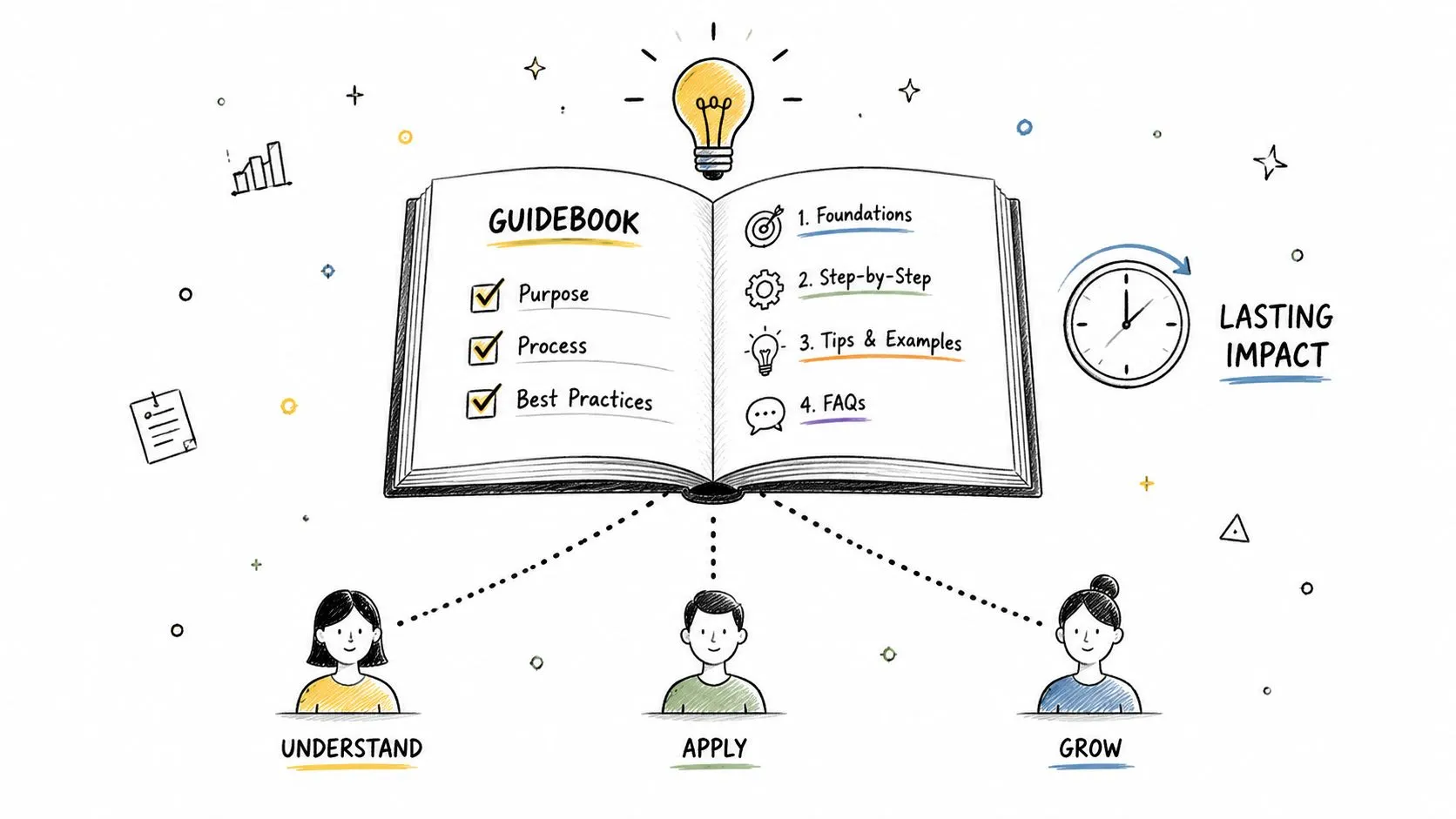
Some people make teams better because they explain things clearly, write useful documentation, or build onboarding material that people use. That's recommendation-worthy. It shows multiplier effect, not just individual output.
Here's a visual way to think about it.
Point to the artifact
Hypothetical example:
I worked with Sasha during our analytics stack rollout. Sasha wrote the setup guide and training notes everyone kept coming back to because they were actually clear. Months later, new team members were still using her documentation instead of asking the same setup questions in Slack. That kind of clarity saved time for the whole team, not just for one project.
That works because it points to something real. A guide. A training session. A thread everyone bookmarked.
Length matters less than that kind of specificity. Recommendations have a technical limit of 3,000 characters, but strong guidance is to keep them roughly in the 150 to 300 word range so they're readable before truncation, as noted in this overview of recommendation length and readability. Short and specific wins.
What to ask when memory is weak
- Ask what they taught: “What did this person explain that made work easier?”
- Mention the artifact: Guide, SOP, training deck, Loom, or Slack post.
- Describe the team effect: Fewer repeated questions. Faster onboarding. Less confusion.
A short explainer on communicating work well belongs here too:
Many samples of LinkedIn recommendations still miss the point. They praise communication as a trait. Better recommendations show the thing the person communicated and who it helped.
7. The Judgment-Call Recommendation
Execution matters. Judgment matters more.
If someone made a hard call under imperfect information and got it right, write about that. It's one of the rarest signals you can include because it proves the person can think, not just do. Plenty of people complete assigned work. Fewer know when to change course.
Show the tension, then the call
Hypothetical example:
I worked with Casey on a client delivery with a brutal deadline. Midway through, it became clear we couldn't ship the full scope cleanly without creating technical debt we'd regret immediately. Casey pushed for a phased release instead of pretending we could do everything at once, made the case clearly to the client, and protected both the timeline and the product. It was the right call.
That reads well because the decision wasn't obvious.
You should keep the conflict in the paragraph. Don't sand it down into “Casey is strategic.” The tension is the evidence. If you need help thinking about how roles signal trust and responsibility in customer-facing work, this flight attendant resume sample is oddly useful because it shows how decision-making gets framed when calm judgment matters.
Prompt the memory the right way
- Ask what call they made: “Was there a decision you questioned at first that turned out right?”
- Keep the uncertainty: Good judgment usually appears when the answer wasn't obvious.
- Focus on reasoning: Don't make it sound like luck.
A recommendation LinkedIn sample that only praises confidence is thin. Confidence without a real decision behind it is just style.
8. The Pattern-Recognition Recommendation
Some people don't just solve the obvious problem. They spot the quiet one early.
That's worth writing about because pattern recognition signals range. It tells the reader this person wasn't waiting to be assigned the issue. They noticed something repeating, connected the dots, and acted before it got expensive.
Name the pattern they caught
Hypothetical example:
Over time, I noticed Liam kept asking questions about database performance that the rest of us brushed past because nothing was fully broken yet. He dug into the query patterns, showed where the slowdown was building, and made the case for a migration before it turned into a crisis. That kind of foresight saved us from reacting late.
That's stronger than calling Liam “analytical.”
It also lines up with how good recommendation sets work overall. Strong profiles usually don't rely on one relationship type alone. Guidance on recommendation strategy says a baseline of strong recommendations matters, but diversity across roles and relationships is what builds a believable professional narrative in this recommendation structure guide. Pattern-recognition recommendations are especially useful when they come from peers or cross-functional partners who saw the person notice what others missed.
Keep it grounded
- Ask what they saw early: “What did this person notice before everyone else?”
- Tie it to evidence: A repeated customer complaint, slowing queries, candidate drop-off, recurring support friction.
- Show the follow-through: Seeing the pattern matters less than acting on it.
If you're also refining your profile language, StoryCV's article on what to put in LinkedIn summary helps connect these recommendation themes to the rest of your narrative.
Comparison of 8 LinkedIn Recommendation Samples
| Recommendation Type | Complexity 🔄 | Resource Needs ⚡ | Expected Outcomes 📊 | Ideal Use Cases 💡 | Key Advantages ⭐ |
|---|---|---|---|---|---|
| The Project-Specific Recommendation | Medium, needs a clear deliverable and measurable result | Low, one concrete example and some metrics | Clear, tangible impact that hiring managers can picture | Hiring for executional roles with deliverables (engineering, PM, campaigns) | Stands out vs. generic praise; highly credible |
| The Problem-Solver Recommendation | Medium, frames issue → intervention → outcome | Low–Medium, requires before/after context or metrics | Demonstrates initiative and measurable process improvement | Roles needing autonomy and business judgment (ops, product) | Shows independent thinking and business awareness |
| The Under-Fire Recommendation | High, must recount a genuine high-stakes moment accurately | Medium, needs specific crisis details and outcomes | Signals reliability, composure, and strong judgment under pressure | Leadership, customer-facing, incident-prone roles | High credibility; memorable evidence of character |
| Peer-to-Peer Collaboration Recommendation | Low, short anecdote about helping a colleague | Low, easily recalled and verifiable by peers | Illustrates teamwork, generosity, and improved team flow | Team-focused environments and culture-fit assessments | Differentiates cultural fit and interpersonal quality |
| The Skeptic-Converted Recommendation | Medium, requires honest doubt plus concrete evidence of change | Low, needs specific examples showing improvement | Highly credible praise that shows growth and adaptability | Transitions, promotions, hires with perceived weaknesses | Builds trust by admitting doubt then showing proof |
| The Knowledge-Transfer Recommendation | Low–Medium, tied to a teachable artifact or session | Low, point to documentation, guides, or training outcomes | Multiplier effect: lasting reduction in onboarding friction or errors | Scaling teams, onboarding, knowledge-intensive roles | Verifiable, high-impact with low ongoing cost |
| The Judgment-Call Recommendation | High, must present tradeoffs and reasoning, not just outcome | Medium, needs context on options and downstream effects | Demonstrates systemic thinking and sound decision-making | Managerial roles, product strategy, high-stakes tradeoffs | Signals leadership and ability to weigh ambiguity |
| The Pattern-Recognition Recommendation | Medium, requires longitudinal observation and evidence | Medium, may need data or repeated observations | Reveals blind spots and drives strategic improvements | Analytics, hiring, ops, continuous-improvement roles | Shows proactive, high-level insight that prevents future issues |
A Recommendation Is a Story, Not a Scorecard
Stop trying to write someone's entire career in one recommendation. That's the mistake. You don't need to summarize every strength, every project, and every nice thing about them. You need one small, true story.
That's why so much “LinkedIn recommendation template” advice falls apart in practice. It gives you structure, but structure isn't the hard part. Memory is. Most vague recommendations happen because the writer started typing before they had a real moment in mind, so they defaulted to safe compliments that could apply to almost anyone.
The fix is simple. Ask the person what they'd want highlighted. That is completely normal, and it's far better than producing generic filler. If they mention a project, a launch, a difficult week, a training doc, or a judgment call, you've got your starting point. From there, write what happened, what they did, and what changed.
Keep it short. Shorter and specific beats long and generic every time. That principle also fits how recommendations get read. In initial screening, a smaller set of strong recommendations from the right people beats a pile of bland endorsements, and direct managers or cross-functional stakeholders carry the most weight according to this screening-stage analysis of LinkedIn recommendations. You don't need more adjectives. You need more signal.
If you're the person searching for samples of LinkedIn recommendations, sample recommendation for LinkedIn examples, or even a recommendation template for LinkedIn, take the useful part and drop the rest. Useful part: open with how you know the person. Then write one real moment. Then close with a clear endorsement. Drop the robotic phrasing and all-purpose compliments.
A good recommendation doesn't feel optimized. It feels observed. The reader should come away thinking one thing: the writer was there, they saw the work, and they remembered the part that mattered.
And if you like seeing how specific roles get translated into sharp, credible narratives, discover F1 team roles. It's another good reminder that clear professional writing starts with concrete work, not buzzwords.
If your real problem isn't writing but remembering what actually mattered, StoryCV is built for that. It's an online resume writer that pulls specifics out of vague memory, turns scattered experience into clear narrative, and helps you say what you did without sounding like everyone else.