Your About section sits empty for months. Then someone looks you up. A recruiter messages you. A client asks for your LinkedIn. A colleague updates theirs and suddenly yours looks abandoned.
That's when people make the same mistake. They stop writing like a person and start writing for an imaginary recruiter. The result is the usual sludge: “results-driven,” “passionate,” “proven track record.” It says nothing. It sounds like everyone else. It gives a real reader no reason to care.
The challenge is not determining what to include. The challenge is deciding who the summary is for. Write for the person scanning your profile and trying to place you fast. Write for the hiring manager, collaborator, client, or peer who wants to know what you do, how you think, and why you're worth a conversation. If you need a useful model for sharper positioning, these professional summary examples for resumes help show the difference between generic and specific.
A good LinkedIn summary is clear, concrete, and human. It should sound like you know your lane. It should explain your value in plain English. It should make the right person think, “I get this person.”
Presentation matters too. If your profile photo is weak, fix that before you obsess over phrasing. A solid ai headshot generator can clean up that part fast. And if you care about writing clearly in public online, this piece on top platforms for text-based creators is worth a look.
This guide will show you what belongs in a LinkedIn summary that works. Not a confession. Not a corporate bio. A useful introduction with a job to do.
1. Professional Headline and Hook
Start with two or three sentences that answer the reader's first question: who are you, really?
Not your official bio. Not your annual review language. Your actual professional identity.
Bad:
I am a results-driven professional with 12 years of experience driving digital transformation initiatives.
Better:
I lead messy operational change. Most of my work sits at the point where legacy systems, unclear ownership, and growth pressure collide. I'm usually brought in when a team has outgrown the way it works.
That second version sounds like a person. It also tells me what kind of problems you solve.
Write the first lines like they matter
They do. Recruiters scan profiles fast. Grammarly's summary guide says recruiters spend an average of about 7 seconds scanning profiles, which is why your first lines need to do real work, not warm up slowly in vague language, as noted in Grammarly's LinkedIn summary advice.
Use this simple shape:
-
State your lane: “I build finance systems for companies that have outgrown spreadsheets.”
-
State your value: “My work usually reduces confusion, speeds decisions, and gives leaders numbers they trust.”
-
State your angle: “I'm strongest in environments that are scaling faster than their processes.”
If you're stuck, borrow the logic from strong professional summary examples for resume writing. The same principle applies. Lead with meaning, not labels.
Practical rule: If your opening could describe a thousand strangers with your title, rewrite it.
One more thing. Don't stuff this opening with every keyword you've ever seen in a job description. Natural language works better than a pile of nouns.
You can still be specific:
“Product leader focused on pricing, onboarding, and retention in B2B SaaS.”
That's clear. That's enough.
Need a profile photo to match a sharper summary? A clean ai headshot generator can help, but the writing matters more.
2. Core Achievement Narrative
Someone opens your profile after a referral, a comment, or a search. They are trying to answer one question fast. Can this person do the work?
Your summary should answer that with a real example.
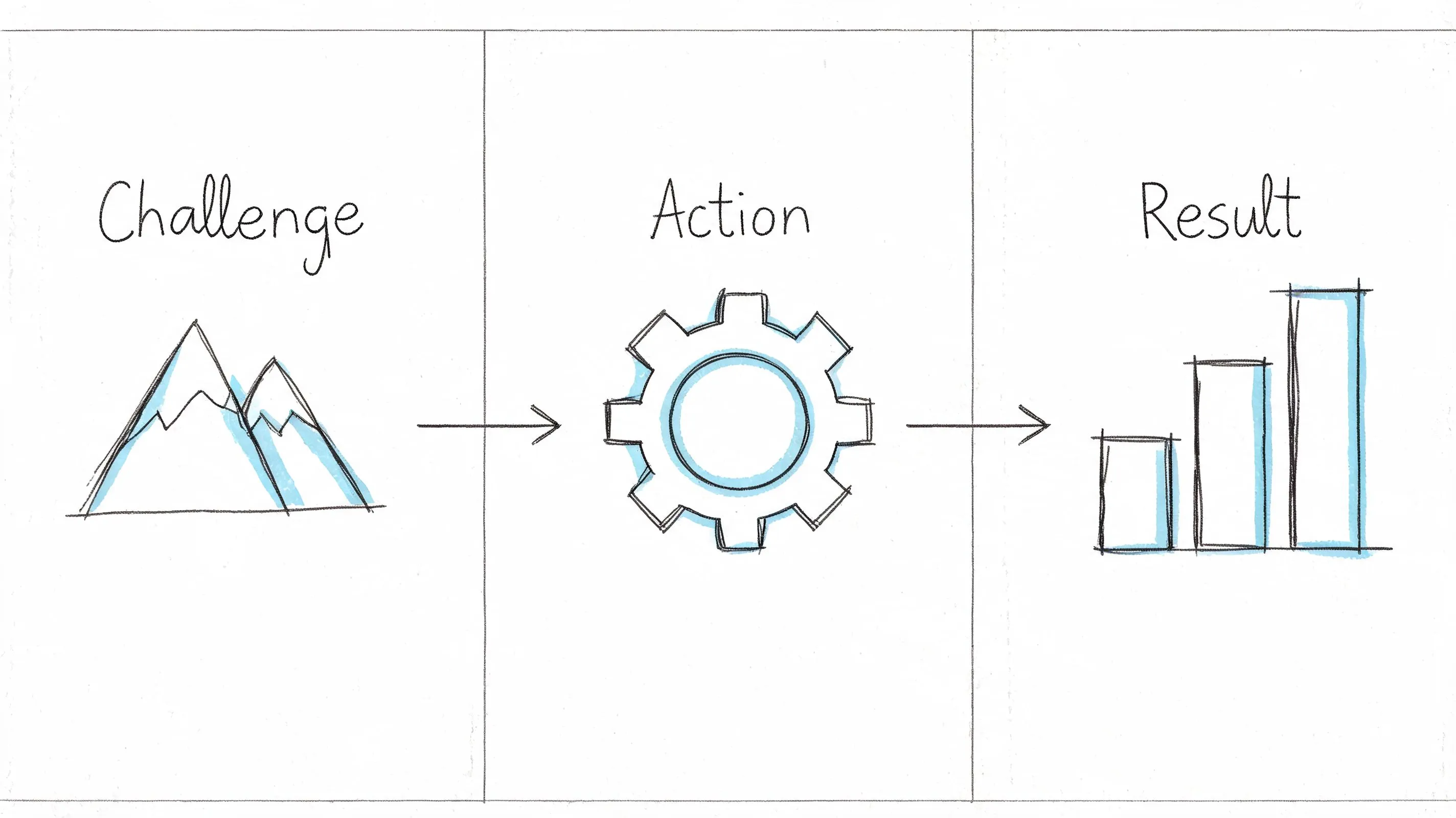
A good achievement narrative is not about cramming in every win. It is about giving the right reader one concrete reason to trust your judgment. That is the part people miss. They write for some vague recruiter in the sky and end up sounding generic. Write for the actual person you want to convince. A hiring manager. A founder. A peer in your field. Then tell one story that proves how you think.
Use a simple structure:
Problem. What you did. What changed. Why it mattered.
Example:
When I joined a regional operations team, reporting was split across five systems and nobody trusted the numbers. I rebuilt the workflow around one source of truth, tightened handoffs between finance and ops, and turned weekly reviews into decision-making meetings instead of cleanup sessions. The real result was not the dashboard. It was faster decisions because people stopped debating the data.
That works because it shows context, action, and judgment. It sounds like a person who has done the work, not someone stuffing a profile with résumé fragments.
Pick one representative story. One is enough if it carries weight.
Try approaches like these:
-
For product leaders: “I do my best work on products that function technically but fail in adoption, retention, or clarity.”
-
For operators: “I'm usually brought in when growth has outpaced process and teams are wasting time fixing preventable messes.”
-
For marketers: “My strongest work starts when positioning sounds polished internally but falls flat with buyers and sales calls.”
Then add proof. Use numbers if you have real ones. If you do not, describe the before and after in plain English. Better process. Shorter sales cycle. Fewer errors. Faster onboarding. Stronger retention. Clearer reporting.
If you want help phrasing those wins without sounding stiff, use these examples on how to write achievements in a resume.
The best story is not the biggest one. It is the one that makes your value obvious to the right person.
3. Industry-Specific Language and Terminology
Use the language of your field. Just don't turn your summary into a glossary.
If you work in data, say SQL, Tableau, experimentation, cohort analysis, or forecasting when those terms are part of your work. If you're in operations, name procurement, planning, network design, or process improvement. If you're in B2B marketing, say pipeline, positioning, lifecycle, demand gen, and revenue operations when they fit.
Specific words help people place you fast. Generic words make people work.
Speak your field without sounding like a database
Good:
I work at the intersection of revenue operations, CRM cleanup, and sales process design.
Bad:
Revenue operations | CRM | GTM | pipeline management | optimization | systems thinker | strategic leader
That second version looks like you dumped search terms into a blender.
Mechabee's best-practices article says profiles optimized with role-specific keywords rank higher in recruiter searches, but that's only useful if the summary still reads like normal language. It also notes that the first 300 characters are especially important for earning the click into the rest of the summary in Mechabee's LinkedIn best practices handbook.
So do this instead:
-
Name your actual tools: “I've led reporting and workflow redesign across Salesforce, HubSpot, and Power BI.”
-
Name your actual domain: “Most of my experience is in B2B SaaS onboarding and retention.”
-
Name your actual context: “I'm strongest in teams where product, sales, and customer success need to align.”
That gives readers substance. It also gives search enough to work with.
If you're changing fields, translate. Don't pretend. A veteran moving into tech can say: “My background is in military logistics, and the through-line is operational discipline under pressure.” That's honest and useful.
4. Unique Value Proposition or Differentiation
A hiring manager opens five profiles for the same title. Four sound interchangeable. One sounds like a real person with a clear use.
That's the one that gets remembered.
Your value proposition is not a pile of adjectives. It's the specific reason someone should keep reading. The mistake is writing for an imaginary recruiter checklist instead of the actual person asking, “What do you do better than the other people with this background?”
The best differentiators usually come from combination.
A finance leader who explains risk in plain English.
A product manager who gets alignment without endless meetings.
An operations lead who can design systems and earn trust from the people using them.
A career changer who brings executive communication into a messy product environment.
That works because it sounds usable. People hire usefulness.
Find the overlap that is actually yours
Use these questions to get there:
-
What do people hand you before they hand it to others?
-
What kind of mess do you make clearer, faster, or calmer?
-
What do colleagues with your title often miss that you consistently get right?
Then write the answer like a human being.
Example:
I'm strongest when a team has too many priorities, unclear ownership, and smart people talking past each other. I bring structure fast. My edge is turning ambiguity into decisions, rhythm, and follow-through.
That says something real. It gives the reader a reason to picture you in action.
If you need help putting that into plain language, this guide to listing strengths on resume can help you name the pattern without sounding inflated.
Your summary should make one thing obvious. Why someone should choose you over another person with the same title.
5. Career Trajectory and Future Direction
Someone lands on your profile after seeing a weird career path. Finance. Ops. Product. Strategy. If your summary reads like a stitched-together resume, they leave confused.
Your job here is to give them a clean throughline.
A strong About section shows progression and direction. It tells a real person why your past roles connect and what kind of work you want next. That matters most when your path is not linear, because people do not need every detail. They need a pattern they can trust.
Example:
I started in finance, moved into operations, and kept getting pulled toward cross-functional process work because that's where I was most useful. The pattern across those roles is simple. I solve messy business problems by building clearer systems. Now I'm focused on leadership roles where analytical judgment and execution both matter.
That works because it sounds human. It also gives the reader a reason to keep reading instead of trying to decode your timeline.
Give your path a clear line
If you're changing direction, explain the logic. Do not defend it. Do not write for some imaginary recruiter scanning for perfect symmetry. Write for the actual person reading your profile and trying to answer one question: does this path make sense for the work this person wants now?
Resume Worded's article on LinkedIn summaries points out that career changers, returners, and veterans often get weak advice, and that shows up in how people write these sections. They list examples from people with non-linear backgrounds, but the main takeaway is simpler. The gap is usually not the career path. The gap is the explanation. See the examples in Resume Worded's LinkedIn summary examples article.
Use this structure:
-
Past: “I spent a decade in enterprise operations.”
-
Shift: “Over time, I took on more work in product and workflow design.”
-
Direction: “Now I'm targeting roles where I can lead systems, process, and cross-functional execution more directly.”
That's enough.
Before you write this part, decide what you want the reader to do next. Contact you about a role. Take your pivot seriously. Understand why your background fits a new lane. That answer should shape every sentence in this section.
6. Problem-Solving Approach or Methodology
Titles tell people what you've done. Your approach tells them how you think.
A good LinkedIn summary excels beyond a resume. A resume is tied to a job description. Your About section isn't. It's the one place you can say what kind of work you like doing, how you make decisions, and what people can expect from you.
Example:
I don't start with software. I start with friction. Where are people losing time, repeating work, or making decisions with weak information? Once that's clear, the process and tooling usually become obvious.
That's useful. It tells me how you operate.
Show your method in plain English
Here are stronger ways to describe your thinking:
-
For strategy people: “I work hypothesis-first. I'd rather test assumptions early than defend a beautiful plan that never had a chance.”
-
For operators: “I look for handoff failures first. Most recurring execution problems show up between teams, not inside one team.”
-
For product leaders: “I start with user behavior, not feature requests.”
-
For managers: “I make reasoning visible so teams can challenge it and improve it.”
Good process language makes you sound senior because it shows pattern recognition.
The mistake here is writing something abstract like “I use cross-functional collaboration to drive innovation.” Nobody knows what that means. Replace it with a sentence someone could imagine seeing in a meeting.
If a line doesn't help someone predict how you'd work with them, cut it.
7. Relevant Credentials, Certifications, and Continuous Learning
Put credentials in your summary only if they support the story you're telling.
This is not the place to dump every course, badge, and certificate you've collected since 2016. Pick the ones that matter to the work you want.
Good:
AWS Certified Solutions Architect. MBA. Recent coursework in analytics and automation because more of my work now sits at the overlap of systems, data, and operations.
Also good:
I came up through practice, not formal design training, then added product coursework later to sharpen what I was already doing on the job.
That second example works because it explains relevance. It doesn't just decorate your profile.
Use credentials as support, not filler
Include these when they strengthen credibility:
-
Formal education that still matters: MBA, MSCS, nursing degree, law degree
-
Recognized certifications tied to the role: AWS, PMP, CPA, Scrum certifications
-
Recent learning with direct relevance: A serious analytics or AI course if that work is now part of your lane
Leave out things that create noise.
For senior professionals, the strongest signal is still applied judgment. Credentials help. They don't replace evidence.
A clean line is enough:
“Certified Scrum Product Owner with a background in operations and recent work in product delivery.”
That says what matters and stops.
8. Social Proof, Endorsements, and Credibility Signals
Use outside proof carefully. One sharp credibility signal beats five weak ones.
You can mention published work, a conference talk, an internal award, advisory work, or recognition from clients or peers. Just keep it real and specific. Don't write fake testimonials. Don't overproduce this section like a press kit.
Example:
I write occasionally about onboarding, operating cadence, and scaling cross-functional teams. A few of those posts have led to useful conversations with operators facing the same problems.
That works even without hype.
Borrow credibility without sounding thirsty
You can include:
-
Published work: “I've written about pricing and retention for product teams.”
-
Speaking: “I've spoken with internal leadership groups about workflow redesign and operating clarity.”
-
Recognition: “Past managers have trusted me to lead high-friction initiatives that needed calm execution.”
If you do have a stronger external signal, mention it:
“I've been invited to speak on RevOps alignment because that's where much of my recent work has been.”
No fireworks needed.
Social proof should confirm your positioning, not carry it. If the summary itself is vague, outside signals won't save it.
9. Clear Call-to-Action and Accessibility
Someone reads your summary, nods, and leaves. No message. No connection request. No follow-up. That usually isn't a credentials problem. It's a direction problem.
Your summary needs to tell the right person what to do next. Not some imaginary recruiter. An actual human being who now has a reason to reach out.
Example:
I'm most interested in senior operations, program leadership, and chief of staff roles where messy growth needs structure. If you're building in that direction, send me a message.
That works because it removes friction. It tells people who should contact you, and why.
End with an easy next step
A clear ask gets more replies than a vague sign-off. Simple.
Use one of these shapes:
-
Role-focused: “I'm exploring senior product roles in B2B SaaS.”
-
Problem-focused: “I'm happy to connect with teams working through onboarding, retention, or product adoption issues.”
-
Conversation-focused: “If your team is dealing with process debt, I'm always open to comparing notes.”
Pick one. Don't stack three asks in a row. Don't turn the ending into a list of every role, industry, and city you'd consider. That reads like you wrote it for search filters, not people.
If you're job hunting, say it plainly:
“I'm open to the right leadership role, especially where product, operations, and systems work overlap.”
That is sharper than “open to opportunities.” It gives the reader a use case. And that's the whole point.
10. Personality and Voice That Reflects Authenticity
A hiring manager opens your profile and sees this: “Results-driven professional with a proven track record.” They forget it before they finish the sentence.
That is the core problem. Bad summaries usually do not fail because they left something out. They fail because they were written for a fake audience. Some vague recruiter. Some corporate filter. The result sounds polished, generic, and dead.
Your summary should sound like a real person talking to another real person for a reason.

Write the way you speak when you know your work and do not need to impress anyone. That does not mean casual to the point of sloppy. It means specific, human, and clear.
The fastest test is simple. Read it out loud. If it sounds like a company wrote it, rewrite it.
Sound like a person with a point of view
Good voice has shape. It tells the reader how you think, what you notice, and where you do your best work.
Examples:
-
Plainspoken: “I like fixing unclear systems more than I like talking about strategy in the abstract.”
-
Warm but sharp: “I'm drawn to work that sits between people problems and process problems, because that's usually where the friction is.”
-
Confident without noise: “I do my best work when the situation is critical and the plan still isn't obvious.”
None of those lines try to sound impressive. That is why they work.
Here's the bad version:
Before:
I am a results-driven professional with 12 years of experience in digital transformation, stakeholder management, and cross-functional leadership.
Here's the version a person might remember:
For most of my career, I've been the person teams call when growth exposes the cracks. I've led system rollouts, process redesign, and cross-functional change, but my actual job is usually simpler. Get people aligned. Make ownership obvious. Remove friction fast.
That second version gives the reader a voice, a pattern, and a brain to trust.
A short video can help if you want another perspective on sounding more human in your profile:
Write like you're describing your work to an intelligent peer, not auditioning for a corporate brochure.
LinkedIn Summary: Top 10 Elements Comparison
| Component | Implementation Complexity 🔄 | Resource Requirements ⚡ | Expected Outcomes ⭐ | Results / Impact 📊 | Ideal Use Cases & Tips 💡 |
|---|---|---|---|---|---|
| Professional Headline and Hook | Low, concise copywriting and edits | Low, a few hours, keyword check | ⭐⭐⭐⭐, high immediate impression | Boosts discoverability and first‑impression metrics | Use for profile headlines; lead with keywords and metrics; test variants |
| Core Achievement Narrative | Medium, structured STAR writing | Medium, gather metrics and context | ⭐⭐⭐⭐⭐, very persuasive evidence | Makes impact tangible; aids interviews and resume bullets | Use in summaries and interviews; include clear metrics and cause→effect |
| Industry‑Specific Language & Terminology | Medium, research and balance | Low–Medium, review JD's, peers, update periodically | ⭐⭐⭐⭐, improves fit with recruiters/ATS | Increases search visibility and credibility in field | Use 3–4 relevant terms naturally; avoid jargon‑stuffing |
| Unique Value Proposition / Differentiation | Medium–High, self‑reflection and positioning | Low–Medium, feedback and iteration | ⭐⭐⭐⭐⭐, strong memorability and positioning | Attracts specific roles; clarifies why you're different | Identify 2–3 authentic differentiators; validate against job needs |
| Career Trajectory & Future Direction | Low–Medium, articulate path and goals | Low, reflection; update regularly | ⭐⭐⭐⭐, signals intentionality and growth | Reduces mismatches; shows fit for future roles | State target roles/industries clearly but remain flexible |
| Problem‑Solving Approach / Methodology | Medium, describe repeatable process | Medium, examples and peer alignment | ⭐⭐⭐⭐, demonstrates thinking and execution | Reveals working style and cultural fit; interview talking points | Ground methodology in examples; explain when you adapt it |
| Relevant Credentials & Continuous Learning | Low, selective listing | Low, collect certificates, update twice yearly | ⭐⭐⭐⭐ (varies by career stage), validates expertise | Third‑party validation; required in some fields | Include recent, relevant creds; prioritize quality over quantity |
| Social Proof, Endorsements & Credibility Signals | Medium, curate and obtain permissions | Medium–High, gather links, testimonials | ⭐⭐⭐⭐⭐, strong external validation | Builds trust; differentiates similar candidates | Use recent, verifiable proof; get explicit permission to quote |
| Clear Call‑to‑Action & Accessibility | Low, concise CTA and contact links | Low, maintain links/calendar/email | ⭐⭐⭐⭐, increases inbound relevance | Removes friction for recruiters; raises response rates | Be specific about opportunities; provide 1–2 contact methods |
| Personality & Voice That Reflects Authenticity | Medium, tone calibration and confidence | Low, peer review and iteration | ⭐⭐⭐⭐, improves memorability and fit | Builds connection; filters for cultural fit | Read aloud; include one professional personal detail; stay consistent |
It's a Summary, Not a Confession
You open LinkedIn to write your About section. Ten minutes later, you're typing like a corporate hostage. “Results-driven.” “Passionate professional.” “Proven track record.” None of that sounds like a person anyone would want to message.
That's the core problem.
People don't struggle with what to put in linkedin summary because they have nothing to say. They struggle because they write for a fake audience. An imaginary recruiter. An abstract hiring panel. A keyword robot. The result is stiff, vague, and forgettable.
Write for a real human instead. Someone who lands on your profile and wants the fast answer to three things. What do you do. How do you think. Why should they care.
Your summary is not the place to dump your whole career story or explain every twist in your path. It is a filter. It should help the right people recognize you quickly and help the wrong people move on.
That means your About section should do a few simple jobs well. State who you are. Name the work that matters. Show how you solve problems. Make your difference obvious. End with the kind of conversation you want next.
Short beats bloated. Specific beats impressive. Human beats polished.
If your career path looks uneven, use that. Give it shape. Show the thread. Don't sand it down until it sounds fake. A good summary does not pretend your career was perfectly planned. It makes your choices make sense.
You can update it later. You should. Profiles that stay current tend to stay more useful. But do not hide behind editing forever.
Publish the version that tells the truth now.
Then improve it after people can read it.
If writing about yourself makes you freeze, this piece on manage social overloads with tonen is a useful reset.
If writing about yourself turns your brain to static, StoryCV is built for that. It acts like a digital resume writer, not a template box. You answer a smart guided interview, and StoryCV turns your experience into clear, credible career writing that sounds like you. Start free and get one role written properly before you touch the rest.