Most advice on a cover letter for nursing assistant jobs is wrong.
It tells you to be professional, mention your compassion, and summarize your duties. That produces the same dead letter everyone else sends. Hiring managers don’t need another note saying you took vital signs, assisted with hygiene, and documented care. They already know what a nursing assistant does.
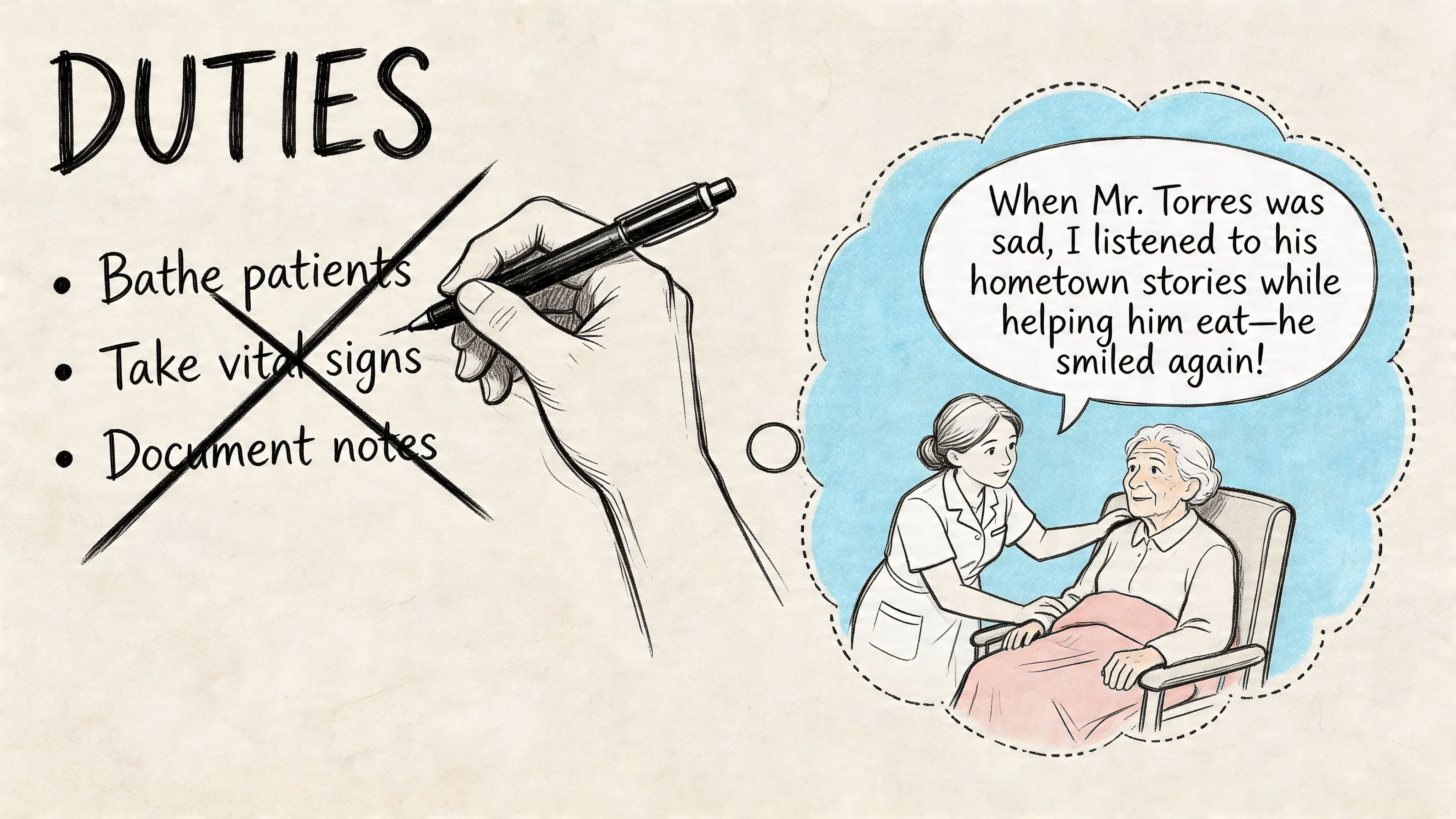
What they want is proof that patients trusted you, families listened to you, and the floor ran better because you were there. That means story first. Not template first.
Stop Listing Duties Start Telling Your Story
Most nursing assistant cover letters read like copied job descriptions. That’s why they disappear.
Data shows 70% of nurse managers prioritize quantifiable soft skill demonstrations, yet only 10% of online templates show people how to write them, according to Indeed’s nursing assistant cover letter guidance. That gap is the whole problem. Templates tell you to say you’re compassionate. They don’t tell you how to prove it.
What hiring managers actually remember
They remember moments.
A patient who calmed down because you changed how you spoke to them. A family member who stopped panicking because you explained the routine clearly. A shift that ran smoother because you noticed a pattern before it became a problem.
That’s what a strong cover letter for nursing assistant roles should do. It should show quiet competence in motion.
“During my rotation in a long-term care facility, I cared for a dementia patient who often became agitated during evening routines. By observing her patterns and speaking gently about familiar topics, I was able to reduce her distress and help her feel safe during care. Over time, she began to recognize me and respond calmly, which made daily care smoother for both of us.”
That works because it sounds real. No hero language. No fake drama. Just patience, observation, and patient impact.
Replace duties with proof
Here’s the shift:
- Weak: Assisted patients with daily living activities
-
Better: Supported patients during bathing, dressing, and mobility while adjusting my approach to reduce confusion and resistance during care
-
Weak: Excellent communication skills
-
Better: Explained daily care routines in simple language so patients and families knew what to expect and felt more comfortable cooperating with treatment
-
Weak: Team player
- Better: Coordinated with nurses and other assistants to keep care transitions smooth during busy shifts
If you’re early in your career, you can still do this. Clinical placements, volunteer work, and caregiving all count if you describe them clearly. If you need help framing that background, this guide on how to write a CV with no experience is useful for thinking through transferable evidence.
For your resume bullets, keep the same rule. Show effect, not task. This breakdown on writing stronger resume bullet points is worth reading before you draft both documents.
The First Three Sentences That Hook a Hiring Manager
The opening line is where many applicants waste the letter.
They start with “I am writing to apply for the nursing assistant position.” That sentence says nothing. It’s clerical. It doesn’t tell me who you are, why you care, or why this facility should keep reading.
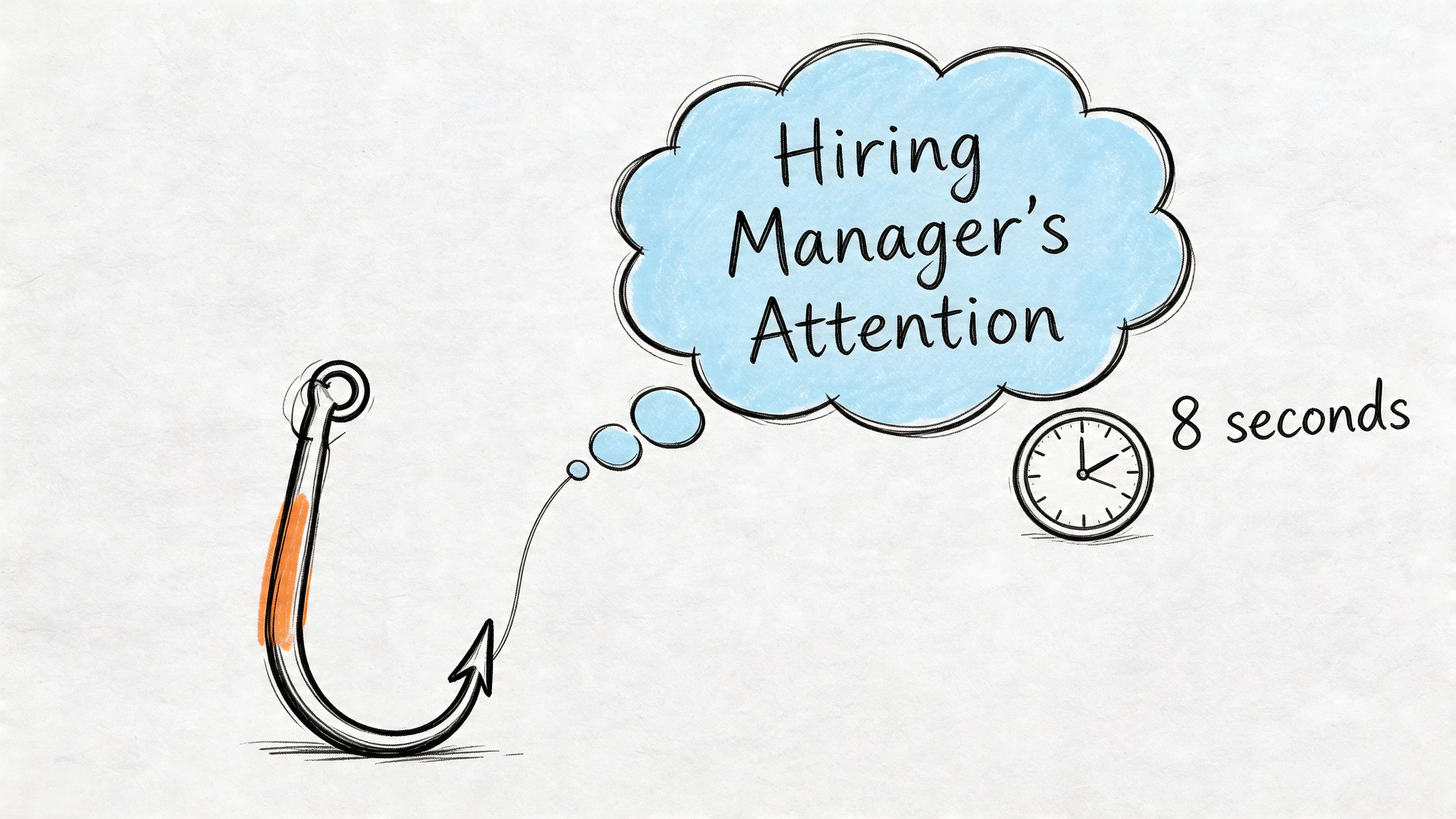
In a field with projected 5–7% employment growth over the next decade, competition is still real, and a strong opening matters because recruiters look for immediate fit and personal investment, as noted in WahResume’s nursing assistant cover letter guide.
A hook that actually works
Use this structure:
- Lead with identity or purpose
- Name the facility
- Connect your background to their kind of care
Here’s a strong opening:
“I became a nursing assistant because I wanted to be the person patients feel safe with, not just the person completing their care tasks.”
That line works because it does three things fast. It shows motive. It signals patient-first thinking. It sounds like a person, not a form letter.
Then make it specific:
“I’m applying for the nursing assistant role at Green Valley Clinic because your focus on community-based, patient-centered care matches the way I’ve supported elderly patients in both home and clinical settings.”
That’s already better than most applications because it acknowledges the employer instead of pretending every hospital is interchangeable.
Before and after
Here’s the generic version:
“I am applying for the nursing assistant position at your hospital. I have experience in patient care and am passionate about helping people.”
This could be sent anywhere. That’s why it lands nowhere.
Here’s the customized version:
“I am applying for the nursing assistant role at Green Valley Clinic, where your focus on community-based, patient-centered care strongly aligns with my experience supporting elderly patients in home and clinical settings.”
And then one more sentence to lock it in:
“In my previous role, I worked closely with elderly patients managing chronic conditions, prioritizing comfort, clear communication, and continuity of care, values that are central to Green Valley Clinic’s approach.”
That’s enough. You don’t need a grand speech. You need relevance.
A simple opening formula
Use this if you’re stuck:
| Situation | Opening move |
|---|---|
| Experienced CNA | Lead with a patient-care belief, then name the facility |
| Newly certified | Lead with why you chose the work, then connect training to the role |
| Career changer | Lead with what transferred, then show why healthcare is the right move |
| Returning after a break | Lead with renewed commitment, then show what still makes you effective |
If you want a quick visual walkthrough before writing your own opening, this short video is a decent prompt to get your first draft moving.
Show Your Impact Beyond the Patient Chart
Your resume covers responsibilities. Your cover letter should cover meaning.
Your writing should prove that your work changed something. Maybe a patient felt safer. Maybe a family became easier to work with because you communicated clearly. Maybe the team moved faster because you stayed organized and observant. Those are not soft details. They’re hiring decisions.
According to MyPerfectResume’s CNA cover letter examples, high-impact letters use measurable results such as a 95% patient satisfaction rating, a 40% reduction in patient wait times, or a 20% decrease in infection rates. If you have numbers, use them. If you don’t, use clear outcomes.
How to quantify soft skills without sounding fake
Don’t write “I’m empathetic.”
Write what empathy did.
“Communicated daily with 15–20 patients and their families, helping reduce anxiety by clearly explaining care routines and addressing concerns, which improved cooperation during treatment.”
That sentence works because the soft skill is anchored in behavior. Communication became action. Empathy became a visible result.
Here are stronger ways to frame common claims:
-
Instead of: compassionate caregiver
Write: “Adapted my communication style to each patient’s comfort level, especially during hygiene and mobility assistance, so care felt less rushed and more reassuring.” -
Instead of: strong team player
Write: “Worked closely with nurses and fellow assistants to keep handoffs accurate and patient needs addressed during high-volume shifts.” -
Instead of: detail-oriented
Write: “Maintained complete and accurate patient records with 100% compliance in patient records.”
The best stories are usually small
People think they need a dramatic save. They don’t.
The strongest cover letter for nursing assistant jobs often includes one small, honest story that shows how you think during care. The dementia anecdote is a good model because it shows observation, emotional control, and consistency.
Use this pattern:
-
Set the scene
One patient, one recurring issue, one care setting. -
Show what you noticed
Noticed agitation during evenings. Noticed confusion during transfers. Noticed family stress during updates. -
Explain what you changed
Adjusted your tone. Spoke about familiar topics. Gave clearer explanations. Coordinated better with the team. -
State the result
Patient became calmer. Daily care got smoother. Cooperation improved. Family stress eased.
Practical rule: If your sentence could describe anyone, it’s too generic. If it could only describe you, keep it.
Examples you can adapt
Here are a few lines that say something:
- “Supported more than 150 patients in a single year while maintaining a 95% patient satisfaction rating through consistent, respectful care.”
- “Collaborated with the care team to streamline scheduling, helping reduce patient wait times by 40%.”
- “Followed hygiene protocols carefully and contributed to a 20% decrease in infection rates on the ward.”
- “Helped train 10 new assistants, focusing on patient dignity, accurate handoffs, and dependable routines.”
- “Maintained 100% compliance in patient records, ensuring nurses had accurate information for timely care decisions.”
What belongs in the body paragraph
A strong body paragraph usually includes these parts:
- A real situation from your work, rotation, or caregiving background
- One action you took that shows judgment, not just effort
- One outcome that proves your work mattered
- One line of relevance tying that experience to the employer’s setting
If your paragraph just repeats your resume, cut it. If it shows how you think and care, keep it.
Four Nursing Assistant Cover Letter Examples That Work
You don’t need another blank template. You need to see what good looks like.
These examples are short on fluff and heavy on specifics. Don’t copy them line for line. Steal the structure. Steal the level of detail. Steal the honesty.
If you want more sample formats after these, StoryCV also has a broader guide with a sample cover letter for job application.
Example one for a newly certified CNA
Persona: Recent CNA graduate applying to a long-term care facility
Dear Hiring Manager,
I became a nursing assistant because I wanted to be the person patients feel safe with, not just the person completing their care tasks. I’m applying for the Nursing Assistant role at Maple Grove Care Center because your focus on patient dignity and consistent care matches the way I approached my clinical training.
During my CNA training and long-term care rotation, I learned that the smallest moments often shape a patient’s experience. While caring for a resident with dementia who became agitated during evening routines, I slowed my pace, spoke about familiar topics, and kept my instructions simple and calm. Over time, she responded more comfortably during care, which made the routine less stressful for both of us and reinforced how much observation and patience matter in this work.
I’ve also supported daily hygiene, mobility assistance, vital signs, and accurate documentation in supervised care settings, while staying focused on respect and reassurance. My CPR certification, willingness to learn quickly, and commitment to dependable team support would help me contribute positively to your staff from day one.
I’d welcome the chance to discuss how I can support your residents with steady, patient-centered care. Thank you for your time and consideration.
Sincerely,
[Your Name]
Example two for an experienced nursing assistant
Persona: Mid-career nursing assistant moving to a hospital role
Dear Hiring Manager,
I’m applying for the Nursing Assistant position at North Valley Hospital because your emphasis on efficient, patient-centered care matches the standards I’ve built across hospital and senior care settings. Over 6+ years, I’ve supported over 500 patients while staying focused on comfort, accurate documentation, and smooth teamwork during demanding shifts.
In my current role, I communicate daily with patients and families to explain care routines clearly, answer questions, and reduce avoidable stress during treatment. That patient-facing communication has helped improve cooperation during care and strengthened trust on the floor. I’ve also maintained 100% compliance in record-keeping and worked closely with nurses to keep patient information accurate and current.
What sets me apart is that I don’t treat bedside care as a checklist. I pay attention to patterns. I notice when a patient is becoming confused, when a family needs clearer communication, and when a routine can be adjusted to make care safer or more efficient. In prior roles, I contributed to care practices that supported a 95% patient satisfaction rating and helped train 10 new assistants on documentation, patient dignity, and shift coordination.
I’d value the opportunity to bring that level of consistency and judgment to North Valley Hospital. Thank you for considering my application.
Sincerely,
[Your Name]
Example three for a career changer
Persona: Former caregiver or support worker moving into nursing assistant work
Dear Hiring Manager,
I’m applying for the Nursing Assistant role at Green Valley Clinic because your patient-centered approach reflects the kind of care I’ve always tried to provide. I’m entering this role with formal CNA training and practical experience from caregiving environments where calm communication, routine support, and close attention to people’s needs were part of every day.
Before certification, I supported adults who needed help with daily routines, medication reminders, mobility, and emotional reassurance. That work taught me how to stay steady when someone is confused, frustrated, or anxious. It also taught me that patients respond better when they feel informed and respected, not rushed.
Since completing my training, I’ve focused on translating that instinct into clinical discipline. I’m CPR certified, comfortable with vital signs and documentation, and committed to supporting nurses with reliable, patient-first care. In patient interactions, I aim to make communication useful, not performative, by explaining what’s happening, listening closely, and helping people feel more in control of the care process.
I’d welcome the chance to bring that combination of empathy, structure, and adaptability to Green Valley Clinic. Thank you for your consideration.
Sincerely,
[Your Name]
Example four for someone returning after a break
Persona: Nursing assistant returning to healthcare after time away
Dear Hiring Manager,
I’m excited to apply for the Nursing Assistant role at Riverside Senior Living. Returning to healthcare has only made me clearer on why this work matters to me. I value the kind of care patients remember: consistent, respectful, and calm, especially when they feel vulnerable.
Before my career break, I worked as a nursing assistant in long-term care, supporting residents with hygiene, mobility, meal assistance, and daily monitoring. What stayed with me most was how much trust depends on routine and communication. Patients were more comfortable when care was explained clearly, and families were more confident when updates were straightforward and specific.
I’m now ready to return with renewed focus and a stronger appreciation for reliability. In my previous role, I helped maintain accurate records, supported smooth coordination with nurses, and contributed to routines that improved both comfort and efficiency for residents. I’m confident in my ability to step back into patient care with professionalism, warmth, and respect for the standards your team upholds.
I’d appreciate the opportunity to discuss how I can support your residents and staff. Thank you for your time.
Sincerely,
[Your Name]
Why these letters work
They all do four things right:
- They open with motive, not admin. Nobody starts with “I am writing to apply.”
- They name the employer. That alone separates them from lazy applications.
- They include one human detail. A patient, a family, a shift, a routine.
- They sound like adults. No buzzwords. No fake inspiration speech.
A good cover letter for nursing assistant roles should feel like evidence, not performance.
Common Mistakes That Get Your Letter Ignored
Most bad letters fail fast.
Not because the candidate is weak. Because the letter signals low effort, low judgment, or both. And hiring managers don’t have time to interpret your potential through bad writing.
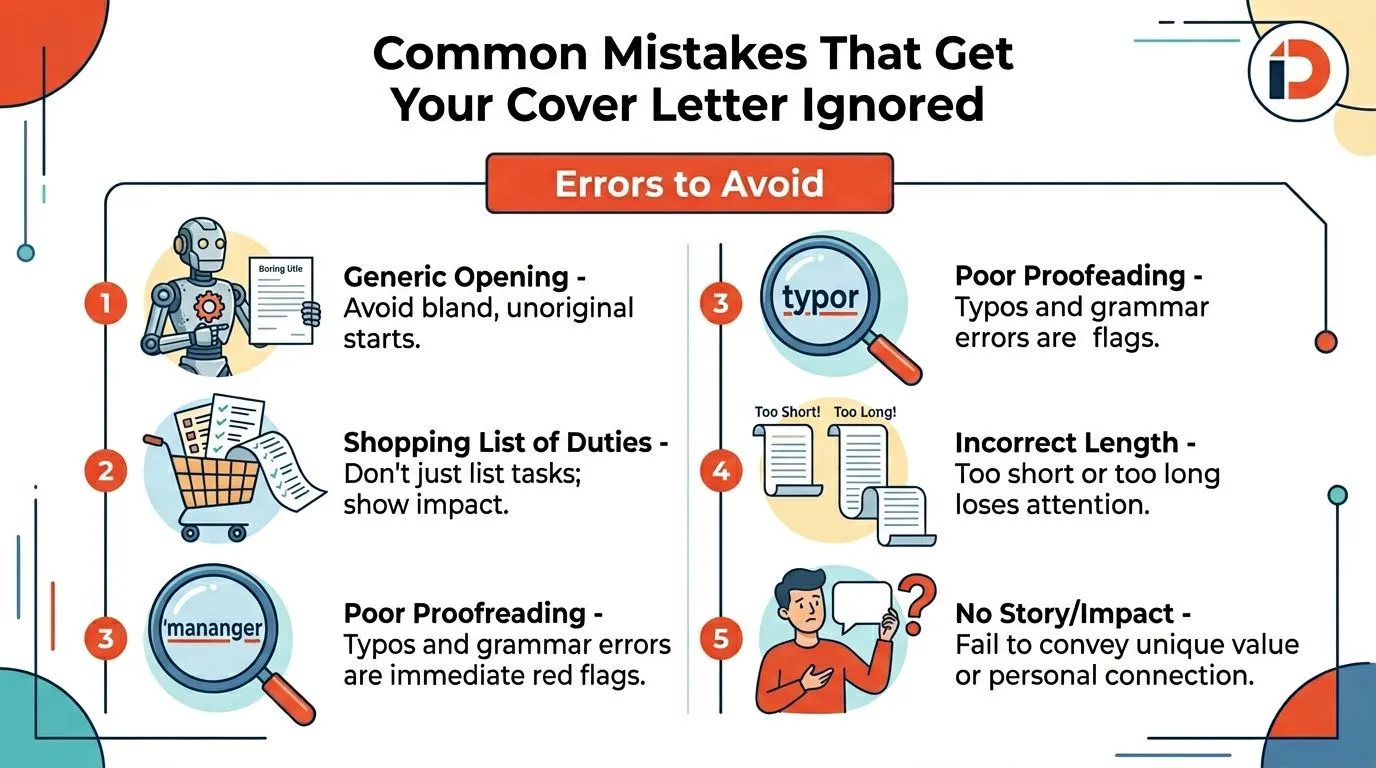
According to AMN Healthcare’s cover letter advice, generic letters lead to 70-80% immediate rejections, letters that go beyond one page are ignored 100% of the time, and proofreading errors disqualify 55% of applicants.
The five killers
| Mistake | Why it fails | Fix |
|---|---|---|
| Generic opening | Sounds copied and forgettable | Name the facility and lead with a real reason |
| Duty list body paragraph | Repeats the resume | Replace tasks with one patient story or one clear result |
| Poor proofreading | Signals carelessness | Read it aloud and review names, dates, and job title |
| Wrong length | Looks unfocused or undercooked | Keep it to one page |
| No story or impact | Gives the reader nothing to remember | Add one specific moment that shows how you work |
What to cut immediately
If your letter includes any of these, delete them:
-
“I am a hardworking individual”
Empty claim. Everyone writes that. -
“I have excellent communication skills”
Show the communication in action instead. -
“Please see my resume for more details”
Of course they can see your resume. Your letter should add context. -
“To whom it may concern”
Use a real name or “Dear Hiring Manager.”
Your cover letter doesn’t need to sound impressive. It needs to sound credible.
A fast self-audit
Before sending, ask:
- Did I name the facility?
- Did I include one real example instead of generic claims?
- Is the whole thing one page?
- Did I check every spelling detail, especially names and role title?
If you keep getting silence after applying, the problem may not be your experience. It may be how you’re packaging it. This breakdown on why you may not be getting job interviews is useful if your applications keep stalling.
Your Final Polish and Story Prompts
A good final draft is usually shorter than your first one.
That’s a good sign. You’re cutting noise. You’re leaving only what proves fit.
Letters created for the job with quantifiable achievements can increase interview callback rates by as much as 40%, and hiring managers often spend less than 10 seconds on the first scan, according to Credenza Health’s CNA cover letter writing advice. So don’t send a draft that still sounds like notes.
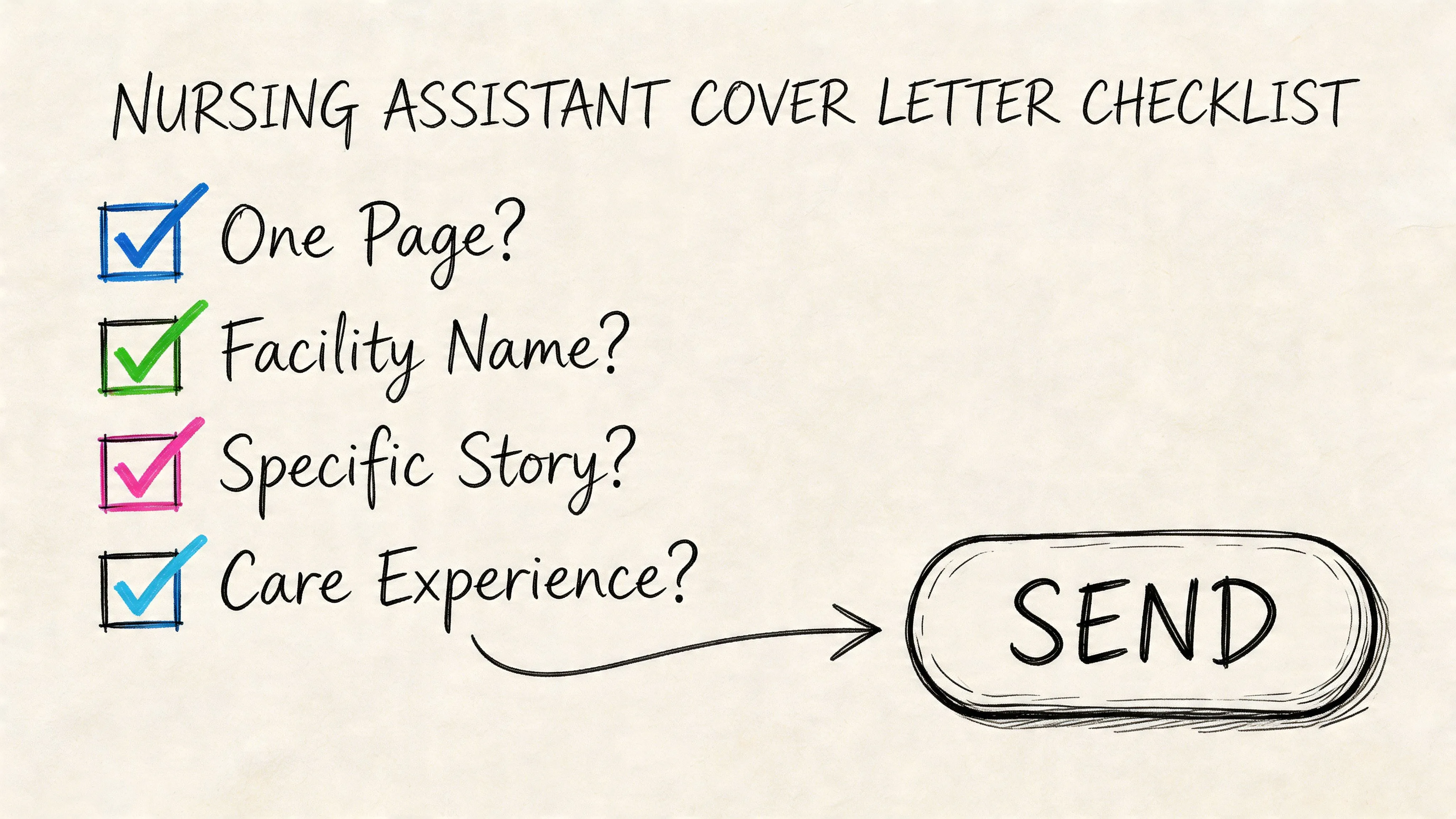
Your final checklist
-
One page only
If it spills over, tighten it. -
Specific employer named
Hospital, clinic, or facility should appear naturally in the opening. -
One real story included
Not a slogan. Not a trait. A moment. -
One clear result or outcome
Use a metric if you have one. If not, describe the effect plainly. -
No recycled resume bullets
The letter should add meaning, not duplicate formatting. -
Proofread for details
The facility name, title, and spelling matter more than fancy phrasing.
Prompts that pull out better stories
If you’re staring at a blank page, use questions instead of trying to “sound professional.”
Ask yourself:
- When did a patient become easier to care for because of how I communicated?
- What routine problem did I notice before someone asked me to notice it?
- When did a family member relax because I explained something clearly?
- What part of the shift got smoother because I stayed organized or stepped in early?
- Which patient interaction best shows my patience, not just my duties?
That’s how better cover letters get written. Not by filling boxes. By remembering what occurred.
If you use outside writing help for brainstorming, keep it for idea generation, not for generic copy. Something lightweight like the lunabloomai AI writing assistant app can help you get unstuck, but the final letter still needs your real examples, your judgment, and your voice.
The right story is usually already in your experience. You just haven’t framed it properly yet.
StoryCV is built for exactly this problem. It acts as a StoryCV digital resume writer, not a template machine, helping you turn real work into clear, credible narratives for resumes and cover letters. If you’ve done strong work but struggle to explain it, start there.