You’ve rewritten the same bullet six times. It still feels wrong. You’ve been told to tailor your resume, use keywords, add a cover letter, optimize LinkedIn, network more. None of that is bad advice. It’s just incomplete.
Most “how to stand out in job applications” advice is obsessed with packaging. Fonts. keywords. sections. hacks. That stuff matters, but only up to the point where your application clears the first gate. After that, the core question is simple: does this read like a person who made good decisions at work, or a person who completed assigned tasks?
That’s where most resumes die.
Recruiters are sorting through volume. Corporate openings attract an average of 250 resumes, and only 4 to 6 candidates move to interviews, according to Recruiter.com’s summary of hiring data. If your application sounds like everyone else’s, it gets treated like everyone else’s.
The boring truth is that table-stakes advice only gets you table-stakes results. A customized resume that still reads like a chore list won’t carry you very far. A polished cover letter that says nothing specific won’t either. What people want is evidence. Judgment. Taste. Prioritization. Signs that you can walk into a messy situation and make it better.
That’s the frame for this piece.
Not “how to game the system.” Not “how to write the perfect resume.” Just how to stop sounding interchangeable. If your application can show what changed because of you, you stop looking like an applicant and start looking like a future teammate.
1. Your Resume Is a Story, Not a List
A resume that reads like a filing cabinet does not stand out. It gets skimmed, categorized, and forgotten.
Hiring managers are not looking for a diary of everything you touched. They want the logic of your career in one pass. What problems do you tend to solve? How has your scope changed? Why does this next role make sense for you? If those answers are buried under generic bullets, your resume forces the reader to assemble the story themselves. They will not do that work.
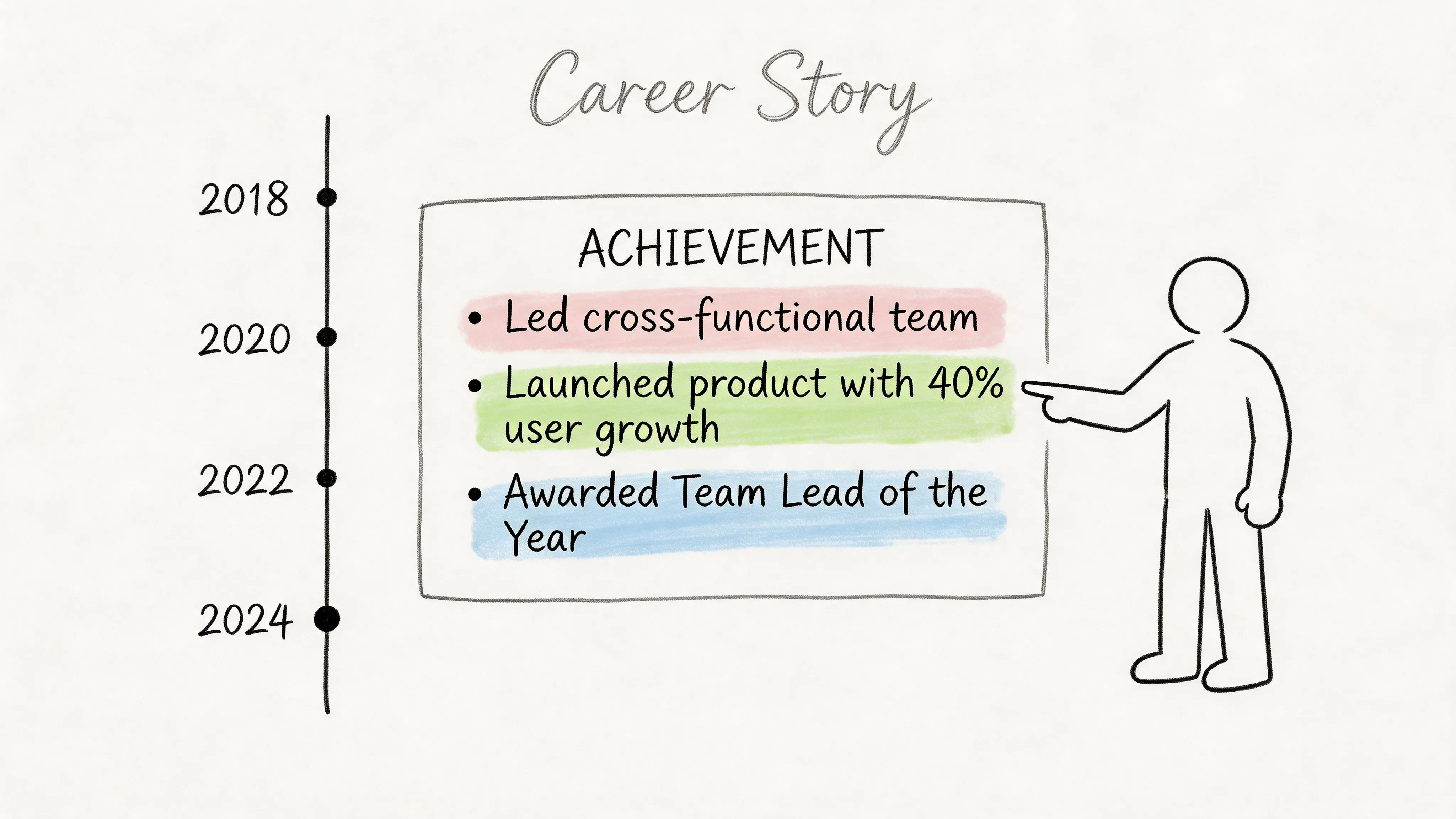
Here’s the shift that matters. Stop treating the resume as a record of duties. Use it as a record of judgment and results over time.
That changes how you write every section.
Pick the thread first
Start with the role you want, then choose the thread in your background that supports it. Every strong resume has one. Without it, the document feels random even when the experience is solid.
A career thread is not just “I got promoted.” It can be sharper decision-making, broader ownership, stronger commercial judgment, deeper technical specialization, or repeated success in ugly situations that needed cleanup. That is the level that makes a candidate memorable.
If you are changing direction, write toward the common problem you solve.
Before:
- “Operations manager with experience in reporting, cross-functional coordination, vendor management, and process improvement.”
After:
- “Operator who fixes broken workflows, aligns teams, and turns messy execution problems into repeatable systems. Now applying that strength at the product level.”
Same background. Better argument.
Write bullets that support the plot
Each role should answer one question: what changed because you were there?
Weak resumes pile up activity:
- “Managed onboarding process”
- “Worked with stakeholders”
- “Responsible for weekly reporting”
Strong resumes show pattern and consequence:
- “Rebuilt onboarding flow after spotting drop-off in week one, cutting support tickets and giving sales a cleaner handoff.”
- “Used weekly reporting to identify stalled accounts, then changed the escalation path with customer success and recovered renewals.”
- “Set operating cadence across product, ops, and support so launch issues were surfaced and fixed before they hit key accounts.”
The difference is not style. It is signal. One version says you were present. The other says you noticed, decided, and improved something.
If you need help turning flat bullets into evidence-based ones, this guide on writing ATS-friendly resume bullet points that still sound human is worth using while you revise.
Clean up the confusing parts instead of hiding them
A non-linear path is fine. An unexplained one is not.
If you took time off, consulted, studied, freelanced, or tried something that did not become a full-time role, give it a label and a purpose. Dead space creates doubt. Context creates coherence.
Use a simple line like this:
2022–2023: Independent consulting and market research for three early-stage startups, focused on go-to-market strategy in Southeast Asia.
That works because it explains the gap and reinforces a theme. The same principle applies to students and early-career applicants. Coursework, internships, side projects, research, and part-time work can look scattered or intentional. The difference is framing.
Bad:
- “Completed coursework in ML, statistics, Python, and financial systems.”
Better:
- “Built a foundation in machine learning for financial applications through coursework, a fintech internship, and a fraud-detection capstone.”
Now the reader sees direction.
Use the summary to name the pattern
The summary is not a slogan. It is a positioning statement. Keep it short and specific.
Examples:
- “Operations leader moving into product after years of fixing broken internal systems and aligning cross-functional execution.”
- “B2B marketer focused on growth, lifecycle, and conversion problems across underperforming funnels.”
- “Commercial generalist with experience in sales, partnerships, and market entry for new regions.”
That opening gives the rest of the resume a frame. Then every bullet underneath has a job: prove the claim.
Specialized fields need the same discipline. If you work in medicine, for example, it helps to see how others craft a standout clinician CV.
A good resume does not say, “Here is what I was assigned.” It says, “Here is the kind of professional I am, how I think, and what improves when I’m in the room.”
2. Treat the ATS Like a Gate, Not a Judge
Stop writing for software like it can choose talent. It can’t. The ATS does one job. It checks whether your resume is readable and obviously relevant enough to pass through.
That means your target is simple. Make the document easy to parse, then spend the rest of your effort making a hiring manager feel confident you can solve the problems in the role.
Build for parsing, then write for judgment
Use a plain layout. Standard section headers. One column if your formatting gets unstable. Keep important text out of headers, footers, tables, and graphics. Save the file as a standard type the employer asks for.
Then pull the key language from the job description and place it where it earns its keep. Not in a stuffed skills dump. Inside bullets that show you used the skill in context.
Bad:
- “SQL, Tableau, stakeholder management, Agile, sprint planning, KPI reporting, collaboration”
Better:
- “Built KPI reporting in SQL and Tableau, then used it in sprint planning with product and operations leads to prioritize weekly fixes.”
Same terms. Better evidence.
Match the posting without sounding manufactured
A good ATS-friendly resume does not repeat keywords like a bot. It mirrors the employer’s terminology in the places a human expects to see proof.
If the posting says “CRM” and your resume says “customer database,” fix it. If they ask for “forecasting” and you only say “planning,” fix that too. Precision matters because filters and recruiters both scan for exact language.
Use this quick filter:
- Job title and target function match the posting
- Core tools and methods appear in your summary, skills, or bullets
- Acronyms and spelled-out versions both appear when relevant, such as “Key Performance Indicator (KPI)”
- Keywords show up inside achievements, not just in a laundry list
If you want help turning those terms into stronger proof statements, this guide on how to write achievements in a resume is the right reference.
Treat keyword use like translation
The mistake is not missing the ATS. The mistake is passing it with a resume that sounds empty.
Here’s the standard I recommend. Every important keyword should answer one of two questions: what problem did you handle, or what result did you produce? If a term cannot do either, it probably belongs in a short skills section, not in the center of the page.
Before:
- “Experienced with Salesforce, pipeline management, reporting, and cross-functional communication.”
After:
- “Used Salesforce pipeline reports to flag stalled mid-market deals and gave sales and finance a weekly view that improved forecast accuracy.”
That second version still helps with matching. It also signals judgment, ownership, and business value.
StoryCV’s guide on ATS resume bullet points gets the formatting right.
The ATS should read your resume without friction. The human should see a professional who knows what matters.
3. Write About Decisions, Not Descriptions
This is the shift that changes everything.
A bullet point is not a description of your job. It’s a record of your judgment. This insight is often missed, resulting in lines that any competent stranger with the same title could copy.
“Managed cross-functional teams.”
“Improved user experience.”
“Led strategic initiatives.”
None of that tells me anything.

The trade-off matters more than the task
Look at this rewrite.
Before:
“Optimized checkout flow to improve user experience and reduce cart abandonment.”
After:
“Pushed through a checkout redesign that three previous PMs had deprioritized. By shipping it in 6 weeks and focusing on ‘friction-first’ fixes, we cut cart abandonment by 18%.”
The first bullet describes work. The second shows prioritization, persistence, speed, and outcome. It sounds like a person making calls, not a person filling a seat.
That’s the standard.
Most resumes say what someone did. The good ones say why it mattered and what they chose to do when the easy path was available.
Use recovery metrics when growth looks too easy
A lot of candidates only show wins that were already moving in the right direction. That’s fine, but it’s weak compared with a turnaround.
This kind of bullet hits harder:
“Inherited a legacy product trending -15% YoY and reversed it to +10% growth within two quarters by sunsetting three underperforming features and re-allocating marketing spend to high-intent SEO channels.”
That works because it shows pressure, triage, and trade-offs. Anybody can claim they helped something grow. Recovery tells me you can walk into trouble without flinching.
If your bullets are too flat, ask one question: what decision did I make here?
- What trade-off did you choose? Speed over perfection, margin over volume, retention over acquisition.
- What resistance did you face? A stalled initiative, a skeptical stakeholder, a broken process.
- What changed because of you? Cost, quality, time, growth, clarity, risk.
If you need help turning raw work into stronger proof, StoryCV’s piece on how to write achievements in a resume is useful.
Your resume should not read like a job description with dates attached.
It should read like a trail of good decisions.
4. The Unignorable First Impression
The average outreach message is dead on arrival. It opens with a formal greeting, announces interest in the role, repeats a few lines from the job description, and politely asks for consideration. That’s not an opening. That’s a ritual.
If you’re going to send a cover letter, outreach email, or short note with your application, use it to prove that you already think like someone on the team.
Lead with an observation, not an introduction
This line works because it has teeth:
“I’ve been a power user of [Product] for two years, but I’m writing to you because of the one thing I hate about it: the onboarding friction for new teams. Here is the ‘First 90 Days’ plan I built to solve it.”
That doesn’t sound like an applicant asking for permission. It sounds like someone already engaged with the work.
You can do the same thing without pretending to be a product power user. If the company’s VP posts about data sprawl, mention the problem. If the CEO talks publicly about expansion, reference the operational complexity that follows. If the team just launched a feature, point out one thing that seems smart and one thing you’d test next.
Keep it short enough to be read
Don’t write a memoir. Send a sharp note.
- Start with a real point: Name a product issue, team challenge, market move, or customer problem.
- Connect it to your work: Show where you’ve handled something adjacent.
- End with a low-friction ask: “Is this a priority for the team right now?” is better than “Could we schedule 30 minutes?”
A lot of jobs are found outside formal applications. BLS data shows job seekers averaged 13.67 applications for 1.93 interviews, and 37% of those interviewed received offers, according to the BLS job search analysis. The point isn’t to worship any one channel. It’s to create more interview-worthy moments.
A weak note says you’re interested.
A strong note shows where your brain goes when you’re interested.
5. Translate Your Past for Their Future
Career changers usually don’t have an experience problem. They have a translation problem.
You know your old world too well. So you describe it in its native language and expect the hiring manager in a different world to connect the dots. They usually won’t. They’re busy. They’re skimming. They’re deciding fast.
The job is not to defend your past
It’s to make your past useful.
A retail manager applying to operations should not lead with “managed store operations.” That phrase is so broad it means almost nothing. Say what the work proves instead.
Try this:
“Owned P&L for a retail unit, improved inventory accuracy, reduced waste, and scaled team operations during peak demand.”
That sounds much closer to the language of operations.
A teacher moving into L&D or corporate enablement shouldn’t say “taught students.” Better:
“Designed and delivered curriculum, measured learning outcomes, and adapted communication across groups with different needs.”
Same experience. Better translation.
Build your own dictionary
Take ten phrases from the job description and rewrite your past through them. This is one of the cleanest ways to learn how to stand out in job applications when your background doesn’t look obvious on paper.
-
Old label: classroom management
New framing: stakeholder communication and group facilitation -
Old label: store scheduling
New framing: workforce planning and resource allocation -
Old label: military logistics
New framing: operational coordination under constraints
If you want a practical process for this, use StoryCV’s guide on tailoring your resume to a job description.
For candidates from non-traditional backgrounds, this matters even more. Katherine McCord put it plainly in TestGorilla’s piece on accessing talent in underserved communities: “Resumes generate significant bias, yet we rely on them for hiring, so marginalized communities are perpetually at a disadvantage.”
That’s why transferable skill framing isn’t cosmetic. It’s how you stop getting screened out for not having the “right” label.
Your job is not to make recruiters admire your unusual path.
Your job is to make them understand why it fits.
6. Show, Don’t Just Tell, With Proof
A resume is still a claim. Even a very good one.
If you say you’re strategic, analytical, creative, technical, operationally strong, user-focused, whatever, the reader still has to trust you. The fastest way to remove doubt is to show evidence.
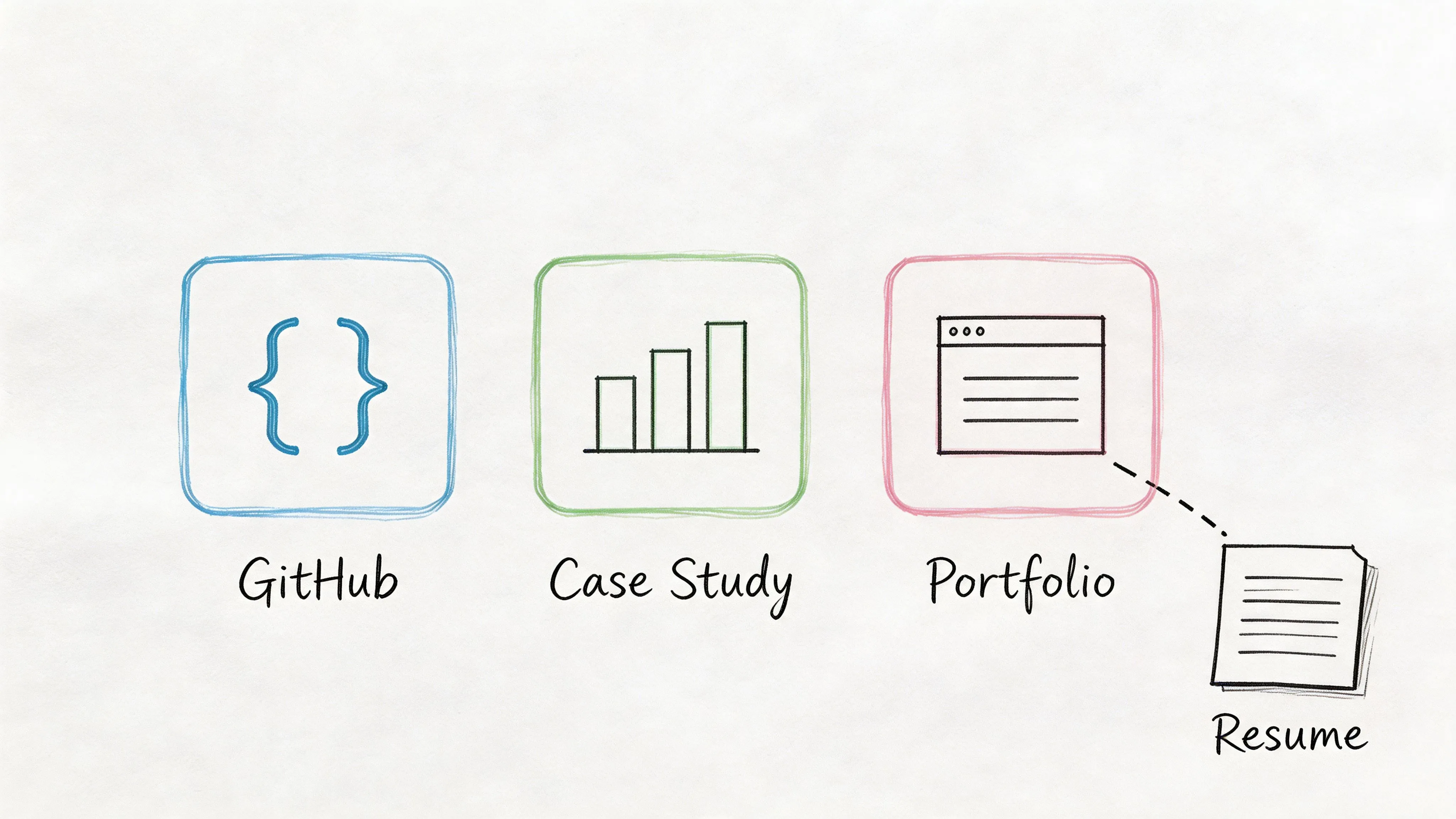
A data analyst with a public Tableau dashboard gives me something to inspect. A software engineer with a clean GitHub profile gives me code to read. An operations candidate with a short case study gives me a way to see how they think through process, trade-offs, and outcomes.
Proof builds trust before the interview
You don’t need a huge portfolio. You need a curated one.
- For analysts: Link one dashboard and explain what decision it supports.
- For operators: Share a one-page process improvement write-up with the problem, action, and outcome.
- For product or marketing people: Show a launch memo, teardown, growth experiment, or strategy doc if confidentiality allows.
- For confidential work: Create a sanitized version and offer the full case privately.
If your work can’t be shared directly, share how you thought. That still counts as proof.
Add context, not just links
“Portfolio” by itself is lazy. Tell the reader what they’ll find.
Good:
- “Case study. Reduced onboarding friction by redesigning the first-run flow.”
- “GitHub. Three pinned projects focused on API performance and internal tooling.”
- “Dashboard sample. Executive reporting view used for weekly planning.”
The same principle applies to your public profile. Colorado State career guidance on market-trend-driven job search notes that optimized professional profiles drive recruiter outreach in a big way, especially when they clearly show accomplishments and active engagement.
You don’t need to flood the internet with content. You need enough visible proof that a hiring manager stops guessing.
Claims get skimmed.
Evidence gets remembered.
7. Speak Their Language, Not Yours
Generic tailoring is weak. Real tailoring changes the frame of your experience so it matches how the company defines value.
Two employers can want the same underlying skill and care about completely different outcomes. A startup may need someone who can make fast calls with incomplete information. A large company may need someone who can make good calls inside process, compliance, and cross-functional review. If your resume describes the work in your terms instead of theirs, you force the reader to translate. They will not do that for long.
The same achievement can signal different strengths
Here is a simple example.
Version one:
“Reduced API latency to improve system performance.”
Version two:
“Reduced API latency on a high-volume workflow, which cut customer-facing delays during peak traffic.”
Both are true. They do different jobs.
The first version fits a platform or infrastructure audience because it stays close to the technical problem. The second fits a product, operations, or business-facing audience because it shows why the work mattered. This is the shift that separates task language from judgment language. You are not only saying what you touched. You are showing what you optimized for.
Use this filter when you rewrite bullets: what did this company hire for besides the literal task?
Match their operating style
Job descriptions help, but they are only the surface. Read the product pages. Read leadership interviews. Read the careers page copy. Read how the company talks about speed, quality, customers, risk, and decision-making.
Then reflect that language back with substance.
- For startups: Stress ownership, pace, messy constraints, and shipping useful work fast.
- For larger companies: Stress coordination, scale, repeatability, controls, and clear handoffs.
- For mission-driven organizations: Connect your work to the users, community, or problem the organization exists to serve.
Do not copy their phrasing line by line. Translate your experience into their priorities.
A simple rewrite shows the difference:
Before:
“Managed cross-functional projects across multiple teams.”
After for a startup:
“Drove launches across product, design, and engineering without waiting for perfect clarity.”
After for a larger firm:
“Coordinated product, design, and engineering teams to deliver launches on schedule with clear dependencies and stakeholder updates.”
Same core work. Different signal.

A quick micro-template
Use this sentence pattern:
I solved [type of problem] by making [type of decision] under [constraint], which led to [result they care about].
Examples:
- “Solved onboarding drop-off by simplifying the first-run flow under a tight engineering budget, which improved activation.”
- “Solved reporting delays by standardizing weekly metrics across teams, which gave leadership faster planning visibility.”
- “Solved support backlog by redesigning intake rules under strict compliance requirements, which improved response times without adding risk.”
Your resume should sound like it came from someone who already understands how this team works, what it protects, and what it values.
That is how you stop reading like an applicant and start reading like a good bet.
8. Stop Spraying and Start Aiming
High application counts usually signal a weak strategy, not strong effort.
Candidates panic, open twenty tabs, and send the same resume everywhere. Then they call it a numbers game. It is not. It is a targeting problem.
As noted earlier, cold online applications convert badly. If your approach depends on volume alone, you are betting on luck instead of improving your odds.
Build a small target list and work it properly
Pick 10 to 20 roles that fit your level, strengths, and working style. Then build each application like a case.
Start with a master resume that holds your best proof. For each role, pull only the examples that match the company’s real priorities. Then add one signal that you did your homework. A short note to a hiring manager. A referral request from an alum. A message to a team member with a specific question about the work.
That extra step matters because a lot of hiring still runs through relationships, introductions, and direct outreach, not just job boards. Scale Jobs’ piece on the hidden job market makes the case clearly. Passive applying leaves you in the biggest pile. Targeted outreach gives people a reason to notice you.
Diagnose the actual failure point
If replies are thin, stop sending more applications and check the signal.
Use this quick filter:
- Bad targeting: You are applying to jobs above your level, outside your function, or in environments that value a different type of experience.
- Weak positioning: Your resume shows tasks completed, not judgment used or results created.
- Generic proof: Your bullets are plausible for anyone. Nothing shows why this team should trust you with their problems.
That diagnosis gives you something useful to fix.
Here’s the difference in practice:
Spray approach:
Apply to 40 product roles with the same resume that says, “Managed roadmap, partnered cross-functionally, supported launches.”
Aimed approach:
Apply to 12 product roles. For a startup role, lead with, “Set product direction with incomplete data, cut low-value requests, and shipped changes that improved activation.” For an enterprise role, lead with, “Aligned roadmap decisions across stakeholders, clarified tradeoffs, and delivered launches with predictable communication and risk control.”
Same candidate. Different application. Much stronger signal.
Track interview rate, not application count. If ten targeted applications produce three real conversations, that beats fifty generic submissions that disappear into the void.
Precision wins because it proves judgment. And judgment is what companies hire.
Stand Out in Job Applications, 8-Point Comparison
| Frame | Implementation Complexity 🔄 | Resource Requirements ⚡ | Expected Outcomes 📊 | Ideal Use Cases 💡 | Key Advantages ⭐ |
|---|---|---|---|---|---|
| Your Resume is a Story, Not a List | 🔄 Moderate, needs reflective narrative construction | ⚡ Moderate time for drafting and editing | 📊 More memorable applications; higher human engagement | 💡 Career progression storytelling, gaps, pivots, interviews | ⭐ Differentiates candidates with a cohesive career arc |
| Treat the ATS Like a Gate, Not a Judge | 🔄 Low, apply formatting and keyword alignment | ⚡ Low, quick keyword and layout tweaks | 📊 Ensures review by humans; avoids automatic rejection | 💡 High-volume roles, initial screenings, entry-level hires | ⭐ Increases likelihood of passing automated filters |
| Write About Decisions, Not Descriptions | 🔄 Moderate–High, requires extracting decisions and outcomes | ⚡ Moderate, data collection and metric framing | 📊 Demonstrates ROI, judgment, and leadership impact | 💡 Product/PM, leadership, roles valuing strategic choices | ⭐ Shows concrete decision-making and measurable impact |
| The Unignorable First Impression | 🔄 High, personalized research and crafted outreach | ⚡ Moderate per message; high effort at scale | 📊 Significantly higher response and engagement rates | 💡 Cold outreach, cover letters, LinkedIn messages | ⭐ Positions you as a peer and opens direct conversations |
| Translate Your Past for Their Future | 🔄 Moderate, map past skills to target industry language | ⚡ Moderate, research and rewrite for relevance | 📊 Increases credibility for career changers and pivoters | 💡 Career changers, industry transitions, military-to-civilian | ⭐ Makes non-traditional backgrounds immediately relevant |
| Show, Don't Just Tell, With Proof | 🔄 Moderate, curate portfolios and case studies | ⚡ Moderate–High, build and maintain online artifacts | 📊 Provides instant credibility and reduces hiring risk | 💡 Designers, engineers, analysts, product roles | ⭐ Tangible evidence of work that validates claims |
| Speak Their Language, Not Yours | 🔄 Moderate, adapt tone and terminology per target | ⚡ Moderate, company/industry research per application | 📊 Raises perceived fit and relevance to reviewers | 💡 Sector-specific roles; startups vs. large enterprises | ⭐ Signals cultural and domain alignment quickly |
| Stop Spraying and Start Aiming | 🔄 High, deep targeting and tailored applications | ⚡ High per-application time; lower overall volume | 📊 Higher interview conversion and better job fit | 💡 Senior roles, competitive positions, selective searches | ⭐ Quality-over-quantity yields better-fit outcomes |
Your Application Isn't a Form. It's an Argument.
Most applications fail because they read like compliance.
The candidate followed instructions. They filled in the fields. They matched some keywords. They attached a resume that describes what they were responsible for. Nothing is technically wrong with it. Nothing is alive either.
That’s the trap.
Filling out boxes is for machines. Hiring still happens between humans. A recruiter or hiring manager is trying to answer a basic question fast: why you, over the other qualified people? If your application doesn’t make that case clearly, they move on. They have to.
The better frame is simpler and harder. Every line in your application should support an argument. Not a dramatic argument. Not a self-important one. Just a clear case that says: here’s the kind of problem I solve, here’s how I think, here’s what changed because of me, and here’s why that matters in your world.
That’s why generic advice feels so hollow. It focuses on form before substance. It tells you to customize, but not what to say once you’ve customized. It tells you to optimize for ATS, but not what makes a human stop scrolling. It tells you to sound professional, which usually means sanding off anything distinctive.
You do not need to sound more professional.
You need to sound more specific.
A good application connects the dots that a busy stranger won’t connect for you. It explains the pivot. It frames the gap. It turns a responsibility into a decision. It swaps “supported” for “chose,” “managed” for “changed,” “worked on” for “fixed,” “helped” for “led.”
It also respects reality. Some of this is a gatekeeping game. You still need the right keywords. You still need a format that software can read. You still need a profile that doesn’t look abandoned. But those are the minimum standards, not the winning move. The winning move is clarity with teeth.
If you’ve done strong work and struggle to articulate it, that’s not a talent problem. It’s a translation problem. That’s also why a Digital Resume Writer can help more than a blank template can. StoryCV, for example, uses a guided interview to pull out context, trade-offs, and outcomes so the final draft reads like a person with judgment, not a machine assembling sections.
That’s the actual goal.
Not to look polished. Not to look optimized. To look useful.
Your application isn’t your whole career. It’s the argument you make about it in public. Make it like someone who knows what they’re worth.
If your resume still sounds like a task list, StoryCV helps turn your experience into sharper, story-driven bullets through a guided writing process. It’s built for people who’ve done meaningful work but need help saying it clearly.