The popular advice is wrong: an HVAC technician resume doesn't win because it contains more keywords. It wins because a service manager can see the diagnostic path, compliance scope, and result behind the work.
“Serviced HVAC systems” gets tossed. So does “hard worker” and “team player.” A manager needs to know whether you can isolate a fault, handle refrigerant correctly, explain the repair to a customer, document the job, and leave the truck ready for the next call.
For U.S. roles, the occupation has a substantial replacement and growth pipeline. The Bureau of Labor Statistics projection cited by The HVAC Brief indicates approximately 40,100 annual openings between 2024 and 2034, with employment expected to grow 8% during that period. That makes your resume's job simple: prove field competence, not just exposure.
Why Task Lists Fail on Trade Resumes
Most trade resumes are copied job descriptions wearing a candidate's name. They say “installed ductwork,” “troubleshot thermostats,” and “performed preventive maintenance.” Those phrases may be true, but they don't tell a hiring manager what happened when the obvious fix failed.
A service manager reading an HVAC technician resume is looking for diagnostic logic, independence, and reliability. Can you test before replacing? Can you follow a wiring diagram? Can you identify a refrigerant leak instead of guessing at the charge? Can you finish the call without creating a callback?
The hiring test: Your bullet should show what changed because you did the work.
Compare these two versions:
- Weak: Serviced residential and commercial HVAC systems.
- Stronger: Diagnosed low airflow and intermittent cooling faults across split systems and rooftop units, testing electrical continuity, controls, and refrigerant circuits before completing targeted repairs.
The stronger version doesn't need an inflated claim. It names the systems, the failure pattern, and the diagnostic sequence. That gives the manager something to assess.
What independence looks like on paper
Independent field work leaves evidence. You might have handled a route, managed emergency calls, completed commissioning, documented warranty work, or explained repair choices to property managers. Put that evidence in the bullet instead of hiding it under a responsibility.
Use this structure:
- Context: What equipment, customer type, or workload did you handle?
- Action: What did you test, repair, install, or commission?
- Outcome: What improved, stayed reliable, or avoided repeat work?
A technician who writes “repaired AC units” describes contact with equipment. A technician who writes “isolated failed capacitors and control faults on residential split systems, restoring cooling while documenting test results and parts used” demonstrates a method.
This principle applies across technical careers. If you're comparing how skilled professionals turn duties into evidence, these environmental scientist resume tips offer a useful parallel. The field changes, but the editorial standard doesn't: name the problem, the work, and the result.
For more help separating duties from evidence, use this guide to write stronger resume bullet points. Then remove every bullet that still sounds like a job posting.
Turning Daily Service Calls Into Measurable Impact
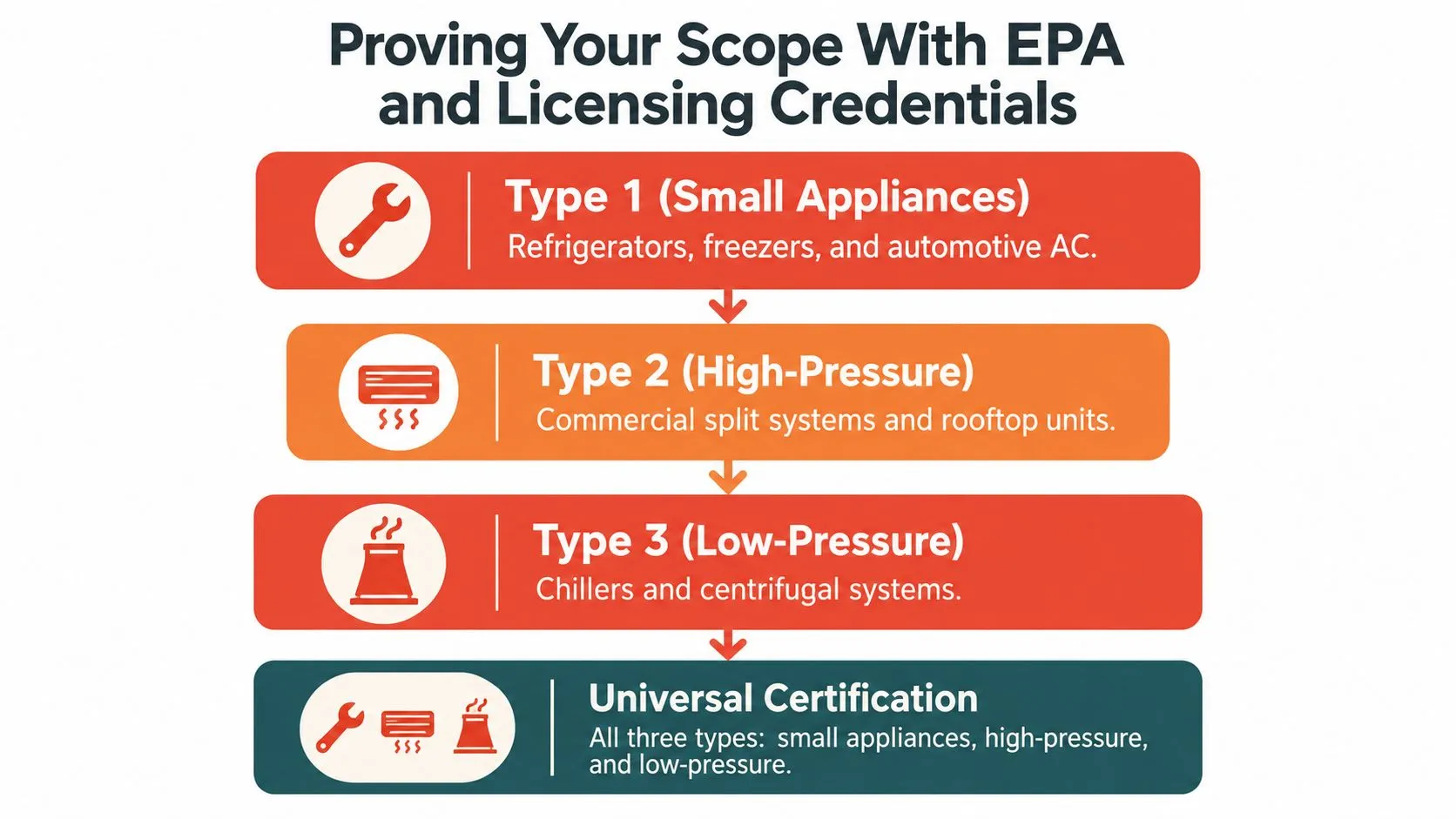
Technicians often say they don't have metrics. They usually do. The numbers are buried in dispatch records, work orders, maintenance agreements, callback history, warranty claims, and route notes.
Don't invent precision. Recover it.
Mine the route for evidence
Start with the operating details you remember:
- Work-order volume: How many calls did you usually complete during a normal week or shift?
- Equipment scope: Which systems appeared repeatedly, such as RTUs, split systems, chillers, boilers, or refrigeration equipment?
- First-time resolution: How often did the customer need another visit for the same fault?
- Response pattern: Did you handle emergency work, after-hours calls, or a defined territory?
- Maintenance workload: How many sites, units, contracts, or facilities were on your route?
- Operational result: Did your work restore cooling, reduce downtime, prevent a leak, complete a commissioning, or protect a service agreement?
A number belongs in the resume only if you can defend it. “Reduced callbacks” is useful if you know the pattern or have records. “Reduced callbacks by 40%” is not acceptable if you guessed.
The verified industry guidance identifies practical evidence such as installations completed, preventive-maintenance completion rates, callbacks, diagnostic turnaround time, customer volume, contract volume, work-order volume, territory size, warranty claims, and on-call response time. Use the measure that naturally belongs to your work, not a decorative metric.
Turn routine work into a result
The basic transformation is:
Responsibility → context → action → outcome
Weak:
Repaired commercial rooftop units.
Stronger, when supported by your records:
Diagnosed and repaired commercial rooftop units across a multi-site service route, testing electrical circuits, controls, airflow, and refrigerant conditions before completing repairs and documenting equipment status.
If you know your actual volume and first-time-fix rate, add them. If you don't, leave them out and strengthen the technical evidence instead. A credible qualitative result beats a fabricated percentage.
A bullet can also show reliability without claiming a performance lift:
Completed preventive maintenance on commercial HVAC equipment, inspecting electrical connections, filters, coils, controls, and refrigerant circuits while recording findings for facility managers.
That sentence proves a repeatable process. It tells the reader you don't just react to breakdowns.
When you have real figures, the metrics in a resume guide can help you decide which evidence earns space. Prioritize numbers that show workload, quality, speed, or business responsibility.
Proving Your Scope With EPA and Licensing Credentials
“EPA certified” is too vague for a serious HVAC technician resume. A manager needs to know which equipment your credential covers and whether your hands-on experience matches that scope.
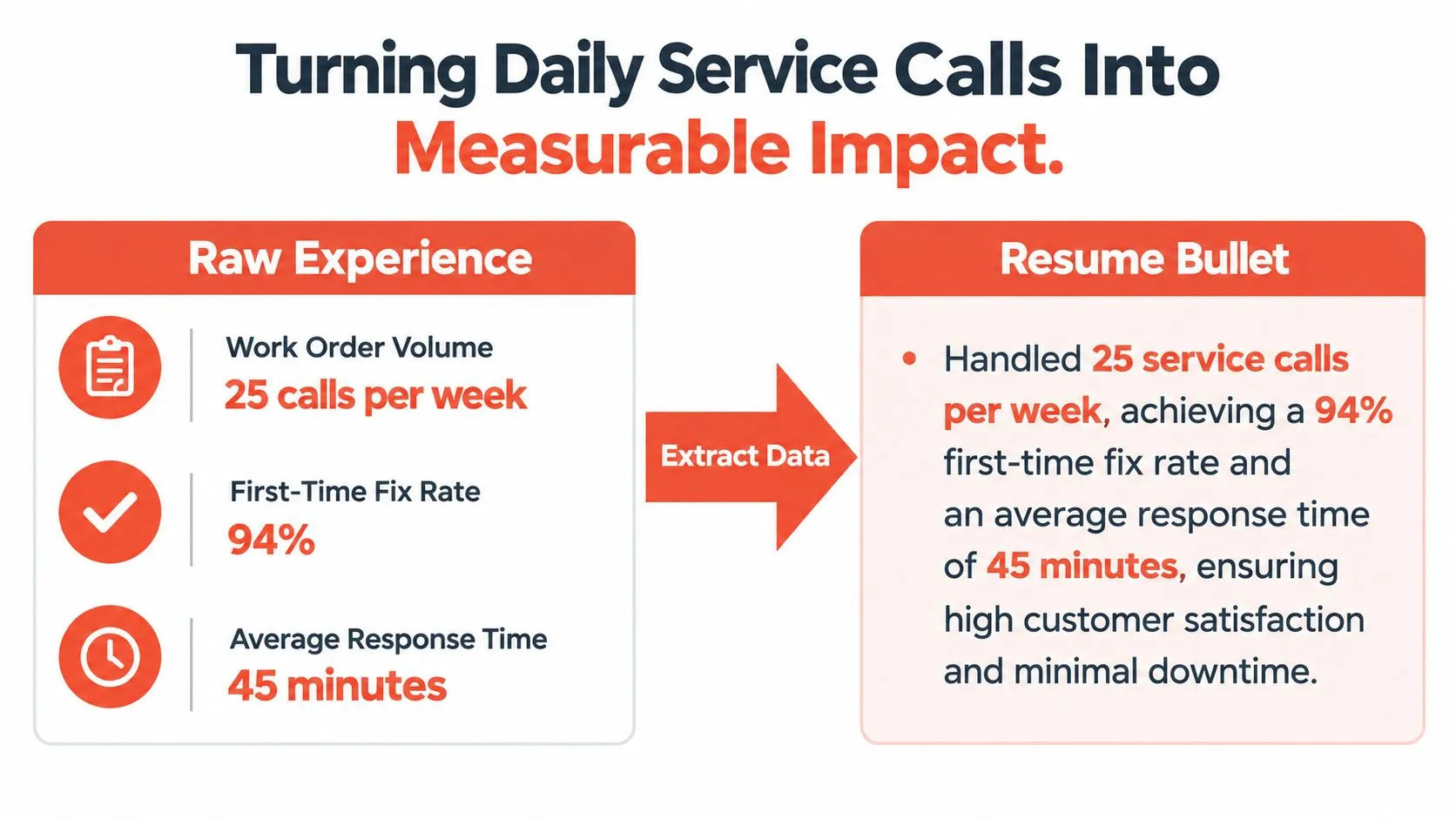
Under EPA Section 608 certification rules, technicians who maintain, service, repair, or dispose of equipment that could release ozone-depleting refrigerants must pass an EPA-approved examination and obtain certification. The final rule was issued on May 14, 1993, and refrigerant-recovery requirements took effect on July 13, 1993. Since January 1, 2018, the requirement has also applied to appliances containing most substitute refrigerants, including HFCs.
The four categories are distinct:
- Type I: Small appliances.
- Type II: High-pressure and very-high-pressure equipment.
- Type III: Low-pressure equipment.
- Universal: All equipment types covered by the program.
Section 608 credentials don't expire, but that doesn't make every other license permanent. State and local licenses belong in a separate line, with the issuing jurisdiction and current status stated accurately.
Build a compliance-first qualifications block
Use this order:
- Equipment scope: Small appliances, high-pressure systems, low-pressure systems, or all covered equipment.
- Exact credential: For example, EPA Section 608 Universal Certified.
- Separate licenses: State, local, or contractor licensing.
- Hands-on methods: Recovery, leak detection, evacuation, charging, brazing, pressure testing, and commissioning.
- Work environment: Residential, commercial, industrial, or supermarket refrigeration.
A strong entry might read:
EPA Section 608 Universal Certified, experienced with refrigerant recovery, leak detection, nitrogen pressure testing, evacuation, charging, and brazing across residential split systems and commercial rooftop equipment.
Don't claim Universal certification unless you passed all relevant categories. Don't present an apprenticeship as equivalent to independent certification. EPA permits apprentices to work under close, continual supervision, so describe supervised work accurately.
The same precision applies to your experience bullets. “Handled refrigerants” says little. “Recovered and weighed refrigerant, pressure-tested with nitrogen, evacuated to manufacturer specification, and documented system charge” shows a controlled process.
Credentials get you considered. Scope and evidence help a manager decide whether you're ready for the work.
Use a certification-focused resume approach when your credentials are a meaningful part of the job. Keep licenses, certifications, and manufacturer training distinct. Blurring them makes the resume look careless.
Detailing Diagnostic and Installation Mechanics
A skills section filled with “communication,” “hard work,” and “problem solving” wastes space. Those qualities matter, but your work history should prove them through specific actions.
O*NET's HVAC occupational profile identifies core requirements including testing electrical circuits for continuity, repairing defective wiring, connecting controls according to diagrams, and testing pipes and connections for leaks. It also includes installing or adjusting thermostats and timers, brazing or soldering defective joints, mounting compressors and condensers, installing ducts and dampers, and using blueprints or manufacturer specifications.
Use those mechanics to build a technical skills block that a service manager can verify.
Translating vague skills into field-ready competencies
| Weak / Generic Claim | Strong / Field-Ready Competency |
|---|---|
| HVAC troubleshooting | Test electrical circuits for continuity, isolate control faults, and verify system operation after repair |
| Refrigerant handling | Recover, weigh, evacuate, leak-test, and charge refrigerant in line with equipment requirements |
| Electrical skills | Read wiring diagrams, test components with a multimeter, and repair or replace defective wiring |
| Installation | Connect equipment to power, fuel, water, or refrigerant sources and commission against manufacturer specifications |
| Preventive maintenance | Inspect coils, filters, blowers, dampers, controls, connections, and refrigerant circuits, then document findings |
| Ductwork | Install or adjust ducts, dampers, and airflow components to support system performance |
| Brazing | Prepare, braze, pressure-test, and verify joints before returning the system to service |
Don't list tools just to create keyword density. Name a manifold gauge set, multimeter, recovery machine, vacuum pump, nitrogen regulator, or micron gauge when you used it for a meaningful task.
A useful bullet separates the work stages:
Diagnosed intermittent rooftop-unit shutdowns by testing continuity, tracing controls against wiring diagrams, checking pressure conditions, replacing the failed component, and commissioning the unit to manufacturer specifications.
That bullet proves more than “experienced with RTUs.” It shows sequence, judgment, and a finished result.
Embedding Customer and Business Impact Into Technical Bullets
HVAC work happens in someone else's building, home, store, or facility. The customer may be uncomfortable, the manager may be under pressure, and the company still needs accurate documentation and profitable decisions.
Don't isolate communication in a generic skills list. Put it inside the technical bullet where it belongs.
A trustworthy field technician explains the fault, the options, and the next step without hiding behind jargon.
Consider the difference:
- Weak: Provided excellent customer service and upsold maintenance plans.
- Stronger: Explained failed-control and airflow findings to homeowners in clear language, documented repair options, and recommended preventive maintenance when the equipment condition supported it.
The stronger version avoids an unsupported sales percentage. It still shows customer judgment and commercial awareness.
What business impact can look like
Your evidence may include:
- Customer confidence: Explained diagnostic findings, repair choices, and safety considerations clearly.
- Revenue protection: Identified warranty coverage, documented parts accurately, and prevented avoidable return visits.
- Contract service: Completed scheduled maintenance across customer sites and recorded exceptions for facility teams.
- Operational continuity: Restored heating or cooling in occupied homes, retail spaces, offices, or production areas.
- Documentation quality: Closed work orders with test readings, parts used, refrigerant actions, and recommended follow-up.
A service manager wants a technician who can work alone without creating confusion for dispatch or the customer. Show that you can make a technical decision, communicate it, and leave a clean record.
The best bullets connect the field action to the business consequence:
Managed emergency residential service calls from diagnosis through customer approval, explaining repair options, completing compliant refrigerant work, and documenting equipment condition for future service decisions.
That is stronger than “handled emergency calls” because it shows ownership from arrival to closeout.
Articulating Your Real Field Experience
Formatting isn't the hard part. Remembering the details is.
Most experienced technicians know the work in their hands and tools, not in polished sentences. They remember the rooftop that kept tripping, the condenser that looked fine until the electrical tests, the customer who needed options explained plainly, and the route that had to be reorganized before the next emergency call. Those details are valuable, but they don't automatically become resume bullets.
Start with the calls that required judgment. Ask yourself:
- What was the symptom when you arrived?
- What did you test first, and why?
- Which likely causes did you rule out?
- What equipment, controls, tools, and specifications did you use?
- Did you work independently or under supervision?
- What did you document for the customer, dispatcher, warranty team, or facility manager?
- What changed after the repair or installation?
- Which details can you support with work orders or memory?
The answers expose the difference between what you did and what you changed.
From memory to a credible bullet
Raw experience:
I had a commercial call where a rooftop unit wasn't cooling. I checked the electrical side, found the issue, repaired it, tested the system, and explained it to the manager.
Resume-ready version:
Diagnosed a commercial rooftop unit with no cooling by testing electrical circuits and controls, completed the targeted repair, verified operation, and explained the findings and follow-up needs to the facility manager.
That version is clear without pretending you remember a performance percentage you can't verify.
StoryCV fits this remembering problem because it uses questions about the work itself and turns the answers into resume-ready writing. It isn't a template library or a formatting tool. It guides you through the context, diagnostic decisions, equipment, and outcome so the final bullet reflects your actual experience.
Use the same standard whether you write manually, talk through your experience with a colleague, or use a guided interview. The finished HVAC technician resume should make one thing obvious: you know how to take ownership of a field problem and bring it to a defensible close.
StoryCV helps you talk through the calls, systems, diagnostic choices, and results you remember, then turns those answers into clear resume bullets. Start with the role where your field judgment is strongest and use the resulting language to show exactly what you can handle alone.