

Most machine operator resumes lead with the wrong proof. “Machine Operator” is a job title, not evidence that you can produce a part, hold a tolerance, or protect a production schedule.
A plant manager wants to know three things quickly: what equipment you can run, what quality you can hold, and what changed because you were on the line. Your machine operator resume should read less like a list of duties and more like an equipment manifest backed by production results.
The U.S. Bureau of Labor Statistics projects about 841,500 material moving machine operator jobs in 2025, with employment projected to grow 1% from 2025 to 2035 and roughly 70,700 openings per year over that decade (BLS occupational data). Employers keep hiring, but replacement-heavy hiring makes reliable proof more valuable than polished filler.
The Machine Make and Model Matters Most
“Machine operator” is a job title, not proof of what you can produce. A plant manager needs the machine, control system, material, tolerance, and level of responsibility before judging your value.
Compare these lines:
- Machine Operator, responsible for operating production equipment.
- Haas VF-2, three-axis CNC operator, producing parts to ±0.001 tolerance.
The second line identifies the make, model, machine type, and tolerance. It also signals familiarity with inspection requirements and production discipline. State clearly whether you ran the machine, performed setups, or handled both. Running a preset cycle and setting offsets, tooling, and workholding are different jobs, and employers pay accordingly.
Build an equipment manifest
Place exact equipment near the top of your resume. List machines you operated or set up, then add the controls, materials, processes, and inspection tools tied to that work.
Include:
- Equipment: Haas VF-2, CNC lathes, injection molding presses, stamping presses, conveyors, forklifts.
- Controls: Fanuc, Siemens, Allen-Bradley, PLC interfaces, CNC controls.
- Quality work: Blueprint reading, calipers, micrometers, gauges, in-process inspection.
- Operating range: Part types, materials, tolerances, production schedules, and changeover work.
Name setup tasks when you performed them, such as loading programs, setting offsets, changing tooling, adjusting parameters, or completing first-piece checks. Do not claim equipment you only observed. A plant manager can test that distinction within minutes.
Practical rule: Lead with the machine that matches your target role. Follow it with the setup scope, quality requirements, and production conditions you handled.
Specificity also separates operating environments. The BLS lists 29,440 computer-controlled machine tool operators in metal and plastic and 56,060 cutting, punching, and press machine setters, operators, and tenders in metal and plastic manufacturing in 2025 (BLS production occupation data). Those roles involve different equipment and expectations. “Machine operator” alone makes the employer guess which work you know.
Turning Floor Duties into Production Metrics
“Inspected parts for quality” is a duty. It doesn't show whether your work protected output or caught defects early.
The two numbers operators often know but rarely write down are scrap rate and first-pass yield. Add parts per shift, units per hour, downtime, changeover time, or machine uptime when you have reliable records. Resume guidance for machine operators also recommends naming the exact process and pairing equipment with measurable outcomes such as scrap reduction, uptime, downtime, and first-pass quality (machine operator resume metrics guidance).
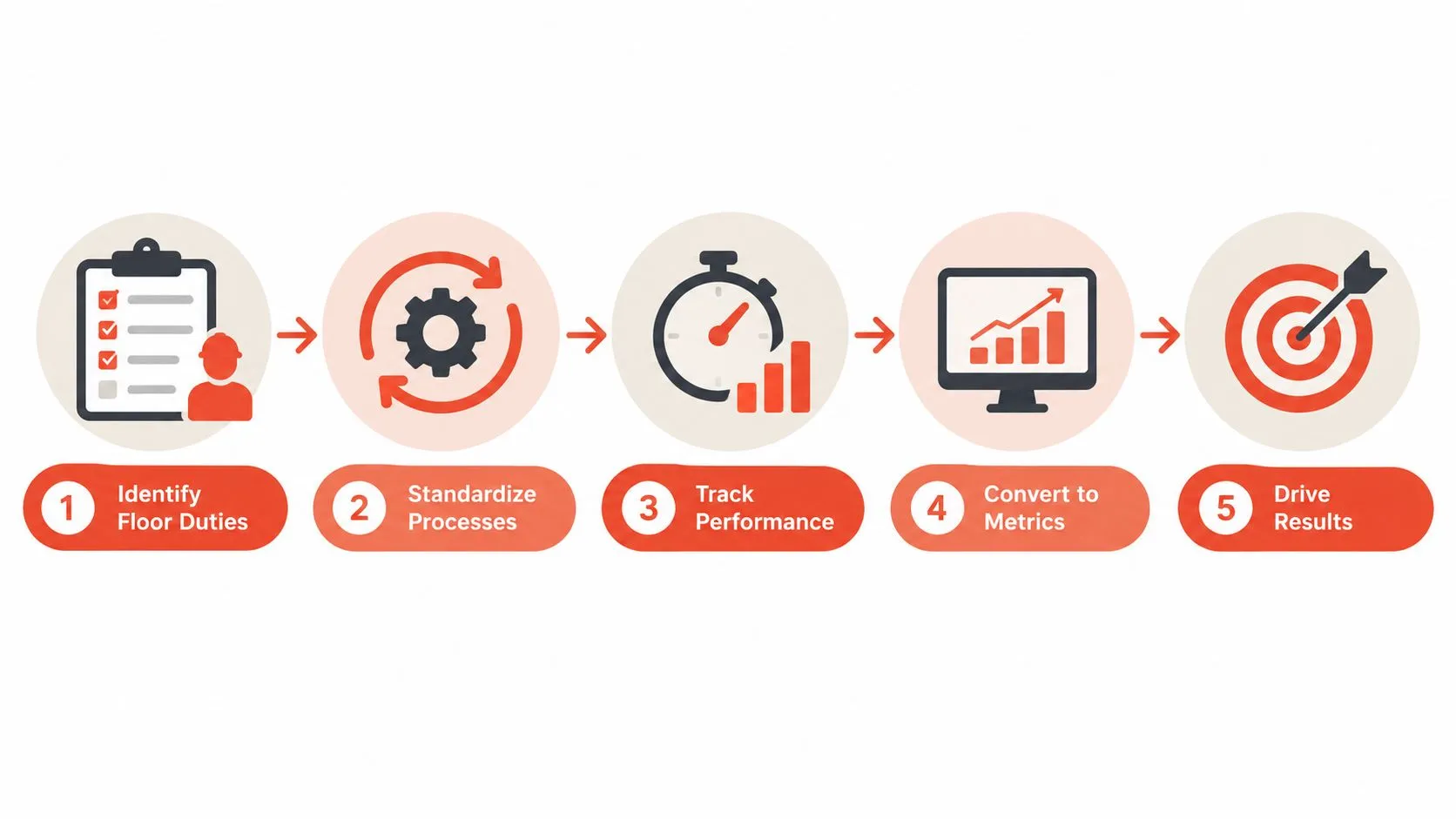
Use the responsibility-to-result formula
Write each strong bullet in four parts:
- Responsibility: What were you accountable for?
- Context: Which machine, product, shift, material, or production condition mattered?
- Action: What did you adjust, inspect, troubleshoot, calibrate, or change?
- Outcome: What production or quality result followed?
A useful structure looks like this:
Responsibility + context + action + outcome
Weak:
Inspected parts and monitored CNC equipment.
Strong:
Maintained 99.2% first-pass yield on CNC lathe operations, reducing scrap rate by 4% over six months through proactive gauge calibration.
Those figures are usable only when they come from your own production records. If you don't know the exact number, don't manufacture one. Use honest language such as “maintained consistent first-pass quality” or “reduced recurring defects through gauge checks.”
A practical bullet bank might include:
- Ran a Haas VF-2 three-axis mill to ±0.001 tolerance while documenting in-process inspection results.
- Set up recurring production runs, verified tooling and offsets, and escalated abnormal wear before it created nonconforming parts.
- Logged downtime causes and coordinated maintenance response to protect the shift schedule.
- Monitored scrap by part number and adjusted inspection frequency when defect patterns appeared.
Operators often remember the action but forget the context. That's where metrics in a resume can help you think through the evidence behind a duty. StoryCV is one option that asks about the work you performed and turns the answers into resume-ready writing. The point isn't to decorate the bullet. The point is to recover the production fact you already earned.
Technical Skills and Safety Keywords That Pass ATS
Manufacturing screening systems and recruiters look for operational vocabulary. “Hard worker” and “team player” won't identify whether you can inspect a part, troubleshoot a fault, or follow a lockout procedure.
One resume-keyword dataset found employers frequently matched machine operator candidates on detail oriented at 13.69%, troubleshooting at 13.33%, communication skills at 10.55%, assembly line at 10.03%, forklift experience at 9.26%, mechanical skills at 7.89%, technical skills at 7.82%, and documentation at 7.49% (machine operator resume keyword data). A second dataset found machine setup and operation on 78% of resumes, safety and OSHA compliance on 66%, quality control inspection on 42%, preventive maintenance on 36%, and blueprint and gauge reading on 25% (machine operator resume skill frequencies).
Use those terms only when they describe your actual experience.
Sort skills by how the plant uses them
| Category | High-Value Keywords to Include |
|---|---|
| Equipment | CNC, injection molding, press machine, forklift, heavy machinery, assembly line |
| Controls | Fanuc, Siemens, Allen-Bradley, PLC, CNC controls |
| Quality | Quality control inspection, blueprint reading, gauge reading, calibration, tolerances |
| Maintenance | Preventive maintenance, lubrication, worn-part replacement, cleaning, work orders |
| Safety | OSHA compliance, lockout/tagout, safety procedures, equipment inspection |
| Operations | Machine setup, changeovers, troubleshooting, production documentation, reporting |
Indeed identifies troubleshooting, equipment inspections, safety procedures, reporting, communication, and attention to detail as common machine operator skills. It also names the OSHA Safety Certificate, CNC Machinist Certificate, and Forklift and Heavy Machinery Certificate among common certifications (Indeed machine operator resume guidance).
List certifications with the exact name, issuing organization, and completion status. Put them in a dedicated section so a recruiter doesn't have to decode them from a paragraph.
Your skills section should support your experience bullets, not replace them. “Preventive maintenance” means little until the work history shows that you lubricated equipment, replaced worn parts, completed inspections, or submitted work orders. Machine operator responsibilities commonly include loading and unloading equipment, monitoring operation, basic maintenance, cleaning, and reporting problems to maintenance staff (Indeed Canada machine operator guidance).
For more ideas on organizing technical terms without stuffing the page, use these technical skills resume examples as a reference point. Keep the final list specific to your floor experience.
Resume Examples for Every Experience Level
Your level changes the proof a hiring manager expects. An entry-level operator must establish safe, accurate execution. A mid-level operator must show independent troubleshooting and setup. A senior operator or shift lead must show control of the line, people, coverage, and maintenance rhythm.
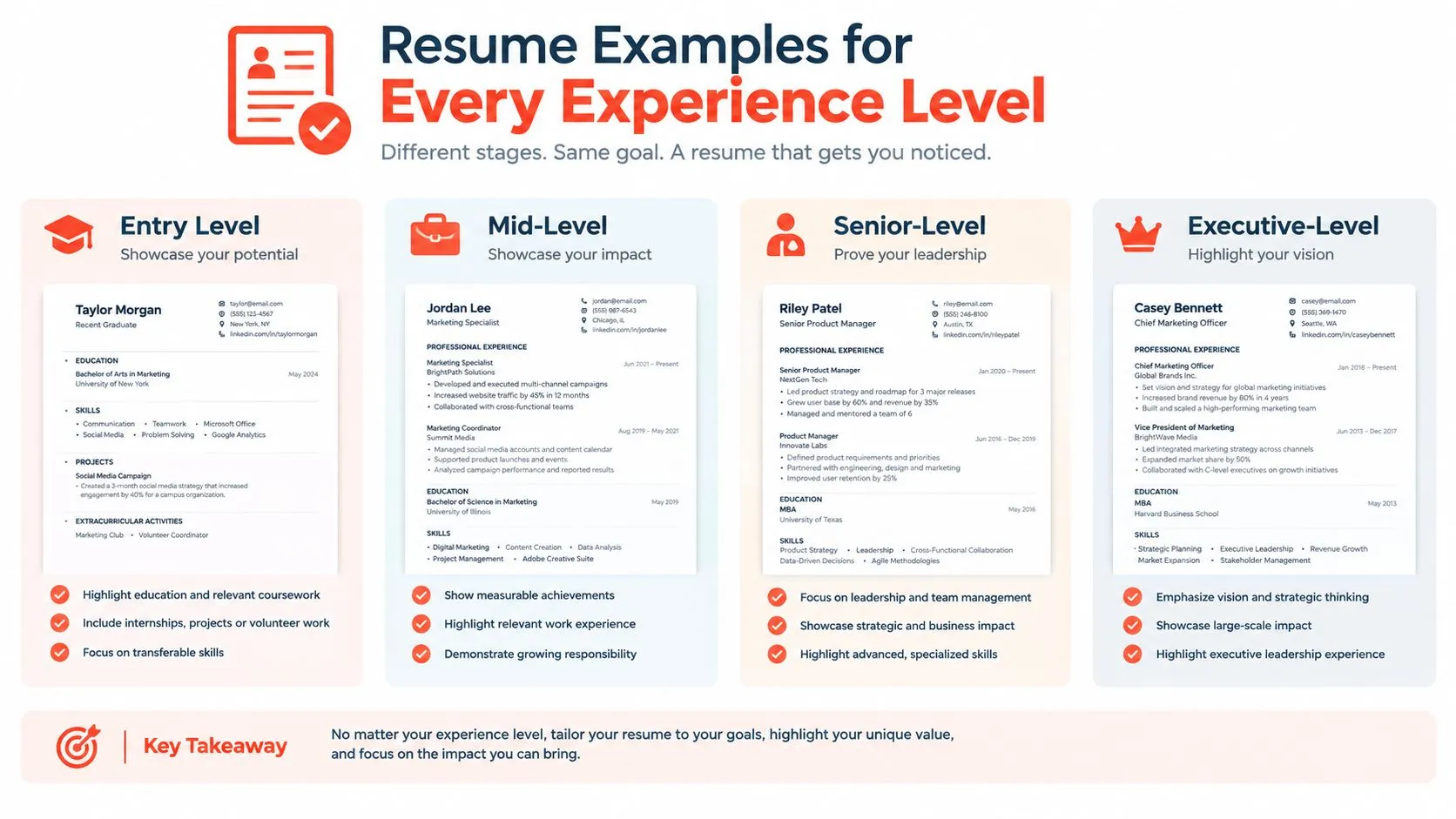
Entry-level operator
Weak:
Operated machinery and followed safety rules.
Stronger:
Loaded and unloaded production equipment, completed pre-shift inspections, and followed OSHA procedures while documenting quality checks for finished parts.
The stronger version proves basic line discipline. It doesn't pretend that an entry-level operator owns setup or process engineering.
Mid-level operator
Weak:
Set up machines and fixed problems.
Stronger:
Set up CNC production runs, verified tooling and offsets against work instructions, troubleshot recurring stoppages, and recorded corrective actions for maintenance follow-up.
This version distinguishes setup from running an already-prepared machine. Add your machine model and verified quality result if you have them.
Shift lead or senior operator
Weak:
Trained employees and managed the production line.
Stronger:
Coordinated machine coverage across the shift, trained new operators on safe changeovers and inspection procedures, and scheduled preventive-maintenance checks to reduce avoidable stoppages.
A senior bullet needs scope. Name the equipment group, production area, training responsibility, or maintenance process you controlled. Don't claim a percentage reduction unless your records support it.
| Career stage | The resume must prove |
|---|---|
| Entry-level | Safe operation, reliable attendance, inspection discipline, accurate documentation |
| Mid-level | Setup, changeovers, troubleshooting, quality ownership, basic maintenance |
| Senior or shift lead | Line coordination, training, preventive-maintenance planning, coverage, escalation |
Use these examples as prompts, then prepare to ace resume talking points by explaining the machine, the problem, your action, and the result behind every major bullet. For operators moving into material handling, the same evidence-first approach applies to forklift operator resumes. Equipment, load conditions, safety practice, and operational results still matter more than generic adjectives.
Proving Setup Capability and Automation Adaptability
Running an already-set machine and setting it up yourself are different jobs. That distinction is often the line between being treated as a machine tender and being considered for higher-value machinist work.
Say exactly what you owned:
- Loaded programs and verified tooling.
- Set work offsets and adjusted parameters.
- Performed first-piece checks.
- Completed changeovers.
- Aligned fixtures and confirmed calibration.
- Diagnosed alarms and corrected minor process issues.
- Released production only after quality checks passed.
“Operated CNC equipment” is weak if you also performed setup. Write the stronger truth.
Setup capability is not a minor skill. It proves independent judgment before production starts.
Automation changes the value of the role, too. Recent machine operator guidance describes a shift toward operators who can run, set up, troubleshoot, and maintain semi-automated equipment, with CNC experience, cross-training, basic maintenance credentials, AI-enabled quality checks, and predictive-maintenance exposure becoming useful differentiators (machine operator resume examples and automation guidance).
Don't write “adapted to new software.” Write what changed on the floor:
- Supported the transition from manual loading to a robotic loading cell.
- Learned a new HMI and updated standard operating procedures.
- Performed basic checks on automated inspection equipment.
- Used predictive-maintenance alerts to escalate abnormal machine conditions.
- Cross-trained across equipment to improve shift coverage.
Avoid invented outcomes. If the upgrade increased output, reduced stoppages, or improved coverage, use the verified result. If you don't have the number, describe the operational change clearly.
Common Mistakes and Your Next Steps
A resume that only says “Machine Operator” leaves pay on the table. Hiring managers need the machine, control system, process, and level of responsibility. Running a machine differs from setting it up, and setup experience supports a stronger case for advancement.
Cut these common failures:
- Generic title: Name equipment, controls, materials, and process.
- Duty-only bullets: Show scrap rate, first-pass yield, output, downtime, or defect response when verified.
- Buried setup experience: Put offsets, tooling, changeovers, fixtures, and first-piece checks near the top.
- Missing quality proof: State tolerances, inspections, and corrective action.
- Certification clutter: Group safety and equipment credentials under clear labels.
Fix the top third first. Lead with exact machines, production environment, setup capability, and your strongest verified result. Then test every bullet: does it prove operation, setup, quality, safety, troubleshooting, or production impact?
StoryCV helps recover forgotten shift details by asking about your equipment, decisions, responsibilities, and results, then turning your answers into clear resume language.
Tell your floor story through StoryCV. Document the machines you ran, setups you owned, and quality problems you solved. Build a resume that proves value instead of repeating a title.