A great software engineer resume makes a hiring case fast. It does not read like a cleaned-up job log. It shows why your decisions mattered, what changed because of your work, and why a team should trust you with bigger problems.
Hiring managers scan for signal. They want evidence of judgment, scope, and results. If your resume leads with tools, duties, or a stack dump, you are hiding the part that sells you. For a stronger model, study this guide to a software engineer resume that shows impact.
That means your resume needs sharper proof. Show the tradeoffs you handled. Show the systems you improved. Show the outcomes your work created. Faster releases. Fewer production issues. Better reliability. Lower support load. Clear wins beat long task lists every time.
A weak resume documents activity. A strong one proves engineering impact.
The difference is simple. One says what you touched. The other says what you changed. That shift is what gets interviews.
1. Lead with Impact, Not Duties
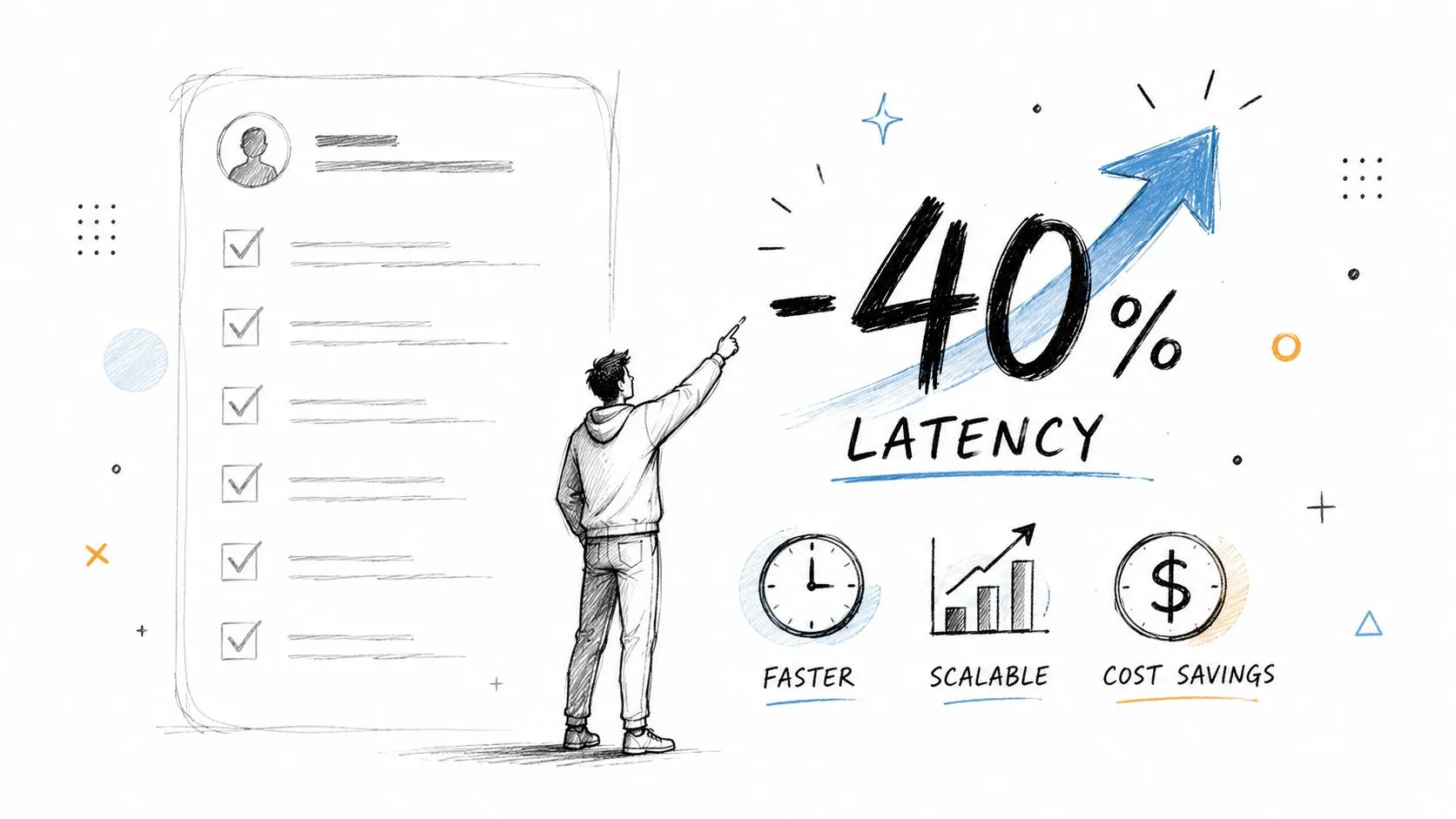
A resume bullet is a decision, not a description. “Built APIs” is a description. “Cut deployment friction by automating release steps” is a decision with a visible result. Hiring managers don't care that you were busy. They care that your work changed something important.
Many engineers waste valuable space. They write bullets like meeting notes. Implemented feature. Collaborated with team. Wrote tests. Fine. And?
Start with what changed
Open the bullet with the result, then explain how you got there. That structure forces you to think like an owner instead of a task runner.
Bad:
- Responsible for backend services
- Implemented CI/CD pipeline
- Fixed bugs in payment system
Better:
- Reduced deployment friction by automating release checks and rollback steps in GitHub Actions
- Eliminated a payment race condition in a Stripe integration that had been causing failed retries
- Cut support churn by tightening validation logic in a customer-facing API
Notice what's missing. Empty verbs. Generic teamwork language. Tool lists pretending to be achievements.
Practical rule: If your bullet can start with “I was tasked with,” it's probably weak.
When exact business metrics exist, use them. Concrete numbers are stronger than broad claims, and hiring managers explicitly want engineers to quantify usage, service load, tickets resolved, or business outcomes when they can (guidance for engineers from Flashfire Jobs). When hard metrics don't exist, use technical consequences you can defend. Fewer incidents. Less manual work. Faster debugging. Simpler handoffs.
Ask one better question
Don't ask, “What did I do?” Ask, “What changed after I shipped it?”
That single question usually rewrites the bullet for you.
For example:
- “Built internal admin tooling” becomes “Built internal admin tooling that cut manual account reviews for support staff”
- “Wrote integration tests” becomes “Wrote integration tests that caught payment and auth regressions before release”
- “Refactored notification service” becomes “Refactored notification service to make failures easier to trace during incidents”
If you need help turning technical work into evidence, this engineering resume guide from StoryCV shows the difference between a task list and a real argument.
2. Show Range Without Diluting Focus

Breadth does not sell your resume. A clear reputation does.
Senior engineers blow this constantly. They dump every category of work into one document. Backend services, a React feature, some Terraform, on-call, mentoring, security reviews, and one forgotten machine learning experiment. That reads like a work log, not a hiring case.
Hiring managers do not need proof that you touched many things. They need proof that you create value in a specific lane, and that your range makes you stronger in that lane.
Pick a core strength, then show useful range
Start with the work you want to be hired for. If you want a backend role, your resume should make that obvious in the first few bullets. Lead with system design decisions, API architecture, data modeling, reliability work, performance fixes, and the outcomes of those choices. Then add adjacent experience only if it strengthens the case.
Use a structure like this:
- Core depth: distributed systems, API design, database performance, service reliability
- Judgment at scale: tradeoff decisions, incident leadership, cross-team design reviews
- Relevant range: frontend, cloud, or DevOps work only when it improved delivery, reliability, or developer speed
That last part matters. Tools do not prove range. Judgment does.
A staff-level candidate should not look broad because they used ten platforms. They should look broad because they influenced architecture, reduced risk, improved execution across teams, or made other engineers faster.
Make breadth support the story
A frontend engineer aiming for product-heavy roles should show more than UI implementation. Show where you shaped interaction decisions, worked with design, or improved conversion and usability. An SRE should put reliability, observability, and incident response first. Cost work or security work can support that story, but they should not hijack it. A platform engineer should show internal adoption, developer experience, and the business effect of better tooling.
The test is simple. Someone should be able to scan your resume and say what you are good at in ten seconds.
If they cannot, you have too much noise.
Software engineering hiring is still crowded, and broad exposure is common. As a result, plenty of candidates can list a long stack. Fewer can show a clear specialty plus the judgment to operate outside it when the work demands it. Focus makes your impact believable.
3. Replace Responsible For With Action Verbs That Prove
“Responsible for” is dead weight. So is “worked on.” So is “involved in.” Those phrases tell the reader you were near the work. They don't prove you drove it.
Strong verbs signal ownership. They show that you made decisions, not just attended meetings around the decisions.
Use verbs with fingerprints on them
Compare these:
- Responsible for backend systems
- Worked on testing infrastructure
- Helped improve database performance
- Was involved in mentoring junior engineers
Now compare these:
- Architected request handling for a high-traffic API
- Built an end-to-end test harness for checkout flows
- Diagnosed query bottlenecks in reporting endpoints
- Mentored junior engineers through code reviews and design walkthroughs
The second set sounds like a person who can explain tradeoffs in an interview. The first set sounds like someone hoping the title does the work.
Verbs should imply judgment
Good software engineer resume tips usually say “use action verbs.” Fine. That's basic. The better advice is this: use verbs that prove a specific kind of judgment.
Try verbs like these when they're true:
- Architected: you defined structure or system boundaries
- Optimized: you improved performance, cost, or flow
- Eliminated: you removed a recurring failure point
- Diagnosed: you found the actual cause, not just the symptom
- Refactored: you improved maintainability without breaking behavior
- Automated: you replaced manual, repeatable work
- Secured: you reduced risk exposure or tightened access
If the work was collaborative, say so clearly without weakening the line. “Led,” “drove,” and “championed” are still stronger than “helped.”
Weak verbs hide strong work.
Read your bullets and look only at the first word in each one. If half the page starts with “managed,” “implemented,” or “worked,” you're flattening your own experience. Rewrite until the verbs sound like they belong to someone who made calls.
4. Prove Experience With Numbers, Not Just Titles
Titles are cheap. “Senior Software Engineer” can mean deep system ownership at one company and glorified ticket processing at another. Numbers cut through that instantly.
You don't need vanity metrics. You need scope. How many users, services, regions, tickets, incidents, migrations, reviews, or teams were affected?

Scope is evidence
Useful numbers on an engineering resume often come from places people ignore:
- Systems: number of services, databases, pipelines, or environments
- People: teams supported, engineers mentored, stakeholders aligned
- Workload: tickets resolved, deployments handled, incidents owned
- Code activity: commits, reviews, migrations, test cases, repos maintained
Quantifying achievements with service load, user counts, support tickets, commits, or code reviews is a valid way to prove impact, especially for internal tools where revenue numbers aren't visible (practical guidance from this YouTube engineering resume breakdown).
Numbers make ambiguity disappear
“Improved incident response” is vague.
“Built on-call runbooks and automated escalation paths for the platform team” is better.
“Built on-call runbooks and automated escalation paths used across multiple services” is better still, because now the reader can feel the scope even before you mention a time reduction or reliability gain.
Don't fake precision. If exact figures aren't available, use a conservative approximation you can defend in an interview. Approximate numbers still do real work. They tell the reader this wasn't tiny.
If your current bullets feel flat, StoryCV's guide to resume metrics is useful for turning hidden scope into visible evidence.
5. Tailor for Role, Not Just Keywords
Yes, ATS matters. No, keyword stuffing won't save a weak resume.
A good customized resume doesn't just match terms. It tells a coherent story about why you fit this job. That means changing emphasis, order, and framing based on the role. Same career. Different argument.
Start with the skills section. A dedicated first-page section explicitly labeled “Languages and Technologies” is the right move for ATS and recruiter scanning, and it should list specific tools rather than vague categories (ATS guidance from UIC Career Services). Don't write “cloud platforms.” Write AWS. Don't write “databases.” Write PostgreSQL, Redis, MongoDB, or whatever you use.
Reorder the truth
If you're a DevOps engineer applying to an SRE role, lead with observability, incident response, reliability work, and production safeguards. If you're applying to a platform security role, move hardening, access controls, audit work, and secrets management higher.
Same background. Different front page.
A full-stack engineer can do this too:
- For a frontend role, lead with React, performance, UX collaboration, and interface decisions
- For a backend role, lead with APIs, data models, throughput, and architecture choices
- For a staff role, lead with systems design, tradeoffs, mentoring, and cross-team alignment
Here's a good video breakdown before you rewrite your own:
Tailoring is mostly rearranging
Tailoring a resume is often thought to mean writing a brand-new one every time. Wrong. It usually means changing the order of bullets, choosing the right examples, and making sure the first page reflects the role you're chasing.
Keep a master resume. Pull from it with intent. Then use a role-specific resume tailoring workflow from StoryCV when you need a version that reads like it belongs to that job.
6. Show Growth, Not Just Tenure
Time at one company does not prove seniority. Scope does.
A five-year stint can signal steady growth or comfortable stagnation. Hiring managers decide which one it is by reading your bullets. If those bullets all sound like the same job repeated for half a decade, your resume says you stayed busy, not that you advanced.
Make the progression obvious.
Show how the problems got harder, how the systems got bigger, and how your judgment started affecting more than your own tickets. That is what seniority looks like on paper.
Make the arc visible
Growth usually shows up in two ways.
Vertical growth means your work moved from execution to ownership:
- shipped fixes and small features
- took over service design, reliability, or migrations
- set standards, reviewed design decisions, and guided technical direction
Horizontal growth means your influence spread wider:
- started on one team
- supported multiple teams
- owned a shared platform, product line, or company-wide practice
Spell that out. Do not expect a title change to carry the whole story.
Seniority should show in the bullets
Your bullets should reveal a clear shift in level.
A weak version looks flat:
- Built backend features in Java
- Developed APIs for internal systems
- Worked on billing and authentication services
A strong version shows progression:
- Shipped billing and auth features for a new customer onboarding flow
- Redesigned service boundaries for billing, cutting cross-service failures during peak traffic
- Led migration planning, ran design reviews, and mentored engineers maintaining the platform
Same tenure. Completely different signal.
Reality check: Tenure is a date range. Growth is increased scope, better decisions, and stronger outcomes.
For experienced engineers, this section does the selling. Stop listing what you touched. Show how your role expanded, what judgment you exercised, and what changed because of it. Nobody hires a senior engineer because they once used Java. They hire the engineer who made sound tradeoffs, reduced risk, improved a system, and raised the bar for everyone around them.
7. Write for Humans First, Then ATS
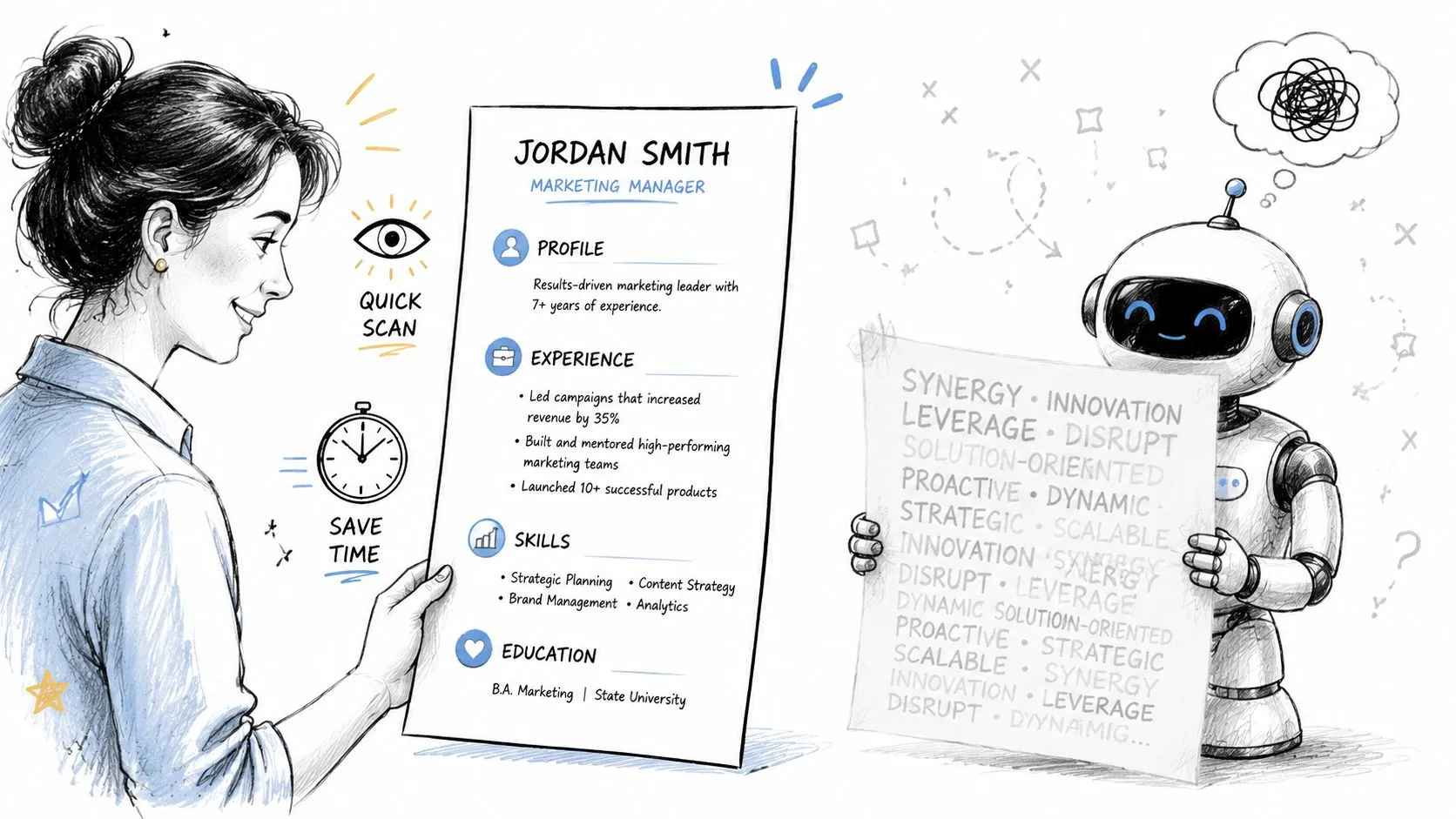
If your resume reads like a scraped job description, you've already lost. ATS might parse it, but humans still decide who gets interviews.
Write so a hiring manager can skim between meetings and still understand what you did. That means clear section labels, short bullets, normal language, and zero corporate sludge.
Keep the structure boring and clean
This is one place where conservative wins.
Use a dedicated technical skills section on the first page. Hiring managers expect it, and 90% of FAANG-ready resumes include that explicit skills section. Put languages, frameworks, tools, and databases there. List them in order of fluency, and lead with the skill you want to be hired for.
For layout, use exactly 0.5-inch margins and avoid headers and footers because ATS often fails to parse text placed there. This is simple stuff, but people still sabotage themselves with fancy formatting, split columns, and text tucked into places the parser may ignore.
Clear beats clever
Don't write:
- Utilized full-stack technologies to deliver scalable systems
- Used cross-functional synergies to enhance agile throughput
Write:
- Built a REST API and internal dashboard for support operations
- Automated deploy checks so engineers could release with less manual coordination
A human should understand your bullet faster than a machine indexes it.
That's the standard. If your resume does that, ATS usually takes care of itself.
8. Quantify or Cut, There's No Soft Impact
“Improved collaboration” is not a bullet. It's a vibe. Same with “drove innovation,” “enhanced user experience,” and “supported stakeholders.” Those lines take up space and prove nothing.
Soft skills matter. On a resume, they need receipts.
Evidence or delete
A bullet about communication, leadership, or mentorship still needs something concrete attached to it.
Better versions look like this:
- Mentored newer engineers through code reviews, onboarding docs, and design walkthroughs
- Coordinated incident response across engineering and support during production outages
- Standardized pull request expectations so reviews moved faster and handoffs got cleaner
- Partnered with product and design to narrow scope and ship a feature set on schedule
These work because they describe behavior in context. They don't hide behind abstract virtue words.
Quantification isn't always revenue
You may not have access to user counts or dollars saved. Fine. Use operational proof instead. Hiring managers still prioritize quantified outcomes over responsibility lists, and many engineers struggle to access direct business metrics (discussion of the metric-access gap on the Apex Lab podcast). That's not an excuse to stay vague. It's a reason to get more creative.
Use evidence like:
- Adoption: how many teams used the tool
- Coverage: how much of the system changed
- Speed: faster review cycles, release steps, or debugging
- Risk reduction: fewer failure points, safer migrations, cleaner rollback paths
One warning. Don't invent neat numbers because the bullet feels empty. If you can't quantify it accurately, anchor it in consequence. What did your work make easier, safer, faster, or less fragile?
That's still impact. But if the line says nothing specific, cut it.
8-Point Software Engineer Resume Comparison
| Item | 🔄 Implementation Complexity | ⚡ Resource Requirements | 📊 Expected Outcomes | 💡 Ideal Use Cases | ⭐ Key Advantages |
|---|---|---|---|---|---|
| Lead with Impact, Not Duties | Medium, requires outcome analysis | Moderate, time to pull metrics | Clearer, memorable accomplishments; higher callbacks | Any resume aiming to show measurable wins | Differentiates from task-lists; signals strategic impact |
| Show Range Without Diluting Focus | High, selective curation and structure | Moderate, tailoring per target role | Focused breadth that maps to desired role | Candidates with diverse experience targeting a specific role | Demonstrates depth + breadth without appearing scattered |
| Replace "Responsible For" With Action Verbs That Prove | Low, rewrite for active voice | Low, simple edits and verb substitution | Stronger sense of ownership and agency | Any resume needing clearer ownership signals | Improves clarity, ATS keyword alignment, perceived leadership |
| Prove Experience With Numbers, Not Just Titles | Medium–High, gather/verify data | Moderate–High, requires access to metrics | Higher credibility; easier role sizing by reviewers | Roles where scale and scope matter (platform, infra, product) | Concrete evidence of impact; reduces ambiguity |
| Tailor for Role, Not Just Keywords | Medium, reframe and reorder content | Moderate, maintain role-specific variants | More relevant narrative; better ATS + human match | High-competition roles or targeted applications | Aligns story to role; shows intent and fit |
| Show Growth, Not Just Tenure | Medium, structure progression clearly | Low–Moderate, document milestones over time | Signals potential and trajectory to hiring managers | Long-tenure applicants or promotion-seekers | Demonstrates development and increasing responsibility |
| Write for Humans First, Then ATS | Medium, balance clarity and keywords | Moderate, disciplined editing | Better human readability while passing ATS | Broad use; first-stage screening where humans decide | Readable, confident voice; avoids keyword-salad |
| Quantify or Cut, There's No "Soft" Impact | High, quantify or remove claims | High, data collection or reframing work | Higher credibility; fewer vague claims | Experienced candidates with space constraints | Evidence-based statements; stronger trustworthiness |
Stop Documenting. Start Selling.
A software engineer resume is not a work log. It is a case for hiring you.
Hiring managers are not looking for a faithful archive of tickets, standups, and shipped features. They want proof that you made sound decisions, solved expensive problems, and changed outcomes that mattered. A bullet that only names a task wastes space. A bullet that shows judgment, tradeoffs, and measurable results earns attention.
That is why so much resume advice falls flat. It obsesses over templates, keyword stuffing, and layout tweaks. Keep the formatting clean. Fine. But clean formatting does nothing for a resume full of weak claims and generic duties.
Recruiters skim fast. Hiring managers skim faster. They look for signal right away: scope, ownership, judgment, results. If your resume hides those behind tool lists and vague responsibilities, it gets ignored.
Be explicit.
Show what you owned. Show what improved because of your work. Show the cost you cut, the risk you reduced, the latency you removed, the time you saved, the revenue you supported, or the reliability you improved. If you cannot explain why the work mattered, the reader will assume it did not.
That is the gap in weak software engineer resumes. Engineers often remember what they built, but skip the hard part: why they chose that approach, what constraints they worked through, what tradeoffs they made, and what happened after the change shipped. That context is what sells. Tools are supporting details. Judgment is the product.
StoryCV helps fix that. It is an online resume writer built to pull the actual value out of your experience and turn routine work into a sharper hiring case. It asks better questions, surfaces the impact hidden inside day-to-day engineering, and helps you write like the person who drove the result, not the person who watched it happen.
Your resume does not need to include everything.
It needs to make the right argument, fast.
StoryCV helps you turn solid engineering work into a resume that argues for your value. Instead of dumping your history into a builder, use an AI-powered resume writer from StoryCV that interviews you, finds the impact, and writes with editorial judgment at software speed.