
Passion is not a sports marketing qualification. A hiring manager can assume you like sports. What they can't assume is that you can grow an audience, deliver sponsor value, sell inventory, or make a campaign pay for itself.
A strong sports marketing resume shows commercial judgment, not just enthusiasm. It makes clear what changed because you were involved, which audience you reached, and how the organization measured success.
That matters in a large business. The global sports sponsorship and in-venue advertising industry was valued at approximately $52 billion in 2025, representing about 12% of total global sports-market revenue (Statista). Your resume should reflect that commercial reality.
Why Loving the Game Is the Weakest Evidence
“Passionate sports fan” is not evidence. It's background noise.
Employers hire into a connected system of sponsorships, ticketing, media, fan data, live events, content, and brand partnerships. A bullet such as “assisted with promotions” tells them almost nothing. It doesn't show the campaign, the audience, the channel, the measurement, or your contribution.
A better bullet might identify a match-day campaign, the channels used, the audience reached, and the result. Even when financial information is confidential, you can use engagement, attendance, qualified leads, completed sponsor deliverables, conversion, or media impressions.
The useful question: What did the organization gain because you did this work?
That question applies to three common readers:
- Students need to turn internships, campus events, volunteer work, and student organizations into evidence of execution.
- Mid-level professionals need to show scale, ownership, budgets, accounts, audiences, and outcomes.
- Career changers need to translate marketing, sales, operations, military, nonprofit, or retail experience into sports-business language without pretending it happened inside a stadium.
The same project may support several applications, but it shouldn't appear unchanged in all of them. A campaign can become a fan-growth story for a team marketing role, a partner-outcome story for sponsorship activation, or a pipeline story for sales.
Generic duties cost interviews because they force the reader to do the interpretation. Don't make a recruiter guess whether you influenced revenue, engagement, attendance, or partner satisfaction.
For a useful perspective on the commercial work surrounding agencies and growth teams, see Sup Growth for agencies. Then apply the same discipline to your own experience. Talk about your work in terms of decisions, actions, and consequences, not just responsibilities.
The Section-by-Section Structure That Reads Clean
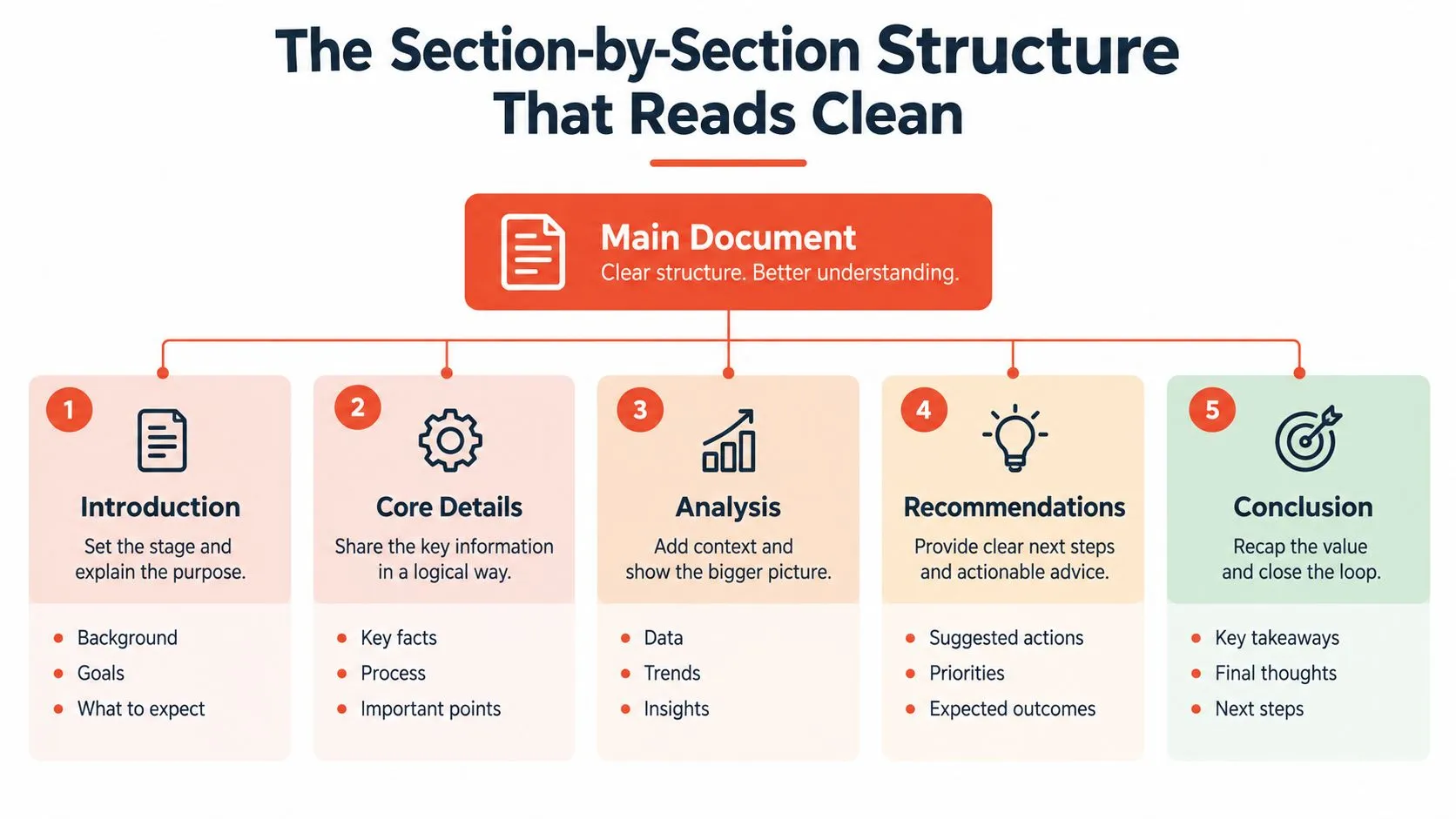
A clean sports marketing resume answers five questions in order: What role do you want? What have you changed? How did you do it? What tools can you use? What else supports your credibility?
Start with the target, not your life story
Your headline should name the function you're pursuing. “Sports Marketing Professional” is acceptable, but “Sponsorship Activation Manager” or “Fan Engagement and Digital Marketing Specialist” gives the reader a sharper frame.
Follow it with a short summary of two or three sentences. Mention your strongest commercial areas, the audiences or partners you've worked with, and the kind of role you're targeting. Leave childhood fandom, broad career philosophy, and soft claims such as “hardworking team player” out.
For a mid-level candidate with agency and in-house experience, the summary might emphasize integrated campaigns, brand partnerships, digital engagement, and event execution. The details belong in the experience section.
Make experience carry the document
Experience is where the resume earns attention. Lead with outcomes, then explain the work behind them. Each role should contain selected bullets, not an inventory of every task you performed.
Put the most relevant campaign or partnership first. Name the organization, role, dates, and scope clearly. A hiring manager should see ownership quickly.
Use skills as a searchable index, not a substitute for proof. Include tools such as Excel, Power BI, Tableau, Python, CRM platforms, social analytics, and email marketing systems only when you can discuss how you used them.
Keep education and extras proportional
Education matters, especially early in a career. For experienced professionals, it should support the story without pushing stronger evidence down the page. Certifications, volunteer work, portfolios, languages, and community involvement earn space when they reinforce the target role.
A one-page resume can work for a student or recent graduate with limited experience. Experienced candidates shouldn't delete valuable campaign evidence to obey an arbitrary page limit. Research summarized by Novorésumé reports that more than 77% of HR professionals prefer resumes of two pages or longer, with over two-thirds considering two pages ideal and roughly one-fifth preferring one page.
A second page is useful when it adds relevant scope. It's useless when it repeats old duties.
Bullets That Prove Impact, With Sports-Specific Rewrites
The strongest bullet follows three moves:
- Name the commercial activity. Sponsorship activation, match-day campaign, community event, ticket promotion.
- Name the measurement system. Engagement rate, attendance, conversion, media value, cost per acquisition, sponsor ROI.
- State the result and your contribution. Explain what changed and what you personally did.
That structure reflects how sports analytics teams evaluate work. Analysts build or interpret models, identify KPIs, assess media effectiveness, and measure sponsorship ROI. Relevant tools can include Excel or VBA, Power BI, Tableau, Python, and social-platform analytics.

Responsibility is only the starting point
Responsibility → context → action → outcome
Weak: “Managed social media for the club.”
Stronger: “Planned and published match-day content across three social channels, using platform analytics to refine timing and creative around fan engagement.”
The stronger version still needs a result if you have one. Add the audience response, engagement change, attendance influence, or commercial decision supported by the work. Don't claim “increased brand awareness” unless you can show how awareness was measured.
Here are three useful rewrites.
Match-day social campaign
- Weak: “Created social media content for match days.”
- Stronger: “Developed match-day content across organic social channels, monitoring engagement and audience response to improve creative decisions during the season.”
Sponsorship activation
- Weak: “Helped deliver a sponsor activation.”
- Stronger: “Coordinated sponsor assets across match-day signage, email, and social content, maintaining delivery against partner requirements and reporting activation performance.”
Community or ticket-driving event
- Weak: “Supported a community event to promote the team.”
- Stronger: “Managed promotion and on-site execution for a community event, coordinating partners, audience communications, and ticket-driving activity from planning through delivery.”
These examples avoid invented results because the candidate must insert their own evidence. If you measured attendance, leads, conversion, partner value, or completed deliverables, add it. Resources on how to measure content ROI can help you choose a measurement that matches the activity.
A compilation of resume research reports that 75% of hiring managers want quantifiable achievements in work experience, while 88% say work experience is the most important resume section (Enhancv). Numbers matter because they reduce interpretation.
Before keeping a bullet, ask:
- What changed?
- Who benefited?
- How was it measured?
- What did I personally own?
- Would this make sense to someone outside my team?
If you can't answer those questions, the bullet probably describes a responsibility rather than an accomplishment. For more help with social and content positioning, see this guide to a social media marketing CV.
Reframing One Campaign for Four Different Roles
One campaign shouldn't produce one permanent resume bullet.
Take a season-long sponsor activation for a mid-tier club. The underlying work stays the same: you coordinated sponsor assets across match-day signage, email, and social content, worked with internal teams and the partner, and reported activation performance.
The framing changes according to the job.
| Target function | Headline metric | Lead language |
|---|---|---|
| Team or league marketing | Fan engagement, attendance, campaign response | “Delivered an integrated activation that connected sponsor content with match-day fan communications.” |
| Sponsorship activation | Partner deliverables, asset completion, activation performance | “Coordinated sponsor assets across venue, email, and social channels, aligning delivery with partner requirements.” |
| Media or content | Audience response, content performance, channel engagement | “Produced and optimized sponsor-led content across digital channels using platform analytics.” |
| Sales-oriented partnership role | Partner value, account support, renewal evidence, qualified leads | “Supported a sponsor account from activation planning through reporting, translating campaign delivery into partner-facing outcomes.” |
The numbers, if you have them, should remain honest and consistent. What changes is the first question the bullet answers.
Team marketing asks, “How did fans respond?” Sponsorship activation asks, “Did the partner receive what was promised?” Media asks, “Which content and channels performed?” Sales asks, “Did this support account value or future commercial opportunity?”
Aim the resume at the first reader
A sponsorship director scans for partner outcomes. A content lead looks for audience behavior and production judgment. A sales leader wants pipeline, account ownership, and commercial conversations. A team marketing manager cares about fan behavior, attendance, loyalty, and execution.
Use the job posting to identify that reader's priorities. Then choose the same experience details that support those priorities. Don't invent a sales result because the role is sales-oriented. Reframe the partner coordination, reporting, relationship management, or lead support you performed.
The goal isn't to write four different careers. It's to show four accurate views of the same work.
ATS Without the Keyword Stuffing Trap
An applicant tracking system usually checks whether your resume contains relevant terms, recognizable job titles, qualifications, and parseable formatting. It doesn't understand your potential. It sorts for language that resembles the posting.
Mirror accurate terms from the listing in your skills and experience sections:
- Sponsorship activation
- Fan engagement
- CRM
- Paid social
- Media relations
- Ticketing
- Partnership marketing
- Experiential marketing
Then attach each term to proof. “CRM” means more when you explain that you segmented a database, supported an email campaign, or improved campaign conversion. “Sponsorship activation” means more when the bullet names the assets, partner, audience, or reporting process.
Keyword stuffing fails because humans notice it. A string such as “CRM, paid social, ticketing, media relations, sponsorship activation” may help a parser recognize terms, but it doesn't show competence. ATS is a floor, not a ceiling.
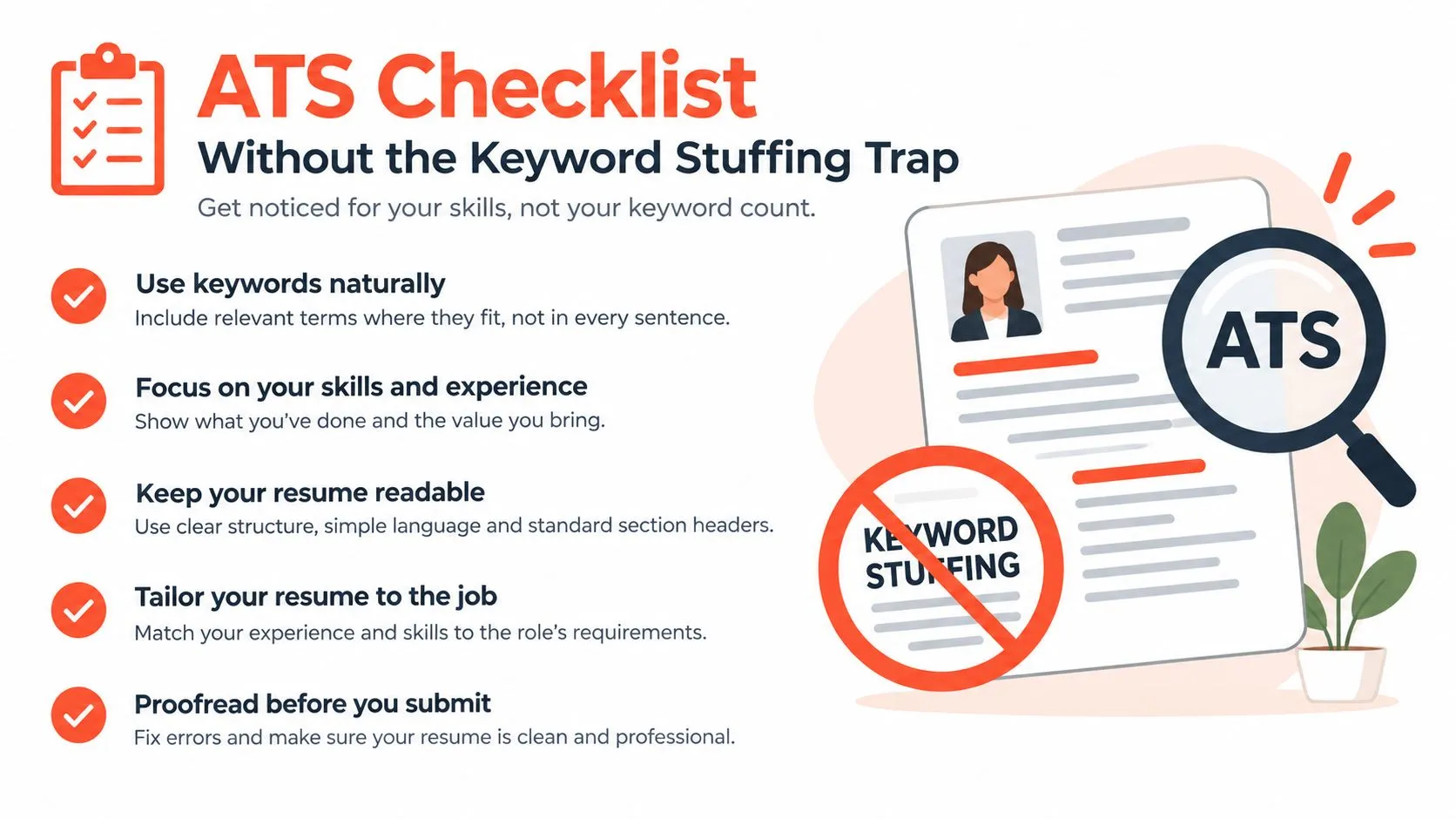
Use standard headings such as Summary, Experience, Skills, Education, and Certifications. Avoid placing essential information inside graphics, decorative text boxes, or complex columns. Simple formatting helps both the software and the person reading after it.
Analytical problem-solving deserves special attention. One Penn State employer-skills summary reports 77% importance for analytical problem-solving, 56% for computer skills, 48% for presentation skills, and 45% for strategic thinking (Penn State Smeal). That's a strong reason to show how you interpreted data, made a decision, presented findings, or changed a campaign.
Use marketing keywords on your resume as labels for evidence, not as decoration.
The Ten-Minute Edit Before You Send
Run this short check before every application.
- Read the first third. Can the reader identify your target function and strongest commercial proof immediately?
- Scan the bullets. Do the most relevant bullets show an activity, measurement, and result?
- Check the headings. Are they conventional and easy to parse?
- Check the layout. Can the resume communicate without tables, columns, graphics, or tiny text?
- Check the length. Is every line relevant to this role, or are you protecting old duties out of habit?
- Match one posting priority. Take the most important requirement in the job description and connect it to one specific experience in plain language.
- Read it aloud. Does the bullet sound like something you really did, or like inflated corporate fog?
Sports marketing connects to several recognized occupations. The Bureau of Labor Statistics reported 2022 median pay of $58,450 for advertising sales agents, $68,230 for marketing research analysts and marketing specialists, and $138,730 for advertising, promotions, and marketing managers. The manager category was projected to grow by 6% from 2022 through 2032 (SNHU summary of BLS data). The point isn't to promise a result. It's to show why your resume should remain flexible across commercial, analytical, communications, and managerial paths.
StoryCV helps you turn real work into resume-ready writing by asking about the context, decisions, actions, and outcomes behind each role. If your experience is strong but the words aren't there yet, use StoryCV to talk through one sports marketing role and build the evidence into clear bullets.