Asking StoryCV vs Enhancv starts with the wrong comparison.
People act like you're choosing between two resume tools that do the same job. You're not. You're choosing between a writer and a builder. That's a different decision entirely.
If your resume already says what you did, a builder can help. If your bullets are vague, inflated, or dead on arrival, a prettier template won't save them.
Here's the fast version:
| Tool | Best for | What it actually solves | Where it breaks |
|---|---|---|---|
| Enhancv | People with decent content and dated presentation | Modern layouts, section control, visual polish, AI-assisted editing | Weak bullets still stay weak |
| StoryCV | People who struggle to explain their impact in resume language | Guided interview, bullet writing, narrative clarity, ATS-friendly drafting | Less about design experimentation |
You Are Asking the Wrong Question
The bad question is, “Which tool is better?”
The useful question is, “Is my resume weak because the writing is weak, or because the presentation is weak?”
That distinction matters more now because this market is getting crowded and specialized.
So don't compare StoryCV and Enhancv like they're clones with different pricing pages.
Writer vs builder
Enhancv is basically a design-forward resume builder. It helps you assemble and polish a resume inside a strong visual editor.
StoryCV is positioned around an interview-led writing workflow. It asks structured questions, pulls out context, decisions, and outcomes, then drafts resume content from that.
Those are different jobs.
Practical rule: If you know what to say but hate how your resume looks, use a builder. If you don't know how to say what you've done, use a writer.
Mid-career professionals get trapped here all the time. They've done meaningful work. Managed messy projects. Fixed ugly problems. Influenced decisions without owning the whole result. Then they sit down to write and produce lines like “Led cross-functional initiatives” or “Responsible for stakeholder alignment.”
That's not a design problem.
If you want a deeper version of this split, the comparison between AI resume writer vs human writer gets at the same core issue. The bottleneck usually isn't document formatting. It's extraction. Getting the substance out of your head and onto the page.
Here's the test:
-
Read your bullets out loud
-
Ask whether they describe actual work
-
Ask whether a stranger would understand the stakes
-
Then decide whether you need writing help or layout help
If the content is flat, don't go shopping for typography.
Here's a quick walkthrough before the comparison gets more specific:
When You Need a Better Design Not Better Words
A lot of people comparing StoryCV vs Enhancv are solving the wrong problem.
If your resume already says clear, specific things about your work, stop obsessing over AI writing features. Your bottleneck is presentation. Fix the layout and move on.

What Enhancv actually helps with
Enhancv is useful when the words are good enough and the packaging is weak.
Its value is control. You can reorder sections, adjust hierarchy, change templates, rewrite lines inline, generate summaries, tailor to jobs, and build matching cover letters. That makes it a strong resume builder. It does not fix fuzzy thinking about your own experience.
Design matters for one reason. It makes solid content easier to scan.
When a builder is the right call
Choose Enhancv if these sound true:
-
Your bullets already say something real: A stranger can tell what you owned, changed, or improved.
-
Your resume looks dated: The content holds up, but the document feels flat or sloppy.
-
You want tighter visual hierarchy: Better spacing, cleaner sections, and a more modern structure would help.
-
You do not need help extracting achievements: You need formatting, not discovery.
That is a legitimate use case.
Good design improves delivery. It does not rescue weak content.
That limit matters. Reviews of Enhancv often focus on ATS checks, rewriting tools, and tailoring features, but they mainly describe what the product can do, not whether it fixes a bad resume strategy, as covered in ResumeLab's Enhancv review.
So ask a harder question. Is your resume underperforming because it looks messy, or because it says nothing sharp about your work?
If you need the broader split between builders and interview-led writing tools, this explanation of resume writer tools lays it out clearly.
Where the builder approach breaks
People waste absurd amounts of time tweaking colors, sidebars, and section dividers on resumes that still read like corporate oatmeal.
Recruiters may notice the design first. They decide on the substance right after. That second judgment decides whether you get ignored.
Use a builder when your content is already carrying its weight. If it is not, prettier formatting just hides the underlying problem for another hour.
When Your Words Betray Your Work
A polished template will not save a resume that says nothing clear about your work.
That is the trap. You did useful, difficult work. Then you describe it in dead corporate language and wonder why the document feels weak. The problem is not effort. The problem is translation.

The bottleneck is usually upstream
Mid-career candidates run into this constantly. They know the work too well, so they skip the context that makes it impressive. They use internal language nobody outside the company understands. Or they sand down messy, meaningful work into bland verbs because they are trying to sound polished.
That is why a writing-first workflow exists. StoryCV starts with structured questions about role, decisions, and outcomes, then turns those answers into resume bullets and summaries. If you want another example of that interview-led approach, this StoryCV vs Rezi breakdown shows the same split from a different angle.
What this actually fixes
Use this kind of workflow when the issue is weak expression, not weak formatting.
-
Career changes: You need your past work translated into relevance.
-
Non-linear paths: Your value does not show up cleanly through job titles alone.
-
Mid-level roles: You influenced outcomes without owning every final metric.
-
Credibility problems: You want stronger bullets without sounding fake.
Good resume writing is specific writing.
Builders assume you already know what to say. That is a bad assumption for a lot of experienced job seekers. If your draft keeps collapsing into phrases like “collaborated cross-functionally” or “supported strategic initiatives,” the content is not ready for a design tool.
Here is the difference.
Weak bullet:
- “Led cross-functional initiatives to improve process efficiency.”
Stronger bullet:
- “Coordinated product, operations, and support teams to fix handoff delays, cutting project completion time.”
Notice what changed. The stronger version names the teams, the problem, and the result. It gives a recruiter something they can believe.
That is the whole point of this section. Stop asking which tool has better templates if your resume still hides the work. Diagnose the bottleneck first. If your experience is solid but your bullets sound generic, writing help beats prettier formatting every time.
Workflow Face-Off Interview vs Builder
At this point, StoryCV vs Enhancv gets clear.
One starts with a document.
The other starts with a conversation.
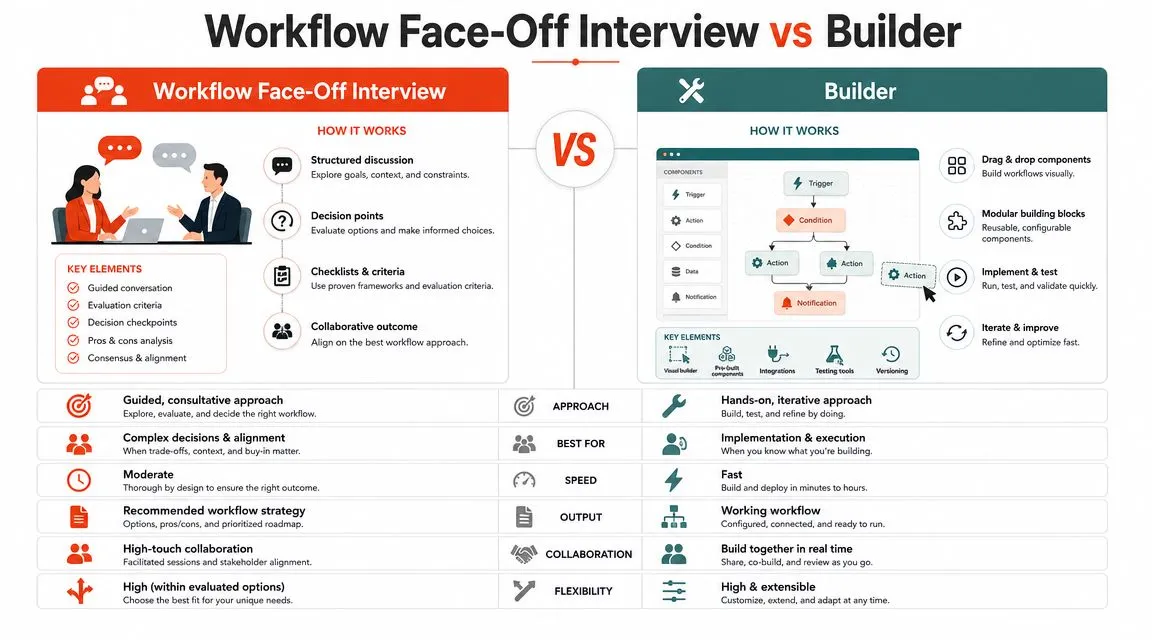
Two different starting points
Enhancv's workflow is basically this:
-
Pick a template
-
Add sections
-
Rewrite and tailor inside the editor
-
Export a polished document
StoryCV's workflow is more like this:
-
Choose the target role
-
Answer structured questions
-
Clarify decisions, context, and outcomes
-
Turn the interview into bullets and summaries
The difference is philosophical. Enhancv treats resume creation as assembly with assistance. StoryCV treats it as extraction before formatting.
Enhancv acts more like a high-control document editor. StoryCV acts more like an interview-to-draft engine.
That distinction matches the public product descriptions. Enhancv supports section reordering, inline AI rewriting, and one-click job tailoring, while StoryCV uses role-aware prompts and guided revision to improve the semantic quality of the content before formatting, as described in Enhancv's comparison of builder-style workflows and guided drafting.
The real tradeoff
Here's the trade:
| Workflow | Strength | Weakness |
|---|---|---|
| Builder | More visual control | Assumes you can already write the substance |
| Interview | Faster path to strong bullets | Less focused on layout experimentation |
Neither approach is universally better.
They're better for different bottlenecks.
If you're comparing builder-style tools and trying to figure out whether content-first software fits you better, this Rezi vs StoryCV comparison is useful because it frames the same issue from the workflow side, not just the feature list.
Two Job Seekers Two Different Problems
Abstract advice gets fuzzy fast. Use people.
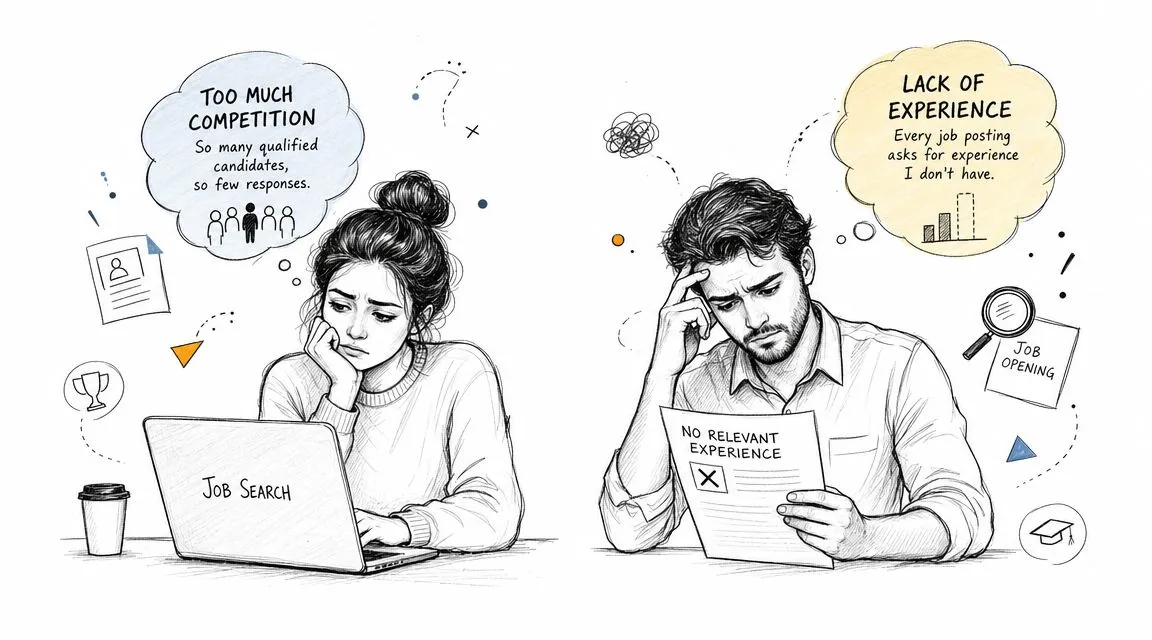
Alex needs presentation help
Alex is a project manager.
Their resume already includes solid bullets. You can read them and understand the work. They mention ownership, scope, and outcomes. Nothing is broken. It just looks like a default document from years ago. Dense text. Weak hierarchy. No visual rhythm.
Alex should use Enhancv.
That's exactly where a visual template builder earns its keep. Modern layouts, cleaner typography, better sectioning, and a more scannable page all help when the words are already doing their job.
Sam needs writing help
Sam is a software engineer.
Sam's actual work is strong. Systems migration. Performance fixes. Coordination with product and infra. But the bullets are a mess. Too much jargon. Too little context. The language sounds generic when it isn't vague and inflated when it tries too hard.
Sam needs a writing-first process, not a new template.
For people changing direction or translating messy experience, a guided interview can be more useful than a template-first editor, especially because the core problem is often articulation rather than presentation, as argued in StoryCV's guide to resume tools for career changers.
The mistake both people can make
Alex can overthink wording that is already fine.
Sam can hide weak bullets inside a better-looking layout.
Those are opposite errors.
A lot of job seekers with non-linear careers think they need “a professional-looking resume” when what they need is a coherent story. A professional-looking resume helps only after the story exists.
If your bullet points don't survive a careful read, the template isn't the fix.
Which Should You Choose A Simple Matrix
Pick the tool based on the bottleneck. Not the homepage.
That's the whole game.
Strong bullets are built around measurable outcomes such as a 30% reduction in project completion time or 60% growth in traffic, and AI use is already mainstream enough that the differentiator is whether the system helps you articulate concrete outcomes. Teal notes example quantified bullets like those, and Enhancv's statistics page reports that 61% of men and 45% of women used AI to write their resume in 2024, as summarized in Teal's guidance on quantifying resume bullets.
StoryCV vs Enhancv what's your real problem
| Your Situation | Recommended Tool | Why |
|---|---|---|
| Your bullets are solid, but your resume looks dated | Enhancv | You need better packaging, not deeper writing help |
| Your bullets sound generic or fake no matter how much you edit | StoryCV | You need structured writing help to pull out real impact |
| You're changing careers and can't connect the dots | StoryCV | Your problem is narrative translation |
| You want more control over layout and sections | Enhancv | The editor is built for presentation choices |
| You want both strong bullets and modern design | Use them in sequence | Fix content first, then format it |
My direct recommendation
If you're unsure, assume the content problem comes first.
Individuals often overestimate how good their bullets are and underestimate how much weak language is hurting them. They confuse “I know what I did” with “my resume communicates what I did.” Those are not the same thing.
A simple decision matrix helps here. If you like structured prompts for making choices, Bulby helps make smarter decisions by showing how to turn fuzzy comparisons into clearer yes-or-no criteria.
Use that mindset on your resume:
-
If the writing is weak: fix the writing first.
-
If the writing is fine: improve the presentation.
-
If both are weak: don't start with design.
A clean frame doesn't fix a blurry picture.
The honest pairing is sequential, not competitive. Use a writing-first product to get the bullets into plain, credible language. Then, if your field or personal preference calls for more polish, move that content into a builder like Enhancv.
If your resume problem is that the words come out flat, generic, or inflated, StoryCV is built for that specific job. It uses a guided interview to turn your experience into usable resume bullets and summaries, then you can paste that text into any format you want.